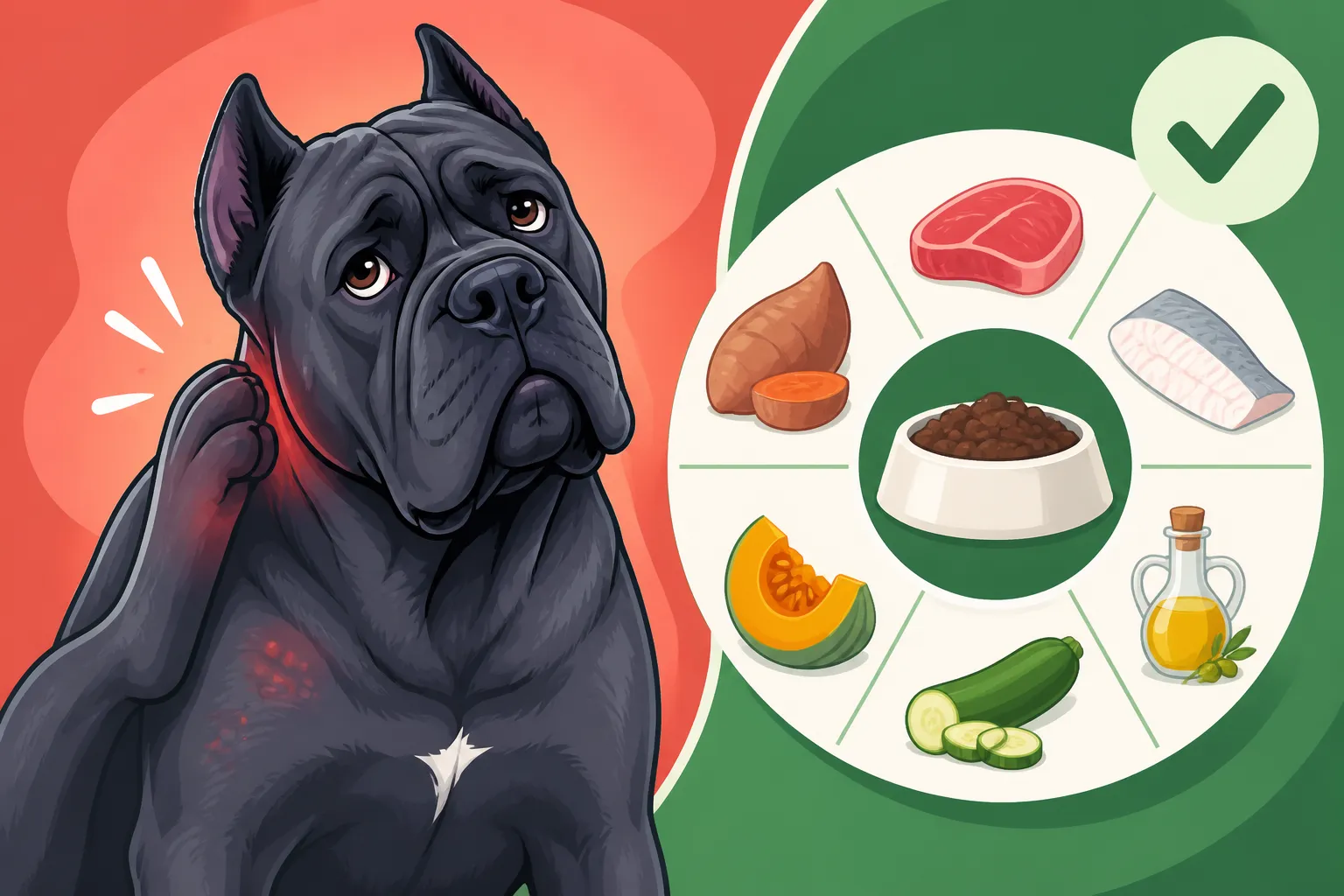
An Elimination Diet for an Itchy Cane Corso
It's incredibly frustrating, isn't it? You love your big, beautiful Cane Corso, but lately, they've been scratching and chewing themselves raw. You’ve tried everything, from flea treatments to medicated shampoos, and still, that persistent itch remains, leaving you worried and your dog uncomfortable. This comprehensive guide is here to walk you through the process of an elimination diet, a tried-and-true method for uncovering whether food is the silent culprit behind your Cane Corso's relentless itching.
Understanding the Root of the Itch: Beyond Just "Allergies"
When your Cane Corso starts to itch, it’s like a mystery novel playing out on their skin. We often jump to conclusions, but the truth is, many different things can cause that persistent discomfort. It's rarely a simple "one-and-done" fix, and understanding the potential causes is the first step in helping your companion.
Common Culprits: What Makes a Cane Corso Itchy?
Before we dive into diet, it's crucial to acknowledge the usual suspects that can make any dog, especially a Cane Corso, terribly itchy. These are often the first things a vet will rule out, and for good reason—they’re widespread and can mimic food-related issues.
First up, environmental allergies. Just like us, dogs can react to pollen, dust mites, mold spores, and grass. Your Cane Corso might be fine indoors but turn into an itching machine after a romp in the park. These allergens can be seasonal or year-round, depending on what your dog is reacting to. Symptoms often include itchy paws, ear infections, and generalized body itching, sometimes accompanied by redness or hot spots. Imagine having a constant runny nose or itchy eyes, but all over your body – that’s what it can feel like for them. You might notice them licking their paws excessively or rubbing their face on the carpet.
Then there are fleas, the tiny terrors that can cause huge problems. Even if you don't see them, a single flea bite can trigger a massive allergic reaction in a sensitive Cane Corso. This is called Flea Allergy Dermatitis (FAD), and it can lead to intense itching, redness, hair loss, and scabbing, particularly around the base of the tail, inner thighs, and belly. Many owners assume if they don't see fleas, they don't have them, but these resilient little pests are masters of hide-and-seek. Consistent, high-quality flea prevention is non-negotiable for any itchy dog, regardless of other suspected causes.
Finally, we have contact allergies, though these are less common as primary itch triggers. These occur when your Cane Corso's skin comes into direct contact with an irritating substance. Think about new cleaning products on the floor, certain plants in the yard, or even the material of their bed. The itching and redness usually appear directly where the skin touched the irritant. While often localized, severe reactions can spread.
The Suspicion of Food Allergies or Sensitivities
Once the more obvious environmental and parasitic culprits have been addressed, our attention often turns to what's going into your Cane Corso's bowl. This is where food allergies and sensitivities enter the picture, and they can be incredibly sneaky to diagnose. It’s not just about an immediate reaction; it’s about a cumulative effect.
It's important to differentiate between a true food allergy and a food sensitivity or intolerance. A food allergy involves the immune system, leading to a more severe and immediate reaction, often with skin issues but potentially gastrointestinal upset (vomiting, diarrhea) and even respiratory symptoms. A food sensitivity or intolerance, on the other hand, doesn't involve the immune system. It's more of a digestive issue, causing symptoms like gas, loose stools, or mild skin irritation, but usually not the severe, systemic itch of an allergy. Regardless of the technical definition, both can make your Cane Corso miserable.
The challenge with food-related issues is that reactions are often delayed. Unlike a peanut allergy in humans that causes an immediate, dramatic response, a dog's food allergy might manifest hours or even days after eating the offending ingredient. This delayed reaction makes it incredibly difficult to pinpoint the exact food. Your dog might have eaten chicken for dinner on Monday, but doesn't start itching until Wednesday, making the connection nearly impossible without a structured approach. This is why guessing and switching foods randomly often leads to more frustration than relief. You just keep cycling through different bags, hoping for a miracle that never quite arrives. This frustrating cycle can leave you feeling helpless, watching your beloved Cane Corso scratch away.
The Elimination Diet: A Methodical Approach to Pinpointing Triggers
So, what do you do when all other avenues have been explored, and your Cane Corso is still an incessant itch-monster? This is where the elimination diet comes in. It's not a quick fix or a magical cure, but a scientific, methodical process designed to strip away all potential allergens and then carefully reintroduce them to identify the specific culprits.
What Exactly is an Elimination Diet?
At its core, an elimination diet for a Cane Corso involves feeding them a "novel" protein and a "novel" carbohydrate for a specific period, usually 8-12 weeks. What do "novel" ingredients mean? Simply put, they are food sources your dog has never, ever eaten before. The idea is that if your dog has never been exposed to these ingredients, they haven't had the chance to develop an allergic reaction to them. This creates a baseline, a clean slate, free from the proteins that might be causing their body to react.
The success of an elimination diet hinges entirely on strict adherence. This isn't a time for "just a tiny piece" of your dinner or a "harmless" commercial treat. Every single thing that goes into your Cane Corso's mouth must be either the novel protein or the novel carbohydrate. Any deviation, no matter how small, can contaminate the diet and set back your progress, making the whole process pointless. Imagine trying to find a needle in a haystack, and someone keeps throwing in more needles. It’s that serious.
This methodical approach is considered the gold standard for diagnosing food allergies because it bypasses the inaccuracies of blood or saliva tests, which can often produce false positives. Instead of testing for antibodies, you're directly observing cause and effect. If your Cane Corso's itching dramatically improves on the novel diet, you've got a strong indication that food was indeed the problem. Then, the careful reintroduction phase helps you identify precisely which foods are the issue.
Selecting Novel Ingredients for Your Cane Corso
Choosing the right novel ingredients is critical to the success of an elimination diet. You need to pick sources that your Cane Corso has never encountered in any significant quantity before. For most dogs, common proteins like chicken, beef, lamb, and turkey are staples. This means you need to look for something entirely different.
When it comes to novel proteins, you might consider options like venison, duck, rabbit, or even more exotic meats like kangaroo or alligator. These are less common in commercial pet foods and therefore less likely to have caused prior sensitization. For example, if your Cane Corso has been on chicken-based kibble their whole life, switching to a duck and potato formula could be the novel approach needed. You'll want to review every ingredient in their past foods to ensure you're truly selecting something new.
For the carbohydrate component, options like sweet potato, tapioca, or potato are often used. Again, the key is novelty. If your Cane Corso's previous diet included rice or corn, you'll want to avoid those. The goal is simplicity and purity in their food sources during this diagnostic period.
Many owners opt for commercially prepared "limited ingredient" or "hydrolyzed protein" diets for this phase, as they are formulated to contain only novel or broken-down proteins that the immune system doesn't recognize as allergens. You can often find these specialized diets through pet supply retailers like Chewy or Amazon, but always consult your veterinarian for recommendations on the best product for your dog's specific needs. For some, preparing a home-cooked diet with a vet nutritionist's guidance might be the preferred route, offering even greater control over ingredients.
The Strict Protocol: What Stays In and What Stays Out
Once you've chosen your novel protein and carbohydrate, the real work begins: maintaining an ironclad protocol. This is where many well-intentioned owners falter, not realizing how easily the diet can be compromised. For the entire duration of the elimination diet, typically 8 to 12 weeks, absolutely nothing else should pass your Cane Corso's lips.
This means no treats of any kind, unless they are specifically made from the novel ingredients you've chosen. No table scraps, not even a tiny piece of cheese or a lick of yogurt, even if it seems harmless. Think of it this way: if your Cane Corso has a severe allergy, even a microscopic trace of the allergen can trigger a reaction. Many medications also come in flavored forms, so you'll need to check with your vet to ensure any necessary pills are unflavored or can be hidden in their novel food. Even chew toys can sometimes be flavored, so stick to unflavored options during this period.
It’s not just about you; every single member of your household needs to be on board and understand the severity of the protocol. If a child accidentally drops a piece of toast or a houseguest unknowingly offers a dog biscuit, it can ruin weeks of effort and restart the clock. It's a true family commitment. I've heard countless stories of owners who got 7 weeks in, only for an innocent visitor to offer a piece of chicken, sending them right back to square one.
During this period, you’ll be diligently observing your Cane Corso. The goal is to see a significant reduction in itching, scratching, and any associated skin issues. For dogs with long-standing skin problems, it might take the full 12 weeks to see complete resolution, as their system needs time to clear out the old allergens and heal. Be patient, be vigilant, and keep your eye on the prize: a comfortable, itch-free Cane Corso.
Implementing and Navigating the Elimination Diet Journey
Embarking on an elimination diet is a journey, and like any journey, there are different paths you can take, challenges you might encounter, and important milestones to track. It requires dedication, consistency, and a good partnership with your veterinarian.
Starting the Diet: Commercial vs. Home-Cooked Options
When it comes to initiating the diet, you generally have two main routes: opting for a commercially prepared diet or embarking on a home-cooked regimen. Each has its pros and cons, and the best choice depends on your resources, comfort level, and your vet's recommendation.
Commercial hydrolyzed protein diets are often a veterinarian's first suggestion. These foods contain proteins that have been broken down into such small components that your dog's immune system doesn't recognize them as allergens. Think of it like a puzzle being broken into such tiny pieces that you can't tell what the original picture was. These diets are carefully formulated to be nutritionally complete and balanced, ensuring your Cane Corso gets all the necessary nutrients without you having to worry about deficiencies. Brands like Royal Canin or Purina offer prescription hydrolyzed diets that your vet can help you access. These specialized foods can sometimes be purchased directly from your vet or through online retailers like Chewy or Amazon with a prescription.
Alternatively, you could go with a limited ingredient diet from a commercial brand that features a novel protein and carbohydrate. For example, a duck and sweet potato formula, as long as your dog has never had duck or sweet potato before. These are often easier to find, but you must be incredibly scrupulous about checking the ingredient list for hidden allergens or cross-contamination from the manufacturing process.
A home-cooked elimination diet offers the ultimate control over ingredients, but it comes with significant responsibility. You'll select a single novel protein (like rabbit or venison) and a single novel carbohydrate (like potato or sweet potato) and prepare all your Cane Corso's meals yourself. The huge caveat here is nutritional completeness. It is absolutely crucial to work with a board-certified veterinary nutritionist if you go this route. They can formulate a recipe that is balanced for your Cane Corso's specific needs, ensuring they don't develop deficiencies over the 8-12 weeks. Without professional guidance, a home-cooked diet can inadvertently cause more harm than good. While services like Ollie offer fresh, human-grade food, you'd need to work closely with them and your vet to ensure the specific proteins and carbs they offer are truly novel for your dog and that the formulation meets the strict requirements of an elimination diet.
Here's a quick comparison of the two main approaches:
| Feature | Commercial Hydrolyzed/Novel Protein Diet | Home-Cooked Elimination Diet |
|---|---|---|
| Pros | Nutritionally complete & balanced | Absolute control over ingredients |
| Less preparation time | Can tailor to specific unusual novel ingredients | |
| Proteins are broken down (hydrolyzed) | ||
| Cons | Can be more expensive | Requires significant time and effort for preparation |
| Limited flavor options | Requires veterinary nutritionist consultation for balance | |
| Requires vet prescription | Risk of nutritional deficiencies if not balanced | |
| Availability | Vet clinics, Chewy, Amazon | Requires sourcing fresh, often expensive, ingredients |
Monitoring Progress and Reintroduction Phase
Once you’ve started the elimination diet, the next critical step is meticulous monitoring. You need to become a detective, tracking every subtle change in your Cane Corso’s skin, coat, and behavior. Keep a detailed journal! Note the date you started, your dog's current symptoms (itching severity, redness, ear infections, paw licking), and any changes you observe daily or weekly. Are the ear infections clearing up? Is the paw licking less frequent? Is their coat looking healthier? You might also want to track The Yeast Smell on a Cane Corso's Skin Folds or any signs of Skin Allergies That Flare on a Cane Corso. It’s a marathon, not a sprint, and sometimes improvements are gradual.
After the initial 8-12 weeks, if your Cane Corso's symptoms have significantly improved, it’s time for the reintroduction phase. This is the moment of truth where you systematically add back individual ingredients that were previously removed, one at a time. The goal is to identify which specific food item triggers a return of symptoms.
You'll introduce one new protein or carbohydrate source (e.g., chicken) for about a week, while continuing the novel diet. During this week, observe your Cane Corso very closely. If the itching, redness, or any other previous symptoms return, you’ve found a culprit! If no symptoms appear after a week, that ingredient is likely safe, and you can move on to testing the next one, but always return to the novel diet for a few days of 'washout' before introducing the next suspect. This careful process allows you to build a list of "safe" foods and a list of "trigger" foods.
Common Challenges and Troubleshooting
The elimination diet sounds straightforward, but let’s be real, living with a Cane Corso adds its own layer of complexity. They're big, they're smart, and they can be quite persuasive!
One of the biggest challenges is accidental ingestions. A dropped piece of food on the floor, a sneaky raid of the trash can, or a well-meaning visitor who doesn't understand the strict rules can derail the entire process. You need to be incredibly vigilant about supervising your Cane Corso, securing trash cans, and educating everyone who interacts with your dog. Remember, even a small amount can trigger a reaction and force you to restart the entire 8-12 week period, which is soul-crushing after weeks of effort.
Another challenge is slow improvement, or even no improvement at all. If after 8-12 weeks there's no noticeable change in your Cane Corso's itching, it strongly suggests that food is not the primary cause of their issues. In this case, you'll need to go back to your vet to explore other possibilities. Could it be environmental allergies that are dominant? Or maybe something entirely different like a parasitic infection or a less common autoimmune condition? This is where your vet might suggest Allergy Testing for an Itchy Cane Corso or other diagnostic tests to broaden the search. Sometimes, the problem is a combination of factors, and while food might be part of it, environmental triggers are still at play.
Finally, the sheer cost and effort involved cannot be overstated. Specialized hydrolyzed or novel protein diets can be expensive, and if you're home-cooking, sourcing novel ingredients can also add up. The time commitment to prepare meals and meticulously monitor your dog is significant. It's a commitment that requires patience, financial planning, and a deep love for your Cane Corso. But for many owners who finally find relief for their chronically itchy dog, it's absolutely worth every penny and every minute.
Life After the Elimination Diet: Managing Your Cane Corso's Diet Long-Term
Congratulations, you've made it through the gauntlet of the elimination diet! Now that you've identified your Cane Corso's dietary triggers, the next step is establishing a permanent feeding plan that keeps them comfortable and healthy.
Establishing a Permanent, Hypoallergenic Diet
Once the elimination diet has successfully identified the problematic ingredients, the long-term solution involves creating a diet free from those triggers. This often means carefully selecting commercial dog foods or continuing with a modified home-cooked diet. The good news is that you now have a clear roadmap.
If you choose commercial food, you'll become a master label reader. Every single ingredient needs to be scrutinized to ensure it doesn't contain any of your Cane Corso's identified allergens. This can be tricky, as some ingredients might be listed under different names, or "natural flavors" might contain hidden proteins. Look for limited ingredient diets (LID) that specifically highlight their primary protein and carbohydrate sources. For instance, if chicken was the culprit, you'd look for a formula that guarantees it's chicken-free and uses a safe protein like duck or fish.
Remember that even if a food is labeled "hypoallergenic," it only truly is if it doesn't contain your Cane Corso's specific triggers. What works for one dog might not work for another. Consistency is key here. Once you find a food that your Cane Corso tolerates well, try to stick with it. Frequent food changes can sometimes lead to new sensitivities, as we discussed earlier regarding Diet Changes That Upset a Deep Chested Cane Corso and Why a Cane Corso Has Loose Stools on New Food. You might find yourself ordering specific brands from Chewy or Amazon to ensure a consistent supply of safe food.
If you opt for a home-cooked diet, continue working with your veterinary nutritionist. They can help you craft several balanced recipes using only the safe ingredients, ensuring variety and nutritional completeness over time. This approach offers the most control but requires ongoing commitment to preparing meals.
The Broader Picture: Environmental and Other Allergy Management
It's vital to remember that an elimination diet specifically targets food allergies. While it can bring tremendous relief if food is the primary issue, it’s not always the sole answer. Many Cane Corsos suffer from a combination of allergies, meaning environmental triggers can still play a significant role in their overall itchiness, even after their diet is perfectly tailored.
Think about it: even if you've eliminated all food allergens, your Cane Corso might still be reacting to pollen in the air or dust mites in your home. So, alongside managing their diet, you might also need to implement strategies for environmental allergy management. This could include regular bathing with a gentle, hypoallergenic shampoo, using air purifiers, frequent vacuuming, or wiping down their paws after outdoor excursions. Your vet might also discuss supplemental therapies, such as prescription allergy medications, or even immunotherapy (allergy shots) to desensitize them to environmental allergens. Whether Fish Oil Settles a Cane Corso's Itchy Skin is a common question, and indeed, fatty acid supplements can help support skin barrier health, but they are typically a supportive measure, not a primary treatment for severe allergies.
Also, don't forget to keep up with routine preventative care. Conditions like demodectic mange, while not an allergy, can cause intense itching and hair loss and might be mistaken for an allergy. The Cost of Treating a Cane Corso's Demodex can add up, so prevention and early treatment are important. Similarly, some coat colors, like Why a Gray Cane Corso Gets More Skin Trouble, may predispose a Cane Corso to certain skin issues that need specific care, regardless of diet.
Managing a Cane Corso with allergies can be a lifelong endeavor, combining careful dietary choices with environmental management and veterinary care. It’s about creating a holistic plan that addresses all potential sources of discomfort, ensuring your magnificent companion can live their life as comfortably and happily as possible. Understanding your dog's unique needs, from How Many Cups a Ninety Pound Cane Corso Gets to The Daily Ration an Adult Cane Corso Actually Needs, becomes a fundamental part of providing them the best care.
Disclaimer
This article is for general informational purposes only and does not constitute professional advice. Laws, prices and regulations vary by location and change over time. Consult a qualified professional for guidance on your specific situation.