Whether One Person Can Manage a Cane Corso Alone
Living alone with a Cane Corso can work, but the hard part is not simply having enough room or being physically strong. It is managing a powerful, watchful dog through ordinary moments: a delivery at the door, a sudden lunge on leash, a vet visit, or a day when you are sick. This guide explains what solo ownership demands and how to decide whether it fits your life.
Can one person realistically manage a Cane Corso
Yes, one person can manage a Cane Corso, but it takes consistent planning—not just affection and a fenced yard. The dog needs someone who can provide daily care, teach reliable household manners, and prevent situations that are too difficult or risky to handle alone. A second adult is not essential; a workable routine and backup support are.
Cane Corsos are large, strong dogs with protective instincts. Those traits do not mean every individual is difficult or aggressive, but they do mean that ordinary lapses in management can have bigger consequences. A dog who drags a small owner toward another dog, bolts through an open door, or rushes to greet a visitor can be hard to physically control.
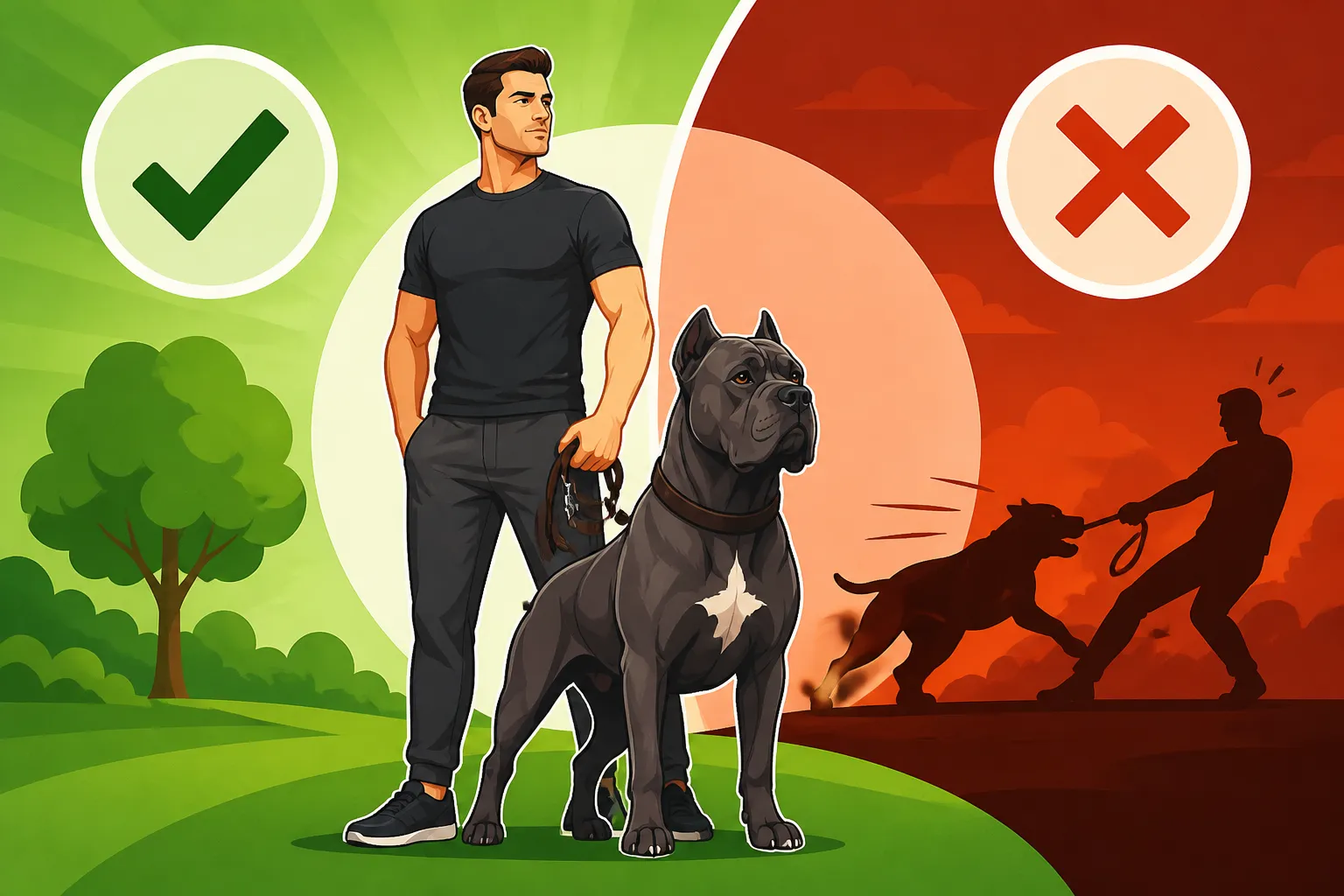
The real test is control, not body size
You do not need to outweigh your Cane Corso to be a capable owner. You do need to be able to keep the dog safe and responsive without relying on a tug-of-war. A well-fitted harness or collar, a sound leash, practiced cues, and enough distance from triggers all matter. So does choosing routes and situations you can manage.
Imagine walking alone and seeing an off-leash dog approaching. If your Cane Corso is still learning to disengage, you need to be able to turn away, create space, and keep the leash secure. If your plan depends on overpowering the dog after it has already lunged, the setup needs work. The goal is to prevent a struggle, not prove you can win one.
The same principle applies at home. If you cannot safely hold your dog while opening the door, do not try to improvise when a courier arrives. Teach the dog to settle behind a gate or on a designated mat, and keep a leash accessible. The household becomes easier to manage when the dog has a familiar routine for predictable moments.
Experience and temperament matter
A first-time guardian-breed owner may find solo management especially demanding. You are responsible for recognizing when the dog is uneasy, deciding whether a greeting is appropriate, and intervening before excitement or suspicion escalates. Experience with friendly family dogs can help, but it is not always the same as experience managing a large, alert dog in public.
Individual temperament matters, too. One Cane Corso may recover quickly from a noise or accept visitors after a calm introduction; another may need more distance and careful management. A puppy’s behavior is not a guarantee of its adult response. If you are choosing a dog, ask about the parents’ temperaments and how the breeder raises and evaluates puppies. For a broader look at fit, read Who a Cane Corso Actually Suits.
A rescue dog can also be a good companion for one person, but get as much information as possible about its history, behavior around strangers and dogs, and comfort with handling. Be honest about what you can manage. The question is not whether the dog deserves a chance; it is whether your home and skills can safely meet its needs.
Compare your actual day with the dog’s needs
A Cane Corso may be content to rest at home after exercise and engagement, but “large dog” does not mean “low effort.” They need routine, training, appropriate movement, and companionship. A yard can help with supervised outdoor time, but it does not replace walks, enrichment, or teaching the dog how to behave around people and everyday distractions.
| Solo-owner situation | More manageable when | More challenging when |
|---|---|---|
| Walking | The dog can walk on a loose leash and respond around distractions | The dog pulls hard, reacts at close range, or is difficult to redirect |
| Visitors | The dog has a practiced place or gated area | The dog rushes the door or guards access to the home |
| Workday | The dog can rest safely and has a realistic care plan | The dog is left too long without a break or becomes distressed alone |
| Vet care | The dog is comfortable with handling and travel | The dog cannot be safely examined or moved without help |
| Emergencies | A trusted person can step in and care instructions are ready | No one can help if you are ill, delayed, or unable to drive |
If several items fall in the challenging column, that does not automatically rule out ownership. It does show where to build skills or support before bringing a dog home. For related questions about home and lifestyle fit, see Whether a Cane Corso Belongs in an Apartment and Whether a Cane Corso Can Be Left During a Work Day.
Build a routine that does not depend on improvising
Solo ownership gets much easier when the same situations happen the same way. A predictable schedule helps you notice changes in appetite, energy, or behavior, and it gives the dog clear expectations. You do not need a rigid minute-by-minute timetable, but the basics—meals, exercise, training, rest, and bathroom breaks—should be dependable.
Train the moments that are hardest to manage alone
Prioritize practical behaviors that make daily life safer: walking without pulling, coming when called in secure settings, waiting at doors, settling on a mat, accepting a leash, and allowing calm handling. Teach these skills in small steps at home before expecting them to work around visitors, traffic, or other dogs.
For example, practice “place” when nothing exciting is happening. Reward the dog for going to a mat and staying there briefly, then gradually add mild distractions. Later, use the same cue when someone knocks, with a gate or closed door as an additional safety layer. A cue is not a substitute for management, but practiced routines can reduce frantic movement when your hands are busy.
Socialization should mean helping a dog remain calm around ordinary sights, sounds, surfaces, and people—not making it greet everyone. A large dog does not need to be everyone’s friend. Neutral behavior and the ability to move away calmly are valuable goals. Why a Cane Corso Should Meet People Without Greeting Them offers a useful perspective on that distinction.
Make the home easier to operate with one pair of hands
Set up gates, a crate if the dog is comfortable using one, a secure yard, and a clear place for walking equipment. Keep the leash, waste bags, treats, and a towel where you can reach them without leaving the dog unattended near an open door. If you use food puzzles or training rewards, keep a supply in a consistent location; Chewy can be one option for restocking routine pet supplies when a store trip is inconvenient.
Plan for transitions. Before opening the front door, secure the dog. Before bringing groceries inside, decide where the dog will wait. Before taking the leash off in the yard, check that the gate is latched. These small habits may seem overly careful until the day a dog slips past you. Prevention is simpler than trying to catch a powerful dog near a street.
A quiet resting area also matters. A dog that can nap while you work or cook is easier to live with than one that follows every movement and becomes unsettled whenever you leave the room. Build independence gradually: reward calm time on a bed, step out briefly, and return without turning every departure into a major event.
Set up supplies around your real routine
The right equipment does not train the dog for you, but it can remove unnecessary friction. Choose a leash and walking setup you can hold securely, food and water bowls that suit the dog, grooming tools you can use safely, and a vehicle arrangement that keeps travel controlled. Ask a qualified trainer or veterinarian for help choosing equipment if you are unsure what fits your dog.
For routine food, cleaning, and enrichment supplies, some owners use Chewy to arrange delivery rather than carrying heavy items home. Keep the focus on the dog’s needs and your storage space: a large bag of food is useful only if you can store it properly and the diet is appropriate for that individual dog. If you are still preparing your home, Fencing and Gear for a Hundred Pound Cane Corso can help you think through practical setup needs.
Arrange backup before you need it
One of the less obvious challenges of owning a Cane Corso alone is having no automatic handoff when life goes sideways. You may be sick, injured, delayed at work, or unable to drive to an appointment. A responsible plan includes at least one person who knows the dog and can help in an emergency.
Find people who can safely handle your dog
Do not assume a friend who likes dogs can manage a large guardian breed. Introduce a potential helper gradually, and make sure the person can follow your handling rules. They should know how the dog responds to visitors, what cues it understands, how to secure doors and gates, and what situations to avoid.
A pet sitter or boarding facility should be assessed for experience, policies, and safety practices. Ask how they handle introductions, emergencies, medication, and dogs who are uncomfortable around unfamiliar people or animals. Be candid about your dog’s behavior. A provider who declines because the setup is not suitable may be making a responsible decision, not judging you.
If no one in your circle can safely take over, identify professional options before an emergency. Some facilities may not accept every dog, and availability can vary. It is better to ask early than to discover during a family emergency that your only option is not equipped for your dog.
Plan for vet visits and physical handling
A routine veterinary appointment can be more complicated when you are alone with a strong dog. Practice getting into the car, waiting calmly, and accepting gentle handling. Call the clinic beforehand to discuss any concerns about reactivity, fear, or difficulty getting the dog onto a scale. The clinic can tell you how to arrange the visit safely.
Do not wait until a dog is ill to discover that it cannot be guided into a vehicle or touched around the paws. Cooperative-care practice—brief, reward-based handling of ears, feet, mouth, and body—can help make ordinary care less stressful. If your dog panics, growls, or snaps during handling, ask your veterinarian about a safe plan rather than forcing the interaction.
For the unexpected, keep medical and contact information in an accessible place. Include your veterinarian’s details, medication instructions if relevant, feeding notes, and the name of someone authorized to help. Chewy may help with ordinary supply deliveries, but essential medication and urgent care arrangements should be made directly with your veterinary team.
Account for costs and housing rules
Solo ownership means you are the person responsible for food, training, routine veterinary care, and unexpected expenses. It also means checking that your housing and insurance arrangements permit the breed. A landlord, homeowners policy, or local rule may create restrictions that are separate from your ability to care for the dog. Verify those requirements before committing.
Think beyond the initial setup. Ask yourself whether you can manage ongoing training, transportation, a sitter when needed, and care if the dog develops a medical issue that affects mobility. A backup fund and a reliable support network are not luxuries for a large dog; they make it more likely you can respond calmly when something goes wrong.
Decide whether solo ownership fits your life
The best way to answer “Can I manage a Cane Corso alone?” is to test your daily routine against the dog you are considering—not an idealized version of the breed. Think about your strength and mobility, but also your schedule, experience, home layout, visitors, finances, and access to help. A person with a modest home and a thoughtful routine may be better prepared than someone with a large yard but no training plan.
Use a practical readiness check
Before bringing a Cane Corso home, make sure you can answer these questions clearly:
- Can I walk and safely redirect a large dog without depending on brute strength?
- Can I provide regular exercise, training, and calm time every day?
- Can I secure the dog when opening doors, receiving deliveries, or meeting visitors?
- Do I have a safe plan for work hours, travel, illness, and emergencies?
- Have I checked housing, insurance, and local requirements?
- Can I afford routine care, training, and unexpected veterinary needs?
- Do I know where to get qualified help if behavior becomes difficult?
A “not yet” answer is useful information. It may mean taking a training class first, improving fencing, arranging a trusted sitter, or waiting until your schedule changes. It does not need to become a permanent no. But ignoring a known gap can put you, the dog, and other people in a stressful position.
Choose support that teaches you, not just the dog
A good trainer should help you understand what your dog is communicating and how to manage the environment, not simply take the dog away and promise a quick fix. Look for experience with large guardian breeds, humane methods, clear explanations, and a plan that includes you as the handler. Ask how the trainer manages safety and what they expect you to practice between sessions. What to Look For in a Cane Corso Trainer can help you prepare those questions.
Group classes may suit a dog who can stay calm around other dogs at a distance. Private work may be more appropriate when the dog is fearful, reactive, or too distracted to learn in a group setting. The right format depends on the individual. If you feel physically unsafe, stop putting the dog into situations that are beyond your current control and seek professional guidance.
A good solo setup is calm and repeatable
One-person ownership works best when the dog is not expected to make decisions for you. You set the distance from strangers, choose the walking route, manage introductions, and decide when the dog rests. The dog learns what to do because the same cues and boundaries show up consistently.
That approach is not about keeping a Cane Corso isolated or treating it as a problem. It is about giving a powerful dog a predictable life and giving yourself enough control to respond thoughtfully. For related reading on management and realistic expectations, see The Handler a Cane Corso Respects, The Structure a Cane Corso Needs Every Single Day, and Whether a Cane Corso Owner Needs a Bigger Vehicle.
Chewy and other retailers can make routine supplies easier to obtain, but the most valuable “equipment” for a solo owner is preparation: training that holds up in real settings, secure management at home, and people you can call when you need help. If those pieces are in place—or you are willing to build them before ownership—a Cane Corso may fit a one-person household. If they are not, waiting and preparing is a responsible choice.
Disclaimer
This article is for general informational purposes only and does not constitute professional advice. Laws, prices and regulations vary by location and change over time. Consult a qualified professional for guidance on your specific situation.