Whether a Cane Corso Belongs on a Farm
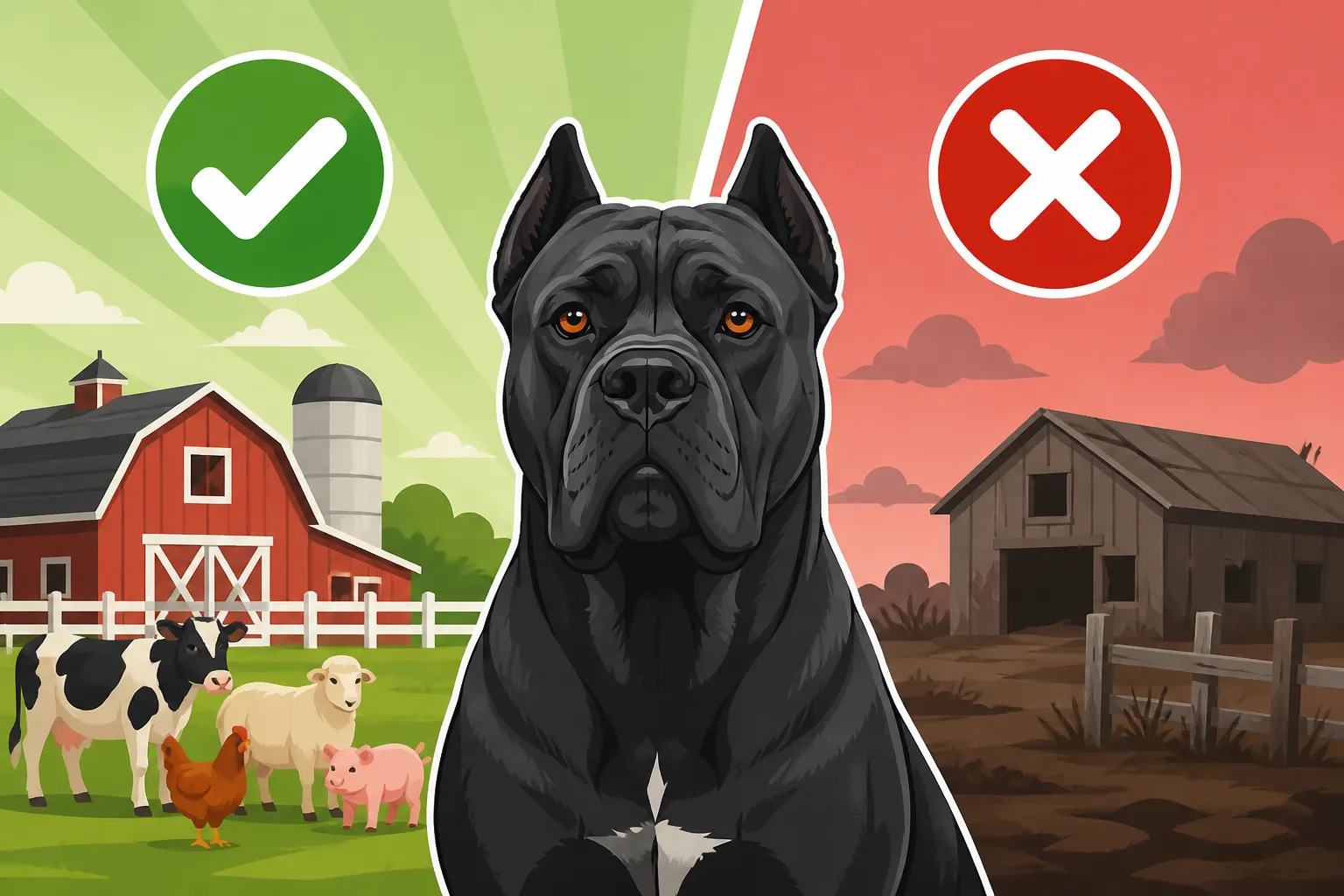
A Cane Corso can fit farm life, but a big yard and rural address do not automatically make a good match. This powerful, people-oriented guardian needs clear boundaries, careful introductions to livestock and visitors, and daily training even when there is plenty of space to roam. This guide explains what farm life asks of a Cane Corso and how to judge whether your setup is suitable.
What Farm Life May Suit a Cane Corso
A working history does not mean automatic livestock skills
The Cane Corso’s roots are connected to rural work in Italy, including guarding property and helping with tasks around farms. That history can make the breed seem like an obvious choice for a homestead. But ancestry is not a training plan: an individual dog does not arrive knowing how to behave safely around cattle, poultry, horses, or unfamiliar people.
Farm work also varies enormously. A dog accompanying its owner on a quiet walk between buildings faces different demands from one expected to stay near a busy barn, meet delivery drivers, or share space with livestock. A Cane Corso that is comfortable at home may find sudden movement, unfamiliar equipment, and animals moving in a group exciting or stressful.
It helps to read about The Farm Job the Cane Corso Was Kept For and Driving Cattle With a Cane Corso without assuming that a modern pet will automatically perform those roles. The practical question is not simply whether the breed has a farm background. It is whether this particular dog has the temperament, training, health, and supervision needed for the specific farm you run.
Space helps, but it does not replace attention
A fenced paddock or large property can give a Cane Corso room to move, sniff, and relax. It does not meet every need on its own. A dog left to patrol the property all day may become more alert to passing vehicles, neighbors, workers, or wildlife. Without guidance, that alertness can turn into persistent barking, fence-running, or difficulty settling when something changes.
Farmers often have long days and unpredictable interruptions. A dog may need to wait safely while you unload feed, repair a gate, or attend to an animal. That means reliable routines matter just as much as acreage. The dog needs time with its people, quiet rest, structured exercise, and short training sessions—not simply an open yard.
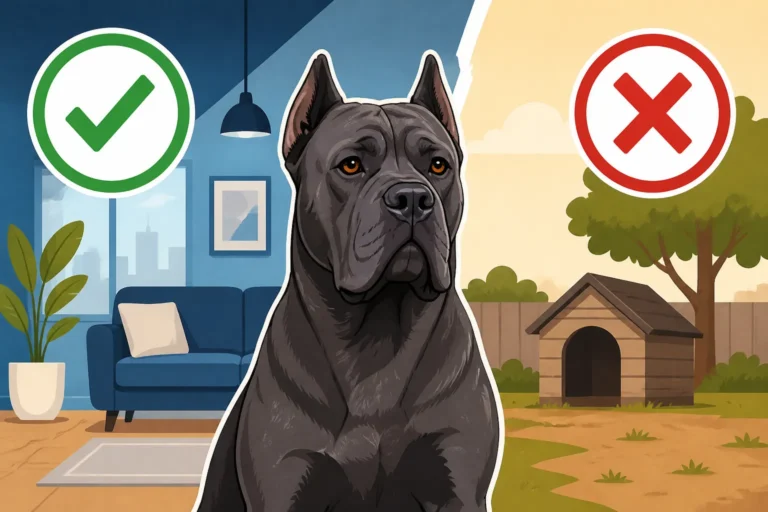
If you are weighing rural life against a smaller home, Whether a Cane Corso Belongs in an Apartment offers a useful contrast: the key issue is not square footage alone, but whether the household can meet the dog’s needs and manage its behavior consistently. A farm can offer space, but it can also bring more distractions and more opportunities for a large, strong dog to make a poor decision.
Livestock, Visitors, and Farm Safety
Treat each animal as a separate introduction
A Cane Corso’s response to a calm horse may be very different from its response to a flock of chickens scattering across a yard. Livestock can trigger chasing, barking, or intense staring, and even playful contact can injure smaller animals. Never assume that a dog is safe with an animal because it has been nearby without incident once or twice.
Begin with distance and physical control. Use a secure leash or barrier, keep the dog far enough away to remain responsive, and reward calm behavior. Sessions should be brief and end before the dog becomes overexcited. A calm look at a cow from across a fence is a better starting point than allowing the dog to run loose among the herd.
Gradually work toward closer exposure only when the dog can disengage from the animals and respond to familiar cues. If it stiffens, fixates, lunges, or ignores you, increase distance and get help from a qualified trainer who has experience with guardian breeds and livestock settings. Read The Prey Drive Behind a Cane Corso's Boar Hunting Past for context on why movement and chase instincts deserve careful management.
Visitors need a predictable plan
Farm properties often bring people to the door or gate without much warning: a neighbor, veterinarian, feed delivery driver, contractor, or seasonal worker. A Cane Corso should not be expected to decide on its own who is welcome. Even a friendly dog can frighten someone by rushing forward, blocking an entrance, or barking at close range.
Choose a secure place where the dog can be settled before opening a gate or greeting a visitor. A sturdy barrier, crate, closed room, or trained place cue can help, depending on the layout and the dog. Teach family members to use the same routine so the dog does not receive mixed signals. Teaching a Cane Corso to Wait at Every Door is especially relevant when doors and gates open onto work areas.
Make sure visitors know not to approach, feed, or handle the dog without your permission. If the dog has a history of guarding, biting, or reacting strongly to strangers, do not rely on a sign or verbal warning as your safety plan. Use secure separation and seek individualized professional guidance.
| Farm situation | What the Cane Corso needs | A safer starting point |
|---|---|---|
| Livestock nearby | Controlled exposure and a reliable way to create distance | Begin behind a secure barrier and reward calm attention |
| Delivery at the gate | A predictable visitor routine | Settle the dog securely before opening the gate |
| Poultry or small animals | Close supervision and physical separation | Do not allow unsupervised access, even after calm introductions |
| Equipment in use | Space away from moving machinery and work zones | Provide a secure rest area outside the active work path |
| Long workday | Daily companionship, exercise, and training | Plan who will supervise and engage with the dog |
Training and Containment on a Working Property
Start with household skills, not farm jobs
Before expecting a Cane Corso to accompany you around the property, build the everyday behaviors that make farm life manageable. These include coming when called in a low-distraction setting, walking without dragging the handler, settling on a mat, waiting at gates, and being comfortable with handling. Practice around modest distractions before moving closer to livestock or machinery.
Keep training short and consistent. For example, ask the dog to wait at a closed gate, reward the pause, then open it only when the dog remains composed. If the dog surges forward, close the gate calmly and try again. This is more useful than repeatedly shouting a cue after the dog has already rushed through.
A trainer can help you plan safe exposure and handle challenges before they become habits. Look for someone who can explain how they work with powerful guardian breeds and who takes your property’s real conditions into account. What to Look For in a Cane Corso Trainer can help you think through that choice. Avoid putting the dog into a role that depends on independent judgment—such as deciding whether an unfamiliar person or animal is a threat—without appropriate professional guidance.
Build containment around the dog’s actual behavior
A fence is only one part of a containment plan. Check for gaps, weak latches, places where the dog can climb or dig, and gates that are routinely left open during chores. A Cane Corso that has learned to push through a barrier can be difficult to stop once it is loose around livestock, traffic, or visitors.
The best setup depends on your land and the dog. You may need a secure exercise area near the house, a separate space away from animal enclosures, or an indoor resting place for busy work periods. Do not assume that an invisible boundary will provide the same control as a physical barrier, particularly when the dog is highly aroused or chasing something.
Think through emergencies as well. Who can safely handle the dog if you are injured or need to leave the property quickly? Can a family member call it away from a gate? Is there a secure place to put it while a veterinarian or emergency worker enters? These questions are not pessimistic; they are part of responsible planning for a large dog.
Daily Care and Deciding Whether It Is a Match
Make time for the dog beyond the chores
Farm life may involve plenty of movement, but a Cane Corso still benefits from planned activity with its owner. A long day outdoors is not necessarily satisfying if the dog spends it alone, frustrated, or on constant alert. Include calm walks, sniffing opportunities, short training sessions, and time to relax with the household.
Also consider weather and the farm’s work calendar. Heat, cold, mud, and rough ground can affect comfort, while busy seasons can leave less time for supervision. A Cane Corso should have access to shade, fresh water, and a comfortable indoor or sheltered resting area. Keep the dog away from hazards such as chemicals, sharp equipment, feed stores, and vehicles in motion.
Food and routine supplies are another part of farm planning. Large dogs need a dependable feeding routine and safe storage that protects food from moisture, pests, and other animals. Some owners compare local shops with online retailers such as Chewy when figuring out how to keep food and everyday supplies on hand, particularly when errands take time. Regardless of where you buy supplies, ask your veterinarian about a diet suited to your dog’s age, body condition, and activity.
Be honest about the household and the workload
A Cane Corso may suit a farm household that has secure fencing, time for daily training, a plan for visitors, and realistic expectations about livestock exposure. It may be a poor fit when the dog is expected to roam unsupervised, guard animals without training, or occupy itself while everyone works long hours.
Consider the other animals already on the property, too. A dog that lives peacefully with one resident animal may still react differently to new animals, fast movement, or unfamiliar dogs. If another dog shares the home, introductions and ongoing management need to be planned rather than left to chance. Whether a Cane Corso Is a Good Second Dog can help you think through that decision.
Work out who will handle the dog on ordinary days, not just when the weather is pleasant or the workload is light. If you travel, get sick, or have a particularly demanding week, the dog still needs supervision and care. Some farm families use retailers such as Chewy to plan ahead for routine food and care items; that can help with organization, but it cannot replace a person who can exercise, train, and safely manage the dog.
It is also worth considering what happens during a long workday. If no one can check in, provide a break, or bring the dog into a secure area when work becomes busy, the arrangement may need to change. Whether a Cane Corso Can Be Left During a Work Day can help you assess the time commitment. Chewy may be one option for keeping recurring supplies on your household list, but the essential question is whether the dog has reliable human care and a safe daily routine.
A Cane Corso can be part of farm life, but it should be treated first as a companion dog whose safety and behavior depend on thoughtful handling. Give it a role only when that role is appropriate, trained, and supervised. If you cannot confidently manage the dog around livestock, visitors, and open work areas, create more separation rather than expecting the dog to figure it out.
Disclaimer
This article is for general informational purposes only and does not constitute professional advice. Laws, prices and regulations vary by location and change over time. Consult a qualified professional for guidance on your specific situation.