The Nerve Disease Cane Corsos Are DNA Tested For
Few things are more heartbreaking than watching your magnificent Cane Corso, a breed known for its strength and vitality, slowly decline due to an insidious neurological condition. This isn't just a concern for breeders; it's a very real fear for anyone who brings one of these loyal guardians into their home. This comprehensive guide will delve into Neuronal Ceroid Lipofuscinosis (NCL), a devastating nerve disease that can affect Cane Corsos, why DNA testing is an absolute game-changer, and how understanding its complexities can empower you to make informed decisions for your beloved companion.
Understanding Neuronal Ceroid Lipofuscinosis NCL in Cane Corsos
When we talk about a "nerve disease" in Cane Corsos, we're specifically referring to Neuronal Ceroid Lipofuscinosis, or NCL. This isn't just a generic term; it’s a specific, progressive neurological disorder that can steal the vitality and cognitive function from these powerful dogs far too soon. It’s a genetic time bomb that, if not screened for, can lead to immense heartache.
What is NCL and How Does It Affect the Brain?
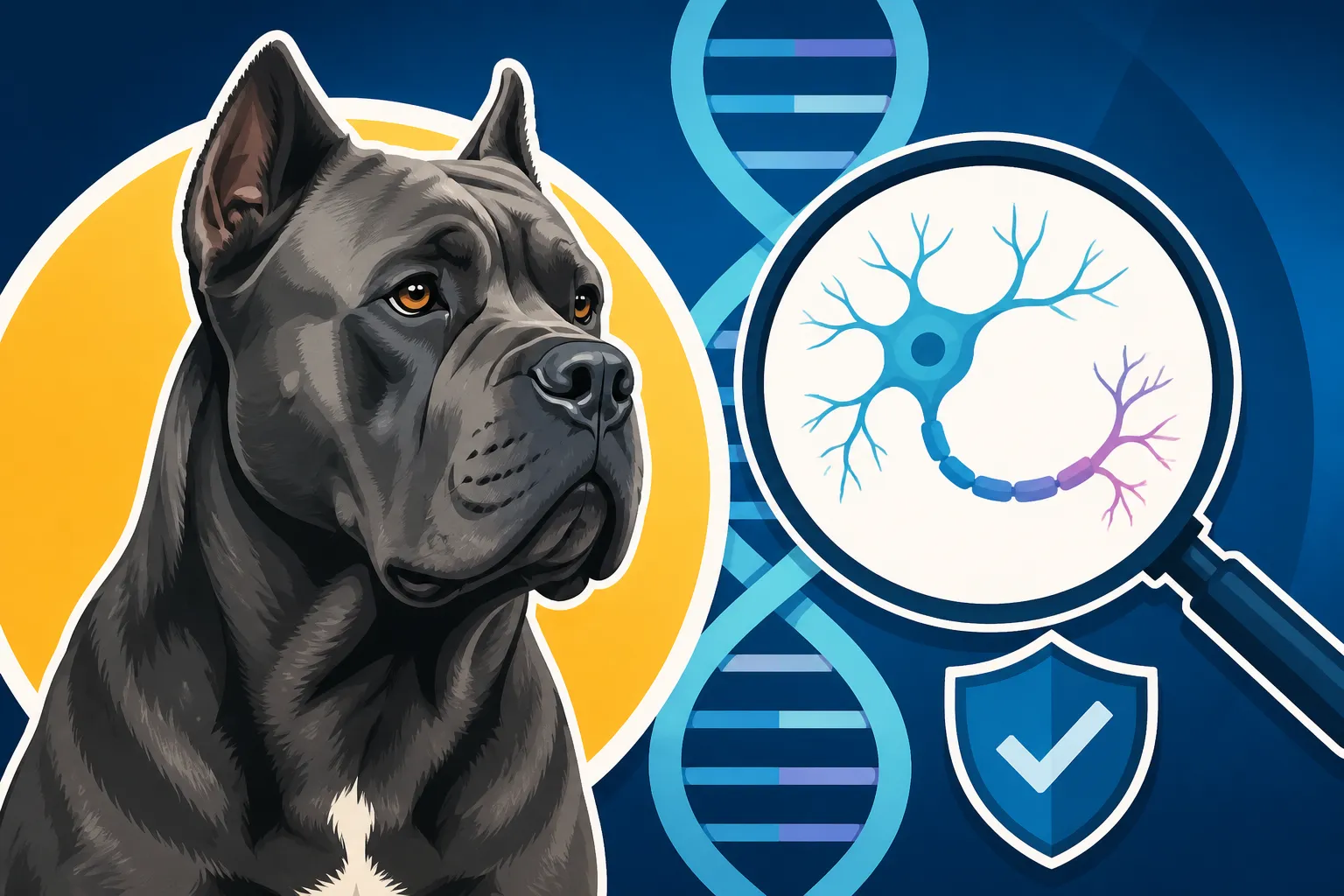
NCL is a group of inherited neurodegenerative diseases that affect various species, including humans and dogs. In simple terms, it's a storage disease. Think of the cells in the brain and nervous system as tiny factories. These factories have a waste disposal system, and in dogs with NCL, that system isn't working correctly. Undigested fatty-protein substances, called lipofuscins, start accumulating within the lysosomes of cells, particularly in the neurons of the brain, retina, and other tissues. This accumulation acts like a slow poison, progressively disrupting normal cell function and eventually leading to cell death.
Imagine tiny garbage trucks in the brain that are supposed to remove cellular waste. In a dog with NCL, these trucks are broken, and the trash just keeps piling up inside the critical brain cells. Over time, this cellular debris chokes the neurons, preventing them from communicating effectively. This leads to a cascade of neurological symptoms that worsen over time, profoundly impacting the dog's quality of life. The brain, which is the command center for everything from movement to personality, slowly becomes overwhelmed, causing irreversible damage.
The Specific NCL Variant in Cane Corsos
While there are many forms of NCL across different breeds and species, Cane Corsos are susceptible to a specific variant, often referred to as NCL8. This is important because it means a specific DNA test can identify this particular mutation. Knowing the exact variant helps researchers and veterinarians understand its unique progression and, most importantly, allows for targeted genetic screening. This isn't a vague catch-all diagnosis; it’s a specific genetic defect that impacts this magnificent breed.
The NCL8 variant in Cane Corsos has been extensively studied, and the genetic marker responsible for it is well-established. This scientific clarity is what makes DNA testing so reliable and essential for responsible breeding. It's not a mystery illness; it's a known genetic flaw that we have the tools to identify and, ultimately, prevent from spreading through the breed. Unlike some diseases with multiple genetic factors, the NCL in Cane Corsos is tied to a single, identifiable mutation, which simplifies the testing and prevention strategies significantly.
Why Cane Corsos Are Prone to NCL
Like many purebred dogs, Cane Corsos can be prone to certain genetic conditions due to the selective breeding practices over generations to maintain desired traits. While these practices help preserve the breed's characteristics, they can also inadvertently concentrate genes for certain diseases if breeders aren't diligent about health screening. NCL is one such condition that surfaced in the breed, likely through a common ancestor who carried the mutation.
The relatively closed gene pool of a purebred dog, while maintaining breed integrity, also means that once a specific mutation appears, it can quickly become widespread if carriers are unknowingly bred. This is precisely why a disease like NCL can become prevalent in a specific breed like the Cane Corso. Without widespread DNA testing, a carrier dog might produce multiple litters, passing on the faulty gene to numerous offspring, some of whom will be carriers themselves, and others who will unfortunately be affected. This highlights the critical need for every Cane Corso owner, and especially every breeder, to understand their dog's genetic status. Ignoring this risk is akin to playing Russian roulette with a puppy's future health.
The Genetics Behind NCL
Understanding NCL means diving into the fundamentals of genetics. It's not just about a dog getting sick; it's about how traits, both good and bad, are passed down through generations. For NCL, the inheritance pattern is key to preventing its occurrence.
Autosomal Recessive Inheritance Explained
NCL in Cane Corsos follows an autosomal recessive inheritance pattern. What does that mouthful mean for you? It means two things are critically important: First, "autosomal" refers to a gene that is not located on the sex chromosomes (X or Y), so it affects males and females equally. Second, "recessive" means a dog must inherit two copies of the faulty gene – one from each parent – to actually develop the disease.
If a dog inherits only one copy of the faulty gene and one normal copy, that dog is considered a "carrier." Carriers typically do not show any symptoms of NCL because the single normal gene copy is sufficient to perform the necessary cellular functions. They are perfectly healthy themselves, which is why this disease can sneakily spread through a breed if not for DNA testing. The danger with carriers is that they can pass on that single faulty gene copy to their offspring. It's like a hidden defect that only becomes apparent when two carriers happen to mate. This is a common pattern for many inherited diseases, making them challenging to eradicate without proper screening.
Understanding Carrier Versus Affected Status
Let's break down the possible genetic outcomes for NCL with a simple explanation:
- Clear (N/N): This dog has two normal copies of the gene. They will not develop NCL and cannot pass the faulty gene to their offspring. This is the ideal status for any Cane Corso.
- Carrier (N/Affected or N/n): This dog has one normal copy and one faulty copy of the gene. As discussed, they are usually healthy and will not develop NCL symptoms. However, they can pass the faulty gene to 50% of their offspring, on average. This is why carriers are so important in the conversation about genetic health – they are silent spreaders if not managed responsibly.
- Affected (Affected/Affected or n/n): This dog has two copies of the faulty gene, one from each parent. This dog will develop NCL symptoms and eventually succumb to the disease. They will also pass a faulty gene to 100% of their offspring, making them unsuitable for breeding.
It's crucial for prospective owners to understand that a "carrier" status doesn't mean the dog is sick or will get sick. It simply means they carry the genetic potential to pass on the disease if bred irresponsibly. Many fantastic, healthy dogs are NCL carriers, and they can live full, wonderful lives as beloved pets. The issue arises only in breeding decisions.
Implications for Breeding Pairs
The implications of these genetic statuses become starkly clear when considering breeding. This is where a simple Punnett square, a basic genetic tool, illuminates the risks:
| Normal (N) | Affected (n) | |
|---|---|---|
| Normal (N) | NN (Clear) | Nn (Carrier) |
| Affected (n) | Nn (Carrier) | nn (Affected) |
- Clear x Clear: All puppies will be Clear (N/N). Zero risk of NCL.
- Clear x Carrier: On average, 50% Clear (N/N) and 50% Carrier (N/n). No puppies will be affected.
- Clear x Affected: All puppies will be Carriers (N/n). Every single puppy will carry the gene, even if they appear healthy.
- Carrier x Carrier: On average, 25% Clear (N/N), 50% Carrier (N/n), and 25% Affected (n/n). This is the pairing that produces affected puppies, and it's the one responsible breeders strive to avoid at all costs.
- Carrier x Affected: On average, 50% Carrier (N/n) and 50% Affected (n/n). Half the litter will develop the disease.
- Affected x Affected: All puppies will be Affected (n/n). Every puppy will develop NCL.
This table clearly illustrates why testing both parents is non-negotiable. Breeding two carriers together, even if both parents are outwardly healthy, means you are knowingly producing puppies who will suffer from this terrible disease. A responsible breeder will use these results to make ethical breeding decisions, ensuring that no puppy they produce will ever be affected by NCL. This preventative measure is one of the cornerstones of maintaining a healthy breed.
DNA Testing: Why It's Crucial for Cane Corsos
The existence of a reliable DNA test for NCL in Cane Corsos is a monumental advantage for the breed. It transforms NCL from an unpredictable curse into a manageable genetic trait that can be systematically phased out through careful breeding. For anyone considering bringing a Cane Corso into their home, demanding proof of NCL clearance is paramount.
The DNA Test for Cane Corso NCL
The NCL DNA test for Cane Corsos is a straightforward, non-invasive procedure. It typically involves a simple cheek swab or a blood sample taken by a veterinarian. This sample is then sent to a specialized genetic testing laboratory. These labs analyze the dog's DNA to identify the specific mutation associated with NCL8 in Cane Corsos. The technology behind it is highly accurate, providing definitive results on whether a dog is Clear, a Carrier, or Affected.
Leading veterinary genetic labs, such as those offered by Canine Health Information Center (CHIC) program members or specific university labs, provide these services. The ease and affordability of the test mean there's really no excuse for a breeder not to screen their dogs. It’s a minimal investment that prevents a lifetime of suffering for a puppy and immense heartache for its future family. Reputable breeders will already have these results readily available for both parents of any litter, and they will be eager to share them with prospective buyers.
Interpreting DNA Test Results
Once you receive DNA test results, they will clearly state your dog's NCL status: Clear, Carrier, or Affected. Understanding what these mean for your specific dog is crucial.
- If your Cane Corso tests as Clear (N/N): Congratulations! Your dog does not carry the NCL gene and will not develop the disease. They also cannot pass it on to any offspring. This is the gold standard for breeding and ownership.
- If your Cane Corso tests as a Carrier (N/n): Your dog carries one copy of the NCL gene. They are healthy and will not develop NCL. However, if you plan to breed, it is absolutely essential that you only breed them to a dog that is Clear (N/N) for NCL. This ensures that none of the puppies will be affected by the disease, though half of the litter will likely be carriers themselves. Responsible management of carriers in a breeding program is key to maintaining genetic diversity while eliminating affected outcomes.
- If your Cane Corso tests as Affected (n/n): This is the most devastating result. Your dog has two copies of the NCL gene and will develop the disease. They should never be bred, as they will pass on a faulty gene to all their offspring, ensuring every single one is at least a carrier.
A responsible breeder should provide you with official documentation from the testing laboratory, not just a verbal assurance. This documentation should clearly list the sire and dam's names, their registration numbers, and their NCL status. If a breeder is hesitant to share these results, it should raise a significant red flag. This transparency is a cornerstone of ethical breeding practices and gives you peace of mind that you're bringing home a puppy with the best possible start. It’s a sad reality that while many breeders are committed to health, some still prioritize profit over the welfare of their dogs, making your due diligence even more important.
Breeder Responsibility and Transparency
Responsible breeding demands full transparency regarding NCL DNA test results. There should be no hidden information, no vague answers, and no excuses. A truly dedicated Cane Corso breeder will have completed all recommended health clearances for their breeding stock, and NCL testing is absolutely on that list. This isn't just a suggestion; it's an ethical imperative.
When you're looking for a Cane Corso puppy, always ask to see the NCL DNA test results for both parents. A reputable breeder will not only have these results but will be proud to share them with you. They will explain what the results mean and how they've used them to ensure the health of their litter. If a breeder tells you their dogs are "vet checked clear" but doesn't offer DNA paperwork, that's not good enough for NCL. A physical exam won't reveal carrier status or future affected status. Only a DNA test can provide that certainty. For deeper insights into understanding health records, you might find useful information on topics like What a Cane Corso CHIC Number Actually Certifies.
Furthermore, a responsible breeder will use the information from the NCL test to make intelligent breeding decisions. This might mean breeding a carrier dog to a clear dog, never breeding two carriers together, and certainly never breeding an affected dog. Their goal is to produce healthy puppies, reducing the incidence of genetic diseases in the breed, not just in their own kennel. This commitment to the breed's future health is a hallmark of an ethical operation.
Recognizing NCL Symptoms and Progression
The insidious nature of NCL means its symptoms can be subtle at first, often dismissed as normal puppy quirks or behavioral issues. However, as the disease progresses, the signs become unmistakable and increasingly heartbreaking.
Early Warning Signs and Onset Age
The onset of NCL symptoms in Cane Corsos typically occurs in early to mid-adolescence, often around 1 to 2 years of age, though it can vary slightly. This age range is particularly cruel because it's when these magnificent dogs are just hitting their stride, physically and mentally. Owners often report subtle changes initially. These might include mild incoordination, especially when navigating stairs or uneven ground. You might notice a slight tremor, particularly in their head or hindquarters, or an increased clumsiness where they stumble or trip more often than seems normal.
Behavioral changes can also be early indicators. A previously confident puppy might start to show increased anxiety, confusion, or even aggression without clear provocation. They might become disoriented in familiar surroundings, stare blankly, or have difficulty responding to known commands. These early signs are often frustrating because they're easily mistaken for training issues or typical adolescent rebellion, making a proper diagnosis challenging until more overt neurological signs appear. It’s crucial to remember that these aren't personality flaws; they are the initial whispers of a serious underlying neurological issue impacting their brain function. To learn more about common health issues that arise around this age, you can check out The Age NCL Symptoms Surface in a Cane Corso.
Behavioral and Motor Skill Decline
As NCL progresses, the symptoms become more pronounced and debilitating. The subtle clumsiness evolves into severe ataxia, which is a loss of full control of bodily movements. Dogs may walk with a wide-based, drunken gait, have difficulty standing up, or repeatedly fall over. Muscle tremors can become more severe and generalized, affecting their entire body. Their coordination for simple tasks, like eating or drinking, deteriorates. Imagine a powerful Cane Corso struggling to simply walk in a straight line or keep its balance – it's truly devastating to witness.
Cognitively, the decline is equally profound. Dogs may experience significant memory loss, forgetting house training, familiar people, or even their own names. They can become disoriented, agitated, or withdrawn. Seizures often develop in the middle to late stages of the disease, adding another layer of distress for both the dog and the owner. Their personality can change dramatically, becoming unrecognizable from the dog you once knew. This is not merely an aging process; it’s a progressive destruction of their neurological integrity, leaving a once-vibrant companion a shell of its former self. Pet insurance providers like Healthy Paws, while not covering pre-existing conditions, emphasize the importance of early diagnosis and genetic screening to avoid such heart-wrenching scenarios.
The Devastating Advanced Stages
In the advanced stages of NCL, the affected Cane Corso's quality of life diminishes severely. Most dogs become completely incapacitated. They may lose the ability to stand or walk independently, becoming recumbent and requiring full assistance for all bodily functions. Severe muscle wasting occurs, further weakening their already compromised bodies. The seizures can become more frequent and intense, often requiring medication, though even then, they might not be fully controlled. Cognitive function is severely impaired, leaving the dog in a constant state of confusion, fear, or blankness.
At this point, the suffering is immense, and the dog requires constant care. The once-proud and powerful Cane Corso is reduced to a fragile patient, unable to interact with their environment or express their needs effectively. This is where owners face the agonizing decision of euthanasia, a final act of love to prevent further suffering. It's a tragic end to a life that should have been long and full of vitality, underscoring the critical importance of preventing this disease through responsible breeding practices and genetic testing.
Living with an NCL-Affected Cane Corso
Caring for an NCL-affected Cane Corso is an incredibly demanding and emotionally taxing journey. It requires immense dedication, patience, and a willingness to adapt to a dog whose needs are constantly changing and often deteriorating.
Managing Daily Life and Providing Comfort
When you have an NCL-affected Cane Corso, daily life becomes a meticulous routine focused on comfort and safety. Their compromised motor skills mean household hazards abound. You'll need to dog-proof your home extensively, removing tripping hazards, blocking stairs, and possibly padding hard surfaces to prevent injury from falls. Non-slip rugs can become essential, especially on slick flooring. Mobility aids, such as harnesses with handles or slings, will become invaluable for helping them up and down, or simply assisting with balance during walks.
Their cognitive decline means consistency in routine is paramount. Try to keep meal times, potty breaks, and sleep schedules as regular as possible to minimize confusion and anxiety. You might need to hand-feed them or provide elevated bowls as their coordination for eating becomes more difficult. Frequent, gentle potty breaks are necessary as incontinence can become an issue. It's about creating a safe, predictable, and supportive environment where your dog feels secure, even as their world becomes increasingly disorienting. Every small adaptation helps ease their daily struggles.
Palliative Care and Veterinary Support
Palliative care for an NCL-affected Cane Corso focuses entirely on minimizing discomfort and maximizing their remaining quality of life. This means working closely with your veterinarian to manage symptoms. Medications can be prescribed to help control seizures, reduce anxiety, or manage any secondary pain that might arise from their mobility issues. Physical therapy, even gentle range-of-motion exercises, can help maintain muscle mass and prevent stiffness, though the underlying neurological decline cannot be reversed.
Nutritional support is also important. As their ability to eat normally might decrease, ensuring they receive adequate nutrition becomes a challenge. Your vet can recommend dietary adjustments or supplements. Regular vet visits, often more frequent than for a healthy dog, are necessary to monitor their condition, adjust medications, and discuss their overall well-being. This journey requires open and honest communication with your vet about your dog's current state and prognosis. While there's no cure for NCL, a dedicated veterinary team can significantly improve an affected dog's comfort. Sadly, as we touched upon in topics like Whether an Affected Cane Corso Can Be Treated at All, the options are limited to symptom management rather than halting the disease.
The Emotional Toll on Owners
Perhaps the most profound impact of NCL is the emotional toll it takes on the owner. Watching your powerful, loving Cane Corso slowly lose its abilities, its personality, and its connection to the world is devastating. It's a grief that unfolds over months, often years, as you witness a gradual decline, knowing there's no cure. Owners often describe feelings of helplessness, frustration, and deep sorrow. The financial strain can also be considerable, as ongoing veterinary care, medications, and specialized equipment add up, even with some support from pet insurance like Healthy Paws for certain aspects of non-pre-existing care.
There's the heartbreaking moment when you realize the dog you loved is no longer truly "there" in the same way, or when the decision for humane euthanasia becomes inevitable. This journey is a testament to the unconditional love owners have for their dogs. Seeking support from fellow Cane Corso owners, online communities, or even pet loss support groups can be invaluable during this incredibly difficult time. It's a burden no owner should have to bear, which makes the emphasis on genetic screening even more critical for the future of the breed.
Breeding Responsibly: Preventing NCL
The power to prevent NCL in future generations of Cane Corsos lies squarely in the hands of responsible breeders. Utilizing DNA testing and making ethical breeding choices are the only ways to ensure this devastating disease becomes a rarity rather than a potential heartache.
Using DNA Test Results in Breeding Decisions
For breeders, DNA test results are not just pieces of paper; they are critical tools for making informed, ethical breeding decisions. The cardinal rule for NCL is simple: Never breed two NCL carriers together. Doing so guarantees that 25% of the litter, on average, will be affected by the disease. This is a non-negotiable principle.
A responsible breeding program will meticulously track the NCL status of all potential breeding dogs. If a dog is a carrier (N/n), they can still be a valuable part of a breeding program to maintain genetic diversity, but they must only be bred to a dog that is Clear (N/N) for NCL. This pairing ensures that no affected puppies will be produced, although approximately half of the puppies will inherit the carrier status. These carrier puppies can then be selectively bred to clear mates in future generations, slowly reducing the carrier prevalence without drastically narrowing the gene pool. This strategic approach is vital for the long-term health of the breed, as simply removing all carriers from the gene pool could inadvertently lead to other genetic issues due to lack of diversity.
The Importance of Testing Both Parents
It sounds obvious, but it bears repeating: you absolutely must test both parents for NCL before planning any litter. Skipping even one parent's test is a gamble with the health and lifespan of every puppy in that litter. Imagine a scenario where you only test the female, and she comes back clear. You might assume everything is fine. However, if the male is an untested carrier, you could still end up with carrier puppies, and if he happens to be an affected dog (a very rare but possible scenario with untested lines), all puppies would be carriers. Even worse, if both parents are untested and both happen to be carriers, you risk a heartbreaking litter of affected puppies.
This is why organizations focused on breed health, and even pet insurance providers like Healthy Paws, advocate for thorough genetic screening from the outset. They understand that preventing these conditions through responsible breeding is far more humane and economically sound than treating them after they arise. Genetic testing for both parents ensures complete transparency and accountability in a breeding program. As covered in Why Both Cane Corso Parents Need the DNA Panel, this truly is a fundamental step.
Ethical Considerations for NCL Carriers
While it is crucial to avoid breeding two carriers together, there's an ongoing discussion about the role of NCL carriers in a responsible breeding program. Some argue that all carriers should be removed from breeding. However, this approach can drastically reduce genetic diversity within the breed, potentially leading to an increased prevalence of other genetic issues by limiting the available healthy breeding stock.
A more balanced and generally accepted approach is to breed carriers strategically. As long as a carrier is only bred to a clear mate, no affected puppies will be produced. The resulting carrier offspring can then be carefully placed in homes with limited registration (meaning they cannot be bred) or kept in breeding programs with strict adherence to pairing them only with clear mates. This method allows valuable traits to be preserved while systematically reducing the prevalence of the NCL gene over generations. It's a thoughtful, long-term strategy that prioritizes both the elimination of disease and the overall genetic health and robustness of the Cane Corso breed. Understanding Whether an NCL Carrier Cane Corso Stays Healthy is a key part of this consideration, affirming that carriers themselves are not at risk, only their potential offspring if improperly bred.
| Parent 1 NCL Status | Parent 2 NCL Status | Outcome for Puppies (Avg.) | Breeding Recommendation |
|---|---|---|---|
| Clear (N/N) | Clear (N/N) | 100% Clear | Ideal Pairing |
| Clear (N/N) | Carrier (N/n) | 50% Clear, 50% Carrier | Recommended Pairing |
| Clear (N/N) | Affected (n/n) | 100% Carrier | Not Recommended (Ethical Concerns) |
| Carrier (N/n) | Carrier (N/n) | 25% Clear, 50% Carrier, 25% Affected | NEVER PAIR |
| Carrier (N/n) | Affected (n/n) | 50% Carrier, 50% Affected | NEVER PAIR |
| Affected (n/n) | Affected (n/n) | 100% Affected | NEVER PAIR |
The table above illustrates the stark reality of genetic outcomes for NCL. Responsible breeders will always strive for "Ideal" or "Recommended" pairings, ensuring that the heartbreaking reality of an NCL-affected puppy is avoided at all costs. For anyone considering a Cane Corso puppy, always ensure you ask about the NCL status of both parents and review their official DNA test certifications. This proactive step can save you and your future companion from an unimaginable journey of suffering. Knowing how to interpret these results, especially when reviewing a dog's pedigree, is also vital, as detailed in Reading a Cane Corso's DNA Results Before You Buy.
Disclaimer
The information provided in this article is for educational and informational purposes only and does not constitute veterinary advice. Always consult with a qualified veterinarian for any health concerns or before making any decisions related to your pet's health and treatment.