The Droving Work That Looks Like Herding in a Cane Corso
It’s a common sight: someone asks about a Cane Corso and inevitably, a well-meaning person brings up herding, picturing these massive dogs gently nudging sheep. But if you’ve ever lived with a Cane Corso, you know "gentle nudging" isn't quite their style, and sheep aren’t typically part of their historical resume. The truth is, the Cane Corso's ancestral work isn't "herding" as most people understand it; it's a far more robust, protective activity known as droving. This guide will clarify the distinction and help you understand how these ancient instincts still shape your modern Cane Corso's behavior today, and how you can manage them.
Understanding the Difference: Herding Versus Droving
Many people use the terms "herding" and "droving" interchangeably, but for dog breeds, they represent vastly different skill sets and temperaments. Confusing the two can lead to misunderstandings about a Cane Corso's true nature and why they behave the way they do. It's crucial for any potential or current owner to grasp this historical context.
What "Herding" Really Means for Dogs
When we talk about herding dogs, images of Border Collies, Australian Shepherds, or Shetland Sheepdogs often come to mind. These breeds possess a strong "prey drive" that has been carefully refined over centuries to gather and control flocks of sheep or cattle. They use a specific set of behaviors:
- The "Eye": A low, intense stare used to intimidate and guide animals.
- "Driving": Pushing animals away from the handler.
- "Fetching" or "Gathering": Bringing animals towards the handler.
- "Flanking": Moving around the edge of the flock.
A true herding dog often works with minimal physical contact, relying on their presence, movement, and specific barks to direct livestock. Their goal is precision, often moving individual animals or small groups. They are typically agile, quick, and possess an almost obsessive focus on the task at hand. If you put a Border Collie with a flock, it will naturally try to organize them. This isn't the Cane Corso's historical job, nor is it how their instincts manifest.
The Ancient Art of "Droving"
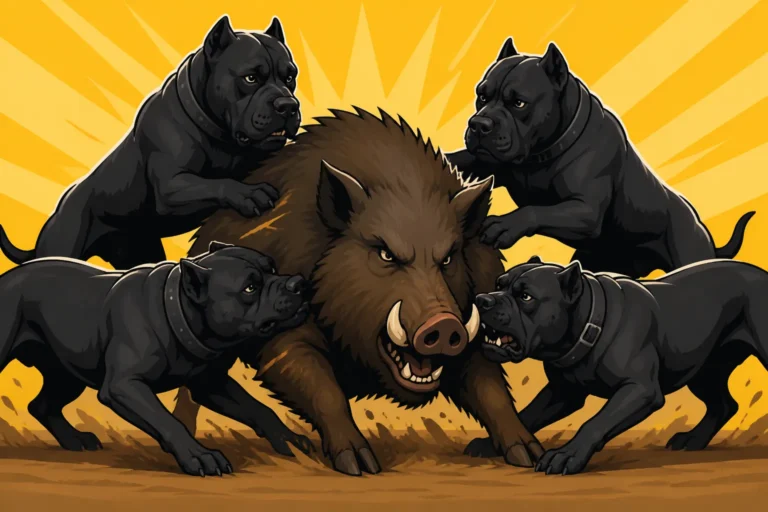
Droving, on the other hand, is a much heavier, more physically imposing task. It involves moving large, often stubborn, livestock like cattle or hogs over significant distances, usually to market or new pastures. This wasn't about gentle guidance; it was about sheer force, intimidation, and protection.
The dogs involved in droving, like the ancestors of the Cane Corso, were less about finesse and more about presence and power. They would bark, nip at heels, and physically block animals, using their size and strength to compel movement. Crucially, they also served as guardians against predators and rustlers during these journeys. Imagine trying to move a herd of 50 head of cattle through rough terrain; you needed a dog that could stand its ground, deter a wolf, and not be easily trampled. This work required immense courage, physical robustness, and an unwavering protective instinct, which is a hallmark of the Cane Corso. You can learn more about their roots in The Roman War Dog Behind the Cane Corso.
Here's a quick comparison of the two distinct roles:
| Feature | Herding Dog (e.g., Border Collie) | Droving Dog (e.g., Cane Corso ancestor) |
|---|---|---|
| Primary Goal | Gather, control, and move livestock gently. | Drive, deter, protect, and physically compel movement. |
| Technique | "Eye," flanking, driving, fetching, nipping. | Barking, blocking, nipping, physical presence, guarding. |
| Physicality | Agile, fast, light contact. | Strong, powerful, heavy contact, robust. |
| Instinct Focus | Prey drive refined for organized control. | Protective, territorial, strong drive to manage and defend. |
| Danger Level | Low-risk guidance. | High-risk confrontation with large animals/predators. |
| Example Task | Moving sheep through a gate. | Moving a herd of cattle to market, fending off wolves. |
The Cane Corso's Historical Role in Droving
The Cane Corso, originating from Southern Italy, was bred for a variety of tasks on the traditional Italian masseria, or farmstead. These weren't fluffy, pampered pets; they were serious working dogs whose survival depended on their efficacy. Their utility was rooted deeply in their ability to handle large, often dangerous, animals and protect property.
Guardians of the Italian Masseria
On the sprawling Italian farms, the Cane Corso served as an all-around utility dog. They were invaluable for protecting the family, the livestock, and the property from intruders – both human and animal. This wasn't just about standing guard; it was about active management of the farm's assets. A significant part of this management involved the livestock. Their job was to keep animals within designated areas, move them when needed, and most importantly, defend them. This protective aspect is a core part of The Farm Job the Cane Corso Was Kept For.
They were a visible deterrent. Their impressive size and formidable presence alone would often be enough to make a would-be thief or predator think twice. If that failed, the Cane Corso was more than capable of engaging directly. This deep-seated guardian instinct meant they weren't just moving animals; they were asserting control and maintaining order, a characteristic that still resonates in the breed today. They learned to assess situations quickly and respond with appropriate force, from a warning bark to a physical intervention.
Driving Cattle to Market and Pasture
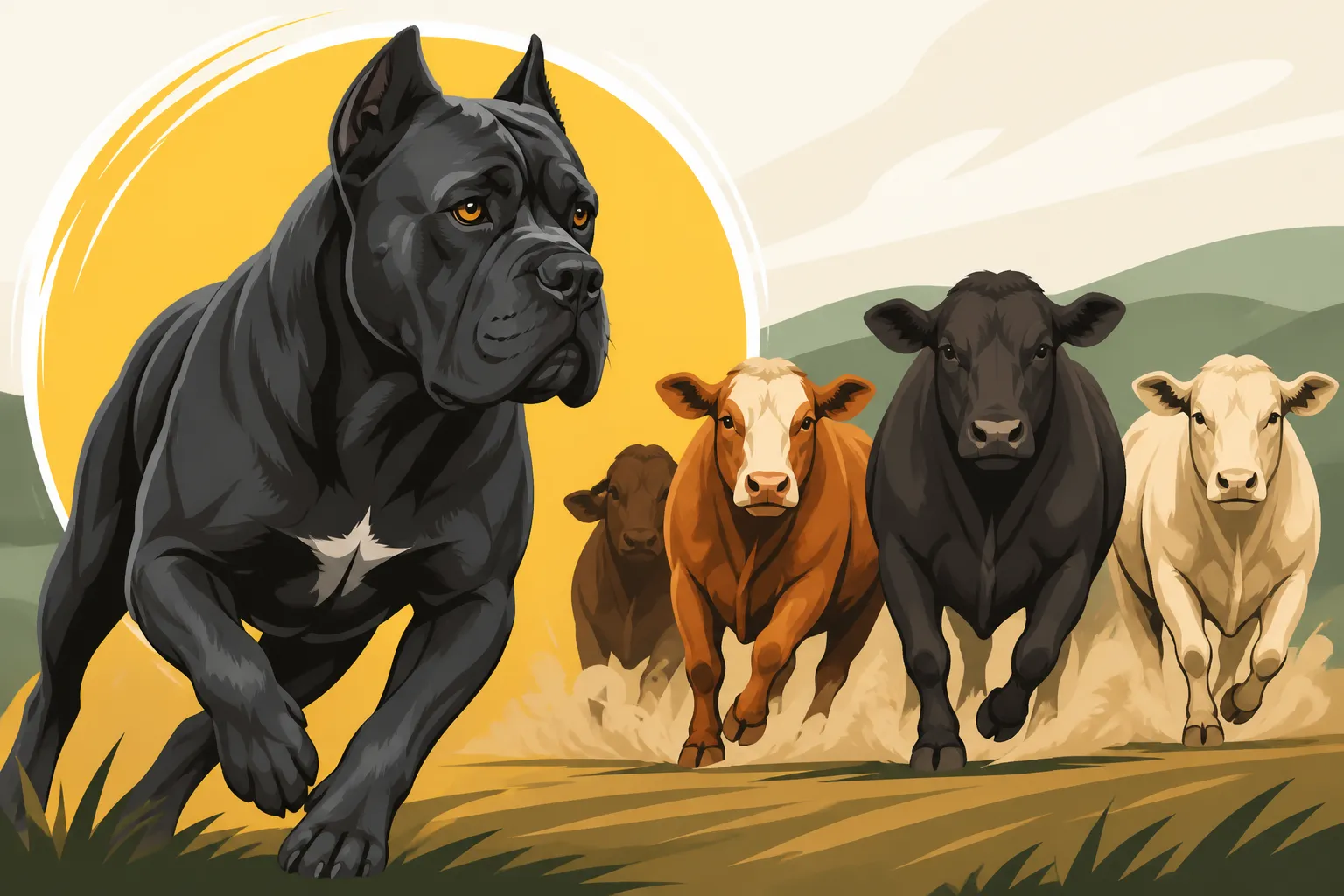
Imagine a time before trucks and trailers, when livestock had to be walked for miles. This is where the Cane Corso's droving skills truly shone. They were crucial in Driving Cattle With a Cane Corso. A handful of these powerful dogs could keep a herd of cattle moving, preventing stragglers, steering them away from fields, and ensuring their safe arrival. This task required strength, unwavering focus, and a willingness to engage physically with animals much larger than themselves.
They would use nips to the heels to get stubborn cattle moving, or strategically place themselves to block an animal trying to break from the herd. Their bite was strong, their presence intimidating, and their resolve unshakeable. This wasn't a job for a dog that was easily scared or distracted. The Cane Corso's direct ancestors, the Roman Molossers, were similarly employed in ancient times, establishing a long lineage of powerful working dogs. You can trace this history in The Roman Molossers the Cane Corso Descends From. This practical, no-nonsense approach to livestock management is a far cry from the delicate maneuvers of a sheepdog. They were the security detail and the cattle drivers, all rolled into one impressive package.
How Droving Instincts Manifest in Modern Cane Corsos
Even if your Cane Corso has never seen a cow in its life, those ancient droving instincts are still very much alive, shaping their everyday behaviors in subtle and not-so-subtle ways. Understanding these manifestations can help you appreciate your dog's unique personality and avoid misinterpreting their actions.
The "Collector" Tendency
One of the most common ways a Cane Corso's droving instinct shows up in a modern home is their tendency to "collect" or "contain" their family members. While they won't round you up like sheep, you might notice your Cane Corso trying to keep everyone in the same room, especially if someone tries to leave. They often position themselves in doorways or hallways, subtly (or not-so-subtly) blocking paths to keep the "herd" together.
For instance, if you're in the living room and your child heads to their bedroom, your Cane Corso might get up and follow, then lie down near the door, creating a gentle barrier. This isn't always malicious; it's often their way of keeping track of their family and ensuring everyone is "safe" within their perceived territory. They are maintaining the integrity of their flock. This can be particularly pronounced when guests are over, as they might try to keep visitors contained in one area, subtly discouraging them from wandering through the house.
Spatial Awareness and Boundary Setting
Cane Corsos have an incredible sense of spatial awareness and a natural drive to set and enforce boundaries. This comes directly from their droving and guarding background, where knowing the limits of the farm or pasture was paramount. In a home environment, this translates into a dog who understands the layout of your house and yard, and will often patrol these areas. They are constantly monitoring their territory.
You might notice your Cane Corso walking the perimeter of your yard, checking fence lines, or lying in a spot where they can oversee the most activity, like a vantage point. When a new person enters their space, they often "size them up," maintaining a respectful distance while observing. They learn what belongs and what doesn't, and will often alert you to anything out of place. This isn't just general guarding; it’s an active assessment and maintenance of their defined space and the beings within it. Their instinct to patrol and defend boundaries is a key aspect of What a Cane Corso's Guardian Instinct Actually Is. It’s why some Cane Corsos bark at everything that passes their window or fence line – they are vocally setting boundaries. The Cane Corso That Barks at Everyone Who Passes is a common frustration tied directly to this instinct.
Training and Managing Droving-Related Behaviors Today
Recognizing these powerful instincts is the first step, but the real work lies in managing and training your Cane Corso to channel them appropriately. These are not dogs you can simply ignore; their drives are strong and require consistent, clear guidance.
Channeling Instinct into Productive Outlets
Since your Cane Corso likely won't be driving cattle, it's essential to find modern outlets for their innate desires to work, manage, and protect. Ignoring these needs can lead to frustration, destructive behaviors, or anxiety in your dog.
- Structured Exercise: While they aren't marathon runners, Cane Corsos need regular, structured exercise. This doesn't just mean a quick romp in the yard. Think long, leashed walks where they are focused on you. They benefit from activities that engage both their body and mind. Consider activities like long-line work in safe, open spaces, or even just long walks in varied environments where they can explore scents. Ninety Minutes a Day and a Cane Corso's Mind is not an exaggeration for these dogs; they thrive on activity that provides purpose.
- Job Training: Give them a "job" at home. This could be anything from learning complex obedience commands to carrying a weighted backpack on walks (once fully grown and cleared by a vet). Some owners find success with protection sports (with qualified trainers) or even just advanced obedience that requires focus and discipline. Scent work, where they use their powerful noses to find hidden items, is another excellent way to engage their minds and satisfy their natural drive to explore and "hunt" in a controlled manner.
- Mental Enrichment: Puzzle toys, interactive feeders, and chew toys can provide mental stimulation and help satisfy their need to "work." Consider robust toys available from retailers like Chewy, designed for powerful chewers. A tired Cane Corso, mentally and physically, is usually a well-behaved Cane Corso.
Setting Clear Boundaries and Expectations
A Cane Corso needs a strong, consistent leader who provides clear rules and boundaries. Without this, they will often step up to fill the leadership vacuum, sometimes with undesirable results given their protective nature.
- Consistent Leadership: From day one, establish that you are the decision-maker. This doesn't mean harsh corrections, but rather consistent enforcement of rules. Teach them to "place" or go to their mat when guests arrive, or to wait at doors before you. These small, consistent acts build a foundation of respect and understanding. The Structure a Cane Corso Needs Every Single Day is non-negotiable.
- Socialization, Not Free-for-alls: Early and ongoing socialization is vital, but it must be structured. This means exposing them to various sights, sounds, people, and other calm, well-behaved dogs, all under strict control. The goal isn't for them to be best friends with every dog or person, but to learn neutrality and appropriate responses. They should learn to be calm and observant, not reactive.
- Managing Guarding Instincts: Your Cane Corso will guard. It's inherent. The goal isn't to eliminate it, but to manage what they guard and how. Teach them that you are responsible for guarding the home and family. When the doorbell rings, teach them to go to their "place" and remain calm, allowing you to handle the situation. This teaches them that their alerting is appreciated, but the "response" is your job. This is crucial for avoiding issues like A Cane Corso That Guards Its Bowl From the Family or A Cane Corso Meeting Guests at the Front Door.
- Professional Guidance: Given the power and intelligence of a Cane Corso, professional training is highly recommended, especially if you're a first-time large breed owner. A qualified trainer can help you understand your dog's instincts and teach you how to effectively communicate and manage them. Remember, Why a Cane Corso Is Not a First Dog is a common saying for a reason; they require an experienced hand. A good trainer will help you pick appropriate gear, like a sturdy harness or lead, which you can find readily on platforms like Chewy, ensuring it's durable enough for a strong dog.
By understanding the historical role of droving in the Cane Corso's lineage, you can better appreciate their unique traits and proactively shape them into a well-adjusted, confident, and beloved family member.
Disclaimer
This article is for general informational purposes only and does not constitute professional advice. Laws, prices and regulations vary by location and change over time. Consult a qualified professional for guidance on your specific situation.