The Daily Ration an Adult Cane Corso Actually Needs
It's incredibly common to find yourself staring at that giant bag of kibble, utterly baffled about how much to pour into your magnificent Cane Corso's bowl each day. These aren't dainty little lapdogs, and their nutritional needs are robust, reflecting their imposing size and strength. Getting it wrong can lead to serious health issues, from rapid growth problems in puppies to obesity and joint strain in adults. This comprehensive guide is here to help you confidently determine the ideal daily ration for your adult Cane Corso, ensuring they thrive and stay healthy.
Understanding the Foundation of Cane Corso Nutrition
Feeding a Cane Corso isn't just about filling a bowl; it's about providing the right balance of nutrients to support their unique physiology as a large, athletic breed. Their dietary needs differ significantly from smaller dogs, and understanding these fundamentals is the first step to a healthy, well-nourished companion. You're not just feeding a dog; you're fueling a finely tuned, powerful animal.
Why Giant Breed Formulas Matter
When you're looking at dog food options, you'll often see specific formulas for "large breed" or "giant breed" dogs. This isn't just marketing fluff; it's crucial for your Cane Corso's long-term health. These formulas are specifically engineered with different nutrient profiles than standard adult dog foods. For example, they often contain lower levels of calcium and phosphorus, which is absolutely vital for managing their rapid growth rate in puppyhood and maintaining optimal bone health in adulthood. Too much calcium, especially during their formative months, can actually contribute to developmental orthopedic diseases like hip and elbow dysplasia, which we want to avoid at all costs.
Even as adults, giant breed formulas often consider their slower metabolism and tendency towards joint issues. They might include natural joint support ingredients and be formulated to help maintain a healthy weight more effectively. Think of it this way: a race car needs a different fuel blend than a minivan, even if both run on gasoline. Your Cane Corso is definitely a high-performance machine, even if they spend a lot of time napping on the couch!
Balancing Protein, Fat, and Carbohydrates
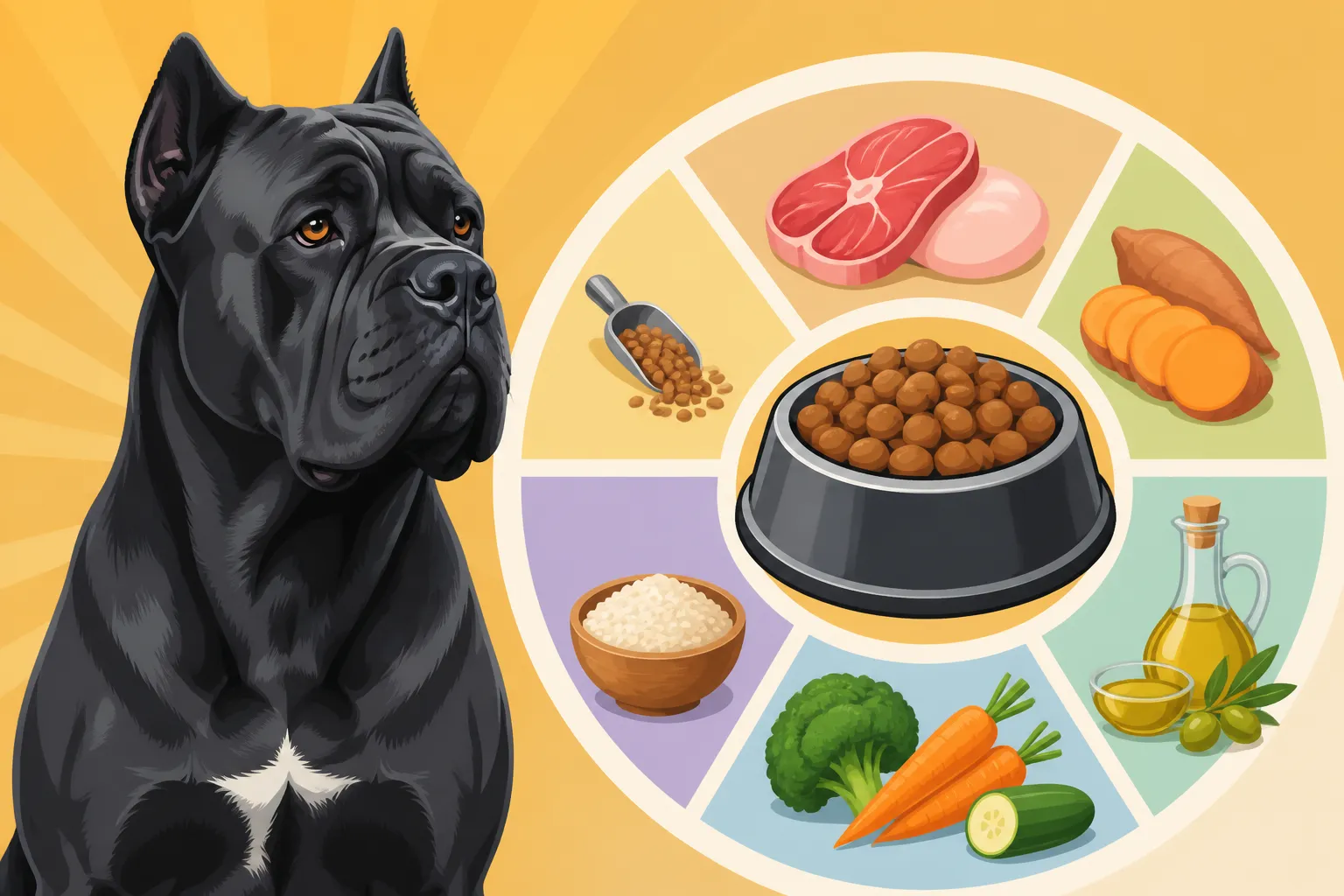
Just like humans, dogs need a balanced diet of macronutrients: protein, fat, and carbohydrates. For an adult Cane Corso, high-quality protein is paramount. They are muscular dogs, and protein is essential for maintaining that muscle mass and supporting cellular repair. Look for foods where a named meat source (like "chicken meal," "lamb," or "beef") is among the first ingredients. However, "high protein" doesn't necessarily mean "excessive protein" – too much of anything can cause digestive upset or other issues.
Fats are concentrated sources of energy and are crucial for healthy skin, a shiny coat, and the absorption of fat-soluble vitamins. Omega-3 and omega-6 fatty acids are particularly important for inflammatory responses and overall health. Carbohydrates provide readily available energy and fiber, which aids digestion. Complex carbohydrates from sources like sweet potatoes, brown rice, or oats are generally preferred over simple, refined carbs. The key is balance; no single macronutrient should be overly emphasized at the expense of others, unless specifically recommended by your vet for a particular health condition.
Calculating Your Cane Corso's Daily Calorie Needs
This is where many owners get tripped up, and it's totally understandable! There isn't a one-size-fits-all answer because every Cane Corso is an individual. Their age, activity level, metabolism, and even the climate they live in can all affect how many calories they burn and, therefore, how many they need to consume. Guessing can lead to an underweight dog, or more commonly, an overweight one, which puts immense strain on their joints. Why a Lean Cane Corso Keeps Its Hips Longer is a great read to understand the importance of this.
Factors Influencing Calorie Requirements
Consider these variables when trying to dial in your Cane Corso's daily caloric intake:
- Age: Growing puppies have incredibly high caloric needs to fuel their rapid development, but adult dogs' needs stabilize. Senior dogs, often less active, may require fewer calories to avoid weight gain.
- Activity Level: Is your Cane Corso a couch potato who gets a leisurely stroll twice a day, or are they a working dog involved in protection sports, long hikes, or regular rigorous exercise? A highly active dog will naturally burn significantly more calories.
- Metabolism: Just like people, some dogs have faster metabolisms than others. You might have two Cane Corsos of the same age and activity level, and one just needs more food to maintain condition.
- Reproductive Status: Pregnant or lactating females have vastly increased caloric and nutrient demands.
- Climate: Dogs living in colder climates might need slightly more calories to maintain body heat, while those in hot climates might have slightly reduced needs during peak heat.
- Health Status: Certain medical conditions can affect appetite or nutrient absorption, requiring adjustments under veterinary guidance.
Using the Resting Energy Requirement RER as a Starting Point
While a precise calculation can be complex, a good starting point for adult dogs is the Resting Energy Requirement (RER). This is the energy required for a dog at rest in a thermoneutral environment, essentially just to keep their basic bodily functions running. It's not their total daily need, but it provides a baseline.
Here's a common formula for RER (though consult your vet for precise figures):
RER in kcal/day = (Body weight in kg)^0.75 x 70
Once you have the RER, you'll multiply it by an "activity factor" to estimate their total daily caloric needs (DER – Daily Energy Requirement).
| Activity Level | Activity Factor (Approx.) |
|---|---|
| Neutered Adult (Sedentary) | 1.4 – 1.6 |
| Intact Adult (Active) | 1.6 – 1.8 |
| Working/Active Dogs | 2.0 – 5.0 |
| Weight Loss (Under Vet Guidance) | 1.0 – 1.2 |
| Weight Gain (Under Vet Guidance) | 1.8 – 2.0 |
Example: Let's say you have a 100-pound (approx. 45 kg) neutered adult Cane Corso who is moderately active.
- Convert weight to kg: 100 lbs / 2.2 = 45.45 kg
- Calculate RER: (45.45)^0.75 x 70 ≈ 1400 kcal/day (using a calculator, 45.45^0.75 is roughly 16.5)
- Apply activity factor: For a moderately active, neutered adult, let's use 1.6.
1400 kcal/day * 1.6 = 2240 kcal/day
So, a rough estimate for this Cane Corso would be around 2240 calories per day. This is an estimate, and you'll need to monitor your dog's weight and body condition closely and adjust as needed. Your vet is always the best resource for precise calculations and individualized feeding plans. Don't forget, the caloric density varies significantly between dog foods, so always check the bag's specific calorie count per cup or gram!
Choosing the Right Food for Your Adult Cane Corso
With so many options out there, from kibble to raw, choosing the right food can feel overwhelming. The key is to select a high-quality option that meets your Cane Corso's specific nutritional needs and fits your lifestyle and budget. Remember, what works for one dog might not work for another.
Kibble vs. Raw vs. Fresh Diets
Each feeding approach has its pros and cons, and it's essential to understand them before making a decision for your Cane Corso.
- Kibble: This is the most common and often most convenient option. High-quality kibbles designed for large or giant breeds can provide complete and balanced nutrition. They are typically shelf-stable, easy to measure, and generally the most affordable. When selecting kibble, prioritize brands that list real meat as the first ingredient and avoid excessive fillers, artificial colors, and flavors. Many reputable brands offer formulas that consider the needs of deep-chested breeds like the Cane Corso. You can find a vast selection of these on sites like Chewy or Amazon, allowing you to compare ingredients and customer reviews easily.
- Raw Diets (BARF – Biologically Appropriate Raw Food or Prey Model Raw): Advocates for raw feeding believe it's closer to a dog's ancestral diet, offering benefits like improved digestion, better coat health, and cleaner teeth. However, raw feeding requires meticulous research and preparation to ensure it's nutritionally balanced and safe, as there are risks of bacterial contamination for both dog and handler. It's absolutely critical to ensure a raw diet is complete and balanced, often requiring careful balancing of muscle meat, organ meat, and bone. Consulting with a veterinary nutritionist is highly recommended if you choose this path.
- Fresh/Cooked Diets: These diets involve preparing cooked meals for your dog at home, often using human-grade ingredients. Similar to raw, this approach requires careful formulation to ensure it's nutritionally complete and balanced, which can be very difficult for a layperson. However, it allows for complete control over ingredients, which can be beneficial for dogs with sensitivities or allergies. Several services now offer pre-portioned, fresh-cooked meals delivered to your door, like Ollie, which can be a convenient way to provide this type of diet while ensuring nutritional completeness. Just remember to introduce any new food gradually to avoid stomach upset. Why a Cane Corso Has Loose Stools on New Food covers this in more detail.
Deciphering Dog Food Labels
Understanding a dog food label is like reading a secret code, but once you crack it, you gain so much power in making informed decisions for your Cane Corso. The "guaranteed analysis" tells you the minimum percentages of crude protein and crude fat, and maximum percentages of crude fiber and moisture. While these are important, they don't tell the whole story.
The ingredient list is equally, if not more, crucial. Ingredients are listed by weight, so the first few ingredients make up the bulk of the food. Look for whole, identifiable protein sources (e.g., "deboned chicken" or "lamb meal") at the top. Avoid vague terms like "meat meal" or "meat by-products" without further specification. Pay attention to the types of carbohydrates and fats, too. Look for wholesome grains or vegetables and healthy fats like chicken fat or salmon oil. Always check the caloric content (kcal per cup or per kg) which is usually listed, as this is essential for calculating your Cane Corso's daily ration.
Mealtime Habits and Avoiding Bloat
Feeding your Cane Corso isn't just about what you feed them, but how and when. These giant, deep-chested dogs are particularly prone to Gastric Dilatation-Volvulus (GDV), commonly known as bloat, which is a life-threatening emergency. Establishing good mealtime habits can significantly reduce this risk and promote healthy digestion. Bloat and What a Cane Corso's Deep Chest Costs highlights the severity of this condition.
The Importance of Split Meals
One of the most critical habits for a Cane Corso is feeding them multiple, smaller meals throughout the day rather than one large one. For an adult Cane Corso, two to three meals are ideal. A large single meal can lead to excessive gas and expansion of the stomach, increasing the risk of bloat. When the stomach is distended, it's more likely to twist on itself, cutting off blood supply.
By splitting the daily ration into two or even three servings, you keep the stomach from becoming overly full at any one time. This also aids in more consistent digestion and nutrient absorption. For example, if your Cane Corso needs 2,500 calories a day, don't give them all 2,500 in one go. Instead, give them 1,250 in the morning and 1,250 in the evening, or even break it down further if your schedule allows. This simple change can make a world of difference in mitigating the risk of a terrifying health crisis.
Slow Feeders and Meal Timing
Beyond splitting meals, how quickly your Cane Corso eats can also play a role in their digestive health and bloat risk. Many Cane Corsos are gulpers, scarfing down their food in mere seconds. Rapid eating can lead to them ingesting a lot of air along with their food, contributing to stomach distension. This is where slow feeder bowls become invaluable.
Slow feeder bowls are designed with ridges, mazes, or obstacles that force your dog to eat around them, significantly slowing down their consumption. You can find many options on sites like Chewy or Amazon. Another trick is to spread their kibble out on a large baking sheet or use a food-dispensing puzzle toy, making them work for their meal and eat at a more leisurely pace. The Mealtime Habits That Turn a Cane Corso's Stomach offers more insights into this.
Furthermore, timing your Cane Corso's meals around their exercise is essential. Avoid feeding them immediately before or after strenuous activity. A general rule of thumb is to wait at least an hour before and after exercise to offer food. This allows their stomach to settle and reduces the chance of twisting. A relaxed mealtime environment, free from stress or competition with other pets, also contributes to better digestion.
Adjusting the Ration for Life Stages and Activity Levels
Your Cane Corso's caloric needs aren't static; they will change throughout their life. What works for a boisterous young adult won't be suitable for a sedentary senior or a highly active working dog. Constant vigilance and adjustments are necessary to maintain their optimal body condition.
Weight Management: Too Thin or Too Heavy
Regularly assessing your Cane Corso's body condition is more important than relying solely on the number on the scale. You want to be able to easily feel their ribs when you run your hands along their side, but not see them prominently. There should be a noticeable waist tuck when viewed from above, and their belly should tuck up when viewed from the side.
- If your Cane Corso is too thin: You might be seeing ribs, hip bones, or vertebrae, and there's little to no fat cover. This could indicate they aren't getting enough calories for their activity level, or there might be an underlying health issue. Increase their daily ration slightly and monitor their weight over a couple of weeks. If they don't gain weight or continue to appear too thin, a vet visit is in order to rule out any medical causes.
- If your Cane Corso is too heavy: You might struggle to feel their ribs, their waist tuck is gone, and they may have a rounded or sagging belly. Obesity puts immense strain on their joints, heart, and other organs, shortening their lifespan and increasing the risk of diseases like arthritis and diabetes. What Extra Weight Does to a Cane Corso's Hips explains this risk clearly. To address this, carefully reduce their daily caloric intake, increase their exercise (if appropriate for their joint health), and consider switching to a "weight management" or "light" formula. Always make changes gradually and consult your vet for a safe weight loss plan. Slimming an Overweight Cane Corso Safely is a great resource.
Impact of Activity and Age
As mentioned earlier, activity level is a huge determinant of caloric needs. A Cane Corso engaged in rigorous daily training or working activities will need significantly more fuel than one whose days are spent mostly lounging. If you notice a change in your dog's energy levels or body condition correlating with a change in their activity, it's time to adjust their food. For instance, if you start a new training regimen with long walks or scent work, you might need to slightly increase their food. Conversely, if an injury or illness necessitates a period of reduced activity, you'll need to cut back.
Age also brings significant changes. Growing puppies need dense, calorie-rich food to support their incredible growth, but this needs to be carefully managed to prevent overly rapid growth. The Growth Curve a Cane Corso Follows to Nineteen Months elaborates on this. As they mature into adulthood, their growth slows, and their caloric needs stabilize. Once they reach their senior years, usually around age 7-8 for Cane Corsos, their metabolism often slows down, and their activity levels naturally decrease. What Changes in a Cane Corso After Its Eighth Birthday is essential reading for senior care. At this point, switching to a senior-specific formula or simply reducing their portion size to prevent weight gain is often necessary. Always monitor their individual needs, as some senior Cane Corsos remain quite active while others become very sedentary.
Supplements: Are They Necessary?
The world of canine supplements can be a minefield of conflicting information and persuasive marketing. For a Cane Corso, certain supplements might be genuinely beneficial, while others are simply unnecessary if they are already on a high-quality, balanced diet. It's crucial to approach supplements with a critical eye and always, always consult your veterinarian before adding anything new to your dog's regimen.
Joint Support for Large Breeds
Given the Cane Corso's size and predisposition to joint issues like hip and elbow dysplasia, joint supplements are perhaps the most commonly considered and often recommended addition to their diet. Ingredients like glucosamine, chondroitin, and MSM are popular choices, believed to support cartilage health and reduce inflammation. Omega-3 fatty acids (EPA and DHA), typically from fish oil, also have powerful anti-inflammatory properties that can benefit joint health, skin, and overall well-being.
While a high-quality giant breed food may already include some of these ingredients, the therapeutic levels in supplements are often higher. Starting a joint supplement regime preventatively, especially in an active adult Cane Corso, is a conversation worth having with your vet. If your Cane Corso already has diagnosed joint issues, these supplements can often be part of a multi-modal management plan to improve comfort and mobility. Whether a Cane Corso Benefits From Joint Supplements provides more context here.
Probiotics and Digestive Health
Digestive upset, characterized by loose stools, gas, or occasional vomiting, can sometimes plague even the most well-fed Cane Corso. Changes in diet, stress, or even just individual sensitivities can disrupt their gut microbiome. This is where probiotics can come into play. Probiotics are beneficial bacteria that help maintain a healthy balance in the gut, aiding digestion and nutrient absorption.
If your Cane Corso experiences frequent digestive issues, a probiotic supplement might be helpful. It can also be particularly useful during times of stress, after antibiotic treatment, or when transitioning to a new food. However, not all probiotics are created equal. Look for reputable brands that list specific bacterial strains and colony-forming units (CFUs) to ensure efficacy. Again, discuss with your vet to see if a probiotic could benefit your individual Cane Corso. Whether a Cane Corso Needs a Probiotic is a good resource to consider.
Remember, feeding your adult Cane Corso is an ongoing process of observation, adjustment, and collaboration with your veterinarian. What they need at two years old as an energetic protector will shift as they age or if their lifestyle changes. By understanding their nutritional needs, choosing quality food, practicing good mealtime habits, and staying attuned to their body condition, you'll be well on your way to ensuring your magnificent Cane Corso enjoys a long, healthy, and happy life by your side.
Disclaimer
This article is for general informational purposes only and does not constitute professional advice. Laws, prices and regulations vary by location and change over time. Consult a qualified professional for guidance on your specific situation.