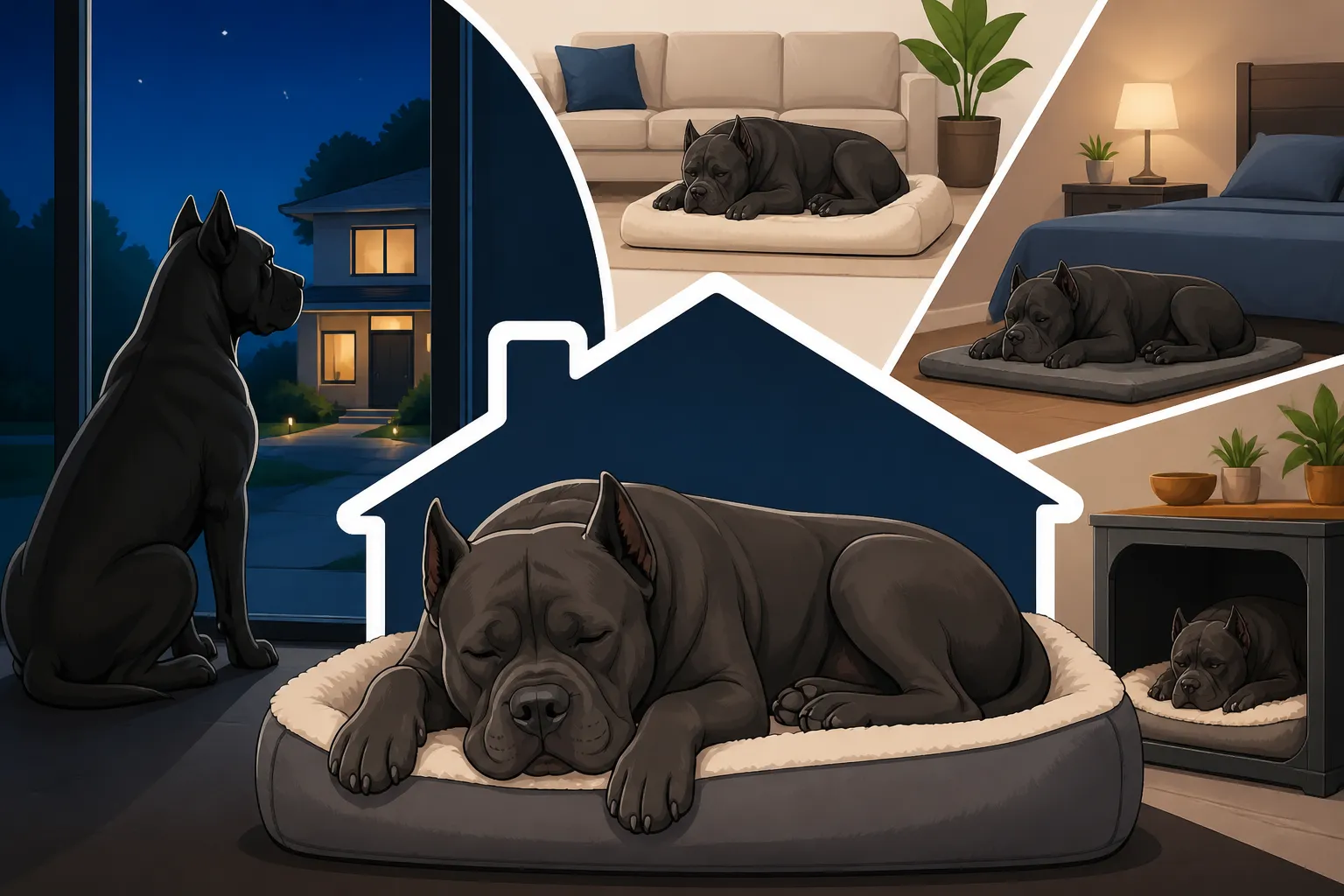
Where a Cane Corso Sleeps in a Guarding Household
Bringing a Cane Corso into your home, especially a household where you value their natural guarding instincts, means carefully considering every aspect of their environment – and that includes where they lay their head at night. It's a common frustration for Cane Corso owners: you want your magnificent dog to be a vigilant protector, but you also want a peaceful night's sleep without unnecessary alarms. This guide will help you navigate the best sleeping arrangements for your Cane Corso, balancing their inherent drive to guard with the need for a calm, structured home life.
Understanding the Cane Corso's Guarding Instincts at Night
Your Cane Corso isn't just a pet; they are a direct descendant of Roman war dogs and Italian farm guardians, bred for centuries to protect. This heritage isn't something that switches off when the sun goes down. Their internal alarm system is always on, even when they appear to be deep in slumber.
The Innate Drive to Protect
The Cane Corso's primary role throughout history was to be a sentinel. They protected property, livestock, and family. This isn't just about barking at strangers; it's a profound, instinctual drive to survey their surroundings, assess threats, and act when necessary. When your Cane Corso is asleep, they are never truly "off duty." Their ears are still tuned to unusual sounds, their nose still catches unfamiliar scents, and their body is poised for action. This is particularly true in their designated "territory" – which often extends to the entire home.
Imagine their ancestors, a The Roman War Dog Behind the Cane Corso, keeping watch over a rural Italian masseria (farm). They didn't just sleep soundly through the night; they were acutely aware of every rustle in the olive groves, every distant dog bark, every shift in the wind. This same vigilance is present in your modern Cane Corso, even if their "flock" is now your family and their "farm" is your suburban home. Understanding this deep-seated drive is the first step in creating a sleeping arrangement that respects their nature while promoting household harmony. Trying to suppress this instinct entirely can lead to anxiety or confusion for the dog.
The Importance of a Defined "Territory"
For a Cane Corso, their sleeping area is more than just a place to rest; it's a critical part of their perceived territory. How they define and protect this territory directly influences their behavior. If their sleeping space is open and encompasses the entire house, they might feel an overwhelming responsibility to guard every nook and cranny. This can lead to hyper-vigilance, where every creak of the house or distant siren becomes a call to action. They may struggle to truly relax, always feeling the need to be "on."
Conversely, a well-defined, secure sleeping area can provide them with a sense of safety and ownership over that specific space. It teaches them that while they are guardians of the home, they have a personal sanctuary where they can truly unwind. This doesn't diminish their guarding capabilities; rather, it refines them. They learn to differentiate between genuine threats and everyday sounds, knowing that their primary job is to protect their immediate space and, by extension, those within it. Think of it as giving them a clear "post" where they are most effective and comfortable. Without this clarity, a Cane Corso can become stressed, constantly scanning and reacting to every minor disturbance. What a Cane Corso's Guardian Instinct Actually Is delves deeper into this fascinating aspect of their temperament.
Common Sleeping Arrangements and Their Impact on Guarding
When it comes to where your Cane Corso sleeps, you have a few primary options, each with its own set of pros and cons, especially in a guarding household. The key is finding a balance between meeting their needs and ensuring a peaceful night for everyone.
Crating for Security and Structure
Crating is often the most recommended option for many reasons, particularly for a guarding breed like the Cane Corso. A large, sturdy crate, made comfortable with soft bedding, becomes your dog's personal den – a safe, secure space that is entirely their own.
Pros of Crating:
- Clear Boundaries: A crate provides an unmistakable boundary for your dog. This helps them understand that while they are part of the household, their immediate "territory" for the night is confined. This can reduce overall anxiety about guarding the entire house.
- Safety and Security: For the dog, a crate is a den. It's a place where they feel safe and protected, especially when the family is asleep. For the household, it ensures that your powerful Cane Corso isn't wandering around, potentially getting into mischief or startling someone in the dark. If you have young children, a crate offers an invaluable layer of safety, ensuring the dog has its undisturbed space.
- Aids in House Training: A dog naturally avoids soiling their sleeping area, making crating an excellent tool for house training, especially for puppies. Even adult dogs benefit from the routine.
- Portability for Travel: A dog accustomed to a crate is much easier to travel with, whether it's for vacations or vet stays, as their "safe space" goes with them.
- Reduced Nighttime Reactivity: While they'll still hear things, being in a crate can sometimes reduce the urgency to react to every minor sound, as they are not "on patrol" of the entire house.
Cons of Crating:
- Potential for Isolation: Some dogs, if not properly introduced to the crate, might feel isolated or punished. It’s crucial that the crate is a positive experience, never a place of negative consequence.
- Still Alert: A Cane Corso in a crate will still be alert to outside sounds. They might still vocalize or stir, even if they aren't free to roam.
- Space Requirement: Cane Corsos are large dogs. Finding a crate substantial enough for their size and ensuring it fits comfortably in your home can be a challenge. Look for heavy-duty metal crates designed for giant breeds. Brands available on platforms like Amazon offer a wide range of sizes and durability, often with options for double doors for easier access or removal.
To make the crate a positive den, fill it with soft blankets, a comfortable bed, and maybe a long-lasting chew toy. Cover it with a blanket to create a true den-like atmosphere. The goal is for your Cane Corso to want to go into their crate, viewing it as their personal sanctuary.
Sleeping in the Owner's Bedroom
Many Cane Corso owners choose to have their dogs sleep in their bedrooms, often on a dog bed on the floor next to them, or occasionally even on the bed itself. This fosters a very strong bond and reinforces the dog's role as a family member.
Pros of Sleeping in the Owner's Bedroom:
- Stronger Bond: Sharing a sleeping space can deepen the bond between you and your Cane Corso, reinforcing their sense of belonging to your immediate "pack."
- Immediate Alert: If something genuinely threatening happens, your Cane Corso is right there, ready to alert you immediately. This can provide a great sense of security for the owner.
- Reduced Separation Anxiety: For dogs prone to Separation Anxiety in a Cane Corso Left in a Crate, sleeping near their owner can alleviate distress.
Cons of Sleeping in the Owner's Bedroom:
- Reinforces Guarding of the Owner/Room: While beneficial for bonding, this arrangement can sometimes lead to the Cane Corso excessively guarding the owner or the bedroom itself. They might become reactive to others approaching the room at night or even growl if a partner gets too close to you in bed.
- Potential for Resource Guarding: If allowed on the bed, some Cane Corsos might start to resource guard the bed or even their spot on it, leading to undesirable behaviors if not managed correctly.
- Increased Alertness to Minor Noises: Being in the bedroom, your Cane Corso is closer to windows and potentially more subtle household noises. This proximity can make them more prone to alerting to sounds that aren't genuine threats, disrupting your sleep.
- Disrupted Sleep: A Cane Corso can snore, dream-bark, shift positions, or get up for water, all of which can disturb your sleep.
- Boundary Confusion: If the dog is sometimes allowed on the bed and sometimes not, or if rules are inconsistent, it can create confusion about their place in the hierarchy and their role.
If you choose this option, establish clear boundaries from day one. Decide if they are allowed on the bed or if they have their own dog bed. Consistency is vital. Where a Cane Corso Sleeps in a Guarding Household requires thinking about how closely they are guarding you.
Designated Areas (Living Room, Hallway, etc.)
Some owners prefer to have their Cane Corso sleep in a more central, designated area of the house, like a living room, a hallway that offers a good vantage point, or a large landing. This allows them to still feel connected to the family but not necessarily in your bedroom.
Pros of Designated Areas:
- Central Overview: Placing a Cane Corso in a central hallway or living room gives them a strategic position to oversee the main entry points of the home. This allows them to fulfill their guardian role by being aware of activity.
- Still Part of the Family: They are not isolated in a far-off room; they are still within the general family space, reinforcing their sense of belonging without being directly in your personal sleeping area.
- Reduced Direct Guarding of Owners: This setup can prevent the dog from developing an overly possessive guarding instinct specifically over the owner, as their primary territory becomes the common areas.
Cons of Designated Areas:
- Feeling Overburdened: If the area is too open and vast, the Cane Corso might feel an excessive responsibility to guard the entire house, leading to the same hyper-vigilance described earlier. They might struggle to relax if they perceive their "post" as covering too much ground.
- Guarding Pathways: A Cane Corso sleeping in a hallway might start to guard that pathway, potentially reacting to family members who need to move around the house at night, like heading to the bathroom. This can lead to unwanted behaviors like growling or blocking access.
- Less Direct Supervision: Unlike sleeping in your room, you have less direct control over what your dog does if they wake up in a common area.
- Disruption for Others: If the designated area is near other family members' bedrooms, their nighttime movements or alerts could disturb others.
The placement here is critical. Choose an area that feels secure to them, perhaps with a wall behind their bed, giving them a "back" they don't have to worry about. Avoid placing them directly in a high-traffic thoroughfare.
Here's a quick comparison of these arrangements:
| Arrangement | Key Benefit for Guarding | Potential Drawback for Guarding | Ideal Scenario |
|---|---|---|---|
| Crate (Bedroom/Den) | Clear territorial limits | Can feel isolated if not well-introduced | Structured environment, helps manage reactivity |
| Owner's Bedroom | Immediate alert, strong bond | Over-guarding of owner/room, sleep disruption | Owners who want close bond and direct alert system |
| Designated Common Area | Central overview of home | Overburdened feeling, guarding pathways | Owners needing oversight without co-sleeping |
Strategies for a Peaceful Night's Rest for Both of You
Regardless of where your Cane Corso sleeps, implementing consistent strategies can make a world of difference for a peaceful night for everyone. These strategies focus on clear communication and a calming environment.
Establishing Clear Boundaries and Expectations
A Cane Corso thrives on structure and clear leadership. Ambiguity can lead to anxiety and unwanted behaviors. This is especially true at night.
- The "Place" Command: This command is invaluable. Teach your Cane Corso to go to a specific spot – their dog bed, a raised cot (like those you can find on Amazon that offer support for their joints), or their crate – and stay there until released. Practice this extensively during the day, rewarding calm duration. At night, "place" becomes their designated sleeping spot. This command tells them, "This is your job, this is your space, and you are to settle here." This helps them understand when their active guarding is expected and when they are simply to rest.
- Teaching When Not to Alert: This is perhaps the hardest part. You want them to alert to genuine threats, but not to every squirrel or distant car door. When they alert to something minor, acknowledge it calmly ("Good guard, I got it"), then redirect them back to their "place" command. Do not reward frantic barking. Over time, they learn to trust your judgment on what requires a full alert. This requires immense patience and consistency.
- Consistency is Key: Every family member must follow the same rules, every single night. If one person allows the dog on the bed and another doesn't, or if the "place" command is enforced inconsistently, your Cane Corso will become confused. Resources from training programs like BAXTER & Bella often emphasize this bedrock principle: consistent expectations and follow-through. A Cane Corso will push boundaries if they sense an opening, and inconsistency creates those openings. The Structure a Cane Corso Needs Every Single Day extends to their sleeping routine as well.
Creating a Secure and Calming Environment
The physical environment plays a huge role in how well your Cane Corso rests.
- Darkness and Quiet: Just like us, dogs sleep better in a dark, quiet environment. Close curtains, turn off unnecessary lights. If outside noises are a problem, consider a white noise machine or a fan to block out sudden sounds.
- Comfortable Bedding: A large, orthopedic dog bed is a must for a heavy breed like a Cane Corso. Their joints need support, and comfort promotes deeper sleep. Amazon offers many options for durable, washable beds designed for giant breeds. Ensure the bedding is clean and free of strong odors that might be distracting.
- Relief Before Bed: Always ensure your Cane Corso has had a thorough potty break right before bed. A full bladder or bowel can lead to restlessness and unnecessary nighttime stirring.
- Exercise and Mental Stimulation: A tired dog is a good sleeper. Ensure your Cane Corso gets adequate physical exercise during the day – two good walks or a solid play session. Equally important is mental stimulation, through training sessions, puzzle toys, or Scent Work and Sniff Walks for a Cane Corso. A dog with a tired mind and body is far more likely to settle down and sleep soundly through the night. Ninety Minutes a Day and a Cane Corso's Mind is a good guideline for their daily activity needs.
Managing Reactivity to Nighttime Sounds
Even with the best preparation, your Cane Corso might still react to noises. The goal isn't to eliminate their guarding instinct, but to channel it appropriately.
- Desensitization: If there are specific, non-threatening sounds that trigger your dog (e.g., neighbor's gate, distant train), try to desensitize them during the day. Play recordings of these sounds at a low volume while your dog is relaxed, gradually increasing the volume over several days or weeks. Reward calm behavior.
- Rewarding Calm Behavior: This is crucial. When your Cane Corso hears a noise and doesn't react, or gives a soft alert that you acknowledge, reward them quietly with praise or a small treat. This reinforces that calm observation is preferred over frantic barking.
- When to Consult a Professional: If your Cane Corso's nighttime reactivity is extreme, constant, or escalating, it's time to bring in a professional. A certified professional dog trainer or a veterinary behaviorist can help identify the root cause of the behavior (is it true guarding, anxiety, fear, or boredom?) and develop a tailored management plan. They can assess your dog's temperament and help you understand What an Anxious Cane Corso Looks Like and how to best address it.
Tailoring the Sleeping Arrangement to Your Household's Needs
There's no one-size-fits-all answer for where a Cane Corso should sleep. Your ideal arrangement will depend heavily on your specific family dynamics and lifestyle.
Factors to Consider: Kids, Other Pets, Lifestyle
Each household is unique, and these elements play a significant role in determining the safest and most effective sleeping setup for your Cane Corso.
- Young Children in the Home: If you have babies or toddlers, a crate in a separate room or a very clearly defined "place" in your bedroom (like a sturdy dog bed right next to yours) is often the safest choice. While Cane Corsos can be wonderful with children, their sheer size and guarding instincts mean that accidental knocks, perceived threats (like a child rough-housing with another family member), or resource guarding of toys or space can be issues if not managed. A crate provides a secure boundary for both the dog and the child, preventing unsupervised nighttime interactions. Raising a Cane Corso Around Small Children requires forethought in every aspect of their cohabitation.
- Multi-Pet Households: In homes with other dogs or cats, separate sleeping spaces are often advisable to prevent nighttime conflicts, especially if your Cane Corso has any tendencies towards Same Sex Aggression Between Two Cane Corsos or resource guarding. Crates in separate rooms or designated "places" far enough apart can ensure everyone gets an undisturbed night. Even if they get along famously during the day, nighttime can sometimes bring out dormant instincts or territorial disputes, particularly if animals are moving around in the dark.
- Your Lifestyle and Home Layout: Do you have frequent guests? Is your home open-concept or does it have many distinct rooms? If you have guests staying overnight frequently, a Cane Corso who sleeps in a central common area might become overly protective or reactive to late-night trips to the bathroom. In such cases, a crate in a quiet room, or your own bedroom, might be more appropriate. If you live in an apartment, a crate might be the only practical solution to prevent noise complaints from neighbors. If your home has multiple levels, consider whether your aging Cane Corso will be able to manage stairs during the night.
- Your Own Sleep Quality: Let's be honest, your sleep matters too! If your Cane Corso's presence in your bedroom means constant disruption, it's not sustainable. Finding a solution that allows both of you to rest properly is paramount for your well-being and your ability to be a patient, consistent owner.
Evolving Arrangements as Your Cane Corso Matures
What works for a Cane Corso puppy may not be ideal for an adult, and certainly not for a senior dog. Their needs and abilities change over time.
- Puppy Stage: A young Cane Corso puppy typically benefits most from crating, initially in your bedroom for comfort and ease of nighttime potty breaks. This helps with house training and provides a sense of security in their new home. As they grow, you might gradually move the crate to a designated spot. How Long a Cane Corso Puppy Lasts Between Night Trips will dictate how close you need to be.
- Adult Dog: Once fully mature and trained, some owners may transition their Cane Corso from a crate to a dog bed in the bedroom, or a designated spot in a common area. This transition should be gradual and contingent on their proven ability to settle calmly through the night without excessive reactivity or destructive behavior. Always observe how they adapt to new arrangements.
- An Older Cane Corso: As your Cane Corso enters their senior years, their physical needs will change. An The Age a Cane Corso Is Counted as Old Cane Corso might develop arthritis, making jumping on and off beds difficult or painful. An orthopedic bed becomes even more crucial. They might also experience changes in bladder control, making it necessary to have their sleeping area closer to an exit, or for them to have more frequent nighttime potty breaks. Their guarding instincts might lessen, or they might become more sensitive to noise. Be flexible and adjust their sleeping arrangements to maximize their comfort and dignity in their golden years. Ramps for beds or vehicles, for instance, can become invaluable.
Ultimately, the best sleeping arrangement is one that provides your Cane Corso with a secure, comfortable space, allows them to fulfill their natural guarding role responsibly, and ensures a peaceful night's sleep for everyone in the household. It requires careful consideration, consistent training, and a willingness to adapt as your dog grows and changes.
Disclaimer
This article is for general informational purposes only and does not constitute professional advice. Laws, prices and regulations vary by location and change over time. Consult a qualified professional for guidance on your specific situation.