Crate Training a Cane Corso That Outgrows Every Crate
One of the most frustrating challenges when you bring home a Cane Corso puppy is watching them seemingly sprout overnight. You buy a crate, thinking it'll last a good while, only to find your pup looking cramped and uncomfortable in a matter of weeks. It’s a common and genuinely disheartening problem for new owners trying to do everything right, but fear not, we’re going to tackle how to successfully crate train your rapidly growing Cane Corso, even when they seem to be testing the limits of every enclosure.
Understanding Your Cane Corso's Rapid Growth and Crate Needs
Cane Corsos aren't just big dogs; they are giant breed dogs with an incredible growth spurt in their first year. This isn't like a Labrador puppy who slowly fills out; a Cane Corso can pack on pounds and inches at an alarming rate, often gaining two to four pounds a week during peak growth phases. This rapid development means that a crate that fits them perfectly at eight weeks might feel like a shoebox by four months. It’s not just about their length and height, but also their breadth and depth – they become substantial animals very quickly.
The Dynamics of Early Growth
When you first bring home your Cane Corso puppy, they’re still relatively small, perhaps 15-25 pounds. A medium or large-sized crate might seem adequate, even spacious, with a divider to control their space for house training. However, within a few short months, they can easily reach 50-70 pounds, then push past 100 pounds before their first birthday. This explosive growth often catches owners off guard, leading to the feeling that you’re constantly upgrading crates. It's not a failure on your part; it's simply the nature of this magnificent breed. You need to prepare mentally and financially for the fact that your Cane Corso will likely need at least two, possibly three, different sized crates before settling into their adult "forever" crate. Don't underestimate The Growth Curve a Cane Corso Follows to Nineteen Months.
Why a Properly Sized Crate is Crucial
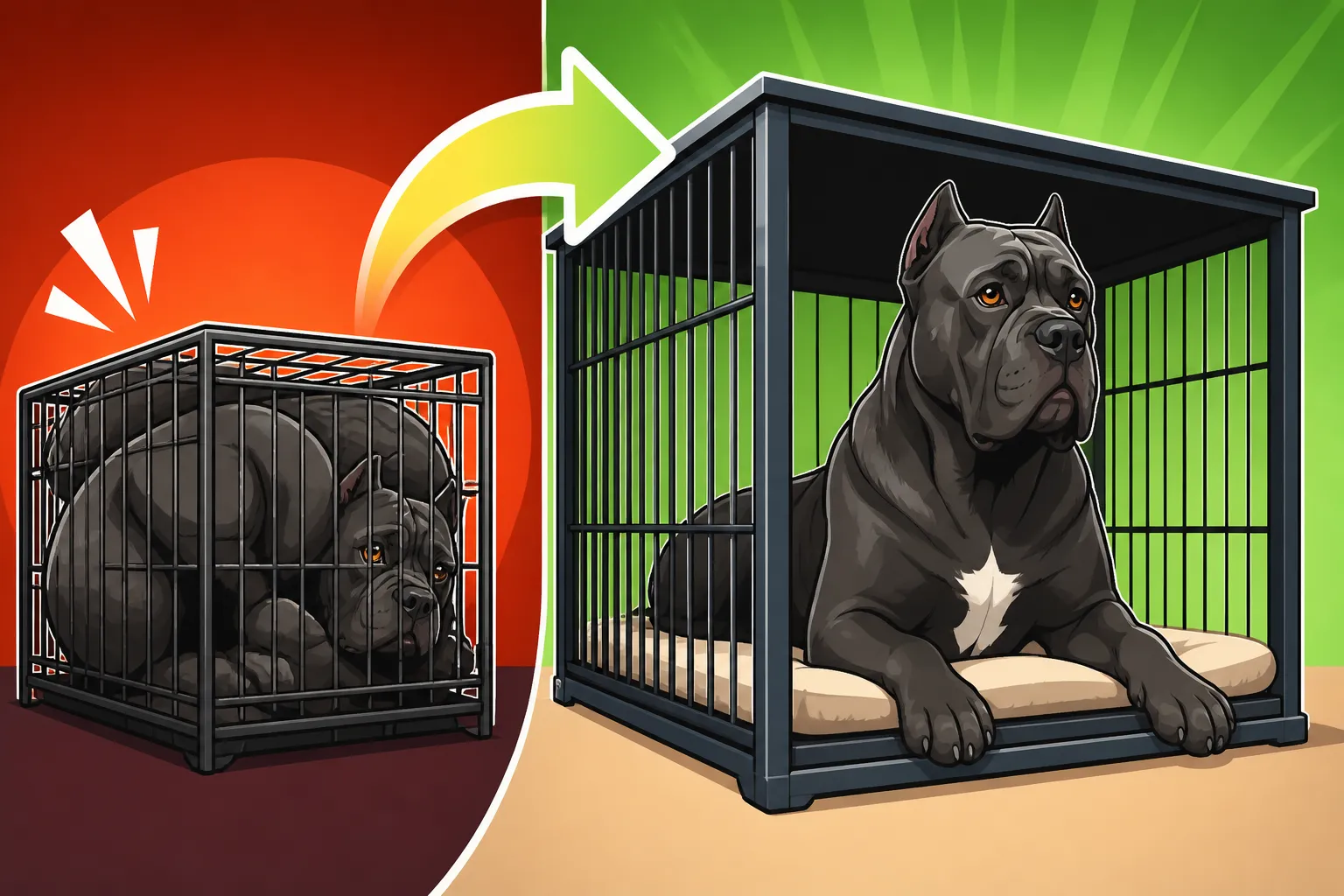
A crate isn't a punishment; it's meant to be a safe, comfortable den for your dog. For your Cane Corso, especially during their intense growth phases, a properly sized crate is non-negotiable for both their physical comfort and psychological well-being. A crate that's too small can cause discomfort, lead to joint issues if they can't stretch out, and, perhaps most importantly, make them resent the crate experience entirely. If they feel cramped or trapped, they are far more likely to resist going into the crate, leading to destructive behaviors, anxiety, or vocalizations. On the flip side, a crate that is too large for a young puppy can hinder house training, as they might use one end as a potty area and sleep in the other, defeating the purpose of the den instinct that makes crate training so effective. It’s a delicate balance to strike between current fit and anticipating future growth.
Choosing the Right Crate: Size, Material, and Durability
Given the rapid growth and immense power of a Cane Corso, choosing the right crate isn't just about finding the biggest one; it's about finding one that can withstand their strength and provide a safe haven through their various stages. You’ll need to think about material, construction, and how well it will hold up to a dog that can easily reach well over 100 pounds.
Measuring for the "Next" Crate
When your Cane Corso is standing, they should be able to stand up without their head touching the top of the crate. When lying down, they should be able to stretch out fully on their side. For a puppy, you want enough room to stand and turn around comfortably, but not so much space that they can go to the bathroom in one corner and sleep in another. This is where a good quality crate with an adjustable divider becomes invaluable. You can expand the space as they grow. For an adult Cane Corso, you're generally looking at crates labeled for "giant breeds" or "XXL." A grown male Cane Corso can easily stand 25-27.5 inches tall at the shoulder and weigh over 100 pounds, so you'll need a crate that measures at least 48 inches long, and often larger. Some owners find that even 54-inch crates are necessary for the largest males. Take accurate measurements of your dog’s current height and length, then add a few inches to each for comfortable movement. You can find many options on platforms like Amazon, but always double-check the actual dimensions against your dog’s size. For more specific sizing guidance, look at resources like The Crate Size a Grown Cane Corso Needs.
Steel vs. Plastic: Durability Matters
When it comes to materials, you'll primarily be looking at wire (steel) crates or heavy-duty plastic (airline-style) crates.
- Wire Crates: These are popular for their ventilation, visibility, and often collapsible design. However, for a determined Cane Corso, especially during adolescence, a standard thin-gauge wire crate might not hold up. They can bend bars, pop welds, or even break out. Look for heavy-duty steel wire crates with thicker gauge wire and reinforced doors and latches. Brands specializing in escape-proof or heavy-duty dog crates are often a better investment for a Cane Corso.
- Plastic Crates: Often used for travel, these provide a more den-like feel and can be surprisingly sturdy. They are also less prone to bent bars if your dog is an escape artist. However, they can be bulky, offer less ventilation, and some dogs might chew through the plastic if left unsupervised and prone to anxiety.
- Heavy-Duty Aluminum or Steel Crates: These are the ultimate in durability and often the best long-term solution for a Cane Corso. They are built like tanks, virtually escape-proof, and designed to withstand immense pressure. They come with a significantly higher price tag, but for a breed of this size and strength, they often prove to be a wise investment, saving you from replacing multiple cheaper crates or repairing damage your dog might cause.
Here’s a quick comparison:
| Crate Type | Pros | Cons | Ideal For |
|---|---|---|---|
| Standard Wire | Affordable, collapsible, good ventilation | Easily bent/broken by strong dogs, less "den-like" | Small puppies, less powerful chewers, temporary use |
| Heavy-Duty Wire | Better durability, good ventilation, still collapsible | Heavier, more expensive than standard wire, still possible for determined dogs | Growing Cane Corso puppies, adult dogs without severe escape tendencies |
| Heavy-Duty Plastic | Den-like, good for travel, more secure than wire for some dogs | Bulky, less ventilation, some dogs chew plastic, limited size options | Cane Corso puppies, dogs who prefer enclosed spaces, travel |
| Industrial Steel/Aluminum | Extreme durability, escape-proof, lasts a lifetime | Very expensive, heavy, not collapsible, less aesthetic for some owners | Adult Cane Corsos, escape artists, dogs with strong destructive tendencies |
Remember that Crates, Collars and Leads Sized for a Cane Corso should all be chosen with durability and strength in mind.
Location and Comfort Inside the Crate
Once you have the right crate, its placement and what's inside are equally important. The crate should be in a central part of your home where your Cane Corso feels like part of the family, but also where they can retreat for quiet time. For many, this is the living room or bedroom. Ensure it's not in a drafty area or direct sunlight.
Inside the crate, keep it comfortable. A durable, chew-proof bed or mat is essential. Soft blankets might be inviting, but a strong chewer will shred them quickly. Look for elevated beds or tough ballistic nylon covers that can stand up to a Cane Corso's power. Enrichment is also key: puzzle toys stuffed with treats, long-lasting Chews That Survive a Cane Corso's Jaw, or a favorite robust toy can make the crate a more positive place. This helps them associate the crate with good things and makes downtime enjoyable, rather than a confinement they must tolerate.
Effective Crate Training for a Giant Breed Puppy
Crate training a Cane Corso, especially as a puppy, is an investment in their future behavior and safety. Given their size, strength, and potential for guardian instincts, a well-crate-trained Cane Corso is a huge asset to any household. The core principles of crate training remain the same, but you’ll need extra patience and consistency, understanding that their rapid growth adds an extra layer of complexity.
Building Positive Associations Early
The key to successful crate training is making the crate a positive, voluntary space. Start from day one with your Cane Corso puppy. Toss high-value treats into the crate, feed meals inside the crate with the door open, and play gentle games near it. Never use the crate as punishment. If your puppy is hesitant, sit by the crate and talk to them encouragingly. Programs like BAXTER & Bella offer comprehensive online puppy training that includes crate training guidance, which can be invaluable for consistent, positive reinforcement. The goal is for your Cane Corso to want to go into their crate, seeing it as their personal den, not a jail cell. This positive foundation is crucial for managing their energy, especially as they get older and stronger.
Managing Grow-Out Phases and Crate Transitions
This is where many Cane Corso owners hit a wall. Your puppy is doing great, then suddenly they’re too big for their current crate. When it's time to upgrade, try to make the transition as smooth as possible.
- Introduce the new crate: Set up the new, larger crate next to the old one (if space allows) for a few days. Let your puppy explore it.
- Transfer comfort items: Put their favorite blanket, bed, and toys from the old crate into the new one. The familiar scents will help them feel more at home.
- Repeat positive associations: Go back to basics for a day or two with the new crate – treats, meals, praise inside.
- Gradual closing: Start with short periods with the door closed, gradually increasing the time.
Remember that house training and crate training often go hand-in-hand. When you get a new, larger crate, ensure you’re still managing the divider appropriately for How Long It Takes to House Train a Cane Corso. A too-large space can lead to accidents. Patience is paramount during these transitions. It might feel like a step backward, but it's essential for long-term success.
Crate Training for Longer Stays
As your Cane Corso gets older and more reliable, they'll be able to stay in their crate for longer periods. This is vital for owners who work outside the home or need to leave their dog safely when guests visit. Gradually extend the time they spend in the crate, always ensuring they have recently been outside to relieve themselves. For an adult Cane Corso, a general rule of thumb is that they shouldn't be crated for more than 4-6 hours at a time during the day, though overnight stretches can be longer. If you’re leaving them for extended periods, consider a dog walker or dog-friendly daycare to break up the day. This also ties into preventing Separation Anxiety in a Cane Corso Left in a Crate. A bored or lonely Cane Corso can quickly become destructive, and a crate is a management tool, not a substitute for proper exercise and mental stimulation. Many owners find that a Kong or other food-dispensing toy filled with frozen peanut butter or treats can keep them occupied and happy during crate time.
When Your Cane Corso Still Outgrows the "Forever" Crate
Despite your best efforts and investing in what you thought was the largest crate available, some Cane Corsos, particularly exceptionally large males, might still push the limits. Or perhaps they've just become too powerful for even a heavy-duty wire crate over time. This is where you might need to consider alternatives or specialized solutions.
Custom Builds and Industrial Options
For the truly massive Cane Corsos or those with extreme escape artist tendencies, standard retail crates might simply not cut it. This is where you might look into custom-fabricated kennels. These are often made from thick-gauge steel or aluminum, designed specifically for powerful breeds. They can be incredibly robust, with secure latching mechanisms and welded construction that can withstand the strongest dog. While a significant investment, they can provide peace of mind and prevent repeated crate replacements. Searching on Amazon for "heavy duty dog crate XXL" can lead you to some industrial-grade options, but always check reviews specifically from large-breed owners. Another option is a kennel run, which is essentially a permanent, secure outdoor enclosure. These are typically built with strong chain link or welded wire panels and a secure roof. They are not meant for indefinite housing, but can provide a safe, spacious area for your Cane Corso when you need to contain them outside.
Managing a Cane Corso Without a Crate
Some owners, after years of trying, decide that a crate isn't the best fit for their individual Cane Corso. This decision requires careful consideration and a strong foundation in training.
- Containment within a secure room: Baby gates (heavy-duty ones, not the flimsy kind!) can be used to block off a "dog-proofed" room in your home. Remove anything they could chew, ingest, or destroy. Think about your Cane Corso's potential to cause The Damage a Bored Cane Corso Does Indoors.
- Extensive training: An off-crate Cane Corso needs impeccable house manners. This means reliable "leave it," "stay," and understanding boundaries within the home. Impulse control work for a Cane Corso is essential for this kind of freedom.
- Exercise and mental stimulation: A tired Cane Corso is a good Cane Corso. Ensuring they get sufficient physical exercise and mental enrichment is critical if they are going to have free roam, even in a limited capacity. A dog that is bored or full of pent-up energy is far more likely to get into trouble.
- Professional guidance: If you're struggling with crate training or considering moving away from it, consulting with a certified professional dog trainer or behaviorist is always a good idea. They can provide tailored advice and help you navigate the unique challenges of your Cane Corso. The BAXTER & Bella program, for instance, offers extensive resources for general obedience that can support a non-crated dog.
Ultimately, whether your Cane Corso is in a massive custom crate or free-roaming a dog-proofed area, the goal is always their safety, comfort, and good behavior. Adaptability and a proactive approach are your best tools when raising these magnificent, fast-growing giants.
Disclaimer
This article is for general informational purposes only and does not constitute professional advice. Laws, prices and regulations vary by location and change over time. Consult a qualified professional for guidance on your specific situation.