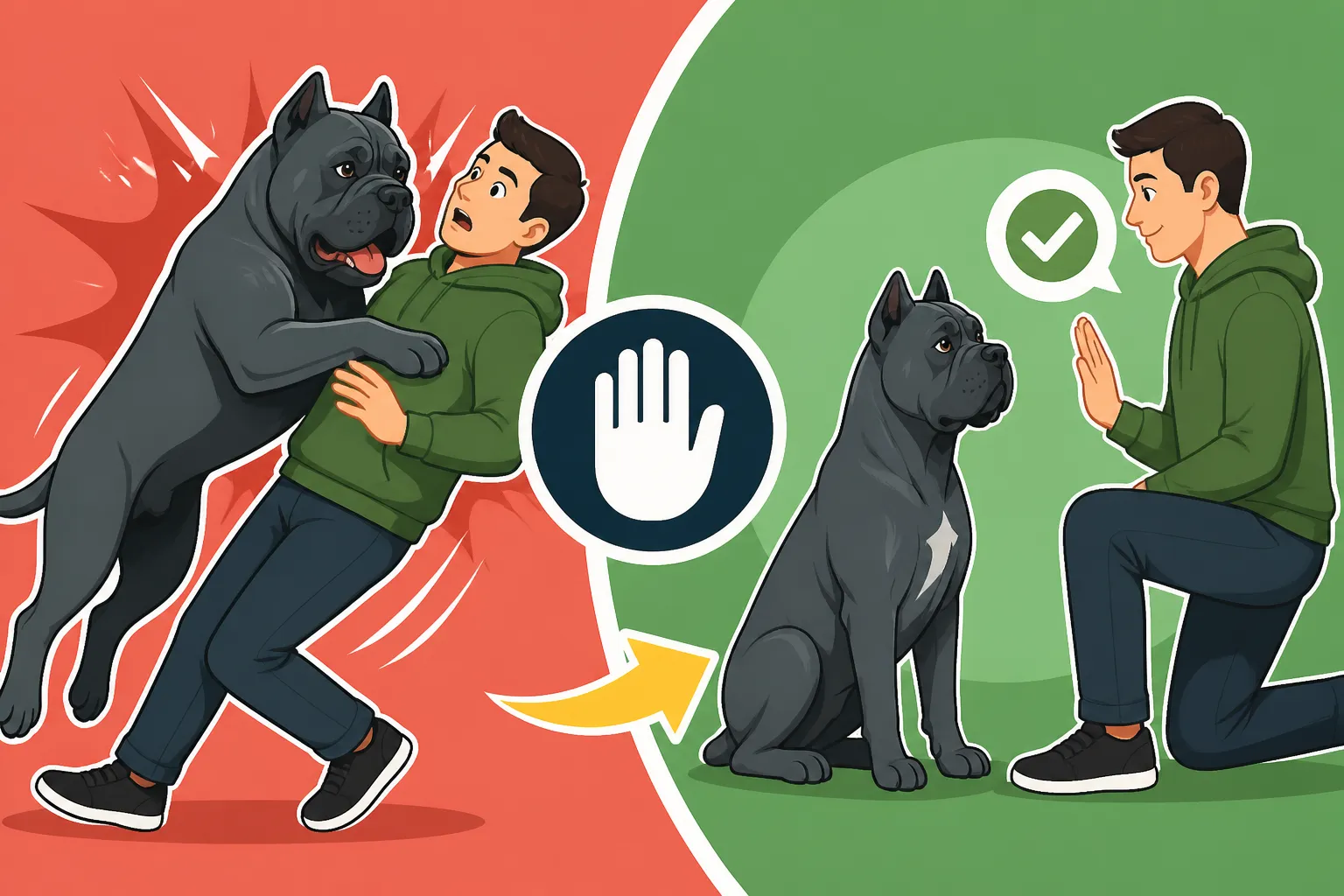
Teaching a Cane Corso Not to Body Slam
It’s a scenario many Cane Corso owners know all too well: you’re standing in your kitchen, minding your own business, and suddenly a hundred pounds of exuberant, solid dog crashes into your side. Or perhaps a guest is visiting, and your Corso, in a burst of excitement, sends them sprawling. This guide is all about tackling that "body slamming" behavior, understanding why your big dog does it, and giving you actionable steps to teach them more appropriate ways to interact.
Understanding Why Your Cane Corso Body Slams
It can feel like your Cane Corso is intentionally trying to knock you over, but the truth is usually far less malicious. These are powerful dogs, and their sheer size means that what might be a gentle nudge from a smaller breed becomes a significant impact when it comes from a Corso. Before we can address the behavior, we need to dig into the root causes.
Exuberance and Lack of Body Awareness
Many times, especially with younger, still-maturing Cane Corsos, body slamming is simply a display of overwhelming excitement and a complete lack of understanding of their own size and strength. Think about it: a puppy might jump and paw playfully, but a full-grown Corso doing the same thing is a completely different experience. They haven't quite learned how their large bodies interact with the world around them, particularly with smaller, more fragile humans. They might be genuinely thrilled to see you, or a new person, and their joy manifests as a powerful, full-body greeting. It’s not about aggression; it’s about a lack of finesse.
Imagine your Corso has been cooped up all day while you were at work. When you walk through the door, their world explodes with happiness. They launch themselves at you, maybe wagging their entire body, and BAM! You're caught in the crossfire of their enthusiastic welcome. This isn't them trying to hurt you; it's them saying, "I MISSED YOU SO MUCH!" with every fiber of their being, without realizing the physical toll it takes on you. They often haven't learned to calibrate their strength or to consider your personal space in the same way a human would.
Seeking Attention and Reinforcement
Dogs are smart, and they quickly learn what gets them a reaction. If body slamming, nudging, or leaning heavily gets your attention—even negative attention like a gasp, a push, or a frustrated "No!"—it might be inadvertently reinforcing the behavior. To your Cane Corso, any attention is often better than no attention. They might be bored, feeling ignored, or simply wanting to engage with you, and they've discovered that a well-placed body check brings you into their orbit.
Consider a scenario where you're engrossed in a book or watching TV, and your Corso trots over. They might try a polite nose nudge, but if that doesn't work, they might escalate to a lean, then a full-on body slam, perhaps even knocking the book out of your hand. When you react, even if it's to scold them, you've just given them what they wanted: your focus. Over time, this accidental reinforcement can solidify the body slamming as a go-to strategy for getting your notice. Breaking this cycle requires a conscious effort to ignore the unwanted behavior and lavishly reward the desired one.
Underlying Guarding Instincts
While less common as the primary cause for all body slamming, a Cane Corso's natural guardian instinct can sometimes play a role, especially if the slamming is directed more aggressively or protectively towards strangers or perceived threats. A Corso is bred to protect, and sometimes they interpret novelty or an unfamiliar person entering their space as something that needs to be "managed" or "controlled." This isn't the playful exuberance we discussed earlier; it's a more serious assertion of their presence.
This might manifest if your Cane Corso body slams a repair person entering your home, or if they cut off a stranger who tries to approach you too quickly on a walk. This isn't just about poor manners; it's about their deep-seated drive to keep you safe. In these cases, the body slam acts as a physical barrier or a way to assert dominance and control the situation. Recognizing this distinction is crucial, as the training approach needs to be tailored to address these powerful protective drives, ensuring they channel them appropriately rather than suppressing them entirely. Understanding What a Cane Corso's Guardian Instinct Actually Is can help you differentiate between playful clumsiness and protective behavior.
Laying the Groundwork: Early Intervention and Consistent Boundaries
Preventing body slamming is always easier than fixing it once it's a deeply ingrained habit. This means starting early, setting clear expectations, and being absolutely consistent with your Cane Corso puppy. From the moment they enter your home, you are their guide, and they need you to show them how to navigate your world without knocking everyone over.
Socialization and Body Awareness for Puppies
The socialization window for a Cane Corso puppy is absolutely critical. From eight to sixteen weeks, every experience shapes their perception of the world. While you might be focused on meeting new people and dogs, don't forget about teaching them spatial awareness. A Cane Corso puppy should be learning how to move around furniture, people, and other pets without barreling into them. Gentle handling, teaching them to walk nicely on a leash, and playing games that encourage controlled movement are vital. The Socialization Window a Cane Corso Puppy Gets is a short but powerful period for this.
Use exercises that build body awareness. Teach your puppy to weave through your legs, step over low obstacles, or navigate tight spaces. Reward calm, deliberate movement. When they get too boisterous and start bumping, calmly stop the interaction. Don’t push them away aggressively, as this can be misconstrued. Instead, freeze, turn your back, or briefly step away, then re-engage when they offer a calmer behavior. Consistent positive reinforcement for gentle interactions will go a long way. Consider investing in an online puppy training program, such as those offered by BAXTER & Bella, which often incorporate modules on body awareness and polite greetings from a young age.
Teaching the "Place" Command
The "place" command is a game-changer for a high-energy Cane Corso, especially for controlling body slamming during greetings. It teaches your dog to go to a designated spot (a mat, a dog bed, a raised cot) and stay there until released. This provides a valuable "off-switch" and a physical boundary that prevents them from rushing and body slamming guests at the door. Teaching a Cane Corso to Hold a Place Cot is a fundamental skill that every Corso owner should master.
Start by luring your Cane Corso onto their "place" with a high-value treat, saying "Place!" as they step on it. Reward them heavily for simply being on the place. Gradually increase the duration they stay there, then add distance. Practice with distractions, like someone knocking at the door or walking past. When guests arrive, your Corso should be sent to their place. They learn that calm behavior on their place earns them rewards and eventually, the privilege of a polite, controlled greeting. This gives them a job during exciting moments and prevents them from acting on impulse.
Practical Training Techniques to Halt the Body Slam
Once your Cane Corso has started body slamming, you need concrete strategies to modify the behavior. This isn't about punishment, but about teaching them alternative, more acceptable ways to get what they want and to express themselves.
Reinforcing Calm Greetings
The key to stopping body slams during greetings is to reward the opposite behavior: calm, four-paws-on-the-floor interactions. This requires patience and consistency, especially when guests arrive. Instruct everyone who enters your home—family members, friends, delivery people—on how to interact with your Cane Corso. The rule is simple: no attention for jumping or body slamming.
When someone comes to the door, have your Cane Corso on a leash initially, or on their "place." If they try to jump or slam, immediately turn away, break eye contact, and ignore them completely. As soon as all four paws are on the floor, or they're calmly sitting on their place, then the guest can offer a calm pet and a treat. If your Corso gets excited and starts to body slam again, the attention immediately stops. This teaches them that calm behavior earns rewards, while boisterous behavior loses them. Consistency is paramount. Everyone in the household must follow these rules.
Leash Manners and Impulse Control
A Cane Corso with poor leash manners is more likely to body slam you or others when excited or pulling to get somewhere. Teaching proper loose-leash walking is crucial not just for pleasant walks, but also for general impulse control and body awareness. If your Corso drags you around, they aren't learning how to manage their body respectfully. Leash Manners Before a Cane Corso Hits Ninety Pounds is an investment that pays dividends in safety and composure.
Invest in a durable, well-fitting front-clip harness or a head halter, available on Amazon, which gives you more control over your Corso's powerful body without causing discomfort. Practice short, frequent training sessions focusing on walking politely by your side without pulling. Use treats to reward them for staying in position. If they pull or lunge, stop immediately. Don’t move forward until the leash is slack. This teaches them that pulling gets them nowhere, and calm walking allows them to continue their exciting adventure. These principles extend beyond walks; they build the foundation for your Cane Corso to exercise impulse control in all situations, including not body slamming.
Teaching a "Hands Off" or "Gentle" Cue
For those times when your Cane Corso is overly physically demonstrative—leaning, pawing, or nudging heavily—teaching a "hands off" or "gentle" cue can be incredibly helpful. This is about giving them a specific command that means to reduce their physical contact or soften their approach.
Start by holding a treat. When your Corso tries to paw or lean on you roughly, say "Gentle!" and if they ease up, even slightly, reward them. If they continue to be rough, calmly remove your attention or walk away. You can also practice this by holding your hand out and rewarding them for a soft nose touch instead of a paw or head butt. Eventually, they will associate the word "Gentle!" with a reduction in physical force. This is particularly useful for interactions with children or elderly family members. Building Impulse Control Work for a Cane Corso into daily routines makes a huge difference.
Creating a Structured Environment for a Well-Mannered Cane Corso
Training happens every moment your Cane Corso is awake, not just during dedicated sessions. The environment you create and the consistency of your rules will either reinforce calm behavior or allow body slamming to continue.
Consistent Rules and Boundaries
Cane Corsos thrive on routine and clear expectations. They are intelligent and strong-willed, and if your rules are inconsistent, they will test them. Every member of the household needs to be on the same page regarding what is and isn't acceptable behavior. If one person allows body slamming and another doesn't, your Cane Corso will become confused and continue to try the behavior.
Establish clear rules: no jumping on people, no leaning heavily unless invited, and no entering personal space uninvited. Discuss with your family how to react when the dog tries to body slam—everyone should ignore it or use a consistent redirect. This unity is crucial for your Cane Corso to understand what’s expected. A great online resource like BAXTER & Bella can help the whole family learn consistent cues and strategies. Remember, The Structure a Cane Corso Needs Every Single Day is non-negotiable for a well-behaved dog.
Management Tools and Techniques
Sometimes, prevention through management is the most effective short-term solution while you're working on training. Physical barriers can be your best friend in controlling opportunities for body slamming.
- Baby Gates: Use sturdy baby gates to create physical boundaries, especially when guests are over. This allows your Cane Corso to be part of the household but prevents them from rushing and body slamming. You can get robust metal gates on Amazon that stand up to a powerful Corso.
- Leash Management: Keep a leash on your Cane Corso when guests are present or during times of high excitement, even indoors. This gives you an immediate way to control their movements without having to physically push them away. You can gently guide them away from people they might be inclined to body slam.
- Crate Training: A crate can be a safe, calm space for your Cane Corso when they need to settle down or when you can't actively supervise them. If your Corso tends to get overstimulated and body slam, a short break in their crate can help them reset.
Here's a quick comparison of scenarios and training approaches:
| Scenario | Cane Corso Behavior | Desired Owner Action | Training Focus |
|---|---|---|---|
| Guest Arrival | Jumps, body slams, pushes past. | Send to "Place." Ignore jumping. Reward 4 paws down. | "Place" command, calm greetings. |
| Seeking Attention | Leans heavily, nudges aggressively with body. | Ignore heavy contact. Reward polite sit or calm gaze. | Attention for calm behavior only. |
| Over-Excitement (Play) | Rams into you during fetch or zoomies. | Stop play immediately. Resume when calm. | Impulse control, "Gentle" cue during play. |
| Walking on Leash | Pulls, cuts in front, bumps into legs. | Stop moving. Reward loose leash. | Loose-leash walking, consistent walking position. |
| Child Interaction | Knocks child over in excitement. | Supervise closely. "Place" for dog. Teach "Gentle." | Boundary training, Supervising a Cane Corso With Children on the Floor. |
Sufficient Exercise and Mental Stimulation
A bored or under-exercised Cane Corso is a Cane Corso looking for ways to burn off energy, and sometimes that energy comes out as body slamming. These are working dogs with a history of demanding physical and mental tasks; they need an outlet for that drive. If they don't get it, they’ll create their own "jobs," which might include bumping you around. Ensure your Cane Corso gets Ninety Minutes a Day and a Cane Corso's Mind through a combination of physical activity and mental engagement.
This could mean long, structured walks, playtime in a securely fenced yard, or engaging in dog sports like scent work or obedience. Mental stimulation is just as important as physical exercise; puzzle toys, training sessions, and interactive games can tire out their minds. A tired Cane Corso is a good Cane Corso, and one that is less likely to have excess energy to throw their weight around. Remember to tailor exercise to their age and joint health; The Age a Cane Corso Can Be Hip Scored and appropriate activities are important considerations.
Disclaimer
This article is for general informational purposes only and does not constitute professional advice. Laws, prices and regulations vary by location and change over time. Consult a qualified professional for guidance on your specific situation.