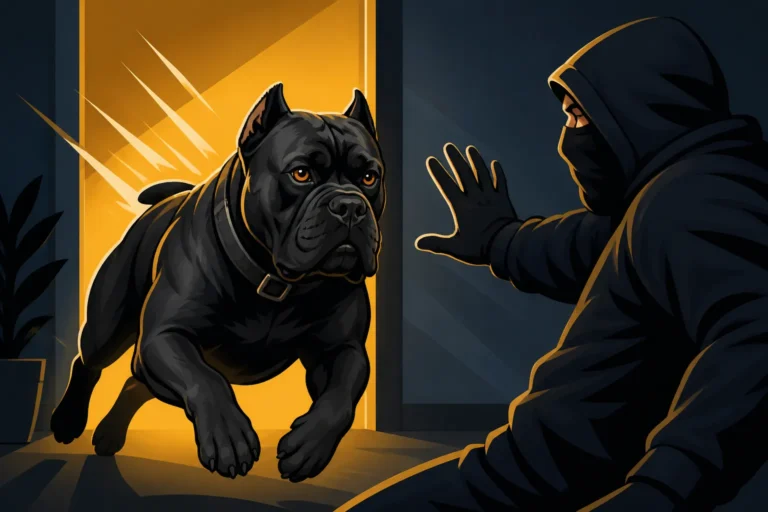
Telling a Cane Corso’s Alert Bark From Its Nuisance Bark
It's incredibly frustrating when your powerful Cane Corso starts barking, and you're left wondering if they're genuinely alerting you to a legitimate concern or just engaging in what feels like endless, aimless noise. As a Cane Corso owner, you know their bark carries weight, but distinguishing between a true alert and a simple nuisance can be a real headache, not to mention a source of tension with neighbors. This guide aims to help you decode your Cane Corso's vocalizations, understand the intentions behind them, and develop strategies to manage unwanted barking while respecting their inherent guardian nature.
Understanding the Cane Corso's Instinctive Bark
Cane Corsos are magnificent dogs, renowned for their loyalty, protectiveness, and intimidating presence. They were historically bred to guard property, livestock, and their families in rural Italy, a role that absolutely required them to be vocal. So, when your Cane Corso barks, it's not just making noise; it's often engaging in a deeply ingrained behavior. The key is to understand the nuances of why they bark and what those barks communicate.
The Core of Their Guardian Nature
Let's be real: a Cane Corso isn't going to be a silent dog, and frankly, you probably don't want one that is. Their bark is a primary tool in their guardian toolkit. Imagine their ancestors, guarding a farm or masseria in Southern Italy. A quiet dog might allow a predator or intruder to get too close before being detected. A powerful, deep bark, however, serves as a significant deterrent, often stopping threats long before they become an actual physical confrontation. This inherent desire to protect their territory and family is deeply wired into their DNA.
This means that some barking is not just acceptable, but desirable. It’s part of What a Cane Corso's Guardian Instinct Actually Is. The challenge isn't to eliminate barking entirely, which is an unrealistic and unfair expectation for the breed, but rather to channel it appropriately. We want them to tell us when there's a real reason for concern, not just when a leaf blows past the window a little too vigorously. Understanding this fundamental aspect of their character is the first step toward managing their vocalizations effectively.
The Difference Between Alert and Alarm
When we talk about Cane Corso barking, it helps to distinguish between an "alert" and an "alarm." An alert is typically a measured, informative bark. It's your dog saying, "Hey, something's different out there, you should know about this." It's a heads-up, a signal to you that their keen senses have picked up on something noteworthy. This might be a delivery truck pulling up, a strange car slowing down on your street, or a person walking too close to your fence line. It's a request for you to investigate or confirm.
An alarm, on the other hand, is a more intense, urgent bark. This often signifies that your Cane Corso perceives a direct or imminent threat. The barking will be more rapid, louder, and insistent, often accompanied by more pronounced body language. While both are rooted in their protective instincts, the alert bark is more about notification, while the alarm bark is about warding off or escalating a perceived threat. Nuisance barking often stems from the dog misinterpreting an alert as an alarm, or simply barking out of boredom or a desire for attention rather than genuine concern.
Identifying the Characteristics of an Alert Bark
When your Cane Corso lets out a bark, how can you tell if it's a genuine alert versus just noise? It comes down to paying close attention to the sound itself, their body language, and the context of the situation. Over time, you'll start to recognize patterns unique to your own dog, but there are some common markers.
Sound and Duration
A true alert bark from a Cane Corso often has a very distinct quality. It's usually a deep, resonant "WOOF! WOOF!" rather than a frantic "Yip-yip-yip!" You might notice fewer barks, perhaps two or three, followed by a pause. During this pause, your Cane Corso is actively listening, gathering more information, and waiting for your reaction. They might bark, then fall silent, head cocked, ears forward, absorbing every sound. It's a serious communication, not just a random burst of noise.
Think of it like this: an alert bark is a statement, not a question. It's assertive and grounded, conveying a message of "I see/hear something important." The cadence will be slower, more deliberate, and less agitated than nuisance barking. If you hear a series of short, choppy, high-pitched barks, that’s usually a good sign that it’s not a true alert, but rather something else entirely, like overexcitement or frustration.
Body Language Cues
A Cane Corso communicates volumes with its body, and this is especially true when they're on alert. Look for a stiff, still posture. Their head will be up, ears forward and attentive, and their gaze will be fixed intently on whatever has caught their attention. Their tail might be held level with their back or slightly raised, but it won't be wagging loosely with excitement. They often stand tall, chest out, radiating a sense of quiet power and readiness. There’s a distinct absence of the bouncy, playful movements you see when they’re seeking attention.
Their hackles might be slightly raised, but not necessarily. The key is the intense focus and stillness. They are assessing the situation, ready to react if necessary. Compare this to a dog barking excitedly at a squirrel, where their body might be more fluid, perhaps a play-bow or a wagging tail. When your Cane Corso is truly alerting you, their entire demeanor screams "serious business." If they're Stopping a Cane Corso From Blocking the Front Door with this kind of posture, it's usually because they genuinely perceive something outside as a potential threat, or at least worthy of investigation.
Context Matters
The trigger for the bark is perhaps the most telling factor. A legitimate alert often comes from something unexpected or perceived as a deviation from the norm within their territory. This could be a stranger pulling up the driveway, an unusual noise from down the street, or someone walking too close to your property boundary at an odd hour. It's typically something that truly warrants investigation or acknowledgment from you.
On the flip side, if your Cane Corso barks at every single leaf blowing by, every bird landing in the yard, or every car that drives down the road, the context shifts from "alert" to "over-reactive" or "nuisance." While they are still alerting to these things, the threshold for what constitutes a "threat" is far too low. It's about discerning between a significant event and the routine background noise of daily life. For instance, if you hear the UPS truck every day, and your Cane Corso barks every single time, it’s not an alert so much as a learned, often frustrating, reaction that might need some adjustment. Teaching a Cane Corso to Ignore the Doorbell is a prime example of managing context-driven barking.
Recognizing the Traits of a Nuisance Bark
Nuisance barking, while still rooted in a dog's natural instincts, often veers away from purposeful communication and into territory that's just… well, noisy. It can be caused by boredom, anxiety, attention-seeking, or simply a low tolerance for everyday stimuli. Identifying these traits is crucial for effective management.
The Barking Marathon
Unlike the measured tones of an alert bark, nuisance barking often feels like a marathon. It's a continuous, repetitive series of barks that can go on for extended periods, sometimes escalating in pitch and intensity. There's no pause for listening, no quiet assessment of the situation. It's more of an outpouring of sound, often accompanied by frustration or excitement. You might notice a higher-pitched, whinier, or even more frantic tone than the deep, authoritative barks of a true alert.
This kind of barking is exhausting for everyone involved, especially you and your neighbors. It might sound like your Cane Corso is panicking, or just complaining loudly. If you've ever had your dog bark non-stop at a squirrel on the fence for ten minutes, even after the squirrel is long gone, you've experienced the barking marathon. This is often the type of barking that leads to Neighbors Who Complain About a Cane Corso's Barking.
Triggers for Excessive Barking
Nuisance barking is often triggered by things that don't pose any real threat or warrant such a dramatic response. Common culprits include:
- Boredom and lack of stimulation: A Cane Corso with nothing to do will often create its own entertainment, and barking is an easy outlet. If they're not getting enough physical or mental exercise, they might resort to barking at anything and everything out of sheer under-stimulation.
- Attention-seeking: If your Cane Corso learns that barking gets your attention – even negative attention – they will use it. A quick glance, a "Quiet!" shouted from across the room, or getting up to investigate all reinforce the behavior.
- Frustration: Being confined or unable to reach something they want (like a person walking by the window, or another dog) can lead to frustrated barking.
- Separation Anxiety: Some Cane Corsos bark excessively when left alone, not necessarily out of aggression, but from distress. This is often accompanied by other anxious behaviors like destructive chewing or house-soiling. This can sometimes sound like The Cane Corso That Barks All Night at Nothing if it's left outdoors.
- Over-excitement: Seeing another dog, a favorite person, or an interesting car can sometimes trigger an outpouring of barking that is more about enthusiasm than actual guarding.
If you notice a consistent pattern where barking occurs during these scenarios, it’s highly likely to be nuisance barking.
Your Dog's Reaction to Your Response
One of the quickest ways to tell if a bark is an alert or a nuisance is how your Cane Corso reacts when you respond. If it's a genuine alert, your dog might look at you, then back at the perceived "threat," expecting you to confirm or investigate. They might stop barking once you acknowledge their alert and appear to be taking control of the situation. They're looking for your leadership.
However, if it's nuisance barking, particularly for attention, your dog might stop barking the instant you make eye contact or approach, especially if they then look to you for a treat or praise. They've achieved their goal: your attention. If they bark more after you acknowledge them, they might be trying to encourage you to join their "barking party." This is where a clear "quiet" cue, taught when they are not barking, can be invaluable. Use positive reinforcement to reward silence. You can find excellent training videos on platforms like BAXTER & Bella that focus on teaching a reliable quiet command through positive methods, helping your Cane Corso learn that silence, not noise, gets the good stuff.
Strategies for Managing Nuisance Barking
Managing nuisance barking effectively requires patience, consistency, and a deep understanding of your Cane Corso's needs. It's not about punishing them for barking, but rather teaching them when it's appropriate and providing alternative outlets for their energy and instincts.
Address the Root Cause
The most important step in reducing nuisance barking is to identify and address its underlying cause. If your Cane Corso is barking out of boredom, simply telling them "no" won't solve anything; you need to increase their mental and physical stimulation. Are they getting at least Ninety Minutes a Day and a Cane Corso's Mind through walks, playtime, and training? For a Cane Corso, a walk isn't just about physical exercise; it's a crucial opportunity for mental engagement through sniffing, observing, and experiencing the world.
If your dog is barking for attention, the solution is to ignore the barking entirely, turning your back or even leaving the room, and only rewarding them with attention (or a treat) when they are quiet. This can be tough, especially when they're being loud, but consistency is key. If they are barking due to anxiety, such as separation anxiety, you might need to consult with a professional behaviorist or vet to develop a more comprehensive plan. This could involve medication, counter-conditioning, and desensitization exercises.
Training for Quiet and Impulse Control
Teaching a "quiet" cue is incredibly valuable. Start by creating a situation where your dog barks (e.g., knocking on a door, or having someone walk past the window). Let them bark a few times, then hold a high-value treat near their nose. The moment they stop barking to sniff the treat, say "Quiet!" and give them the treat. Repeat this many times. Gradually increase the duration of silence before the reward. You can also teach a "speak" command first, and then transition to "quiet."
Beyond specific commands, working on impulse control is vital for a Cane Corso. Teaching them to "wait" at doors, to "place" on their mat, or to not rush their food bowl all build their ability to self-regulate. When they learn to control their impulses in other areas of life, it translates to better control over their barking. This training isn't just for puppies; an adult Cane Corso can absolutely learn these skills with consistent effort. You can find sturdy, engaging puzzle toys on Amazon that can keep your Cane Corso mentally engaged and reduce boredom-related barking.
Structured Environment and Mental Stimulation
Cane Corsos thrive on routine and a clear hierarchy. A chaotic or inconsistent environment can lead to insecurity and, often, excessive barking. Provide The Structure a Cane Corso Needs Every Single Day through consistent feeding times, walk schedules, and training sessions. This predictability helps them feel secure and understand their role in the household.
Mental stimulation is just as important as physical exercise. Engage their powerful minds with training games, scent work, and puzzle toys. Hide-and-seek with their kibble, teaching new tricks, or even just consistent obedience work can tire them out mentally in a way that physical exercise alone cannot. A mentally fulfilled Cane Corso is often a quieter Cane Corso. Consider enrolling in an online training program like BAXTER & Bella, which offers comprehensive resources and live online classes that can provide structured training plans and support, helping you implement consistent cues and routines that can significantly reduce nuisance barking by providing clear expectations and mental enrichment.
Practical Tools and Techniques
Beyond fundamental training, there are practical tools and techniques you can incorporate into your daily routine to help manage and minimize nuisance barking. Remember, these are aids, not replacements for consistent training and addressing the root cause.
Environmental Management
Sometimes, simply managing your Cane Corso's environment can make a huge difference. If they bark incessantly at passersby or animals outside, consider limiting their visual access. Frosted window film, strategically placed privacy screens, or keeping them in a different room during peak "trigger" times can help. For outdoor barking, a solid fence rather than chain link can reduce visual triggers. However, be cautious not to completely isolate them, as this can lead to other behavioral issues or even increase their reactivity when they do encounter new stimuli.
Ensure their outdoor space is secure and engaging. If they're left alone outside, provide sturdy, safe chew toys and fresh water. A bored Cane Corso in a yard is a prime candidate for nuisance barking. Regularly check your fence for weak spots. Fencing That Actually Holds a Cane Corso needs to be robust and tall enough to prevent escape and deter anything from entering their guarded space.
Using Equipment Wisely
While training is paramount, certain equipment can assist in the process.
- Long Lines: If you're working on recall or distance commands where barking might be an issue, a long line (15-30 feet) allows you to practice in a controlled outdoor environment. It gives them the freedom to explore safely while you maintain control and can interrupt unwanted barking. Using a Long Line With a Cane Corso can be a game-changer for building reliable behavior outside.
- Muzzles: Muzzle training is a responsible practice for any large, powerful breed like a Cane Corso, not just for aggressive dogs. It can be useful in situations where you anticipate barking might be problematic (e.g., vet visits, busy public places, or during re-socialization efforts). A well-fitted basket muzzle allows them to pant, drink, and take treats, but prevents barking. Why Every Cane Corso Should Be Muzzle Trained Early cannot be stressed enough – it's a safety tool, not a punishment.
- Sound Machines/White Noise: Sometimes, blocking out external triggers with white noise or a fan can help a Cane Corso that barks at every distant sound. This can be particularly helpful if your dog tends to bark at night at sounds you can't even perceive.
Avoid punitive tools like bark collars that deliver static shock, as these can create fear, anxiety, and distrust, potentially making barking worse or leading to other behavioral problems. Focus on positive reinforcement to teach desirable behaviors.
Consistency and Patience
Training a Cane Corso, especially concerning deeply ingrained behaviors like barking, requires immense consistency. Every family member needs to be on the same page, using the same commands and responding to barking in the same way. If one person ignores nuisance barking while another rewards it, your Cane Corso will become confused, and the barking will persist. Teaching Every Family Member the Same Cane Corso Cues is not just good practice, it's essential for success.
Remember that a Cane Corso's attention span, especially as a puppy, might be shorter than you expect. The Length of a Cane Corso's Attention Span means that short, frequent training sessions are often more effective than long, drawn-out ones. Progress might be slow, and there will be setbacks. Celebrate small victories, remain patient, and never give up. Your Cane Corso is a thinking, feeling being, and understanding their communication, both vocal and physical, is a cornerstone of a strong, respectful relationship.
| Barking Type | Sound Characteristics | Body Language | Common Triggers | Recommended Response |
|---|---|---|---|---|
| Alert Bark | Deep, resonant, few barks, followed by listening | Stiff, focused, ears forward, intent gaze, still body | Stranger/unfamiliar vehicle, unusual noise on property | Investigate, acknowledge dog, praise for quiet, take control |
| Nuisance Bark | Continuous, high-pitched, frantic, repetitive | Loose, excited, frustrated, or anxious movements | Boredom, attention-seeking, frustration, routine external stimuli | Address root cause (exercise, attention), "Quiet" command, environmental management |
Disclaimer
This article is for general informational purposes only and does not constitute professional advice. Laws, prices and regulations vary by location and change over time. Consult a qualified professional for guidance on your specific situation.