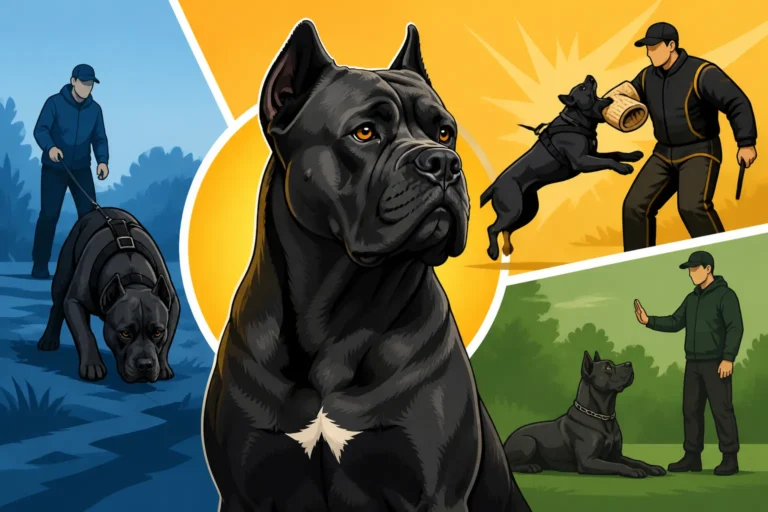
Whether a Cane Corso Guards the Yard Without Training
Many aspiring Cane Corso owners mistakenly believe that because these dogs are naturally protective, they will automatically know how to guard their property effectively and safely without any dedicated training. This assumption often leads to frustrating, and sometimes dangerous, situations where the dog exhibits uncontrolled reactivity, barks incessantly, or misunderstands actual threats. This guide will delve into the nuances of a Cane Corso's guarding instincts and explain why deliberate, consistent training is absolutely essential to channel those powerful instincts into a reliable and well-behaved guardian of your yard and home.
Understanding the Cane Corso's Natural Instincts
The Cane Corso is a formidable breed, historically bred for protection and working on Italian farms, guarding livestock and property. They possess a deep-seated instinct to protect their family and territory, which is one of their most defining characteristics. However, mistaking this natural inclination for an inherent ability to perform complex guarding duties without guidance is a common pitfall.
The Difference Between Instinct and Trained Behavior
Think of instinct as raw potential, like a powerful engine. Without a steering wheel, brakes, and a skilled driver, that engine can cause chaos rather than provide controlled movement. A Cane Corso's guarding instinct is much the same. They feel a need to protect, they notice anything out of the ordinary, and they have the physical presence to deter threats. But how they respond to these observations—whether they bark appropriately, hold their ground, or rush the fence aggressively—is entirely dependent on how you channel that instinct through training.
An untrained Cane Corso might see the mail carrier, a neighbor walking their dog, or even a leaf blowing across the yard as a potential threat requiring an intense, full-force response. This isn't guarding; it's often uncontrolled reactivity stemming from a lack of understanding about what constitutes a genuine threat and what an appropriate response looks like. Their natural inclination to be watchful can easily morph into over-arousal or anxiety if not properly managed. It's crucial to understand What a Cane Corso's Guardian Instinct Actually Is and then build upon it with structure.
What "Guarding" Looked Like Historically for the Cane Corso
Historically, the Cane Corso wasn't just left in a yard to "figure it out." These dogs worked alongside farmers, who were very much involved in directing their dogs. The Corso's job might have involved keeping cattle within a certain boundary, deterring wild animals, or standing watch over the family's assets. This work was often supervised and involved specific, learned behaviors, not just a free-for-all. They were taught through consistent exposure, correction, and reward what was expected of them.
Imagine a Cane Corso protecting a flock of sheep in rural Italy. It wasn't just barking at everything. It learned to differentiate between a harmless deer passing by and a predatory wolf, often with cues from its human handler. This level of discernment comes from exposure, consistent leadership, and explicit training, not just being born with a protective drive. While the genetics provide the foundation, the detailed application of that instinct is learned. Furthermore, their territoriality often begins to develop around a certain age, as explored in The Age a Cane Corso Becomes Territorial, making early intervention critical.
The Risks of Untrained Guarding Behavior
Relying solely on a Cane Corso's natural instincts for yard security is a recipe for trouble. Without proper training, these powerful dogs can quickly develop undesirable and potentially dangerous behaviors that make them a liability rather than a trusted guardian.
Uncontrolled Reactivity and Over-Guarding
An untrained Cane Corso might interpret any new stimulus as a threat, leading to persistent, high-intensity barking at everything that moves beyond your fence line. This isn't just annoying; it can be incredibly stressful for the dog and your neighbors. They might lunge at the fence, causing damage or even injury to themselves or an innocent passerby. This uncontrolled reactivity is a far cry from the composed, discerning guardian you likely envision.
Imagine your Cane Corso, weighing over a hundred pounds, charging your privacy fence and barking furiously at a child riding a bicycle down the street. While the dog feels it's "guarding," it's actually displaying inappropriate and potentially fear-based aggression that isn't helping anyone. It creates a stressful environment for your dog, who is constantly on high alert, and can erode trust within your community. This behavior is a clear example of The Difference Between Guarding and Reacting in a Cane Corso. A truly guarded yard means the dog is calm and only reacts when genuinely necessary, under the control of its handler.
The Importance of Socialization Alongside Guarding Instincts
Many people assume that a protective breed like a Cane Corso shouldn't be too socialized, thinking it might dull their guarding edge. This couldn't be further from the truth. Proper, neutral socialization is critical, especially during The Socialization Window a Cane Corso Puppy Gets. A well-socialized Cane Corso is confident, understands that most people and dogs are not threats, and therefore can make better judgments about when to truly alert. An undersocialized Cane Corso, on the other hand, is more likely to be fearful or insecure, leading to reactive and aggressive displays out of anxiety rather than true, confident guarding.
An unsocialized Cane Corso often barks frantically at strangers or dogs passing by, not because they are inherently dangerous, but because the dog hasn't learned how to process these common stimuli. This can lead to a dog that is constantly stressed, and if a true threat ever arises, their reaction might be an over-the-top, uncontrolled explosion rather than a measured, effective deterrent. They become A Cane Corso That Barks at Everyone Who Passes because they simply don't have the learned context to understand that most passersby are benign.
Why Training is Non-Negotiable for Yard Security
Training isn't about suppressing a Cane Corso's natural instincts; it's about refining and directing them. It provides the framework for your dog to understand its role, its boundaries, and how to appropriately respond to the world around it, creating a truly reliable and effective guardian.
Establishing Boundaries and Appropriate Alerting
Effective yard guarding involves a deep understanding of boundaries, both physical and behavioral. Your Cane Corso needs to know where its territory ends and where it begins, and what kind of activity within that territory warrants an alert versus what should be ignored. This requires consistent training on commands like "place," "stay," and a solid recall, even with distractions. You need to teach them to alert with a bark, but then to disengage and look to you for direction once you've acknowledged the perceived threat.
A common exercise is teaching your dog to "alert and stand." When someone approaches your property, the dog might give a few barks, but then stands calmly at a distance, looking to you for confirmation. This is far more effective and less stressful than a dog throwing itself at the fence. Using tools like a solid long line, perhaps one found on Amazon, during these training sessions can help you manage their impulse control and reinforce the desired behavior. Remember, The Structure a Cane Corso Needs Every Single Day applies as much to guarding scenarios as it does to everyday life. Without it, their natural inclinations become liabilities.
The Role of Obedience in Managing a Guardian Breed
High-level obedience is paramount for a Cane Corso, especially one expected to guard. Commands like "sit," "stay," "down," and a rock-solid recall are not just tricks; they are essential safety mechanisms. If your Cane Corso is fixated on something beyond the fence, you need to be able to call them away instantly. If a guest arrives, you need them to be able to go to their "place" and stay there calmly. Without this level of control, their guarding instincts can quickly become unmanageable.
Consider a scenario where a repair person needs to enter your yard. An untrained Cane Corso might view this as an invasion, while a well-trained one can be commanded to a specific spot, allowing you to manage the interaction safely. Obedience also involves teaching them Teaching a Cane Corso to Ignore the Doorbell, so every ring doesn't trigger a chaotic rush. This is where programs like those offered by BAXTER & Bella can be invaluable, providing structured lessons that build a strong foundation of obedience and impulse control, allowing you to effectively manage your powerful guardian. It’s not about if Whether a Cane Corso Can Be Taught Not to Guard, but how to teach them to guard appropriately.
Ultimately, a Cane Corso's natural instinct to guard is a powerful asset, but it is raw and undirected without intentional training. To have a reliable, safe, and effective guardian for your yard, you must invest in consistent, positive, and firm training. This means teaching them appropriate boundaries, reinforcing good behavior, and ensuring they understand how to differentiate between a real threat and an everyday occurrence. Skipping this crucial step doesn't result in a better guard dog; it often leads to a reactive, anxious, and potentially dangerous animal that lacks the discernment needed for true protection.
Here's a quick comparison of what you might see:
| Aspect | Untrained Cane Corso (Reliance on Instinct Alone) | Trained Cane Corso (Instinct + Structure) |
|---|---|---|
| Response to Stimuli | Excessive barking, lunging, uncontrolled reactivity | Measured bark, alert posture, looks to handler for direction |
| Discernment | Barks at everything (mail carrier, squirrel, child) | Differentiates between normal events and actual threats |
| Stress Level | High, constantly on alert, anxious | Confident, calm, only aroused when necessary |
| Safety for Others | Risk of fence fighting, intimidating behavior | Predictable, controllable, safe for invited guests and passersby |
| Handler Control | Minimal, dog acts on impulse | High, dog responds to commands even during high-arousal situations |
| Effectiveness | Potentially intimidating, but uncontrolled | Effective deterrent due to controlled power and clear communication with handler |
A robust fence, as discussed in The Fencing Height a Cane Corso Needs, is a great starting point for physical security, but the dog inside that fence needs equally robust mental training.
Disclaimer
This article is for general informational purposes only and does not constitute professional advice. Laws, prices and regulations vary by location and change over time. Consult a qualified professional for guidance on your specific situation.