What IGP Training Involves for a Cane Corso
So, you're looking into IGP training for your Cane Corso, and maybe you've heard some conflicting things or feel a little overwhelmed by the jargon. Many people picture protection work and immediately think of aggressive dogs, which couldn't be further from the truth with proper training. This guide will help you understand what IGP truly entails, whether it's a good fit for your powerful companion, and how to embark on this demanding but incredibly rewarding journey.
Understanding IGP: More Than Just "Protection Training"
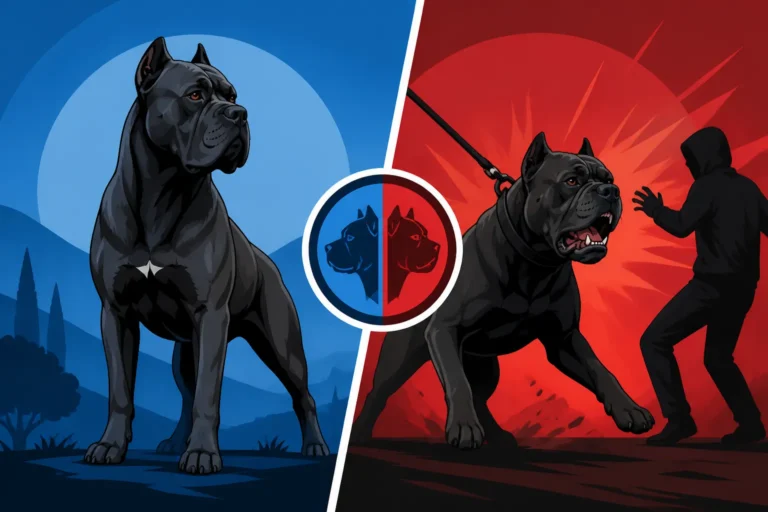
When people hear "IGP," their minds often jump straight to a dog biting a padded sleeve, and honestly, that's a fair assumption given its visible components. But let's be clear: IGP, which stands for Internationale Gebrauchshunde Prüfungsordnung (International Utility Dog Regulations), is a demanding three-part dog sport that tests a dog's temperament, intelligence, physical prowess, and trainability across a broad spectrum. It's not about creating an aggressive dog; it's about channeling a dog's natural drives and instincts into a highly disciplined and controlled sport.
The Evolution and Purpose of IGP
IGP has a rich history, originally developed in Germany as a breed suitability test for German Shepherds. The goal was to ensure that dogs being bred had not only good looks but also sound temperament, high intelligence, and strong working drives. Over time, it evolved into a sport open to many breeds, including our beloved Cane Corsos. For a Cane Corso, a breed historically valued for its guarding and working capabilities, IGP can be a fantastic outlet for their immense intelligence and protective instincts. It provides a structured environment where their natural talents are honed into a finely tuned partnership between dog and handler. Think of it as a canine triathlon, demanding excellence in mental acuity, physical control, and raw drive. Without a doubt, it’s a rigorous standard that evaluates whether a dog can perform under pressure while maintaining absolute control.
Why IGP is Different from "Guard Dog" Training
This is a crucial distinction, especially for a breed like the Cane Corso with strong guarding instincts. "Guard dog" training, in some contexts, can unfortunately lean towards encouraging uncontrolled aggression or reactivity without the necessary layers of obedience and handler control. IGP is the antithesis of this. Every aspect of IGP is about control. The dog must be callable off a bite, must retrieve specific items, and must perform complex obedience routines under various distractions. It's about discerning threats, engaging appropriately, and disengaging immediately on command. A well-trained IGP Cane Corso is not a liability; it's a highly disciplined athlete whose drives are channeled constructively. If your Cane Corso already has a strong What a Cane Corso's Guardian Instinct Actually Is, IGP provides a framework to manage and refine that instinct responsibly.
The Three Phases of IGP for a Cane Corso
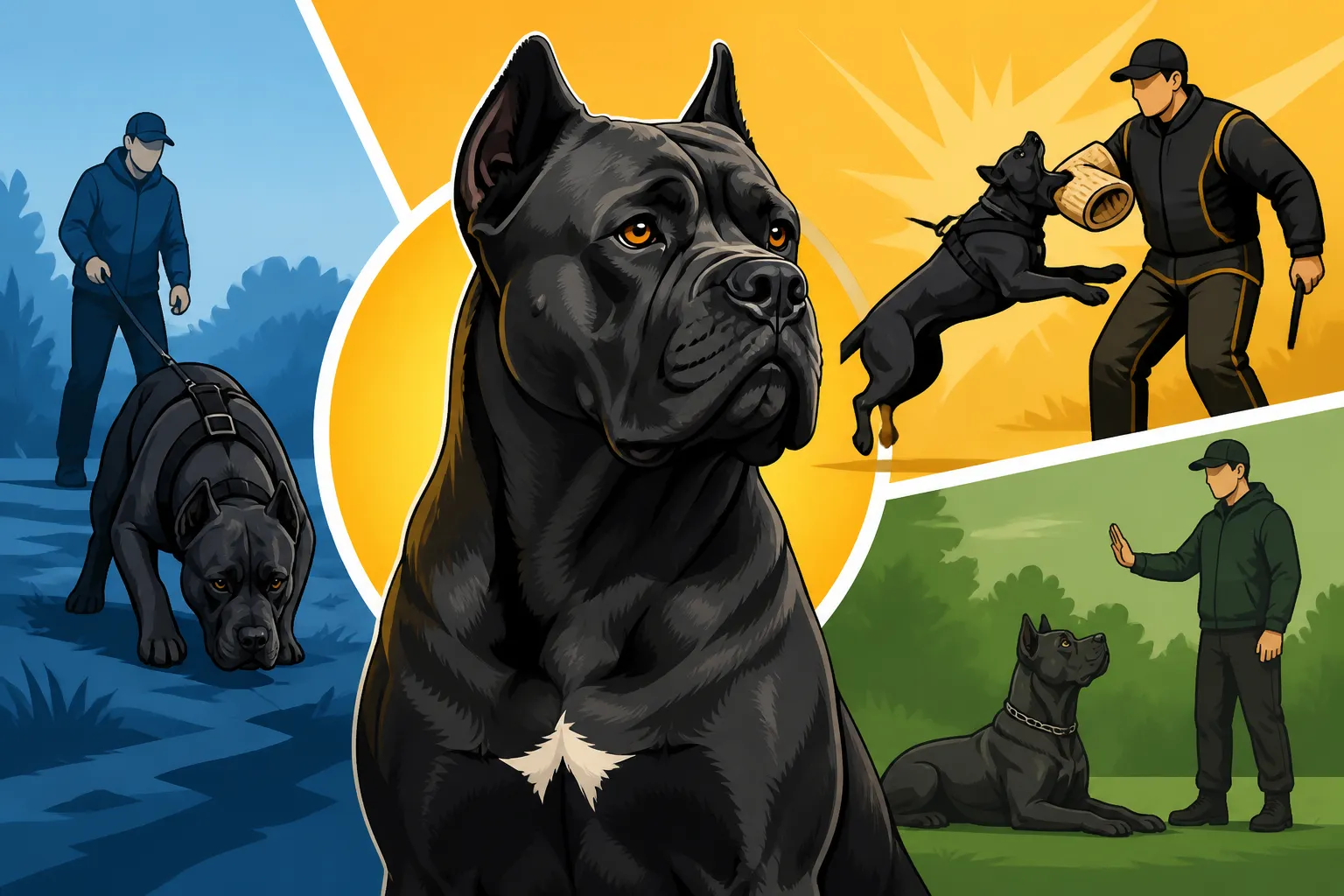
IGP is divided into three distinct phases: Tracking (Phase A), Obedience (Phase B), and Protection (Phase C). To earn an IGP title, a dog must successfully pass all three phases in a single trial. This comprehensive nature is what makes IGP such a challenging and respected sport.
Phase A: Tracking (Fährtenarbeit)
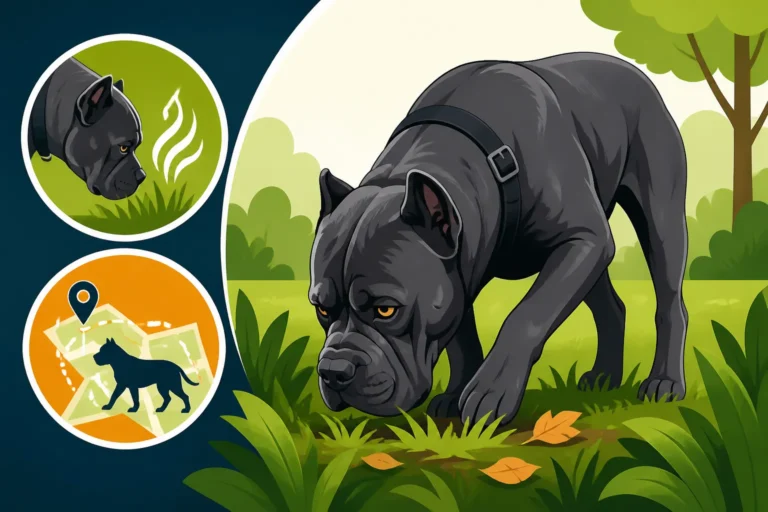
Tracking might seem less flashy than protection work, but it's arguably the foundation of a mentally engaged working dog. In this phase, your Cane Corso uses its incredible sense of smell to follow a human track, detecting the subtle ground disturbance and human scent left behind. The tracks vary in length, age, and number of turns and articles to be found and indicated by the dog. This isn't just a casual sniff around the park; it requires intense focus and problem-solving skills from your dog.
Imagine your Cane Corso, head down, methodically working across a field, ignoring the distractions of birds, other animal scents, and weather conditions. It takes immense concentration. The handler follows quietly behind, learning to read every subtle change in their dog's body language. It's a true partnership, built on trust and understanding, as the dog guides the team along an invisible path. For Cane Corsos, whose ancestors often had to follow trails to guard livestock or hunt, this phase taps into a very primal and satisfying drive. Training often starts with very short, fresh tracks and gradually builds up in complexity. You’ll be amazed at how deeply your dog can concentrate when given a clear task.
Phase B: Obedience (Unterordnung)
The obedience phase is where the discipline and control really shine. This isn't just basic "sit" and "stay"; it's a complex routine performed off-leash, showcasing precise movements, enthusiastic retrieves, and unflappable temperament under distraction. The exercises include heeling (walking perfectly by the handler's side, even through groups of people), sit, down, and stand commands, retrieves over obstacles, a retrieve on flat ground, and a send-out (where the dog runs straight away from the handler and downs on command at a distance). There's also a long down-stay under distraction, where the dog must remain perfectly still while another dog performs its obedience routine nearby.
For a powerful and sometimes stubborn breed like the Cane Corso, this phase is a testament to rigorous training and a strong bond. Every movement needs to be crisp, fast, and joyful, demonstrating that the dog wants to work with its handler. It’s here that Impulse Control Work for a Cane Corso becomes absolutely vital, allowing the dog to suppress its natural inclinations and perform precisely as asked. Think about a hundred-pound dog performing a retrieve over a meter-high jump, then returning to perfect heel position before releasing the dumbbell on command – it’s impressive to witness and even more so to achieve. This phase truly highlights the immense training commitment from both dog and handler. Organizations like BAXTER & Bella offer online puppy training programs that, while not specific to IGP, can provide an excellent foundation in basic obedience and positive reinforcement, which are critical building blocks before specialized IGP work begins.
Phase C: Protection (Schutzdienst)
This is the phase most people associate with IGP, and it's certainly the most visually dramatic. However, it's also the most misunderstood. The protection phase evaluates the dog's courage, fight drive, self-confidence, and ability to remain under absolute handler control while confronting a decoy (the person wearing the protective sleeve). The exercises include a search for the decoy, barking and holding the decoy, preventing an escape, courage tests (where the dog confronts the decoy head-on), and guarding the decoy without biting once the decoy is "downed."
Crucially, the dog is never encouraged to be aggressive towards humans in general. The focus is on the dog's inherent drive to protect its handler and on its courage and nerves, not on malice. The dog views the decoy and sleeve as a game, a "prey" item to be caught and controlled, under strict rules. The moment the decoy stops fighting or the handler gives a command, the dog must release the sleeve. An out-of-control dog or one that bites without command will fail immediately. This phase showcases the dog's ability to switch drives on and off instantly, demonstrating incredible mental stability and control. For a Cane Corso, whose ancestral job involved protecting family and property, this phase allows them to express those deeply ingrained drives in a safe, controlled, and sporting manner. It's a magnificent display of a dog's natural power harnessed by unparalleled training and control.
Is IGP Right for Your Cane Corso (and You)?
Deciding to pursue IGP with your Cane Corso is a huge commitment. It's not a casual hobby; it's a lifestyle. It demands dedication, time, financial investment, and a deep understanding of canine behavior and training.
Evaluating Your Cane Corso's Temperament and Drives
Not every Cane Corso is suited for IGP, and that's perfectly okay. A successful IGP dog needs a specific set of traits: strong nerves, high prey drive, natural courage, good physical conformation, and a desire to work with its handler. Dogs that are overly sensitive, fearful, or genuinely aggressive (as opposed to having strong protective instincts) are generally not good candidates. IGP is about building confidence and control, not about "fixing" temperament issues.
A good trainer will assess your dog's drives through various exercises, often involving toys like bite tugs or balls. They'll look for how your dog reacts to new environments, loud noises, and strangers. They'll also observe how your dog interacts with you. A Cane Corso that is easily distracted, has low toy drive, or lacks confidence might struggle and not enjoy the sport. Conversely, a Cane Corso with a stable, confident temperament and a strong work ethic will thrive. If you're unsure about your dog's suitability, seeking advice from an experienced IGP trainer is the first step. They can often tell you within a few sessions if your dog has the "stuff" for IGP. They will also emphasize the importance of early The Socialization Window a Cane Corso Puppy Gets to build a well-adjusted foundation.
The Commitment Required from the Handler
While the dog does the physical work, the handler is the one doing all the mental heavy lifting, the planning, and the consistent training. IGP is often described as a handler sport, because your skills are constantly being tested. You need to be patient, consistent, resilient, and willing to learn complex handling techniques. There will be frustrating days, plateaus, and moments where you feel like you're not progressing. But the bond you build with your Cane Corso through this shared journey is incredible.
Expect to spend hours each week training, both at a club and at home. You'll need to learn how to read your dog's body language, understand drive theory, and apply specific training methods. Finding a reputable IGP club with experienced decoys and trainers is paramount. The Structure a Cane Corso Needs Every Single Day certainly applies here – IGP training provides exactly that, but it demands it from the owner as well. Be prepared for early mornings, travel to trials, and investing in specialized equipment (which you can often find on Amazon, from proper training sleeves to long lines for tracking). This is not just about showing up once a week; it's a daily dedication to your dog's development.
Financial and Time Investment
Let's be realistic: IGP training is not cheap, and it’s a massive time sink. You'll have club membership fees, trial entry fees, equipment costs (sleeves, tugs, leashes, muzzles, jumps), potential travel and lodging for events, and possibly private lessons. Factor in the cost of high-quality food to fuel your working Cane Corso and regular vet check-ups to keep them in peak condition.
| Item/Category | Description | Estimated Frequency |
|---|---|---|
| Club Fees | Monthly or yearly fees for access to trainers, decoys, and training grounds | Monthly/Annually |
| Equipment | Bite sleeves, tugs, tracking lines, dumbbells, muzzles (e.g., from Amazon) | As needed |
| Trial Fees | Entry costs for sanctioned IGP trials | Per trial |
| Travel | Fuel, potentially lodging for trials held out of town | Per trial |
| Vet Care | Regular check-ups, ensuring your dog is fit for sport | Annually |
| Food/Supplements | High-quality diet for a high-energy working dog | Monthly |
| Decoy Fees | Some clubs charge per session for decoy work | Per session |
This isn't to scare you off, but to ensure you go in with open eyes. The return on investment, however, is a dog that is incredibly confident, well-behaved, and deeply bonded with you, fulfilling its natural drives in a constructive way. What Running a Hundred Pound Cane Corso Costs Yearly is a good read to understand the broader financial picture of owning a Cane Corso, and IGP training will certainly add to those costs.
Starting Your Cane Corso in IGP Training
If you've assessed your Cane Corso and yourself, and you're ready to dive into the world of IGP, here’s how you can get started.
Finding a Reputable IGP Club and Trainer
This is arguably the most critical step. Do your research. Look for clubs affiliated with recognized organizations. Visit several clubs if possible, without your dog initially, to observe their training methods. What to look for:
- Positive Reinforcement Focus: While protection work involves aversives, the overall training philosophy should be fair, balanced, and heavy on positive reinforcement, especially in obedience and tracking.
- Experienced Decoys: The decoy plays a massive role in shaping the dog's protection work. They should be knowledgeable, skilled, and able to read dogs well.
- Structured Sessions: Training should be organized, with clear goals and progression.
- Good Dog Temperaments: Observe the dogs already training there. Are they confident and controlled, or do they seem stressed or overly aggressive?
- Mentorship: A good club will foster a sense of community and offer mentorship to new handlers.
Don't be afraid to ask questions about their philosophy, safety protocols, and how they introduce young dogs to the sport. A good club will welcome your questions and be transparent. You want a trainer who understands giant breeds and their unique developmental needs. A place that truly adheres to What to Look For in a Cane Corso Trainer is paramount.
Laying the Foundation: Obedience and Socialization
Before your Cane Corso ever touches a tracking article or sees a bite sleeve, they need a solid foundation in obedience and socialization. This cannot be stressed enough. Your dog needs to know basic commands reliably, respond to its name, and be comfortable in various environments. A dog that is reactive or uncomfortable around people or other dogs will struggle immensely in IGP.
Focus on building a strong relationship through play, positive reinforcement, and consistent daily training. Attend basic obedience classes, perhaps even some online puppy classes that emphasize engagement and motivation. BAXTER & Bella offers some excellent foundational resources that can help new puppy owners build strong communication skills early on. Socialization is key: expose your puppy to different sights, sounds, people, and safe dogs in a positive way. A dog that is confident and neutral in public is a joy to train. Strong Leash Manners Before a Cane Corso Hits Ninety Pounds are also crucial, as you'll be handling a very powerful dog.
Gradual Introduction to Each Phase
IGP is a marathon, not a sprint. Your Cane Corso won't be doing full protection routines overnight. Training for each phase starts with very basic, fun exercises that tap into the dog's natural drives.
For Tracking, you might start with simple food drops on a straight line, encouraging your dog to put its nose down and follow. For Obedience, it’s about making every command a game, building enthusiasm for retrieves, and perfecting that heel position through repetition and reward. For Protection, the focus is almost always on prey drive – getting the puppy excited about chasing and tugging on a soft bite rag, building confidence and grip. It's a game of chase and tug, not aggression. The decoy starts by playing with the puppy, building its confidence and drive, long before a full sleeve is introduced. Everything is done incrementally, ensuring the dog is always successful and enjoying the work. It’s a slow, deliberate process that builds a robust and confident working dog.
Remember, the journey itself is the reward. Working with your Cane Corso in IGP can forge an unbreakable bond and allow your powerful companion to truly shine.
Disclaimer
This article is for general informational purposes only and does not constitute professional advice. Laws, prices and regulations vary by location and change over time. Consult a qualified professional for guidance on your specific situation.