Rules a Child Living With a Cane Corso Must Know
Living with a Cane Corso is an incredible experience, but when children are part of the household, it adds an entirely new layer of responsibility. It's not enough to simply trust your dog; you need a clear, consistent set of rules for your children to ensure everyone's safety and well-being. This guide will help you establish those critical boundaries and teach your kids how to interact respectfully and safely with your powerful family guardian.
Understanding the Cane Corso's Nature Around Children
Bringing a Cane Corso into a family with children means understanding their inherent traits and how those might interact with the unpredictable energy of kids. These are majestic, powerful dogs with deep instincts, and their reactions aren't always what you'd expect from a fluffy lap dog.
The Guardian Instinct and Family Members
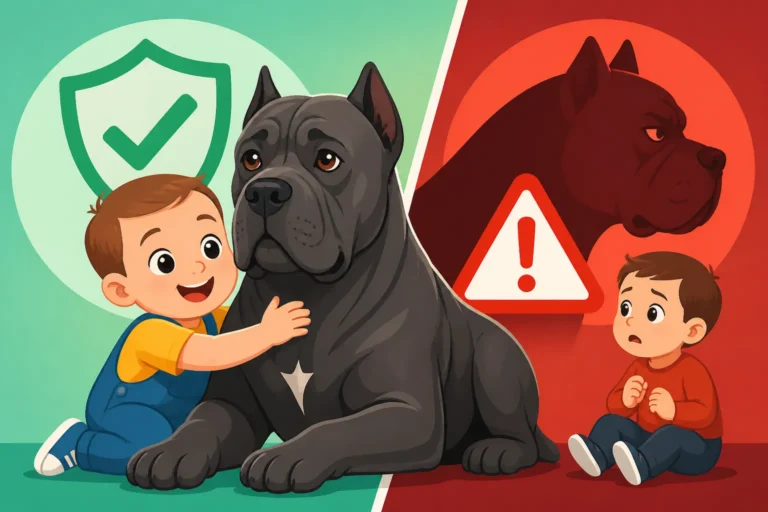
The Cane Corso was bred for protection, for guarding property, livestock, and family. This guardian instinct is a cornerstone of their personality, making them fiercely loyal and protective of their human "pack." While this sounds ideal for a family dog, it's crucial to understand how this instinct can manifest around children. Your Cane Corso sees your children as part of its protected flock, and it will often place itself between your child and perceived threats. This could be a playful friend entering the yard, a new babysitter, or even an unfamiliar delivery person. It's a double-edged sword: wonderful for true threats, but potentially problematic for innocent interactions. Understanding What a Cane Corso's Guardian Instinct Actually Is helps frame this.
This deep-seated protectiveness means your Cane Corso might become overly vigilant, even when unnecessary. They might position themselves between your child and others, or use their imposing presence to deter what they deem an intrusion, which can be unsettling for visitors or even other family members. It’s not aggression in the typical sense, but a strong, inherent drive to keep their perceived dependents safe. Teaching your dog clear boundaries, and teaching your children how to behave around them, is paramount to prevent misinterpretations and ensure your dog's guardian nature is channeled appropriately. Imagine your child running up to greet a friend at the door, and your Cane Corso suddenly steps in front of the child, giving a low rumble to the friend. This isn't malicious, but it demands careful management and consistent training for everyone involved. Whether a Cane Corso Guards the Children Too delves deeper into this specific dynamic.
Predictable vs. Unpredictable Child Behavior
Children, especially younger ones, are a whirlwind of unpredictable energy. They shriek, they run, they drop toys, they crawl, they stumble, they wave their arms wildly. For a dog that thrives on routine and calm, this can be a constant source of sensory overload and confusion. An adult might move calmly and predictably, but a child's sudden movements can trigger a dog's chase instinct or startle response. A loud, unexpected scream from a child playing might be interpreted by the Cane Corso as distress, causing it to rush in, or conversely, it might simply be startling and lead to an instinctive jump or bark.
This unpredictability means that what might be harmless to a smaller, more tolerant breed could be overwhelming or even dangerous for a large, powerful Cane Corso if not properly managed. Think of a toddler's unsteady gait and sudden falls, or a child’s quick, jerky motions while playing with a toy. These actions are normal for children but can be entirely alien and sometimes alarming to a dog that prefers a more stable environment. Without clear rules and constant supervision, these everyday child behaviors can inadvertently trigger an undesirable reaction from your Cane Corso. It underscores why having specific rules for how children interact with such a large dog is not just recommended, but absolutely essential for a peaceful household.
When a Cane Corso Knocks Small Children Over
Cane Corsos are big dogs, and they often don't fully realize their own size and strength. A playful nudge, a happy tail wag, or a sudden burst of zoomies can easily send a small child sprawling. This isn't malice; it's simply a lack of awareness of their powerful bodies in relation to delicate human children. Imagine your Cane Corso excitedly rushing to greet you at the door, or wanting to join in a game of fetch. While these intentions are good, a direct hit from a hundred-pound dog moving at speed can be quite serious for a small child, leading to bumps, bruises, or worse.
This becomes especially evident during moments of high excitement, such as when guests arrive, or during boisterous playtime. Your Cane Corso might be genuinely happy and want to participate, but its sheer mass can turn innocent enthusiasm into an accidental collision. Teaching a Cane Corso impulse control from a young age is vital, but equally important is teaching children how to react and move around their large canine companion. They need to understand that the dog might not see them or might not intend to knock them over, but the potential is always there. This is why addressing The Cane Corso That Knocks Small Children Over is a crucial part of any family safety plan, emphasizing prevention through both dog training and child education.
Essential Rules for Children Interacting with a Cane Corso
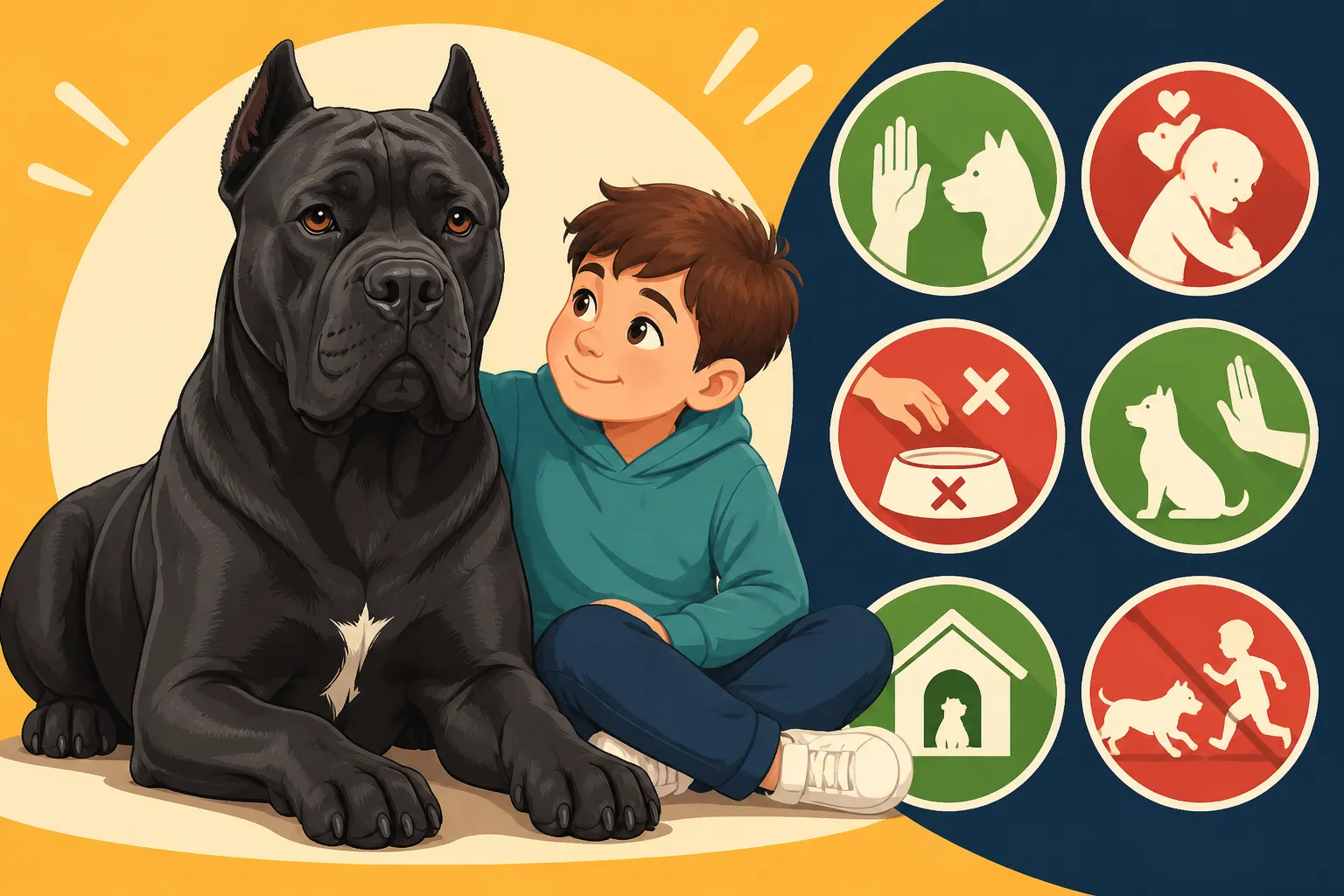
To foster a harmonious and safe environment, every child living with a Cane Corso needs to learn and consistently follow a set of fundamental rules. These aren't suggestions; they are non-negotiable guidelines that protect both your child and your dog.
Respecting the Dog's Space and Belongings
One of the most critical rules to instill in children is to respect the Cane Corso's personal space and belongings. Just like humans, dogs need their own quiet zones where they can retreat and feel safe. This includes their bed, crate, food bowl, water dish, and any toys they are currently playing with. Children should be taught that when the dog is in its bed or crate, it's "off-limits" for interaction. This designated safe space is vital for the dog to decompress and feel secure without being bothered. Think of it as your dog's bedroom – you wouldn't want someone constantly barging in without an invitation. Many incidents occur because a child approaches a dog when it is resting or feels cornered in its private space.
Equally important is teaching children never to bother the dog while it's eating or drinking. Food guarding is a natural, instinctual behavior for many dogs, and while good training can mitigate it, a child reaching into a food bowl is an unnecessary risk. The same goes for toys; while sharing is a lovely human trait, it's not always safe to demand a toy from a large, powerful dog like a Cane Corso. Instead, teach children to "trade" with a high-value treat if they absolutely need a toy back, or better yet, to leave the dog's personal toys alone. Introducing the concept of "leave it" to your dog and "leave the dog alone" to your children can greatly reduce potential conflict. This is where early training comes in, and resources like BAXTER & Bella's online puppy training program can be invaluable for teaching these foundational commands to your dog, which indirectly protects your children. It’s also important to explicitly teach children about Teaching a Cane Corso Puppy to Give Things Up from a young age so it’s a positive experience for both.
Gentle Interactions and Appropriate Play
Children naturally want to play with their pets, but not all play is appropriate or safe for a Cane Corso. Roughhousing, pulling ears or tails, climbing on the dog, or treating the dog like a rideable pony are absolute no-gos. These actions can cause pain, fear, or frustration for the dog, potentially leading to a defensive reaction. Cane Corsos are robust, but they aren't impervious to discomfort, and constant irritation can erode their patience. Children need to learn that petting should be gentle, on appropriate areas like the chest or shoulder, and always after the dog has invited interaction.
Supervised, appropriate play involves toys, not hands. Fetch, tug-of-war (with clear rules about letting go on command), and hide-and-seek with treats are all excellent ways for children and dogs to bond safely. Teach your children to throw a ball or a soft toy, rather than wrestling directly with the dog. When playing tug, emphasize that the game stops immediately if the dog's teeth accidentally touch a hand. This reinforces bite inhibition and control. The goal is to teach both parties how to engage positively without risking injury or creating an adversarial relationship. Remind children that a Cane Corso is a living, feeling creature, not a toy, and deserves respect and gentle handling at all times. This guidance is critical for preventing situations that could lead to your Cane Corso accidentally or intentionally causing harm, such as the issues discussed in Teaching a Cane Corso Not to Body Slam.
How to Approach and Pet a Cane Corso
The way a child approaches and pets a Cane Corso is vital for building trust and ensuring safe interactions. The golden rule is to always let the dog initiate contact. Children should never run up to a dog, especially one that is resting or preoccupied. Instead, they should calmly walk towards the dog, stop a respectful distance away, and wait for the dog to acknowledge them and perhaps even approach. If the dog appears receptive (loose body, wagging tail, relaxed ears), they can then offer a hand, palm up, for the dog to sniff.
Once the dog has sniffed and shown continued interest, children can be taught to pet the dog gently on the chest, shoulder, or side of the neck, rather than reaching over its head. Patting a dog on the head can be perceived as threatening, especially for a large dog with strong guarding instincts. It’s also important to teach children to avoid hugging the dog tightly or putting their face too close to the dog's face, as these actions can make any dog feel trapped or uncomfortable. Always supervise these interactions closely, and if the dog shows any signs of discomfort—like turning its head away, lip licking, yawning, or stiffening—it's time to calmly disengage. These nuanced approaches are fundamental to ensuring that your Cane Corso views interactions with children as positive and non-threatening.
Supervision, Management, and Environmental Setup
Even with the best training and the most well-behaved dog, constant vigilance and careful management are critical when a Cane Corso shares a home with children. Prevention is always better than intervention, and creating a safe environment is a continuous effort.
The Importance of Constant Adult Supervision
This cannot be stressed enough: children and Cane Corsos should never be left unsupervised, even for a moment. This isn't about distrusting your dog or your child; it's about acknowledging that accidents can happen in an instant, even with the most well-meaning individuals. A quick dash to the bathroom, answering the phone, or stepping into another room can be all it takes for a situation to escalate. Adults are responsible for reading the subtle cues from both dog and child, anticipating potential issues, and intervening before problems arise. This means being actively present, not just physically in the same room, but mentally engaged with their interactions.
Active supervision means you are watching for signs of discomfort in your dog (lip licking, yawning, stiffening body, looking away), and signs of inappropriate behavior from your child (pulling, climbing, invading space). It means being ready to step in calmly and redirect either party. This level of constant vigilance can be exhausting, which is why it's crucial to have other management strategies in place. But at its core, the presence of an attentive adult is the most powerful safety measure in a household with a Cane Corso and children. Consider what is discussed in Supervising a Cane Corso With Children on the Floor to grasp the full scope of this responsibility.
Creating Safe Zones and Boundaries
To support constant supervision and provide necessary breaks for both dog and child, establishing clear safe zones and boundaries within the home is essential. A well-trained Cane Corso should have a crate that is its sanctuary – a place where it can go to rest undisturbed. Children must be taught that the crate is a no-go zone. Similarly, baby gates, readily available on platforms like Amazon, are invaluable tools for physically separating dogs and children when direct supervision isn't possible, or when either needs a break. You can use gates to block off certain rooms, create a "dog-free" play area for children, or even create a "child-free" relaxation zone for your Cane Corso.
These physical barriers aren't just for separation; they actively teach boundaries to both dog and child. The dog learns that certain areas are off-limits for its patrolling or play, and the child learns that they cannot access the dog at all times. This management prevents situations where either party feels overwhelmed or cornered. For instance, when the doorbell rings and the Cane Corso gets excited, the children can be safely behind a gate, preventing accidental knocks or over-excitement. For a new baby joining the family, setting up these zones well in advance can greatly aid in the transition, as highlighted in How a Cane Corso Reacts to a New Baby Coming Home. Having these clear physical boundaries in place is a proactive measure that greatly contributes to household harmony and safety.
Managing High-Energy Situations and Play
High-energy situations are a recipe for potential accidents in a Cane Corso household with children. Children screaming, running, or playing wildly can easily over-excite a Cane Corso, leading to accidental bumps, jumps, or even an unintended nipping if the dog gets over-aroused. It's vital for adults to recognize these moments and proactively manage them. This often means separating the dog and children before things get too boisterous. For example, if kids are having a lively playdate, it might be best to put the Cane Corso in its crate with a favorite chew toy or in a separate, secure room.
When play is appropriate and supervised, ensure that toys are used for interaction rather than hands. If the Cane Corso starts to get too rough or overly excited, an adult should calmly intervene, ask the dog for a "sit" or "down" command, or redirect its energy to a solo activity like a puzzle toy. Teaching your Cane Corso Impulse Control Work for a Cane Corso is key here. Children also need to learn to recognize when the dog is becoming overstimulated and to disengage calmly. This isn't about stopping fun, but about teaching safe ways to have fun that respect the dog's limits and prevent unintended consequences from a powerful, enthusiastic animal.
| Interaction Type | Rules for Children | Why It's Important |
|---|---|---|
| Dog's Resting Space | NEVER disturb the dog when it's in its bed or crate. | This is the dog's sanctuary; disturbing it can lead to fear or defensive reactions. |
| Eating & Drinking | NEVER touch the food bowl or dog while it's eating. | Prevents resource guarding and potential bites. |
| Playing with Toys | Only play with approved toys; trade, don't take. | Reduces resource guarding; some toys might be guarded more than others. |
| Approaching the Dog | Walk calmly; let the dog come to you; offer hand to sniff. | Prevents startling the dog; allows the dog to feel in control of the interaction. |
| Petting the Dog | Gentle strokes on chest/shoulder; avoid head and tail. | Head pats can be threatening; rough petting can cause pain or irritation. |
| Rough Play | NO pulling ears/tail, climbing, riding, wrestling. | Can cause pain, fear, or frustration; leads to defensive reactions or accidental injury. |
| Loud Noises/Running | Avoid sudden screams, fast movements around the dog. | Can startle the dog or trigger chase instincts, leading to accidental knocks. |
| Dog Showing Discomfort | Stop interaction immediately, move calmly away, tell an adult. | Discomfort signs (yawn, lick lips, turn head) are warnings; ignoring them can escalate situations. |
Teaching Children Dog Body Language and Signals
For a truly safe and respectful relationship, children need to learn how to "read" their Cane Corso. Dogs communicate constantly through their body language, and understanding these signals is paramount to avoiding conflict and building trust.
Recognizing Stress and Discomfort Cues
Dogs often give subtle signals of stress or discomfort long before they resort to growling or snapping. Teaching children (and adults!) to recognize these early warning signs is a game-changer for prevention. These cues include lip licking (when there's no food around), yawning (when not tired), turning their head away, avoiding eye contact, sniffing the ground, raising a paw, or having a stiff body posture. These are all polite ways a dog tries to say, "I'm uncomfortable; please give me space." If a child can learn to spot these signals, they can disengage before the dog feels the need to escalate its communication.
Think of a scenario where a child is enthusiastically trying to hug the Cane Corso, and the dog starts to lick its lips rapidly or yawn repeatedly. Without understanding these cues, the child might persist, making the dog feel more trapped and uncomfortable. When children learn to interpret these silent requests, they learn empathy and respect for their canine companion. Parents should actively point out these behaviors in their Cane Corso and explain what they mean, reinforcing that these are signals for the child to back off calmly and tell an adult. This proactive education is much safer than waiting for a more explicit, and potentially dangerous, warning from the dog.
Understanding Warning Signals (Growls, Stares)
Beyond the subtle signs, dogs also have more explicit warning signals, such as growling, a hard stare, or raised hackles. It's absolutely crucial that children are taught that a growl is a warning, not aggression to be punished. If you punish a dog for growling, you teach it that warning is unacceptable, which means the next time it's uncomfortable, it might skip the growl and go straight to a bite. A growl is a dog's way of saying, "I'm really uncomfortable, and I need you to stop what you're doing right now."
A hard stare, where the dog fixes its gaze intently without blinking, can also be a significant warning. It often signals a dog that is feeling threatened or is guarding something. Similarly, raised hackles (the hair along the dog's spine standing up) indicate arousal, fear, or aggression. Children need to know that if they see or hear any of these signals from their Cane Corso, the immediate action is to stop what they are doing, calmly move away, and tell an adult. Under no circumstances should they try to "dominate" or confront a dog that is giving these warnings. Respecting these boundaries can quite literally prevent serious incidents and teach children vital lessons about canine communication and safety.
Responding Safely to a Cane Corso's Reactions
Knowing the signals is only half the battle; children also need to know how to respond safely and effectively. If a Cane Corso growls, stiffens, or shows clear signs of distress, the child's response should be calm, slow, and disengaging. They should avoid screaming, running, or making sudden movements, as these can escalate the dog's arousal or predatory drive. Instead, they should slowly back away, avoid direct eye contact (which can be perceived as a challenge), and create distance between themselves and the dog. The next step is always to immediately inform an adult about what happened.
This calm, measured response is vital because it doesn't add fuel to the fire. Running might trigger a chase, and screaming might heighten the dog's alarm. By retreating calmly, the child communicates that they are not a threat and are complying with the dog's request for space. This reinforces that the dog's communication was effective without negative repercussions for the dog. Adults then need to assess the situation, remove the child and dog from the environment, and identify what triggered the dog's reaction to prevent it from happening again. This is a skill that takes practice and consistent reinforcement from parents, making it a cornerstone of Whether a Cane Corso Is Safe Around a Baby and Raising a Cane Corso Around Small Children.
Preparing the Cane Corso for Life with Children
While establishing rules for children is crucial, equally important is ensuring your Cane Corso is well-prepared and trained for life in a bustling family environment. A well-socialized and obedient Cane Corso is a much safer companion.
Early Socialization and Desensitization
The groundwork for a well-adjusted Cane Corso begins in puppyhood with early and consistent socialization. This isn't just about meeting other dogs; it's about exposing the puppy to a wide variety of sights, sounds, smells, people, and experiences in a positive, controlled manner. For a Cane Corso destined to live with children, this means supervised, positive exposure to calm, well-behaved children of various ages from a very young age. This helps the puppy learn that children are a normal, non-threatening part of its world. This is especially critical during The Socialization Window a Cane Corso Puppy Gets, which closes faster than many owners realize.
Desensitization involves gradually exposing the puppy to things that might be startling or overwhelming, like children's sudden movements, high-pitched voices, or even the sounds of toys dropping. This is done by pairing these stimuli with positive reinforcement, such as treats or praise, so the puppy forms positive associations. For example, playing recordings of children laughing or crying at a low volume while feeding the puppy, and slowly increasing the volume over time. If children are already in the home, controlled "meet and greet" sessions should always be supervised by an adult, short, positive, and end before the puppy or child gets overwhelmed. This proactive approach helps build a resilient and tolerant dog, reducing the likelihood of fear-based or startled reactions later on. The BAXTER & Bella online puppy training program often has modules dedicated to this critical early development.
Consistent Training for Impulse Control
A Cane Corso, by virtue of its size and strength, absolutely must have excellent impulse control. This means teaching commands like "leave it," "stay," "wait," and a rock-solid recall, and practicing them consistently in various environments, especially around tempting distractions like children. "Leave it" is perhaps one of the most vital commands, allowing you to tell your dog to ignore a dropped toy, a child's snack, or even a child running by. This command gives you immediate control over your dog's attention and actions, preventing potential issues before they start.
Consistent training isn't a one-and-done event; it's an ongoing commitment throughout your Cane Corso's life. Regular practice, even for just a few minutes each day, reinforces these commands and strengthens the bond between dog and handler. When a Cane Corso knows that listening to its owner brings positive rewards, it’s more likely to respond reliably even in chaotic situations. This kind of disciplined training is not about breaking the dog's spirit but about building clear communication and predictable behavior, which is a cornerstone of safety in a family environment. An untrained Cane Corso, especially one that hasn't learned these critical impulse control behaviors, can inadvertently pose a significant risk, which is why Why a Cane Corso Is Not a First Dog often rings true for many new owners.
The Role of Obedience in a Multi-Species Household
Obedience training isn't just about teaching tricks; for a Cane Corso, it's about establishing a clear hierarchy, building trust, and ensuring that the dog understands its place and expectations within the family unit. In a multi-species (and multi-age) household, a dog that consistently listens to commands is a safer, more manageable dog. A reliable "stay" or "place" command can keep your Cane Corso calmly settled on its mat while children are playing, or while guests are at the door, preventing over-excitement or accidental collisions. These commands provide the structure and predictability that a large guardian breed like the Cane Corso thrives on.
Every family member, including older children if they are capable and mature enough, should be involved in the dog's training to ensure consistency. When everyone uses the same cues and expectations, the Cane Corso understands what is required, no matter who is giving the command. This unified approach prevents confusion and reinforces the dog's good habits. A well-behaved, obedient Cane Corso that respects boundaries and understands commands is not only safer but also a more integrated and valued member of the family. This commitment to ongoing obedience helps you manage everything from mealtime manners to public outings, ensuring that your powerful dog remains a calm, confident, and respectful presence in your home. Impulse Control Work for a Cane Corso emphasizes the dedication needed for this level of training.
Disclaimer
This article is for general informational purposes only and does not constitute professional advice. Laws, prices and regulations vary by location and change over time. Consult a qualified professional for guidance on your specific situation.