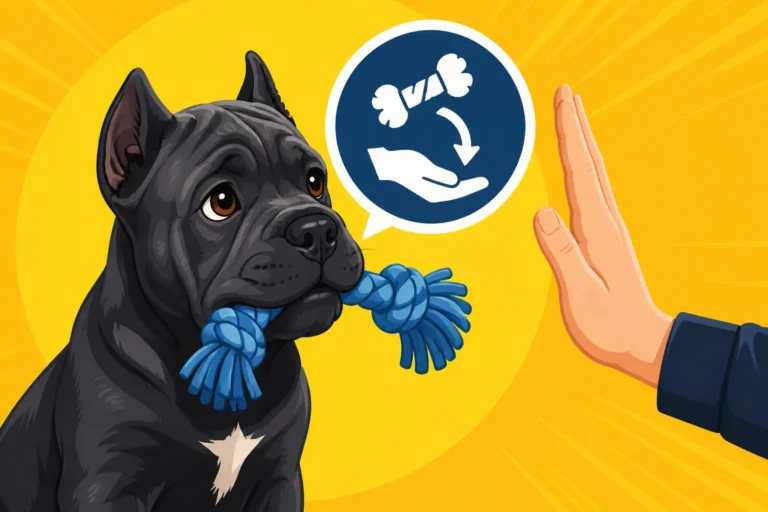
How a Cane Corso Decides Who Is a Threat
It's a common scenario: you have this magnificent, powerful Cane Corso, a dog bred for protection, and you want to ensure they understand their role without becoming overly reactive or fearful. The real challenge comes when your dog, with their keen senses and deep-seated instincts, starts to size up every new person or situation, leaving you wondering if they're about to perceive a threat or if they're simply observing. This guide is dedicated to dissecting the intricate process by which a Cane Corso decides who or what might constitute a threat, offering insights to help you understand and wisely manage these powerful protective instincts.
Understanding the Cane Corso's Innate Guardian Instincts
When we talk about a Cane Corso, we're not just discussing a large dog; we're talking about a living piece of history, a dog whose very purpose was to protect. Their instincts are not something you can train out, nor would you want to, as it's part of what makes them so special. The key is understanding these instincts and channeling them appropriately.
The Historical Role and Breed Temperament
The Cane Corso's ancestors were formidable Roman war dogs, and later, indispensable farm dogs in rural Italy. Their job wasn't just to look intimidating; it was to actively guard property, livestock, and family against intruders, both human and animal. This wasn't a dog that merely barked from a distance; they were expected to assess, deter, and, if necessary, engage. This deep-seated history means they come pre-programmed with a strong sense of territory and an acute awareness of anything "out of place."
Imagine a quiet Italian farm, miles from the nearest village, with livestock roaming and children playing. The Cane Corso was the vigilant sentinel, constantly observing their environment. Their keen senses were tuned to subtle shifts in sound, smell, and visual cues. They learned to distinguish between the familiar sounds of a neighbor's tractor and the hushed footsteps of an unwelcome stranger. This historical context illuminates why your modern Cane Corso might be so discerning, often seeming to know things you don't even perceive yet. It's not aggression for aggression's sake; it's a centuries-old job description manifesting in their daily behavior. The Roman War Dog Behind the Cane Corso offers more historical context.
Not Just Aggression, But Observation
Many people mistakenly equate a Cane Corso's guarding instinct with outright aggression, but that's a superficial understanding. True Cane Corso guarding is rooted in observation, assessment, and a deep sense of loyalty. A well-bred and well-socialized Cane Corso doesn't simply react with hostility to every new person. Instead, they observe. They take in a vast amount of information from a person's demeanor, gait, voice, and even the direction of their gaze.
Think of it like a highly trained security professional at a VIP event. They aren't tackling everyone who walks by; they are scanning the crowd, identifying anomalies, and maintaining a watchful presence. Your Cane Corso does much the same. They might stand still, ears slightly perked, eyes tracking, sometimes even letting out a low, rumbling growl that's more a warning than an immediate attack. This is their way of saying, "I see you, I'm evaluating you, and I'm prepared to act if you prove to be a threat." Understanding this nuanced observation is crucial because it allows you to intervene appropriately, guiding your dog's assessment rather than trying to suppress it entirely. A calm, "boring" demeanor in public is often the sign of a truly confident and well-managed guardian. Why the Best Cane Corso Looks Boring in Public discusses this concept further.
Key Factors in a Cane Corso's Threat Assessment
A Cane Corso's decision-making process regarding threats is far from simplistic. It's a complex interplay of environmental cues, a stranger's behavior, and the subtle signals they receive from their trusted owner. They are constantly gathering data, processing it, and formulating a response.
Body Language and Demeanor of Strangers
One of the most significant factors a Cane Corso considers is the body language and demeanor of the individual approaching or interacting with their space. Dogs are masters at reading non-verbal cues. A person who approaches confidently, directly, and with an open posture is generally perceived differently than someone who is hesitant, shifty-eyed, or makes sudden, erratic movements.
For instance, consider a delivery driver. If the driver walks briskly to the door, hands visible, making eye contact (but not staring intensely), and speaks in a normal tone while setting down a package, your Cane Corso might offer a deep "woof" as a warning, then settle into a watchful stance. Now, imagine a stranger lurking near your fence, trying to peer into your windows, or approaching your yard with hesitant, furtive movements. This entirely different set of cues will trigger a much stronger, more urgent protective response. Your Cane Corso isn't judging character; they're judging intent based on observable actions, and erratic or furtive behavior is often a red flag in their world. Reading a Cane Corso's Body Language at a Distance can help you understand these signals even better.
Context and Environment Play a Huge Role
Where and when an encounter happens is just as critical as who is involved. A Cane Corso's "threat meter" changes dramatically based on the environment. For example, a dog might be perfectly comfortable and social at a dog park, sniffing other dogs and greeting new people with a wagging tail, but the moment that same stranger steps onto your property, the dynamic shifts entirely.
Their protective instincts are fundamentally tied to their perceived territory. Your home, your yard, your car, even the immediate space around you on a walk—these are all areas your Cane Corso may consider part of their domain to protect. A person approaching your front door is viewed through a different lens than the same person encountered at a busy farmer's market. Moreover, time of day can influence this. A stranger walking by in broad daylight might elicit a bark, but the same shadowy figure at dusk or late at night could trigger a more intense alarm. The noise level, the presence of other dogs or children, even the weather conditions can all subtly influence your Cane Corso's assessment of a situation, adding layers to their threat calculation. The Difference Between Guarding and Reacting in a Cane Corso explores this further.
Owner's Cues and Emotional State
Perhaps the most underestimated factor in a Cane Corso's threat assessment is you, their owner. These dogs are incredibly attuned to their human companions. Your emotional state, your body language, and your verbal cues send powerful signals that directly influence how your Cane Corso perceives a situation. If you become tense, anxious, or fearful when a stranger approaches, your dog will pick up on that and interpret it as confirmation that there is indeed something to be concerned about.
Conversely, if you remain calm, confident, and provide clear guidance, your Cane Corso is more likely to defer to your judgment. Imagine a situation where someone approaches you on a walk. If you stiffen, pull your dog closer, and shorten the leash, your dog might think, "Mom/Dad is worried, this person must be a threat!" However, if you relax, offer a casual "hello," and give your dog a clear "leave it" cue, they learn that you are handling the situation, and they don't need to escalate their protective response. This highlights the immense responsibility of the owner in shaping and guiding a Cane Corso's instincts, making a respectful and consistent handler absolutely essential. The Handler a Cane Corso Respects is paramount to this dynamic.
Early Influences on Threat Perception: Puppyhood and Socialization
The foundation of a Cane Corso's behavior, including how they decide who is a threat, is laid down during their formative months. This period is incredibly sensitive and impactful, shaping their worldview for the rest of their lives.
The Critical Socialization Window
From roughly 3 to 16 weeks of age, a Cane Corso puppy experiences a critical socialization window. During this time, every positive and neutral experience with new people, places, sounds, and other animals is logged as "safe" or "normal." The more varied and positive these exposures are, the more resilient and discerning your adult Cane Corso will be. A puppy who meets many different types of people—tall men, women with hats, children, people with beards, people using wheelchairs, individuals of various ethnicities—learns that these differences are not inherently threatening.
Without this broad exposure, a dog might generalize fear or suspicion, seeing anything unfamiliar as a potential danger. For example, if a Cane Corso puppy only ever meets people in their home environment and never experiences a busy street, they might react with fear or alarm when suddenly confronted with traffic noise and crowds later in life. This isn't about forcing interactions; it's about structured, neutral exposure to the world around them. Programs like BAXTER & Bella can be incredibly helpful for new puppy owners, providing structured guidance on how to safely introduce new experiences and build a confident, well-adjusted dog. The Socialization Window a Cane Corso Puppy Gets is a brief but absolutely vital period.
The Impact of Early Experiences
Beyond the sheer volume of exposure, the quality of early experiences profoundly impacts a Cane Corso's threat perception. A puppy who experiences trauma, neglect, or overly harsh corrections during this sensitive period might develop a hyper-vigilance or fear-based reactivity. They might learn that the world is a dangerous place and that they need to be constantly on guard, leading to an exaggerated perception of threats.
Conversely, a puppy raised in a stable, predictable, and supportive environment, where they learn to trust their human companions, will develop a more balanced approach to new stimuli. This means ensuring that any new interactions are positive or, at the very least, neutral. Forcing a puppy to interact with something they're clearly afraid of can be counterproductive. Instead, it's about creating positive associations, such as pairing the sight of a new person with high-value treats or calm praise. A Cane Corso who feels secure in their environment and with their family is far less likely to perceive benign encounters as dangerous, and much more capable of making clear, confident decisions. Neutral Socialization for a Cane Corso at Twelve Weeks is a great way to build this foundation.
When Protection Becomes a Problem: Misinterpretations and Management
While their protective instincts are part of the Cane Corso's appeal, these instincts can become problematic if not properly guided. Misinterpreting their cues or failing to provide appropriate management can lead to fear-based aggression or over-guarding that puts others at risk.
Distinguishing True Threat from Suspicion
A Cane Corso's primary function is to deter, not to attack without cause. A truly confident guardian will often assess, give a warning (a bark, a low growl, a hard stare), and only escalate if the perceived threat continues to advance or ignore their warnings. The problem arises when a Cane Corso, due to poor socialization, fear, or a lack of clear guidance from their owner, misinterprets benign intent as a genuine threat. This could manifest as lunging and barking at every passerby on a walk, or growling at a friend who simply reaches out to shake your hand.
It's crucial for owners to learn to differentiate between their dog's natural suspicion and an inappropriate overreaction. Suspicion might look like a Cane Corso watching intently, perhaps with a low, questioning whine. An overreaction, on the other hand, is a sudden, aggressive display that is out of proportion to the actual situation. If your dog is consistently showing signs of fear or aggression in non-threatening situations, it’s a clear signal that intervention is needed. This isn't about punishing the instinct, but about teaching your dog appropriate responses and building their confidence in your leadership.
The Importance of Proactive Training
Proactive training is the cornerstone of managing a Cane Corso's protective instincts. This isn't just about teaching basic commands like "sit" or "stay"; it's about building a strong foundation of impulse control, confidence, and trust. Commands like "leave it," "place," and a reliable recall are invaluable. For example, teaching your Cane Corso to Hold a Place Cot when visitors arrive not only gives them a job but also allows you to control the environment and prevent unwanted interactions, giving them a clear boundary and you control over the situation.
This training should be consistent, positive, and start from puppyhood. A well-trained Cane Corso understands boundaries and looks to their owner for guidance in uncertain situations. They know that when you say "it's okay" or "leave it," you are taking responsibility for the perceived threat, allowing them to relax their guard. Without this proactive training, a Cane Corso is left to make all the decisions on their own, often defaulting to their deepest protective instincts, which can be overwhelming and misdirected in a modern world. Impulse Control Work for a Cane Corso is a lifelong endeavor that pays dividends.
Seeking Professional Guidance
There will be times when an owner needs to acknowledge that they are in over their head, and that's perfectly okay. If you find your Cane Corso's protective instincts are becoming unmanageable, or if you're struggling to understand their cues, seeking professional guidance is not only advisable but often necessary. A qualified dog trainer or veterinary behaviorist who has experience with guardian breeds can provide invaluable insight and a tailored training plan.
They can help you understand your dog's specific triggers, teach you effective communication strategies, and implement behavior modification techniques. Trying to "fix" a serious behavioral issue with a powerful dog like a Cane Corso on your own can be dangerous and counterproductive. Look for trainers who use positive reinforcement and fear-free methods, and who understand the nuances of guardian breed temperament. Avoid trainers who advocate for harsh or punitive methods, as these can often exacerbate fear and aggression in protective breeds. Don't hesitate to research and What to Look For in a Cane Corso Trainer before committing.
Tools and Strategies for Guiding Your Cane Corso's Instincts
Effectively guiding a Cane Corso's protective instincts requires a multifaceted approach, combining structured training, thoughtful exposure, and careful management of their environment.
Controlled Introductions and Exposure
To help your Cane Corso differentiate between a genuine threat and a harmless stranger, it's essential to orchestrate controlled introductions and varied exposures. This means deliberately exposing them to a variety of people, sounds, and environments in a positive or neutral way.
When introducing your Cane Corso to new people, especially those who will be frequent visitors, manage the environment carefully. Keep your dog on a leash, perhaps even using a training lead available on Amazon, and have high-value treats ready. Ask the visitor to ignore the dog initially, allowing your Cane Corso to observe them calmly. Once your dog is relaxed, the visitor can gently offer a treat while avoiding direct eye contact or overly enthusiastic greetings. This teaches your dog that new people, when introduced calmly and appropriately, bring good things. For more complex situations, like teaching your dog to calmly observe people from a distance, Using a Long Line With a Cane Corso can be an excellent tool, allowing for safe space and gradual exposure without compromising control.
Building a Strong Foundation of Trust
A Cane Corso's protective instincts are amplified or tempered by the depth of their trust in you. When your dog truly trusts you as their leader and protector, they are more likely to defer to your judgment in uncertain situations. This trust is built through consistency, clear communication, and meeting your dog's needs. This means being a predictable, reliable presence in their life, providing structure, routine, and fair training.
If your Cane Corso knows you will handle things, they don't feel the overwhelming pressure to take on every "threat" themselves. A strong bond built on mutual respect and positive reinforcement creates a confident dog who understands their place in the family hierarchy, allowing them to relax and rely on your guidance. They learn that while they can protect, they don't have to, because you've got it covered. This trust is the invisible leash that guides their powerful instincts.
Environmental Management for Peace of Mind
Sometimes, the best strategy isn't more training, but simply smart management of your Cane Corso's environment. This means anticipating situations that might trigger an unwanted protective response and proactively preventing them. For example, if your Cane Corso barks excessively at people walking past your front window, consider using privacy film or blinds to limit their view, or keeping them in a different part of the house during busy times.
| Situation Triggering Guarding | Proactive Management Strategy | Benefit for Cane Corso & Owner |
|---|---|---|
| Front door visitors | Use a "place" command, crating, or gate dog away temporarily | Prevents over-excitement, reduces stress for dog and guests |
| People passing the window | Privacy film, opaque blinds, restrict access to window | Reduces constant vigilance, prevents nuisance barking |
| Strangers on walks | Walk at off-peak hours, seek quiet routes, muzzle training | Lowers anxiety, allows for controlled exposure without confrontation |
| Children playing loudly | Supervise closely, provide a quiet "safe space" for the dog | Prevents accidental bumps, teaches dog to disengage calmly |
| Delivery drivers | Install a visible "Beware of Dog" sign, ensure secure gate | Alerts drivers, reduces surprise encounters, enhances safety |
For outdoor areas, secure fencing that actually holds a Cane Corso is non-negotiable. A dog who can easily escape or interact with strangers at the fence line is a recipe for disaster. Investing in tall, sturdy fencing ensures your dog can patrol their territory safely without direct contact with passersby. Environmental management isn't a substitute for training, but it's a vital tool for preventing rehearsal of unwanted behaviors and creating a more peaceful household for everyone.
Disclaimer
This article is for general informational purposes only and does not constitute professional advice. Laws, prices and regulations vary by location and change over time. Consult a qualified professional for guidance on your specific situation.