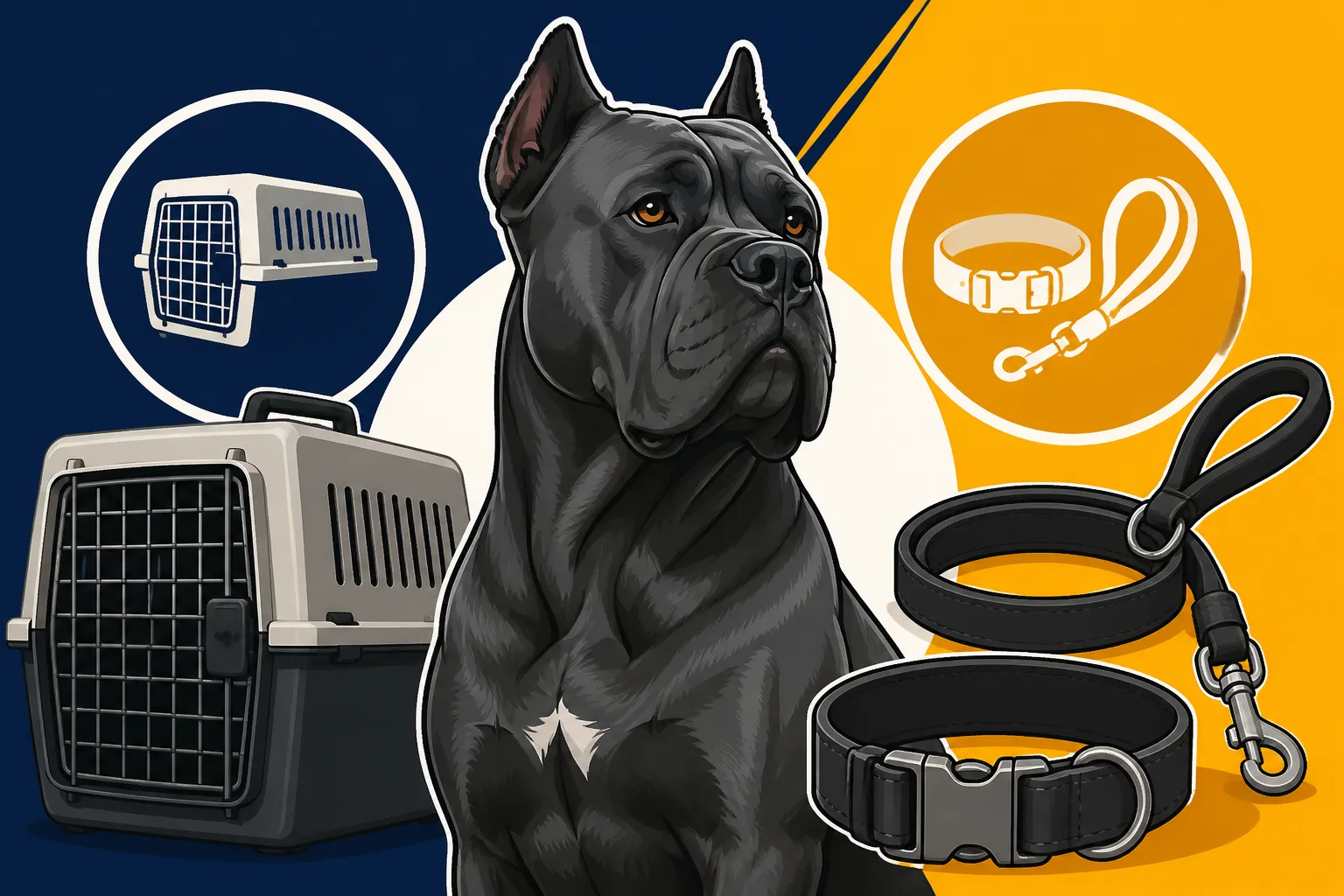
Crates, Collars and Leads Sized for a Cane Corso
Bringing a Cane Corso into your home is an incredible commitment, but many new owners quickly realize that the gear designed for "large breeds" often falls laughably short. You're not just looking for a bigger collar; you need equipment that can safely contain and control a powerful, intelligent, and sometimes stubborn giant. This guide will walk you through the essential considerations for selecting crates, collars, and leads that are truly up to the task of handling your magnificent Cane Corso.
The Unique Challenge of Sizing Gear for a Cane Corso
When you picture "large dog," you might think of a Golden Retriever or a Labrador. But a Cane Corso is an entirely different beast, both in stature and sheer strength. These dogs are working guardians, built with immense power and a solid physique. This isn't just about weight; it's about muscle density, jaw strength, and the surprising force they can exert when excited or focused.
Beyond "Large" or "X-Large" – Understanding True Cane Corso Dimensions
Forget the generic sizing charts you find at most big-box pet stores. A Cane Corso will quickly outgrow or overpower items labeled for "extra-large" dogs. We're talking about a male Cane Corso that can stand up to 27.5 inches at the shoulder and easily weigh over 110 pounds, with females not far behind. Their chests are broad, their necks are thick, and their heads are substantial. This means that a collar that fits a Great Dane might still be too thin or have hardware too flimsy for a Cane Corso. You're looking for gear that is not just large, but heavy-duty and proportionate to their robust build. It’s a common frustration to buy something only to have it look like a toy around their neck or too small for their powerful frame.
The Power and Growth Spurts: Why Durability Matters
Cane Corso puppies grow at an astonishing rate. One week they're a cute, chunky pup, the next they're a lanky adolescent testing boundaries and gaining pounds weekly. This means that whatever gear you invest in, especially for their early months, needs to withstand significant wear and tear. A cheaply made crate or a lightweight leash won't just fail; it could put your dog or others at risk. Imagine a 70-pound adolescent Corso on a flimsy leash lunging at a squirrel – that leash is going to snap, and you're going to lose control. Durability isn't a luxury; it's a necessity for safety and peace of mind. Investing in high-quality, durable items from the start saves you money and potential headaches in the long run.
Choosing the Right Crate for Your Cane Corso
Crate training is absolutely critical for a Cane Corso, not just for house-training but for providing a safe den, managing separation anxiety, and ensuring they have a secure space when you can't actively supervise them. Given their size and strength, selecting the correct crate is paramount. A cheap wire crate simply won't cut it once your Corso decides it wants out.
Crate Size Requirements: Enough Room to Stand and Turn
A general rule of thumb for any dog crate is that your dog should be able to stand up, turn around, and lie down comfortably without their head touching the top. For a Cane Corso, this usually means an extra-large or giant-sized crate. Many adult Cane Corsos will need a crate that is at least 48 inches long, 30 inches wide, and 33 inches high, if not larger. If you're wondering The Crate Size a Grown Cane Corso Needs, it's often much bigger than you'd expect. Remember, a crate isn't a jail; it's meant to be a secure, comfortable den. Skimping on size can lead to discomfort, anxiety, and a dog who fights the crate because it feels restrictive rather than safe. You want them to view it as their personal sanctuary.
Material and Construction: Steel Over Wire for Security
Standard folding wire crates are often no match for a determined Cane Corso. Their strength can bend bars, pop welds, and even escape through latches that seem secure to smaller breeds. For this reason, many experienced Cane Corso owners opt for heavy-duty steel crates. These crates are constructed from thicker gauge steel, often with multiple, strong latch points and reinforced frames. They are significantly more expensive than standard wire crates, but they offer unparalleled security and peace of mind. Some models even feature anti-escape designs, with double latches and solid tops and bottoms. While you might start a puppy in a regular wire crate, be prepared to upgrade as they grow and test boundaries. For owners managing Crate Training a Cane Corso That Outgrows Every Crate, upgrading to a robust, escape-proof model is almost always inevitable.
The Importance of Crate Training for a Giant Breed
Beyond simply containing your Cane Corso, thorough and positive crate training is a foundational element of responsible ownership. It teaches them self-control, provides a safe space during stressful events like thunderstorms, and can be invaluable if they ever need to be hospitalized or travel. Because of their potential size and strength, a well-crate-trained Cane Corso is safer for themselves and for others, especially in situations where they need to be confined. Never use the crate as punishment, as this will only build negative associations. Instead, make it a positive place with treats, chew toys, and comfortable bedding. For durable beds that stand up to their size and chewing, online retailers like Chewy offer a wide selection of orthopedic and chew-resistant options.
Navigating Collars for a Powerful Cane Corso
The collar is more than just a place to hang ID tags; it's a vital piece of safety equipment. For a Cane Corso, a flimsy collar can mean the difference between a controlled walk and a dangerous escape. You need something that won't snap, loosen, or cause injury.
Flat Collars for Everyday Wear: Prioritizing Comfort and ID
Every Cane Corso needs a comfortable, sturdy flat collar for everyday wear, primarily to hold identification tags. This collar should be at least 1.5 to 2 inches wide to distribute pressure across their strong neck, reducing the risk of injury if they pull or you need to grab them quickly. Look for collars made from high-quality leather, heavy-duty nylon, or Biothane, with strong, welded D-rings and buckles. Cheap plastic buckles are a definite no-go. The fit should be snug enough that you can only fit two fingers underneath, but not so tight that it restricts breathing or movement. Always ensure their rabies tag, city license, and personal ID tags are securely attached. While this isn't a training collar, it's their constant identifier, and durability is still key.
Training Collars: When and How to Use Them Responsibly
For a dog as powerful as a Cane Corso, a flat collar often isn't enough for effective leash training, especially during their boisterous adolescent phase. This is where specialized training collars come into play, but they must be used correctly and responsibly.
- Prong Collars (Correction Collars): A well-fitted, properly used prong collar can be a highly effective communication tool for teaching Leash Manners Before a Cane Corso Hits Ninety Pounds. The prongs are designed to create an even pressure around the neck, mimicking a mother dog's correction, rather than choking. It's crucial that these are fitted high and snug on the neck, directly behind the ears, and only used with professional guidance. Never yank or jerk; use gentle, consistent pressure.
- Martingale Collars (Limited-Slip Collars): These collars are excellent for dogs with thick necks that can slip out of traditional flat collars. When the dog pulls, the martingale tightens by a limited amount, preventing escape without choking. They are a safer alternative to choke chains and are often preferred for daily walks by owners of powerful breeds.
- Head Halters: For some handlers, a head halter (like a Halti or Gentle Leader) offers the most control, as it redirects the dog's head and, therefore, their body. While effective, some dogs dislike them intensely, and proper introduction is key to prevent rubbing or discomfort.
Table: Common Collar Types for Cane Corsos
| Collar Type | Primary Use | Pros | Cons | Important Considerations |
|---|---|---|---|---|
| Flat Collar | ID, basic control | Comfortable, universally accepted | Little control for strong pullers, can slip out | Needs to be wide and sturdy, strong hardware |
| Martingale Collar | Leash training, escape prevention | Prevents slipping, humane tightening | Still allows some pulling, less control than prong | Ensure limited-slip chain doesn't choke, proper fit |
| Prong Collar | Leash training, strong pullers | Excellent communication, effective control | Can cause discomfort/injury if used incorrectly | Requires professional fitting and instruction, never yank |
| Head Halter | Leash training, severe pullers | Redirects head for full body control | Many dogs dislike, can rub muzzle, requires gentle use | Introduce slowly with positive reinforcement |
| Choke Chain | Not recommended | Historically used for corrections | High risk of neck/tracheal injury, inhumane | Avoid for Cane Corsos; safer alternatives exist |
Avoiding Problematic Collar Choices for a Cane Corso
Just as there are effective tools, there are also collars that are simply unsafe or ineffective for a Cane Corso. Standard choke chains, for example, can cause serious damage to a Cane Corso's trachea and neck due to their immense strength and drive. They constrict directly on the windpipe and can lead to coughing, gagging, and even permanent injury, especially if the dog lunges unexpectedly. Similarly, any collar with flimsy plastic buckles, thin webbing, or weak D-rings should be avoided. These will fail under pressure, potentially leading to your Cane Corso getting loose in a dangerous situation. It's not worth the risk to save a few dollars on a collar that isn't built for their power.
Selecting Leads That Can Handle a Cane Corso's Strength
A strong collar is only half the equation; you need a lead that can match it. Many owners underestimate the force a Cane Corso can generate, especially when reacting to environmental stimuli or their guarding instincts kick in.
Material and Length: Durability and Control
For a Cane Corso, you need a leash that is both strong and provides good grip for your hands.
- Material: Heavy-duty nylon webbing, climbing rope, or thick leather are your best bets. Look for leashes that are at least 1 inch wide and feel substantial in your hand. The stitching should be reinforced, and the material should be capable of handling significant tensile strength. Cheap, thin nylon leashes will fray, tear, or snap under the pressure of a full-grown Cane Corso. Online retailers like Chewy often carry specialized heavy-duty leashes designed for giant breeds.
- Length: A standard 6-foot leash is generally the most versatile and recommended length for walking and training. It offers enough slack for your dog to explore a bit without allowing them to get too far away. Shorter leashes (2-4 feet) can be useful for close-quarters heeling or crowded areas, offering maximum control. Longer lines (15-30 feet), like those used in tracking or recall training, should only be used in open, safe areas and are not for daily walks, as they can quickly become tangled or dangerous. If you’re practicing Recall Training a Cane Corso in an Open Field, a long line is invaluable.
Hardware Matters: Snaps, Clasps, and Swivels
The hardware on your leash is just as important as the material. A strong leash is useless if the snap connecting it to the collar fails.
- Snaps: Look for heavy-duty, solid brass or stainless steel snaps. Bolt snaps (the traditional ones with a spring-loaded bolt) are common, but for a Cane Corso, a larger, more robust size is necessary. Some owners prefer trigger snaps or climbing carabiner-style clips for extra security, as these are less likely to accidentally open if caught on something. Avoid small, flimsy, or cheap metal snaps that can bend or break under force.
- Swivels: A good quality swivel built into the snap is essential to prevent the leash from twisting and tangling as your dog moves. This ensures the leash always maintains its integrity and doesn't create weak points.
When choosing Which Collar and Lead Hold a Cane Corso, always prioritize the quality of the hardware. It's often the weakest link in the chain.
The Dangers of Retractable Leashes with a Cane Corso
Retractable leashes are an absolute no-go for a Cane Corso, or really any large, powerful dog. These leashes offer almost no control, making it impossible to quickly correct or prevent a lunge.
- Lack of Control: If your Cane Corso decides to bolt towards another dog, person, or object, the sudden stop at the end of a retractable leash can cause severe neck and spinal injuries. Furthermore, you have no way to shorten the leash quickly to bring your dog close to you in an emergency.
- Safety Hazards: The thin cord of a retractable leash can cause rope burns, deep lacerations, or even amputations if it wraps around a person's legs or your own fingers. They can also snap, leaving your dog unrestrained and potentially causing an accident.
- Training Deterrent: Retractable leashes teach a dog that pulling is rewarded by more leash, undermining all efforts at Loose Leash Walking a Cane Corso Puppy. They encourage pulling and fail to establish clear boundaries.
For the safety of your Cane Corso and everyone around them, stick to fixed-length, heavy-duty leashes.
Essential Gear Beyond the Basics
Equipping your Cane Corso goes beyond just crates and leashes. Several other items are crucial for their comfort, safety, and your peace of mind as an owner.
Harnesses: When They're Helpful and When They're Not
Harnesses can be a valuable tool for Cane Corso owners, but their suitability depends on the specific type and purpose.
- Front-Clip Harnesses: These harnesses have the leash attachment point on the dog's chest. When the dog pulls, they are gently redirected to the side, discouraging pulling. Many owners find these very effective for training loose leash walking without putting pressure on the dog's neck. They can be a great option for preventing pulling without resorting to more corrective collars.
- Back-Clip Harnesses: While comfortable, back-clip harnesses are generally not recommended for powerful pullers like Cane Corsos for regular walks. They can actually encourage pulling by engaging the dog's opposition reflex, making them feel like a sled dog. They're better suited for dogs with good leash manners, for carrying saddlebags, or for specific activities like hiking where less control is needed.
- Car Harnesses: Specialized crash-tested harnesses are designed to keep your Cane Corso secure in the car, preventing them from becoming a projectile in an accident. These are different from walking harnesses and are crucial for safe travel.
When considering Harnesses Rated for a Cane Corso's Pull, always prioritize proper fit to prevent chafing and ensure the harness doesn't restrict movement, especially around the shoulders.
Chew-Proofing Your Investment: Beds and Toys
Anyone who has owned a Cane Corso puppy knows their chewing phase is epic. They can chew through almost anything. This means your choices for dog beds and toys need to be robust.
- Beds: Invest in a truly durable, orthopedic dog bed designed for giant breeds, preferably with a chew-resistant cover. Many standard beds will be shredded within days. Look for brands that offer replacement covers or a strong, rip-stop material. Comfort is key, especially as they get older and need support for their joints, so an orthopedic foam base is ideal.
- Toys: Focus on enrichment toys made from hard rubber, solid nylon, or other virtually indestructible materials. Puzzle toys that dispense treats slowly can keep their intelligent minds engaged and prevent boredom-induced chewing on your furniture. For The Chewing Stage a Cane Corso Goes Through, you'll want a variety of safe, durable chews and toys that redirect their natural urge to gnaw. Avoid plush toys or anything with small, easily detachable parts that could be ingested.
Remember that even the most "chew-proof" item can eventually succumb to a determined Corso. Supervise new toys and chews, and replace them when they show significant wear or become a choking hazard.
Car Safety: Vehicle Crates and Barriers
Safety doesn't stop once you get in the car. An unrestrained Cane Corso can be a dangerous distraction to the driver and a severe hazard in the event of a sudden stop or accident.
- Vehicle Crates: The safest option for transporting a Cane Corso is a crash-tested, impact-resistant travel crate. These are often made from aluminum or heavy-duty plastic and are designed to absorb impact, protecting your dog. They are a significant investment, but well worth it for frequent travelers or those who prioritize safety.
- Barriers: For shorter trips or dogs who are less prone to car sickness, a sturdy car barrier can separate your Cane Corso from the driver's area, keeping them in the back seat or cargo area. These are often made of metal or strong mesh and fit snugly to prevent the dog from climbing over or around.
Ensuring you have Vehicle Crates and Barriers for a Cane Corso is not just about your dog's safety, but the safety of all passengers and other drivers on the road. Accidents happen, and being prepared is part of responsible ownership.
Practical Tips for Outfitting Your Cane Corso
Finding the right gear for a Cane Corso isn't just about picking the biggest size; it's about making informed choices that prioritize safety, durability, and effectiveness. Many owners feel frustrated by the lack of truly suitable options at standard pet stores.
Shopping Smart: Where to Find Specialized Gear
You'll quickly learn that your local big-box pet store might not cut it when it comes to truly heavy-duty gear for your Cane Corso.
- Online Retailers: Websites like Chewy, specializing in a vast array of pet products, are often the best place to find giant breed-specific items. They typically carry a wider selection of heavy-duty crates, wider collars, and stronger leashes that you won't find on physical shelves. You can often read reviews from other large breed owners, which can be invaluable.
- Specialty Dog Stores: Some independent pet stores or those focused on working dog breeds might carry a limited selection of high-quality, robust gear. These stores often have knowledgeable staff who can help with fitting.
- Breeder Recommendations: Your Cane Corso breeder is an excellent resource for gear recommendations. They've likely tried and tested numerous products over the years and can guide you toward what works best for the breed.
- Trial and Error: Be prepared for a bit of trial and error, especially with harnesses or training collars. What works for one Cane Corso might not work for another due to individual physique or temperament.
Budgeting for Quality: An Investment in Safety
It's tempting to opt for cheaper gear, but for a Cane Corso, this is a false economy. A cheap crate that breaks, a collar that snaps, or a leash that frays can lead to costly vet bills if your dog gets loose and injured. Think of high-quality gear as an investment in your dog's safety and your peace of mind. While the upfront cost might be higher, it often saves you money in the long run by reducing replacement frequency and preventing potential accidents. It's similar to budgeting for potential health issues; while pet insurance from companies like Healthy Paws can help cover unexpected vet costs, investing in quality gear helps prevent some of those emergencies from happening in the first place. This commitment to quality is part of what it costs to own such a magnificent breed, reinforcing that The Training Bill a Cane Corso Owner Cannot Skip often includes investing in proper tools.
Regular Inspection and Maintenance
No matter how high-quality your Cane Corso's gear is, it won't last forever. Regular inspection is key to preventing failures.
- Check for Wear and Tear: Routinely inspect collars, leashes, harnesses, and crates for signs of fraying, cracking, loose stitching, bent hardware, or rust. Pay close attention to stress points where materials connect.
- Cleanliness: Keep collars and harnesses clean, especially if your Cane Corso loves to swim or roll in mud. Dirt and grit can abrade materials over time.
- Proper Storage: Store leashes and harnesses neatly to prevent tangles that can weaken materials. Crates should be checked for loose bolts or sharp edges.
By being proactive with your gear inspections, you can identify potential problems before they become dangerous failures. This diligence is just another aspect of responsible Cane Corso ownership.
Disclaimer
This article is for general informational purposes only and does not constitute professional advice. Laws, prices and regulations vary by location and change over time. Consult a qualified professional for guidance on your specific situation.