Whether a Cane Corso Puppy Grows Out of Entropion
It’s truly disheartening to see your spirited Cane Corso puppy, full of potential and growing so fast, suddenly develop an eye issue. That moment when you first notice their eyelid rolling inward, causing their lashes to rub against their delicate eye, can send a wave of panic through any dog owner. You immediately worry about their comfort, their vision, and whether this is something they’ll simply "grow out of" or if it's a serious problem that needs intervention. This guide aims to thoroughly explore entropion in Cane Corso puppies, giving you a clear, empathetic, and realistic understanding of this common condition and the best path forward.
Understanding Entropion in Your Cane Corso Puppy
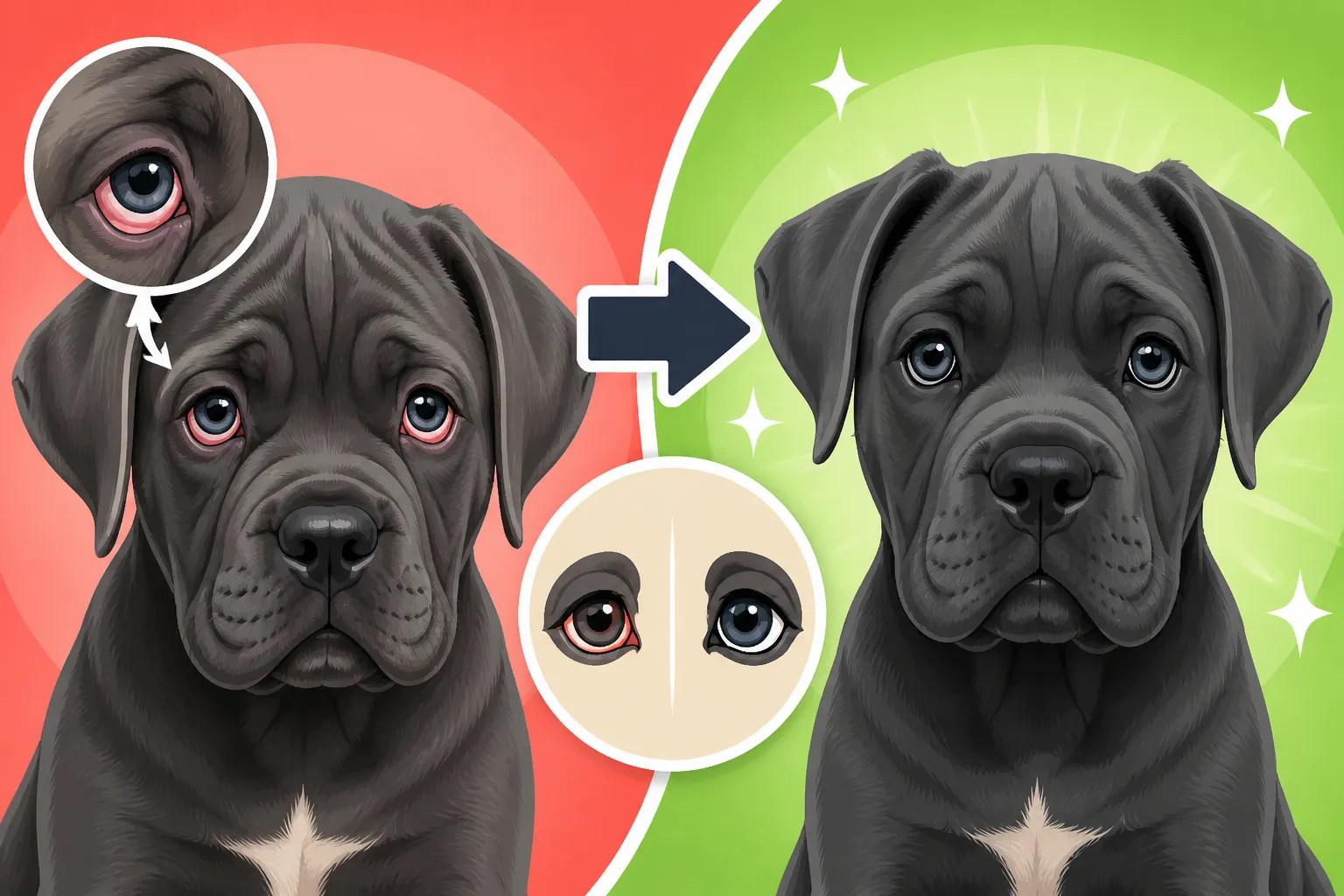
Entropion is more than just a fleeting irritation; it's a structural eyelid abnormality that unfortunately pops up frequently in certain breeds, and our beloved Cane Corsos are definitely among them. When you see those lower (or sometimes upper) eyelids curling inwards, it means the skin and hair on the outside of the lid are making constant, painful contact with the cornea. Imagine having an eyelash stuck in your eye, all day, every day – that's the discomfort your puppy is experiencing, and it's a huge cause for concern.
What Exactly is Entropion?
At its core, entropion is a conformational defect. The eyelid margin, instead of sitting flush or slightly everted, inverts. This inversion can be subtle or quite dramatic, and it often leads to a whole cascade of painful symptoms. The constant rubbing of hair on the surface of the eye, known as the cornea, causes irritation, redness, and excessive tearing. Your puppy might squint a lot, hold the affected eye partially closed, or even rub at their face in an attempt to alleviate the discomfort. This isn't just a cosmetic issue; it's a serious health concern that, if left unaddressed, can lead to severe complications, including corneal ulcers, scarring, and even permanent vision impairment. It's a cruel twist when such a magnificent breed faces such a delicate problem.
Why Cane Corso Puppies Are Prone to It
The breed’s distinctive head structure, with its robust build and sometimes deep-set eyes, makes Cane Corsos particularly susceptible to entropion. It’s largely considered a genetic, inherited condition, meaning puppies are often predisposed to it from birth. However, the timing of its appearance can be tricky. A puppy's rapid growth spurt can sometimes exacerbate or temporarily cause entropion. During these intense periods of development, the facial bones and soft tissues might not grow at a perfectly synchronized rate, leading to a temporary imbalance that causes the eyelid to roll. Dehydration or even minor eye irritation can also make a borderline case of entropion more apparent. This is why some owners might notice it suddenly during a period of stress or illness. The concern many owners share is wondering if their fast-growing pup will simply grow out of it, or if it's a permanent fixture that needs more direct action. This rapid growth, especially in a giant breed, can make diagnosing and deciding on a treatment timeline feel like a moving target. Ensuring your Cane Corso puppy is on the right food, like a Why a Cane Corso Puppy Needs Giant Breed Food, can support proper development, though it won't prevent a genetic predisposition.
The Hope (or Lack Thereof) of Growing Out of It
This is the million-dollar question for many worried Cane Corso owners. It’s natural to hope that such a fast-growing puppy will simply "fill out" or mature past the problem. While it's true that some very mild cases of entropion in puppies can resolve on their own, especially if they're linked to a temporary growth spurt or transient irritation, the vast majority of true, structurally induced entropion in Cane Corsos will not disappear with age. It's crucial to distinguish between a temporary, physiological anomaly and a genuine anatomical defect.
When Temporary Entropion Might Resolve
There are indeed instances where what looks like entropion in a very young Cane Corso puppy might improve. Puppies go through incredible growth spurts, and sometimes the skin and muscle around the eyes temporarily develop at a different pace than the skull, leading to a transient inversion. If the entropion is very mild, intermittently present, and the puppy isn't showing significant pain or corneal damage, your vet might suggest a "wait and see" approach, perhaps coupled with lubricating eye drops. Sometimes, if the puppy has been a bit dehydrated or underweight, gaining a bit of healthy fat and muscle can also subtly alter facial contours enough to help the eyelids sit more normally. This is particularly true for very young pups, say under 4-5 months old. It's a small window of hope, but one that needs to be managed carefully under veterinary supervision. This period might involve frequent check-ups, so having a good pet insurance plan from a provider like Healthy Paws can be incredibly helpful for covering those initial diagnostic visits and conservative treatments.
Why Most Cases Require Intervention
For the majority of Cane Corso puppies diagnosed with entropion, particularly if it's moderate to severe, persistent, or causing visible irritation and ulceration, waiting it out is generally not recommended. The risk of irreversible corneal damage, including scarring, pigmentation, and even vision loss, is too high. The constant rubbing creates a breeding ground for bacterial infections and can lead to painful corneal ulcers. These ulcers are not only agonizing for your dog but can also be very challenging to treat and may require intense medication or even emergency surgery if they deepen.
If a puppy isn't showing signs of improvement by around 5-6 months of age, or if the entropion is causing significant discomfort and corneal injury, it's highly likely that surgical intervention will be necessary. This isn't a decision to take lightly, but it's often the kindest and most effective way to prevent long-term suffering and protect your Cane Corso's eyesight. This is also why having discussions with your breeder about The Loose Eyelids Nearly Every Cane Corso Owner Meets is important, as it helps in understanding genetic predispositions.
When and How to Address Puppy Entropion
Addressing entropion in your Cane Corso puppy promptly is paramount to their comfort and long-term eye health. It’s not a condition that you can simply ignore and hope for the best. Once your veterinarian confirms the diagnosis, you'll need to discuss the best course of action, which typically ranges from conservative management for very mild, temporary cases to surgical correction for more persistent or severe issues.
Initial Veterinary Assessment and Conservative Approaches
The very first step is always a thorough veterinary examination. Your vet will assess the severity of the entropion, check for any corneal ulcers or damage, and determine if there are other contributing factors. They might use a special dye (fluorescein stain) to visualize any corneal abrasions or ulcers. For mild cases, especially in very young puppies, the vet might suggest a course of lubricating eye drops or ointment to reduce irritation. Sometimes, a temporary procedure called "eyelid tacking" can be performed. This involves placing a few sutures in the eyelid to evert it temporarily, relieving the rubbing. This is a reversible procedure often done under light sedation and can be very useful for allowing a puppy to grow without constant irritation. It buys time, allowing the facial structure to mature, and sometimes, if you're lucky, the problem doesn't return once the tacks are removed. However, it's important to understand that tacking is a temporary measure and doesn't correct the underlying anatomical issue. If your vet recommends this, discuss The Age a Cane Corso's Entropion Gets Repaired to understand the full timeline of intervention.
Surgical Correction: The Definitive Solution
For most Cane Corso puppies with true entropion, surgical correction is the gold standard. This procedure, called blepharoplasty, aims to remove a small, crescent-shaped piece of skin and muscle from below the affected eyelid, effectively rolling the eyelid outwards to its correct position. The goal is to provide immediate relief and prevent future corneal damage.
The timing of surgery is often debated, but many veterinary ophthalmologists prefer to wait until the puppy is at least 6-8 months old, or sometimes even older, closer to 12-18 months. This allows for most of the major facial growth to occur, ensuring the surgeon can achieve a more precise and permanent correction. However, if the puppy is suffering from severe pain or repeated corneal ulcers, surgery may be recommended much earlier to prevent irreversible damage. It's a delicate balance, and your vet will guide you on the optimal time. The procedure itself is typically performed under general anesthesia, and while it carries the usual risks of any surgery, it has a high success rate in correcting entropion. Knowing about Entropion Surgery Prices for a Cane Corso can help you prepare financially.
Table: Approaches to Entropion in Cane Corso Puppies
| Approach | Description | Pros | Cons | Ideal Scenario |
|---|---|---|---|---|
| Wait and See | Closely monitor very mild, intermittent entropion in very young puppies (under 4-5 months). | Avoids intervention, may resolve naturally with growth. | High risk of corneal damage if it doesn't resolve; prolonged discomfort. | Extremely mild, non-painful cases in very young pups. |
| Conservative Mgmt. | Lubricating eye drops/ointments, temporary eyelid tacking (sutures). | Provides immediate relief, buys time for growth, less invasive than surgery. | Temporary solution only; recurrence once tacks are removed; requires frequent vet visits. | Mild to moderate cases; bridge to definitive surgery if needed. |
| Surgical Correction | Permanent removal of a crescent of skin/muscle to evert the eyelid (blepharoplasty). | Definitive fix, prevents future damage, high success rate. | Requires general anesthesia; post-op care; potential for re-do if not perfect; cost. | Moderate to severe, persistent, or damaging entropion. |
Living with a Cane Corso Prone to Eye Issues
Even after successful surgical correction, owning a Cane Corso with a history of entropion means being vigilant about their eye health. These magnificent dogs are prone to a few eye conditions, so a little extra care and observation go a long long way in ensuring their comfort and well-being throughout their life.
Post-Surgery Care and Monitoring for Recurrence
After surgery, your Cane Corso puppy will need diligent post-operative care. This typically involves administering prescribed eye drops or ointments, oral pain medication, and sometimes an E-collar to prevent them from rubbing or scratching at the surgical site. Limiting activity is also important to allow for proper healing. Regular follow-up appointments with your vet will be crucial to monitor healing and ensure the eyelids are in the correct position.
While entropion surgery has a high success rate, it's important to be aware that in some cases, a second surgery might be necessary if the initial correction isn't perfect, or if growth changes later on. For instance, sometimes a slight over-correction or under-correction can occur, or if the entropion was on both lids, they might require separate procedures if one side heals differently. This is an important consideration when thinking about Whether a Cane Corso's Entropion Returns After Surgery. Remaining watchful for any signs of discomfort, redness, or tearing is essential, as these could indicate a recurrence or other developing eye issue. A comprehensive pet insurance plan, such as those offered by Healthy Paws, can be invaluable here, often covering follow-up care and even revisional surgeries, provided the initial condition was covered and not pre-existing.
Proactive Care for Overall Eye Health
Beyond addressing entropion, proactive care for your Cane Corso's eyes should be a lifelong commitment. Their unique facial structure can sometimes predispose them to other eye concerns, like "cherry eye" in puppies or the more general issue of The Sagging Lower Lid on a Cane Corso as they age.
Regularly inspecting your dog's eyes at home is a simple yet effective practice. Look for any redness, discharge, squinting, or cloudiness. Keep the area around their eyes clean, especially if they have some natural folds. Use a soft, damp cloth to gently wipe away any debris or discharge. Be mindful of environmental irritants like dust, strong winds, or even certain household cleaners that could cause irritation. If your Cane Corso's eyes seem to be running all day, it could be a sign of underlying issues. Ensuring your dog has a balanced diet and regular veterinary check-ups are fundamental aspects of their overall health, including their eyes. Discussing Daily Eye Care on a Cane Corso's Loose Lids with your vet can provide specific strategies. Investing in a good pet insurance policy early, perhaps from a trusted provider like Healthy Paws, is a smart decision for Cane Corso owners, as it provides a safety net for unexpected health challenges, from eye issues to other breed-specific conditions that might arise throughout their nearly The Nine Year Median Behind a Cane Corso's Lifespan. This preparation helps ensure you can always make the best health decisions for your beloved companion without financial strain.
Disclaimer
The information provided in this guide is for general educational purposes only and should not be considered a substitute for professional veterinary advice. Always consult with a qualified veterinarian for any health concerns or before making any decisions related to your Cane Corso's care and treatment.