How Many Cane Corsos It Took to Hold a Boar
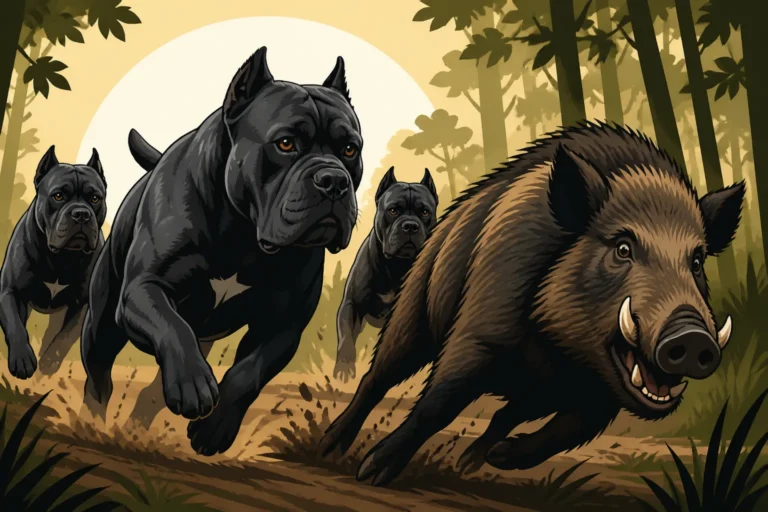
It’s a romantic image, isn't it? A mighty Cane Corso, a beast of a dog, fearlessly confronting a charging wild boar, bringing it down single-handedly. But the reality of historical boar hunting, especially with a formidable animal like a wild boar, was far more complex and dangerous than a single dog could manage. This guide will explore the historical context of the Cane Corso's role in boar hunting and shed light on the strategic teamwork that was truly required to hold such a powerful and unpredictable creature.
The Historical Role of the Cane Corso in Boar Hunting
To truly understand how many Cane Corsos it took to hold a boar, we first need to delve into the historical landscape of the breed and the formidable nature of their quarry. The Cane Corso, with its ancient roots tracing back to Roman war dogs, was developed for a variety of tasks on Italian farms, from guarding property to managing livestock, and yes, hunting dangerous game. The Roman War Dog Behind the Cane Corso speaks to their origins, but their role evolved to suit the needs of agricultural communities.
Understanding the Ancestral Prey: Wild Boar
Wild boars are not to be underestimated. These aren't your average barnyard pigs. They are powerful, intelligent, and fiercely defensive animals, especially a sow protecting her piglets or an old tusker with massive canine teeth that can inflict horrific wounds. They can weigh hundreds of pounds, possess thick, cartilaginous shields on their shoulders, and move with surprising speed and agility. Their tusks are razor-sharp, capable of disemboweling a dog or a human in a single, upward thrust. Hunting such an animal was never a casual endeavor; it was a serious and often life-threatening undertaking, a testament to the sheer courage required from both dogs and hunters.
The Cane Corso's Physique and Temperament for Hunting
The Cane Corso was ideally suited for this dangerous work. They were bred for immense strength, a powerful bite, and a relatively compact, muscular build that allowed for both speed and resilience. Their fearlessness in the face of danger is legendary, a trait essential when confronting an animal that could easily kill them. Beyond brute strength, these dogs possess a keen intelligence and a strong "will to please" their handler, which was crucial for controlled aggression and teamwork in the field. The Prey Drive Behind a Cane Corso's Boar Hunting Past is a deep dive into this aspect of their history, highlighting how their natural instincts were honed for such demanding roles. Their physical attributes, like the sturdy The Chest and Body a Cane Corso Standard Describes, were not just for show but for enduring the rigors of a confrontation.
The "Catch Dog" vs. "Bay Dog" Distinction
Historically, dogs involved in boar hunting fell into two main categories: bay dogs and catch dogs. Bay dogs, often smaller and quicker, were used to locate the boar and harass it, barking relentlessly to "bay" it in one spot, keeping it from fleeing. This allowed the human hunter to approach. Catch dogs, on the other hand, were the powerhouses. Their job was to physically engage the boar, grabbing onto its ears, neck, or hindquarters, and holding it steady until the hunter could arrive to dispatch it. The Cane Corso, with its strength and tenacity, primarily served as a catch dog. It was a role that demanded incredible bravery and physical prowess, but even for a dog as formidable as a Cane Corso, this was never a solo mission.
The Dynamics of a Boar Hunt: More Than Just One Dog
The idea of a lone Cane Corso tackling a full-grown wild boar is more myth than reality. While a highly motivated and skilled individual dog might attempt it, the risks were simply too high for both the dog and the success of the hunt. This was a team effort, combining the strengths of multiple dogs and human intervention.
Why a Single Cane Corso Was Insufficient
A single Cane Corso, no matter how powerful, would be at an extreme disadvantage against a wild boar. The boar's size, speed, aggression, and deadly tusks make it an incredibly dangerous opponent. A lone dog could easily be gored, trampled, or suffer debilitating injuries that would lead to its death or render it useless for the hunt. Imagine a 100-pound dog trying to hold a 300-pound boar that is thrashing violently with razor-sharp tusks. It's a recipe for disaster. Hunters relied on their dogs, and risking a single, valuable animal in such a precarious situation was simply not practical or wise. The goal was always to minimize risk while maximizing efficiency.
The Pack Mentality: Strategy and Numbers
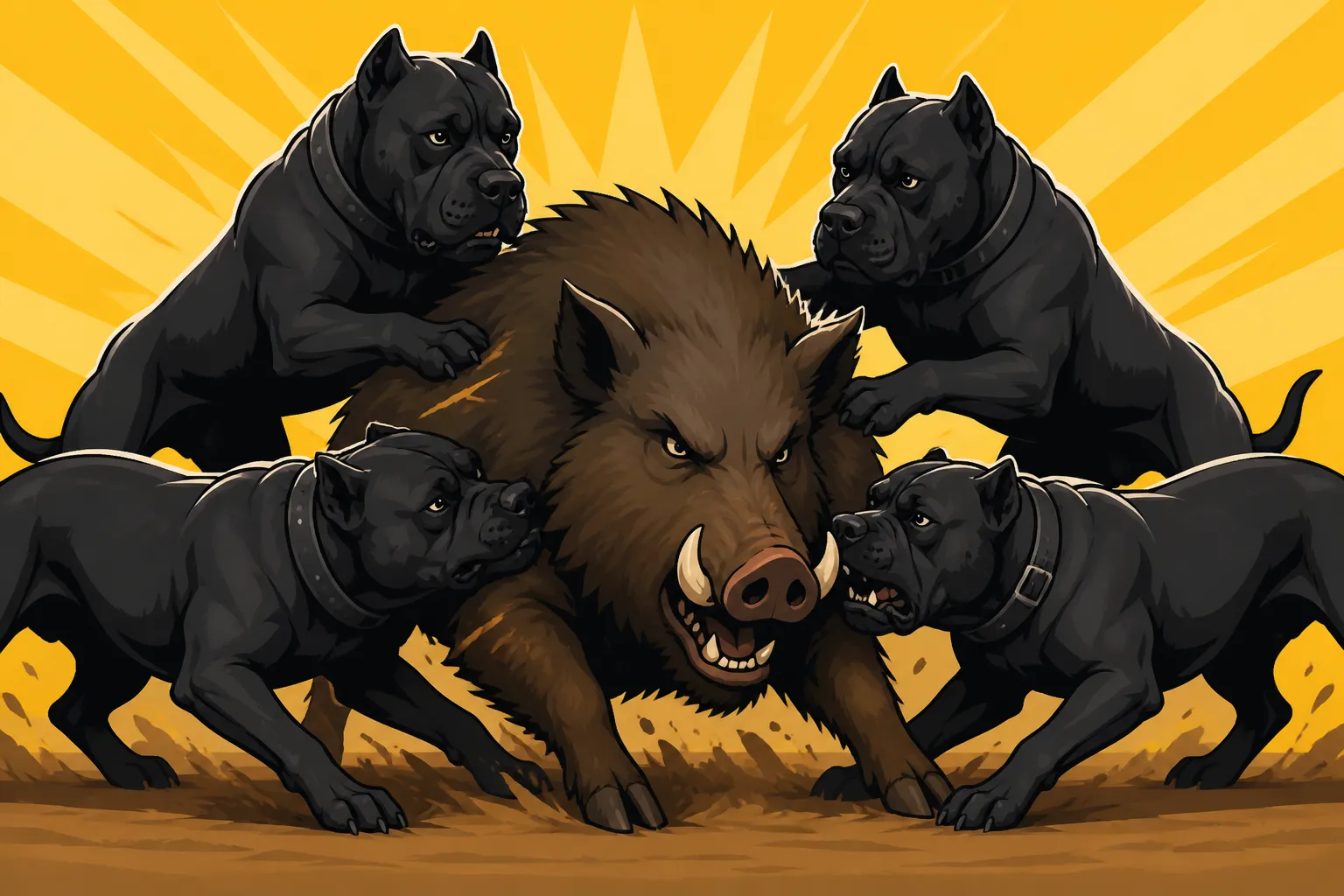
This is where the pack came in. A team of Cane Corsos, or a combination of Cane Corsos and other breeds, provided a strategic advantage. When multiple dogs engaged the boar, they could surround it, coming from different angles. This confused the boar, divided its attention, and made it harder for the animal to focus its attacks on a single dog. One dog might grab an ear, another a leg, another the neck, distributing the boar's focus and allowing for a more secure hold. This collective effort not only increased the chances of successfully holding the boar but also significantly reduced the risk of severe injury to any individual dog. It allowed them to manage the boar's power and bring it under control without a single dog bearing the full brunt of its defensive fury. Just like managing livestock, where How a Cane Corso Held a Bull for the Butcher illustrates similar coordinated efforts, boar hunting demanded numbers.
The Role of the Hunter and Other Dogs
It’s crucial to remember that boar hunting was always a collaborative effort between dogs and humans. The dogs weren't just sent out blindly; they worked in tandem with their human handlers. The hunter, armed with a spear or knife, was the ultimate decision-maker and finisher. The dogs’ role was to immobilize the boar, not to kill it. Furthermore, a pack might not have consisted solely of Cane Corsos. Often, lighter, faster dogs (bay dogs) were used to track and pursue the boar, keeping it moving until the heavier catch dogs, like the Cane Corso, could be brought in for the final engagement. This division of labor optimized the hunt, leveraging the unique skills of different canine partners. It was a well-orchestrated ballet of canine and human strategy, not a free-for-all.
Traditional Accounts and Practicalities: How Many Was Enough?
While there's no single, universally documented number, traditional accounts and practical experience suggest that hunters would typically employ a minimum of two, but often three or more, Cane Corsos (or similar powerful catch dogs) to effectively hold a wild boar.
Historical Narratives and Anecdotal Evidence
Many historical accounts and illustrations depict multiple dogs engaged with a boar, rather than a single hero dog. This isn't just for dramatic effect; it reflects the practical reality of the hunt. Stories from Italian countryside folklore often speak of a "couple" or "a team" of dogs working together. The effectiveness of the Cane Corso in Hunting Wild Boar With Cane Corsos was intrinsically tied to this collaborative approach. A single Cane Corso might be able to find a boar, but holding it was another matter entirely. The older generations of hunters understood the immense power of these wild animals and would never knowingly send a single dog into such a lopsided fight.
Factors Influencing the Number of Dogs
The precise number of Cane Corsos required would depend on several variable factors:
- Size and Temperament of the Boar: A small, young boar might be held by two strong dogs, but a large, old male boar with extensive tusks and a formidable temper could easily require three, four, or even more dogs to secure safely.
- Terrain: Dense brush or uneven ground could make it harder for dogs to maneuver and maintain a grip, potentially necessitating more dogs to ensure stability.
- Experience of the Dogs: Well-trained, experienced Cane Corsos that had worked together before would be more efficient than a group of green dogs. Their ability to coordinate and anticipate each other's moves was paramount. The Length of a Cane Corso's Attention Span and How Fast a Cane Corso Learns a New Cue highlight the breed's intelligence and trainability, which directly impacted their effectiveness as a team.
- Skill of the Hunter: A highly skilled hunter might be able to intervene more quickly, reducing the time the dogs needed to hold the boar, thus perhaps getting by with fewer dogs. Less experienced hunters might need the dogs to maintain their hold for longer, increasing the demand on the canine team.
- Immediate Goal: If the goal was simply to deter a boar from a field, a single brave dog might suffice. If the goal was to hold it securely for dispatch, then more dogs were essential.
The Goal: Immobilization for the Hunter
The primary objective of the catch dogs was not to kill the boar themselves, but to immobilize it. They needed to apply enough pressure and secure enough grips to prevent the boar from moving or inflicting damage, allowing the hunter to safely approach and dispatch the animal with a knife or spear. This required sustained effort, immense grip strength, and coordinated effort from multiple dogs. A single dog simply couldn't maintain that kind of control over a thrashing, powerful wild boar without risking its own life. It was a dangerous, high-stakes game where lives, both canine and human, were on the line.
Here's a simplified look at the factors:
| Factor | Effect on Number of Dogs Needed | Rationale |
|---|---|---|
| Small/Young Boar | Fewer (2-3) | Less powerful, easier to control, less dangerous tusks. |
| Large/Adult Boar | More (3-5+) | Immense power, dangerous tusks, thick hide, higher risk to dogs. |
| Dense Terrain | More | Difficult for dogs to maneuver, may lose grip more easily. |
| Open Terrain | Fewer | Dogs have better footing and visibility, easier to maintain control. |
| Experienced Pack | Fewer | Coordinated effort, better grips, more efficient. |
| Inexperienced Pack | More | Less coordination, higher risk of injury, less effective hold. |
| Hunter's Skill/Speed | Fewer | Quick intervention reduces holding time for dogs. |
| Hunter's Inexperience | More | Dogs need to hold longer, requiring more robust control. |
Modern Perspectives and Ethical Considerations
While the historical role of Cane Corsos in boar hunting is fascinating, it’s also important to look at the modern context. Today, boar hunting with dogs still occurs in some regions, though practices have evolved, and ethical considerations are much more prominent.
Boar Hunting Today with Dogs
In areas where wild boar populations are problematic, such as parts of the southern United States or certain European countries, hunting with dogs remains a method of population control. However, modern practices often emphasize minimizing stress and injury to the animals involved. Dogs are typically outfitted with protective vests to prevent goring, and hunters aim for a swift and humane dispatch once the boar is bayed or caught. The emphasis is on safety for both dogs and humans. Many hunters who use dogs for boar today adhere to strict ethical guidelines, ensuring their dogs are well-trained and that the hunt is managed responsibly.
The Cane Corso in Modern Roles
Today, the Cane Corso's primary role is overwhelmingly that of a devoted companion and formidable guardian. While their prey drive and protective instincts remain – What a Cane Corso's Guardian Instinct Actually Is explains this deeply – their day-to-day lives are far removed from wrestling wild boars. Instead, they excel as family protectors, personal guard dogs, and participants in various dog sports like obedience, rally, and even scent work. Ninety Minutes a Day and a Cane Corso's Mind is a testament to the fact that these intelligent dogs thrive on mental and physical stimulation, regardless of whether it involves historical tasks. Many Cane Corso owners find that providing appropriate outlets for their dog's energy and intelligence, whether through rigorous training or active play with durable toys from places like Chewy, fulfills their innate drives in a safe and positive way. Their strength, determination, and loyalty, once essential for the hunt, are now channeled into making them exceptional companions and protectors in our modern world. Who a Cane Corso Actually Suits delves into the kind of dedicated owner that truly understands and appreciates this magnificent breed.
Disclaimer
This article is for general informational purposes only and does not constitute professional advice. Laws, prices and regulations vary by location and change over time. Consult a qualified professional for guidance on your specific situation.