Whether a Cane Corso’s Short Coat Takes a Deshedding Blade
Oh, the sheer volume of hair! If you're a Cane Corso owner, you know the struggle is real when it comes to shedding, especially when you consider how short their coat actually is. It feels like you're constantly finding those stiff, short hairs everywhere – on the sofa, stuck to your clothes, even in your coffee sometimes. This constant battle often leads us down the rabbit hole of trying every gadget and tool promising to magically stop the shedding, and the deshedding blade, or "Furminator" style tool, is usually one of the first things that catches our eye. But is it actually suitable for your beloved Corso's unique coat, or could you be doing more harm than good? Let's dive deep into understanding your Cane Corso's fur and figure out the best way to keep that shedding under control without damaging their skin and coat.
Understanding the Cane Corso Coat
Before we even think about what tools to use, it’s crucial to understand the very coat we're trying to manage. The Cane Corso's coat is distinct, and what works for a Husky or a Golden Retriever simply won't cut it – literally – for your big, beautiful Italian mastiff. Their coat is designed for protection in varying climates, not for extreme fluffiness.
A Double or Single Coat?
This is a common point of confusion for many Cane Corso owners, and it's vital to get it right. While some sources might broadly categorize them as having a "short, stiff coat," the truth is a bit more nuanced. Most Cane Corsos possess a double coat, although it's not as obvious or fluffy as say, a German Shepherd's. They have a short, coarse outer coat (the guard hairs) that is dense and rain-resistant, and underneath, there's a fine, usually lighter undercoat. The density of this undercoat can vary quite a bit depending on genetics, climate, and the individual dog. In warmer climates, it might be very sparse, making it seem like a single coat. In colder regions, however, that undercoat can become much thicker.
The purpose of this undercoat is insulation – it keeps them warm in winter and actually helps to keep them cool in summer by trapping a layer of air. The guard hairs, on the other hand, are there for protection against elements like rain, sun, and minor abrasions. Understanding this dual-layer system is key because it dictates how we should approach grooming. Incorrect grooming can strip away these protective layers, leaving your Corso vulnerable and potentially creating more shedding issues in the long run.
Seasonal Shedding vs. Year-Round Hair
Anyone who shares their home with a Cane Corso will tell you that they shed year-round. It's not a myth, it's a fact of life! However, like many double-coated breeds, they do experience heavier seasonal "blows" twice a year, typically in spring and fall. This is when they're getting rid of their old undercoat to make way for a new, appropriate one for the coming season.
During these periods, you might feel like you're constantly sweeping, vacuuming, and lint-rolling. The amount of hair can be astounding, making even the tidiest home feel like a fur farm. This is precisely why many owners start looking for more aggressive solutions, hoping to somehow "de-shed" their dog and reduce the hair fallout dramatically. It's a natural frustration, especially with a dog as large as a Cane Corso, where every shed hair feels like three normal dog hairs! You might even notice that the shedding varies by coat color; some owners claim that Whether Brindle Really Makes a Cane Corso Healthier or that Why a Gray Cane Corso Gets More Skin Trouble when it comes to coat issues.
The Characteristics of a Healthy Cane Corso Coat
A healthy Cane Corso coat should be short, dense, and relatively stiff to the touch, with a slight sheen. It lies close to the body, outlining their impressive musculature. When you run your hand against the grain, you should feel a good amount of resistance. The skin underneath should be supple, clear, and free of flakes, redness, or bumps. A dull, brittle, patchy, or excessively oily coat can be a sign of underlying health issues, nutritional deficiencies, or improper grooming. Owners often ask How Much Dander a Short Coated Cane Corso Puts Out, which is another indicator of coat health – excessive dander can signal dryness or irritation. Your Corso's coat is a direct reflection of their overall well-being, so paying attention to its condition is really important.
What Deshedding Tools Are and How They Work
You've seen them on the shelves at pet stores or scrolling through product listings on Chewy and Amazon. These tools promise to reduce shedding by an astonishing percentage, and their marketing often features massive piles of fur being removed from fluffy dogs. But what exactly are they, and how do they achieve these dramatic results?
The Anatomy of a Deshedding Blade
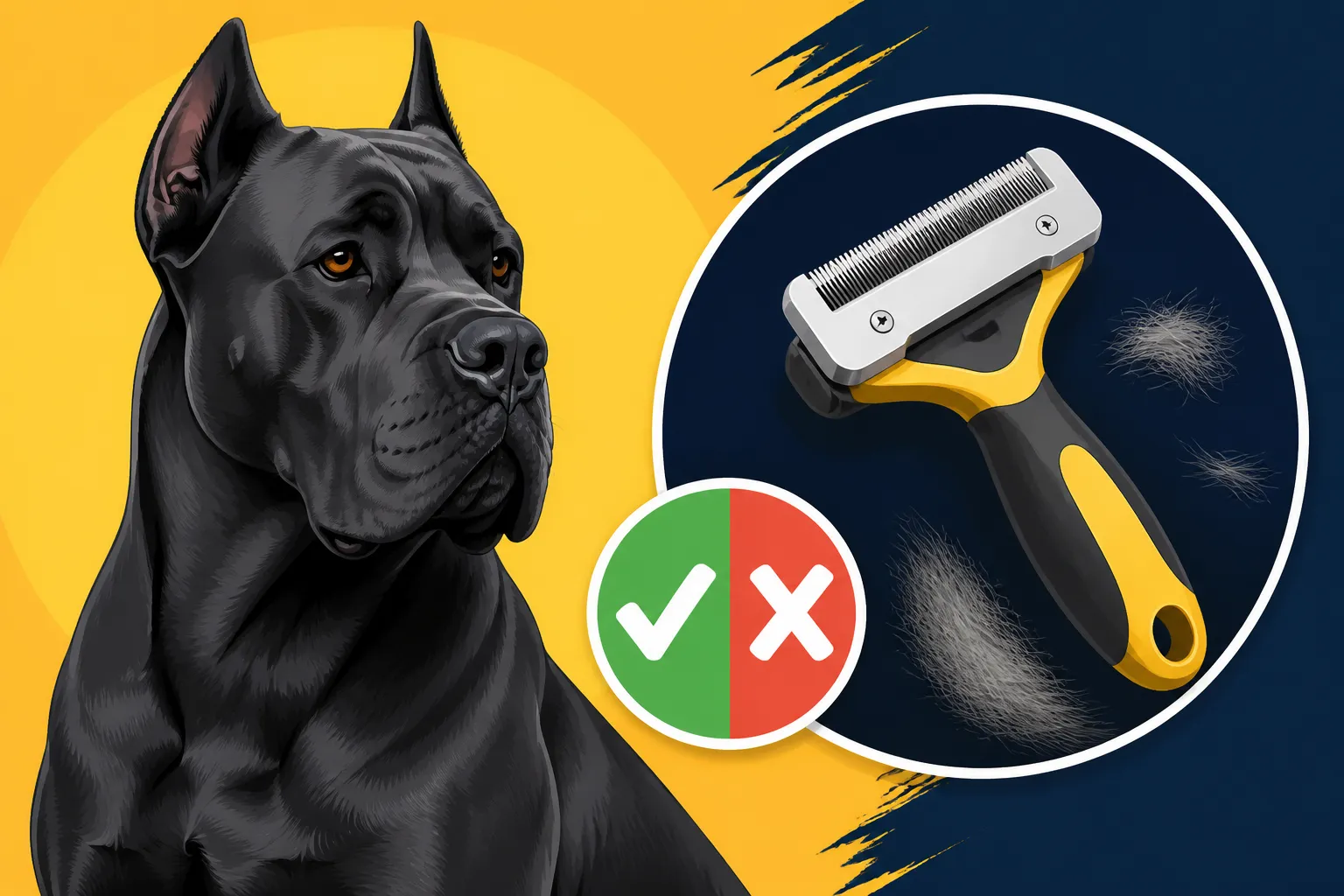
Often generically referred to by the brand name "Furminator," deshedding tools typically feature a finely toothed, comb-like blade made of metal, often stainless steel. This blade is designed with very small, sharp teeth that are set close together. The handle is usually ergonomic, making it comfortable for the owner to hold as they rake it across the dog's coat.
The key to their operation lies in the specific design of these teeth. They are engineered to reach through the topcoat and grab the loose, dead undercoat hairs, pulling them out before they can fall off naturally onto your furniture. This is where the term "deshedding" comes from – the idea is to remove the shedding hair at the source.
How They Claim to Work
The primary claim of deshedding tools is their ability to reduce shedding by removing large quantities of loose undercoat. For breeds with very dense, fluffy undercoats, such as Huskies, Samoyeds, or even some longer-haired mixed breeds, these tools can indeed pull out an impressive amount of hair. The idea is that by extracting this dead undercoat, you're preventing it from shedding out slowly over days or weeks, thus making your home cleaner.
The process often involves running the tool gently across the dog's coat, in the direction of hair growth. As the fine teeth pass through the guard hairs, they are meant to catch and lift the softer, looser undercoat. You'll see piles of fine, downy fur accumulating on the blade, which you then remove and discard. It can be incredibly satisfying to see so much fur come off, giving the impression of a job well done.
Why They Became Popular
Deshedding tools exploded in popularity because they seemed to offer a magic bullet for a universal pet owner problem: shedding. For owners of thick, double-coated breeds, the results could be truly transformative, pulling out what felt like an entire second dog's worth of fur in a single grooming session. The visual impact of the removed hair was compelling, and the promise of a cleaner home was a powerful motivator.
However, the popularity and efficacy of these tools are heavily dependent on the type of coat they are used on. What works wonders for a heavily undercoated breed might be detrimental to a breed with a different coat structure, like our Cane Corsos. Many people simply assume that if a tool removes hair, it must be good for any shedding dog, overlooking the nuances of coat type and the potential for damage. This is why it’s so important to be discerning, especially with a dog like a Cane Corso whose coat, while dense, isn't fluffy in the way many deshedding tool commercials depict.
The Risks of Using a Deshedding Blade on a Cane Corso
While the allure of a shedding-free home is strong, using a deshedding blade on your Cane Corso can actually lead to several issues that negate any perceived benefits. Their short, stiff coat isn't built for the aggressive action of these tools, and you risk doing more harm than good.
Irritation and Rashes
The fine, sharp teeth of a deshedding blade are designed to rake through dense fur. On a Cane Corso's relatively thin undercoat and coarse guard hairs, these teeth can easily scratch, irritate, or even cut the skin. Corsos often have quite sensitive skin, and repeatedly dragging a metal blade across it can lead to redness, inflammation, and even painful rashes. Imagine running a sharp, fine-toothed comb vigorously over your own scalp – it would quickly become sore and sensitive.
This irritation can be particularly problematic in areas where the skin is looser or has folds, like around the neck or flanks. A dog that is uncomfortable or in pain during grooming will quickly develop a negative association with the process, making future sessions a struggle. Over time, chronic irritation can also open the door to secondary skin infections, especially if your Corso is prone to Skin Allergies That Flare on a Cane Corso or other dermatological issues. You might not see the immediate damage, but the cumulative effect of constant irritation can be quite significant.
Damaging the Guard Hairs
One of the most significant risks of using a deshedding blade on a Cane Corso is the potential to damage their crucial guard hairs. These outer hairs are not meant to be "pulled" or "cut" by a grooming tool. They are coarse, protective, and give the coat its characteristic sleek, weather-resistant quality. The fine teeth of a deshedding blade don't always distinguish between loose undercoat and healthy guard hairs; they can snag, break, and even cut the guard hairs.
When guard hairs are damaged, the coat loses its natural protective barrier. It can become dull, brittle, and even feel rougher or more "fuzzy" instead of sleek. This damage compromises the coat's ability to repel water and protect against sun exposure, leaving your Cane Corso more susceptible to environmental factors. Furthermore, once these hairs are damaged, they don't simply grow back perfectly. It can take time for healthy new guard hairs to grow in, leaving your Corso with a compromised coat in the interim. This makes it harder for them to stay clean and comfortable.
The False Promise of Less Shedding
While deshedding blades do remove hair, the idea that they significantly reduce overall shedding for a Cane Corso long-term can be a false promise. For breeds with deep, fluffy undercoats, the tools can effectively pull out massive amounts of trapped, dead fur that would otherwise slowly shed out. But a Cane Corso's undercoat is generally much less voluminous.
What often happens is that the tool aggressively pulls out not just the loose undercoat, but also healthy guard hairs and even some of the developing undercoat. This aggressive removal can sometimes stimulate the follicles to produce more hair, or it can create patchy areas where the coat looks sparse. While you might get a satisfying pile of hair after one session, the overall shedding pattern for your Corso is unlikely to change dramatically for the better over time. In fact, if you've damaged the guard hairs, they might shed out in pieces, leading to even more visible hair in your home, just of a different quality. Remember, a certain amount of shedding is natural and healthy; it's a constant process of renewal, and trying to stop it completely is fighting against nature.
Over-stripping the Coat
Over-stripping refers to the excessive removal of hair, particularly the undercoat, beyond what is healthy or necessary. When a deshedding blade is used too frequently or too aggressively on a Cane Corso, it can strip away too much of the protective undercoat. While their undercoat isn't as thick as some northern breeds, it still serves a vital purpose for thermoregulation.
If too much undercoat is removed, your Cane Corso can struggle to regulate their body temperature. In winter, they'll be colder, and in summer, they might overheat more easily because they've lost that insulating layer of air trapped by the undercoat. This can lead to discomfort and potential health issues. Moreover, an over-stripped coat often looks thin, dull, and lacks the characteristic density of a healthy Cane Corso. This vulnerability can also contribute to skin dryness or irritation, creating a vicious cycle of discomfort and further attempts at grooming that may only worsen the issue.
Better Alternatives for Managing Cane Corso Shedding
So, if deshedding blades aren't the answer, what can you do to manage your Cane Corso's shedding without risking their coat and skin health? The good news is there are several effective, gentle, and responsible methods that will keep your Corso looking and feeling their best.
Daily Brushing with Appropriate Tools
The most fundamental and effective way to manage shedding in a Cane Corso is through regular, consistent brushing with the right tools. Forget the deshedding blade and reach for something that's designed to remove loose hair without damaging the healthy coat.
- Rubber Curry Brush: This is often the unsung hero for short-coated breeds like the Cane Corso. Tools like the Kong ZoomGroom or similar rubber brushes are fantastic. They have soft, flexible rubber teeth that gently massage the skin, stimulating blood flow, and effectively grab loose hairs from both the undercoat and topcoat. They are great for bringing shedding hair to the surface. You can even use them during bath time to help distribute shampoo and work out loose fur when wet. Which Tool Pulls a Cane Corso's Undercoat Out most effectively for a Cane Corso? A good quality rubber curry is often the answer, followed by a slicker or bristle brush.
- Slicker Brush (Soft Pin): A soft-pin slicker brush can be useful for removing fine, loose undercoat, especially during seasonal sheds. Look for one with coated tips or very soft pins to avoid scratching the skin. Use it gently, with light, short strokes, following the direction of hair growth. Avoid pressing too hard, as the metal pins can still irritate sensitive skin if misused.
- Bristle Brush: A natural bristle brush, or a combination bristle/pin brush, is excellent for finishing. It smooths the coat, distributes natural oils, and removes any remaining loose hairs, leaving a healthy shine. It's also great for daily maintenance brushing that isn't focused on heavy shedding, just keeping the coat tidy.
Aim for a quick 5-10 minute brush session daily, especially during peak shedding seasons. This consistency is far more effective than an aggressive weekly session with the wrong tool. It also turns grooming into a positive, bonding experience for you and your Cane Corso.
Regular Bathing and Conditioning
Bathing is an incredibly effective way to release loose hair, especially during those heavy seasonal sheds. Water and shampoo help to loosen dead fur that might be clinging to the healthy coat.
- Frequency: A Cane Corso generally doesn't need frequent bathing, perhaps once every 4-8 weeks, or when they are visibly dirty or smelly. Over-bathing can strip natural oils, leading to dry skin and a dull coat. However, during a heavy shedding period, an extra bath or two can work wonders to literally wash away the loose hair.
- Shampoo and Conditioner: Always use a high-quality, pH-balanced dog shampoo that is specifically formulated for canine skin. Avoid harsh detergents or human shampoos. A good conditioner can help hydrate the skin and coat, making it softer and healthier. There are even "shedding formulas" available from reputable brands on Chewy that contain ingredients designed to strengthen hair follicles and moisturize skin, though their primary benefit comes from the act of bathing itself. If your Corso has sensitive skin, consider a hypoallergenic or oatmeal-based shampoo. Bathing a Cane Corso in a Home Shower can be a challenge due to their size, so make sure you have a non-slip mat and plenty of towels ready!
- Drying: After bathing, towel dry thoroughly, and if your dog tolerates it, you can use a high-velocity pet dryer (on a cool setting) to blast out even more loose hair. This is incredibly effective, but it does require getting your Corso accustomed to the noise and sensation.
Nutritional Support for Coat Health
What goes into your Cane Corso's body has a direct impact on the quality of their coat and skin. A healthy diet can significantly reduce excessive shedding caused by poor nutrition.
- High-Quality Diet: Ensure your Cane Corso is eating a complete and balanced diet appropriate for their life stage and activity level. Look for foods with quality protein sources as the first ingredient and healthy fats. Cheap fillers and artificial ingredients can lead to skin issues and excessive shedding.
- Omega Fatty Acids: Supplementing with omega-3 and omega-6 fatty acids can do wonders for skin and coat health. These essential fatty acids reduce inflammation, moisturize the skin, and promote a shiny, strong coat. Fish oil is a common source and can be easily added to your dog's food. Many owners find that Whether Fish Oil Settles a Cane Corso's Itchy Skin is a beneficial aspect of its use. You can find high-quality omega supplements on Amazon or through brands like Ollie, which often include them in their fresh food formulations. Always consult your vet before adding new supplements to your dog's diet.
- Hydration: Make sure your Corso always has access to fresh, clean water. Dehydration can lead to dry skin and a brittle coat, contributing to shedding.
Professional Grooming
While Cane Corsos don't typically require complex grooming, a professional groomer who understands the breed can be a valuable asset, especially during heavy shedding periods.
- Deshedding Treatments (Non-Bladed): Many professional groomers offer "deshedding treatments" that do not involve sharp blades. These typically include a specialized bath with shedding-release shampoo and conditioner, followed by thorough blow-drying with high-velocity dryers, and then brushing with appropriate tools like rubber curries and slicker brushes. This process is highly effective at releasing loose undercoat without damaging the guard hairs.
- Nail Trims and Ear Cleaning: A professional groomer can also handle other routine tasks like nail trims (which can be a struggle with a large, strong Corso) and ear cleaning. This frees you up to focus on the daily brushing. Regularly checking The Weekly Ear Check a Cane Corso Owner Should Do is important, especially for those with natural, uncropped ears.
When choosing a groomer, make sure they are experienced with large breeds and understand the Cane Corso coat type. Ask specifically about their deshedding methods and confirm they do not use harsh bladed tools on short-coated breeds.
Cane Corso Grooming Tools Comparison
| Tool Type | Best For | Pros | Cons | Usage Frequency | Brands to Consider |
|---|---|---|---|---|---|
| Rubber Curry Brush | Removing loose hair from short coats, massaging skin, bath time | Gentle, effective for shedding, stimulates skin, durable, easy to clean, cannot cut skin. | Less effective on very dense undercoats (though Corsos don't have this), some find it less "satisfying" than pulling huge clumps. | Daily or every other day | Kong ZoomGroom, FURminator Curry Brush (note: this is not their bladed tool), Safari Rubber Bristle Brush |
| Soft Slicker Brush | Removing fine, loose undercoat, detangling minor mats (rare in Corsos) | Reaches undercoat effectively, good for smoothing coat. | Can scratch skin if used too harshly, pins can bend or break. | 2-3 times a week, gently | Chris Christensen Big G (smaller size for Corsos), Hertzko Self-Cleaning Slicker Brush, Safari Soft Slicker Brush |
| Natural Bristle Brush | Polishing coat, distributing oils, removing surface debris, light shedding | Leaves coat shiny and smooth, good for daily maintenance, gentle. | Not designed for heavy undercoat removal, may not penetrate very dense parts of the coat as deeply as other tools. | Daily | Andis Premium Pet Deshedding & Finishing Brush, Safari Bristle Brush, Earthbath All-Natural Bristle Brush |
| Deshedding Blade (e.g., Furminator) | Not recommended for Cane Corsos | (Effective for some very thick, fluffy double-coated breeds) | Can damage guard hairs, irritate skin, cut healthy hair, cause rashes, potentially create worse shedding long-term for Corsos. | Never for Cane Corsos | (Generic "deshedding" tools found on Chewy or Amazon – be careful with descriptions and ensure they are appropriate for your dog's specific coat type, not just "shedding dogs" in general.) |
Managing the shedding of your Cane Corso is an ongoing task, but it doesn't have to involve harsh tools or frustration. By understanding their unique coat, using appropriate grooming methods like regular brushing and bathing, and supporting their health with a quality diet, you can keep your big dog's coat healthy, shiny, and the amount of hair floating around your home to a manageable level. It's about working with their coat, not against it, to ensure both their comfort and your sanity.
Disclaimer
This article is for general informational purposes only and does not constitute professional advice. Laws, prices and regulations vary by location and change over time. Consult a qualified professional for guidance on your specific situation.