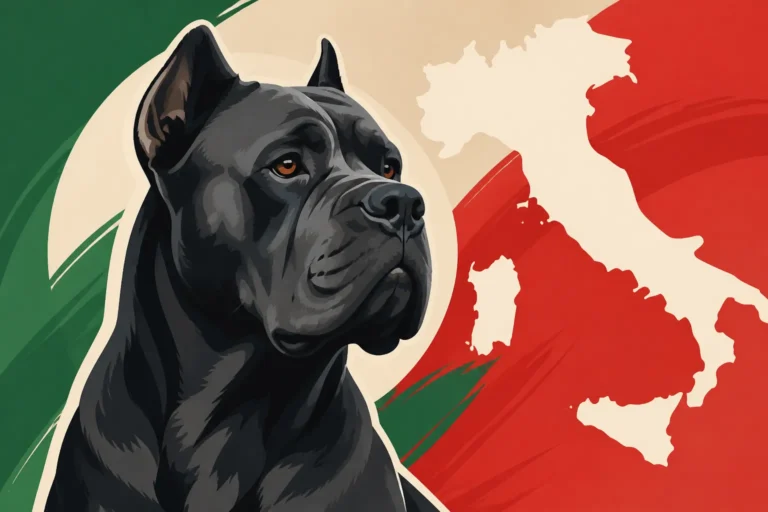
Whether the Cane Corso Is Italy’s National Dog
The Cane Corso is strongly associated with Italy, so it is easy to assume it has an official national-dog title. It does not appear to hold a formal designation of that kind. This guide explains the difference between an Italian breed, a cultural symbol, and an officially named national animal—and why the Cane Corso is still closely tied to Italy.
Is the Cane Corso Italy’s national dog
The short answer on official status
The Cane Corso is not formally designated as Italy’s national dog. It is an Italian breed with deep historical roots, but that is different from receiving an official national title. A country can be closely associated with a breed without having legally or formally named that breed its national dog.
This distinction can be confusing because “national dog” is often used loosely in articles, breed profiles, and social media posts. Sometimes it means a breed originated in a country; sometimes it means people widely associate the breed with that country. Neither usage necessarily means the government has granted an official status.
For the Cane Corso, the careful answer is: it is a historic Italian breed, not an officially named national dog. If you see the breed described as “Italy’s national dog,” treat that as an informal expression of national heritage or pride unless the claim identifies a formal designation.
What people usually mean by the phrase
When someone calls the Cane Corso Italy’s national dog, they may be celebrating its Italian origins and its longstanding place in rural life. The breed’s name, history, and traditional working role all connect it closely to Italy. Those connections can make the phrase feel natural, even when it is not an official title.
The same kind of shorthand appears with many breeds around the world. A breed may be a national favorite, a cultural emblem, or a well-known product of a country’s breeding history. Those descriptions are meaningful, but they are not interchangeable with an official national designation.
It also helps to separate “national dog” from “national animal.” The terms are sometimes used as though they mean the same thing, but a country may have symbols, traditions, or popular associations without officially appointing a particular dog breed to represent it.
| Description | What it means | How it applies to the Cane Corso |
|---|---|---|
| Italian breed | A breed developed or historically established in Italy | Yes, the Cane Corso is an Italian breed |
| Cultural symbol | A breed people associate with a country’s history or identity | It can be described this way informally |
| National favorite | A popular breed within a country | Popularity does not establish official status |
| Official national dog | A breed formally designated by a government or recognized authority | The Cane Corso does not have this formal title |
Why the Cane Corso is so closely tied to Italy
A working dog shaped by Italian life
The Cane Corso’s connection to Italy is not just a matter of a modern label. The breed is associated with the working dogs kept on farms and estates, particularly in southern parts of the country. Its traditional duties included guarding property and livestock, and its history reflects the practical needs of rural households.
That working background is part of why the breed’s identity feels so specifically Italian. The Cane Corso was not developed simply to look imposing. It was valued for usefulness: a substantial, attentive dog expected to live and work alongside people. For a closer look at the breed’s historical role, see The Farm Job the Cane Corso Was Kept For and Guarding the Masseria in Southern Italy.
The breed is also linked to older Italian accounts of large working dogs. Popular retellings sometimes blur history and legend, so it is worth approaching dramatic claims with care. The breed’s genuine historical importance does not need embellishment: its connection to farm work, guarding, and rural life is already compelling. The Roman War Dog Behind the Cane Corso explores the stories often connected to that earlier history.
A breed preserved through revival
The Cane Corso nearly disappeared as traditional farm life changed. Mechanized agriculture and shifts in rural communities reduced the need for many working dogs, and the breed’s numbers declined. Enthusiasts later worked to find, preserve, and develop the dogs that remained. That revival is another reason people view the Cane Corso as part of Italy’s living heritage.
This history matters because it shows that the modern Cane Corso is not simply an unchanged relic from antiquity. It is a breed whose population and recognized identity were shaped by preservation efforts in more recent decades. The account of that period is covered in How the Cane Corso Nearly Disappeared After the War and Paolo Breber and the Men Who Brought the Cane Corso Back.
That revival also helps explain why the breed can inspire strong pride among Italian breeders and enthusiasts. Preserving a breed requires more than keeping a name alive: it involves maintaining recognizable characteristics, documenting pedigrees, and making decisions about health and temperament. The history is a story of recovery, not proof of a formal national designation.
The name and the Italian identity
The breed’s name reinforces its Italian association. “Cane” means dog in Italian, while the meaning and history of “Corso” have been discussed in different ways. The name is not, by itself, evidence that the breed holds national status, but it is one visible part of its cultural identity. For more background, see What Cane Corso Means in Italian.
The breed is also recognized within the Italian dog-breeding world and has an international standard and registry history. Recognition by kennel organizations helps establish a breed’s identity and show eligibility; it does not make that breed an official symbol of the country. This distinction is easy to miss when articles use words like “national,” “traditional,” or “iconic” without explaining what they mean.
How to tell heritage claims from official designations
Look for the authority behind the claim
When you encounter a statement that a dog is a country’s “official national dog,” ask who made the designation. Is it a government, a law, or a recognized national institution? Or is the phrase coming from a breed article, a tourism page, a social post, or a breeder’s description?
If a claim does not name an authority or explain how the designation was made, it may be using “national dog” informally. That does not necessarily make the statement malicious or entirely meaningless; it may be a shorthand way to describe a breed’s origins and cultural significance. It simply should not be mistaken for an official title.
A useful way to evaluate the wording is to look for the exact verb. “Originated in Italy,” “is associated with Italy,” and “was officially designated by Italy” make different claims. The first two describe history or public perception. The last one requires evidence of a formal decision.
Do not confuse breed recognition with national recognition
Kennel-club recognition, breed standards, and government designations serve different purposes. A kennel organization may recognize a breed for registration and competition. A breed standard describes the features and temperament expected of dogs shown under that organization’s rules. Neither step automatically gives the breed a national-symbol status.
The Cane Corso’s international recognition is part of its modern history, including its later recognition in the United States. That milestone helped more people learn about the breed, but it is separate from Italy naming it a national dog. For the American timeline, see The 2010 AKC Recognition of the Cane Corso.
Likewise, a breed’s appearance in a country’s advertisements, films, or public life does not establish official status. A dog can become instantly recognizable and culturally important without being named a national symbol through a formal process.
Be cautious with absolute claims
You may find websites that state confidently that the Cane Corso is “Italy’s national dog,” but the phrase is often repeated without a clear explanation. When sources echo one another, repetition can make an informal description look official. A reliable account should tell you whether the title is legally or formally recognized, or whether it is simply a popular way of describing the breed.
This caution is useful beyond the Cane Corso. Breed histories often contain a mix of documented facts, regional tradition, and romantic storytelling. For context on how regional origins shaped the breed, read Which Italian Regions Kept the Cane Corso Longest and The Dogs of Puglia That Rebuilt the Cane Corso.
What the Cane Corso represents today
A recognizable Italian breed, not an official emblem
Even without a formal national-dog title, the Cane Corso remains one of the breeds most readily associated with Italy. Its name, historical working role, and revival give it a strong connection to Italian heritage. Calling it an Italian breed is accurate; calling it an official national dog overstates what that connection establishes.
That distinction does not diminish the breed’s significance. In fact, it gives a more precise picture of why the Cane Corso matters: it is a breed shaped by Italian working life and maintained through deliberate preservation. Its identity comes from history, people, and continued breeding—not from a government label.
Why the distinction matters to prospective owners
For someone considering a Cane Corso, the national-dog question is mostly about heritage and identity. The more practical questions concern the individual dog and the responsibilities of living with a powerful guardian breed. A dog’s Italian background does not tell you whether it will fit your household, how it will respond to visitors, or what training and management it needs.
Prospective owners should focus on temperament, health, responsible breeding, and their own experience. A breeder’s claims about lineage and health testing deserve closer attention than a grand cultural label. If you are comparing the breed with other guardians, Who a Cane Corso Actually Suits offers a useful starting point, while The Cane Corso's Reputation and the Laws Behind It addresses the public and legal perceptions that can come with owning one.
In short, the Cane Corso is Italian by origin and deeply connected to the country’s rural history. It is not formally designated as Italy’s national dog. The phrase can work as an informal expression of pride, but it should not be presented as an official title.
Disclaimer
This article is for general informational purposes only and does not constitute professional advice. Laws, prices and regulations vary by location and change over time. Consult a qualified professional for guidance on your specific situation.