The Cane Corso Against the Dogo Argentino
A Cane Corso and a Dogo Argentino can both look imposing, athletic, and hard to manage on a leash, but they were developed for different jobs. That difference matters in an ordinary home: it shapes what each dog may notice, how it responds to strangers and animals, and what kind of training and supervision its owner needs to provide.
Cane Corso and Dogo Argentino at a glance
Different histories, different instincts
The Cane Corso comes from Italy, where its ancestors worked around farms and properties. The breed’s history includes guarding, driving livestock, and helping with hunting. That background helps explain why many Corsos are watchful at home and strongly attached to their families. A confident Corso may be calm in public, but it still needs thoughtful guidance around visitors, unfamiliar dogs, and busy surroundings. For more on its working past, see The Farm Job the Cane Corso Was Kept For.
The Dogo Argentino was developed in Argentina for big-game hunting. Its history is closely tied to athletic work, stamina, and cooperation with people in the field. Those traits can show up as a dog that needs regular, purposeful activity and careful management around wildlife or other animals. A Dogo is not simply a “more athletic Corso,” just as a Corso is not simply a “more protective Dogo.” They bring different instincts into the household.
Breed history describes tendencies, not guarantees. A dog’s breeding, early experiences, health, training, and individual temperament all influence behavior. Two dogs of the same breed can differ considerably: one may be composed around visitors, while another needs more distance and structure. When choosing either breed, meet the individual dog and ask specific questions about its parents, previous behavior, and socialization.
Size, build, and daily practicality
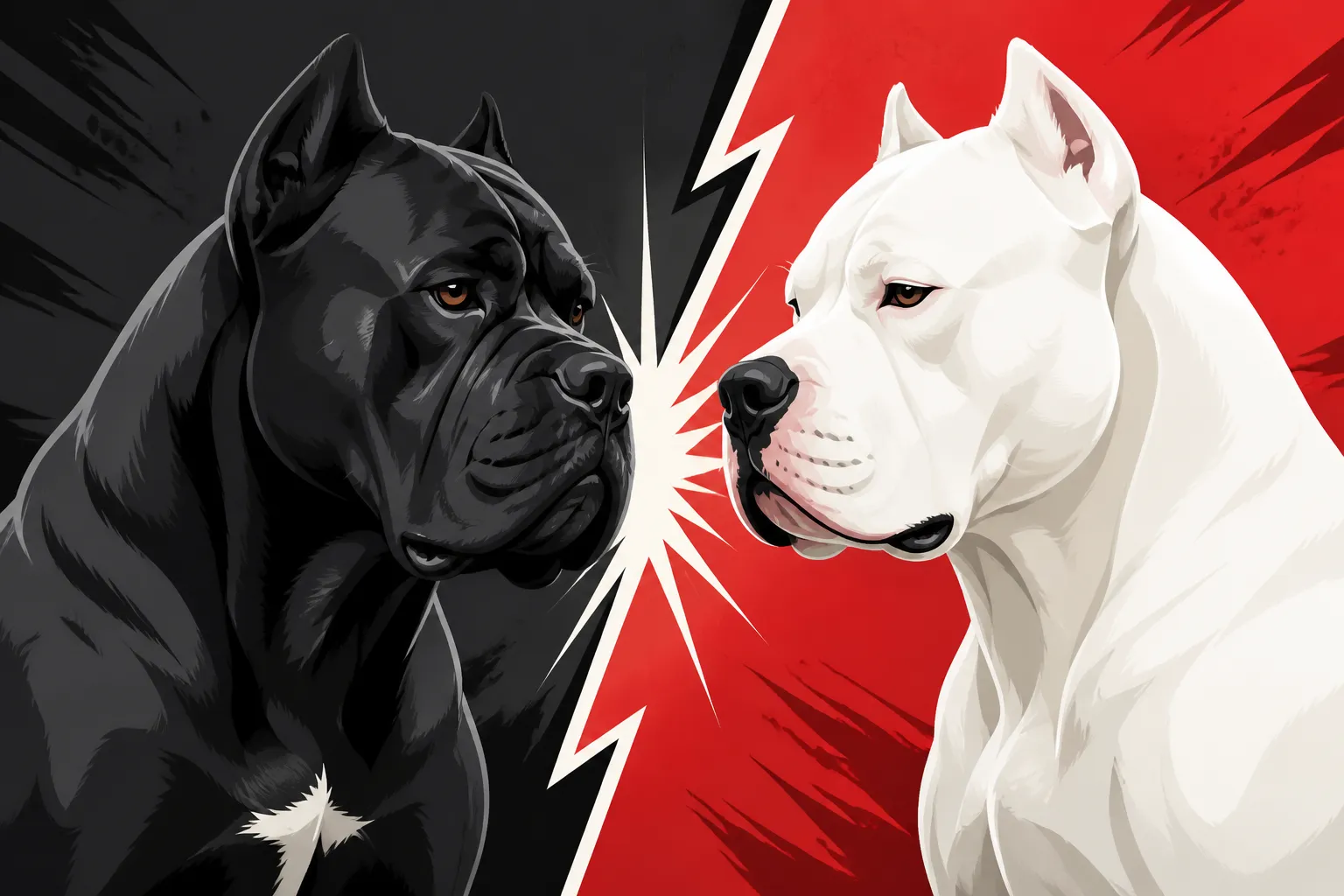
Both breeds are large, powerful dogs, but their physiques often look and feel different. The Cane Corso is generally heavier and more substantial, with a broad head and a strong, solid outline. The Dogo Argentino is typically a muscular, athletic dog with a striking white coat and a build suited to sustained movement. Either dog can be difficult to control if it pulls, lunges, or becomes overexcited, so leash skills should be taught before its strength becomes a daily problem.
Physical size also affects the practical details of ownership. A large dog needs secure equipment, enough room to rest comfortably, and a plan for transport, veterinary visits, and emergencies. A suitable crate or vehicle setup should be chosen by measuring the dog and checking the equipment’s specifications, not by guessing from a product photo. If you are comparing related guardian breeds, The Cane Corso Against the Presa Canario offers another useful point of comparison.
A quick comparison for prospective owners
| Consideration | Cane Corso | Dogo Argentino |
|---|---|---|
| Historical role | Farm, property, livestock, and hunting work | Big-game hunting |
| Common household challenge | Managing guarding tendencies and responses to visitors | Providing suitable activity and managing hunting-related instincts |
| General build | Powerful and substantial | Muscular and athletic |
| Training priority | Calm handling, visitor routines, leash manners, and neutrality | Reliable recall foundations, leash skills, impulse control, and safe activity |
| Health topics to discuss | Joint, eye, heart, and bloat risks | Hearing, joint, skin, and other breed-relevant screening |
| Best starting point | Experienced, consistent owner prepared to manage a guardian breed | Experienced, active owner prepared to meet a strong working dog’s needs |
This table is a starting point, not a prediction of an individual dog. Breed labels cannot tell you whether a particular puppy or adult will be comfortable with children, other dogs, or frequent visitors. Ask about observed behavior and plan for the dog in front of you.
Temperament and household fit
Guarding behavior versus hunting drive
A Cane Corso’s guardian background can make home life a central part of its world. Some Corsos are naturally reserved with strangers, and an owner may need to teach them that visitors can enter without the dog policing every movement. A predictable routine helps: the dog has a designated place, guests are not expected to crowd or excite it, and adults manage greetings rather than leaving the dog to make its own decisions.
The Dogo Argentino’s hunting background brings a different consideration. A dog may be intensely interested in moving animals, and that interest can make an unsecured outdoor area or an unreliable recall risky. A strong prey response is not the same as disobedience or hostility toward people, but it does mean the owner should avoid assuming that the dog will ignore a squirrel, cat, or wildlife simply because it has been taught basic cues. The breed’s history is explored further in The Prey Drive Behind a Cane Corso's Boar Hunting Past.
Neither breed should be selected because someone wants a dog to intimidate people or “handle” threats independently. That expectation can create unsafe situations. The responsible goal is a steady, manageable companion whose owner controls access, teaches useful skills, and prevents avoidable confrontations.
Children, visitors, and other pets
A well-managed dog may live successfully with children, but size alone makes supervision essential. A playful Cane Corso or Dogo Argentino can knock over a small child without intending harm. Children should not climb on, corner, disturb, or take food from a dog, and adults should provide a quiet, dog-only resting space. Young children should never be left alone with either breed, even when the dog is familiar and has behaved gently before.
Frequent guests require planning, especially with a dog that is watchful or easily aroused. Before opening the door, the owner should know where the dog will be and how it will be separated or introduced. A gate, closed room, or trained settle routine can prevent a chaotic doorway greeting. If your household often has visitors, consider how much management you can realistically maintain, rather than assuming the dog will simply adjust.
The same caution applies to cats and other dogs. Some individuals coexist comfortably with household animals, while others need careful separation or may not be safe around certain pets. Early introductions, physical barriers, and ongoing supervision matter; a successful first meeting does not guarantee a safe relationship in every context. For more on how household setting affects the Corso, see Whether a Cane Corso Suits a Family With a Yard.
Which breed may suit which owner
A Cane Corso may appeal to someone who wants a close, attentive companion and is prepared to manage a guardian breed’s presence in the home. The owner needs to be comfortable setting clear routines, practicing calm behavior around visitors, and preventing the dog from rehearsing unwanted guarding or leash reactions. A large yard is not a substitute for supervision or training.
A Dogo Argentino may be a better match for an experienced owner who can provide regular physical and mental activity and who takes hunting instincts seriously. That does not mean the dog should be pushed into relentless exercise. It means planning activities that are appropriate for its age, health, and training, while keeping it safely controlled around other animals and in public.
For either breed, think beyond your best day. Can you manage the dog when it is excited, tired, ill, or recovering from surgery? Can you arrange safe care if you travel? Can every adult in the home follow the same rules? These questions often matter more than deciding which breed looks more impressive. A comparison with another familiar guardian type may also help; Cane Corso or Rottweiler for a Family Guardian explores a related decision.
Training, exercise, and responsible ownership
Training should begin with everyday control
Start with practical skills: walking on a loose leash, coming when called in safe settings, settling on a mat, waiting at doors, and accepting handling. Keep sessions short and repeat them in different places as the dog becomes ready. A dog that responds in a quiet kitchen may not yet respond reliably near a busy sidewalk, an unfamiliar dog, or a visitor at the front door.
Avoid relying on physical strength or intimidation to control a powerful dog. Harsh confrontation can increase fear or arousal and may make the dog harder to handle. Instead, use clear criteria, reward behaviors you want to see, and manage the environment so the dog is not repeatedly placed in situations it cannot yet handle. If a dog shows escalating reactivity, guarding, or threatening behavior, seek qualified, in-person help rather than trying to resolve the issue through guesswork.
A trainer should be able to explain how they assess behavior, what methods they use, and how they plan to keep people and animals safe. Look for experience with large, powerful breeds and ask for a plan specific to your dog, not a promise of a quick fix. What to Look For in a Cane Corso Trainer can help you think through that choice.
Exercise should fit the dog, not a stereotype
Both breeds need more than a fenced yard and a few minutes outside. Walks, training, scent games, and age-appropriate play can provide useful outlets, but the right mix depends on the dog’s condition and temperament. Puppies need controlled activity that supports healthy growth, while adults may enjoy more demanding work if they are physically suited to it. A veterinarian can advise on exercise limitations when a dog is growing, recovering, or managing a health concern.
A long, repetitive run is not automatically the best plan for a high-energy dog. It can build fitness without teaching calm behavior, and it may be unsuitable for a young dog or one with joint problems. Include time to sniff, practice cues, and rest. For a Dogo with strong interest in wildlife, use secure spaces and reliable equipment rather than testing its recall near a tempting distraction.
Buying the right supplies is part of making daily routines manageable, but fit and function matter more than labels. When comparing large-dog leads, harnesses, bowls, or enrichment toys, owners may browse retailers such as Chewy alongside local pet shops and specialist suppliers. Check measurements and product instructions carefully; a piece of equipment that looks sturdy online still needs to fit the individual dog.
Health checks and legal checks belong in the decision
Ask breeders or rescues what health information is available and what screening has been done. For a Cane Corso, owners commonly discuss joints, eyes, cardiac health, and bloat risk with a veterinarian. Dogo Argentino owners should ask about breed-relevant screening, including hearing and joint health. A health test does not guarantee a dog will never develop a problem, but transparent records and informed veterinary care help you make better decisions.
Before bringing either breed home, confirm the rules that apply where you live. Rental agreements, homeowners or renters insurance, municipal requirements, and travel policies may treat breeds differently. Rules can vary by city, housing provider, and insurer, so check the actual terms before paying a deposit or adopting. A retailer such as Chewy can help with routine supplies, but local authorities, housing providers, and insurance companies are the places to confirm ownership requirements.
Also consider the less visible costs: secure fencing, training, veterinary care, transport equipment, boarding, and emergency planning. A dog’s purchase or adoption fee is only one part of the commitment. The most suitable breed is not necessarily the one with the more familiar name or the more dramatic appearance; it is the one whose needs your household can meet consistently.
How to make a thoughtful choice
Meet the individual dog and ask specific questions
If you are meeting a puppy, ask to see the mother when possible and discuss the temperament and health history of both parents. Ask how the puppies have been exposed to ordinary household sounds, surfaces, people, and gentle handling. A responsible breeder should welcome thoughtful questions and should be able to discuss the breed’s challenges without claiming that every puppy will be an effortless family dog.
If you are considering an adult dog, ask about its actual behavior in everyday situations. Has it lived with children, cats, or other dogs? How does it respond to visitors, handling, food, and veterinary care? What situations make it uncomfortable or overexcited? Honest details help you assess whether your home can safely support the dog. Take time to observe, and do not treat a single calm meeting as proof that every situation will be easy.
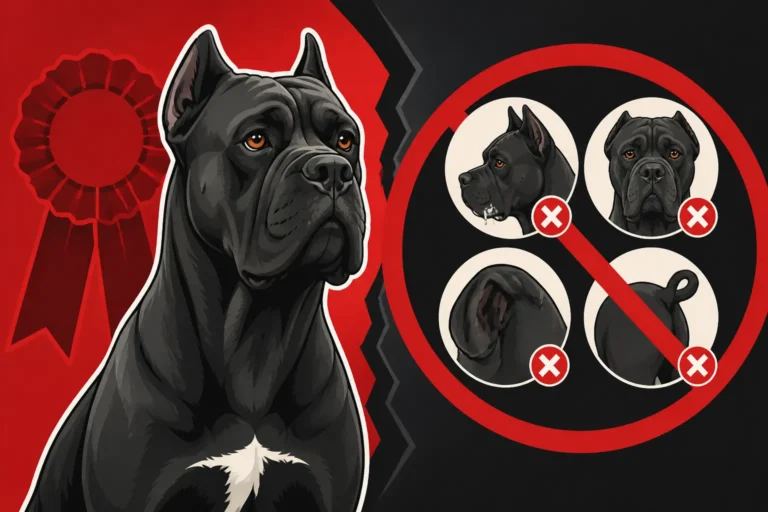
Avoid choosing based only on coat color, size, or a reputation for protection. A dog’s temperament, health, and fit with your lifestyle are more important than an impressive look. For a broader look at the breed’s appearance and physical expectations, see What the Standard Says a Cane Corso Should Look Like.
Choose the dog whose needs you can manage every day
A Cane Corso and a Dogo Argentino can both be devoted companions in suitable homes, but neither is a low-effort choice. The Corso’s guardian tendencies may demand careful visitor management and consistent social guidance. The Dogo’s athletic nature and hunting background may require especially thoughtful activity and animal-safety planning. Neither breed should be expected to become safe and reliable without training, supervision, and a realistic understanding of individual temperament.
Before deciding, write down what an ordinary week would look like: work hours, walks, training, household visitors, care arrangements, and veterinary access. Then consider the harder version of that week, when the dog is adolescent, pulling on leash, recovering from an injury, or unable to join your usual activities. If you are still prepared to provide structure and make adjustments, you are evaluating the commitment honestly.
The best choice is the dog whose needs match your experience, schedule, home, and ability to provide lifelong care. If you are uncertain, meeting adult dogs through responsible breeders or breed-focused rescue groups can offer a more grounded view than relying on appearance or online stereotypes. First-time owners may also find What First Time Cane Corso Owners Say They Underestimated useful before making a commitment.
Disclaimer
This article is for general informational purposes only and does not constitute professional advice. Laws, prices and regulations vary by location and change over time. Consult a qualified professional for guidance on your specific situation.