Hip Dysplasia in a Fast Growing Cane Corso
Cane Corso hip dysplasia caused by rapid growth, genetics, and environment explained with early signs, prevention, and management.
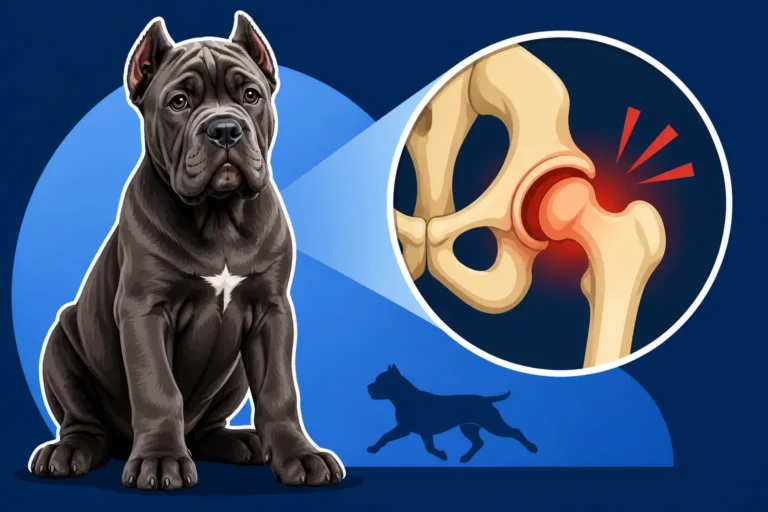
Cane Corso hip dysplasia caused by rapid growth, genetics, and environment explained with early signs, prevention, and management.

Breeding an epileptic Cane Corso creates severe ethical dilemmas due to genetic predispositions for recurrent, unprovoked seizures.

Daily medication management for Cane Corso epilepsy explains idiopathic seizure types, diagnostic blood work, and treatment options.

Cane Corso seizure symptoms and early pre ictal warning signs help owners recognize behavioral and physical changes before a collapse.

Cane Corso epilepsy genetics explain why inherited idiopathic seizures frequently strike young adult dogs between the ages of one and five.

Cane Corso health strategies and proactive management for hip dysplasia and heart conditions help giant breeds reach eleven years old.
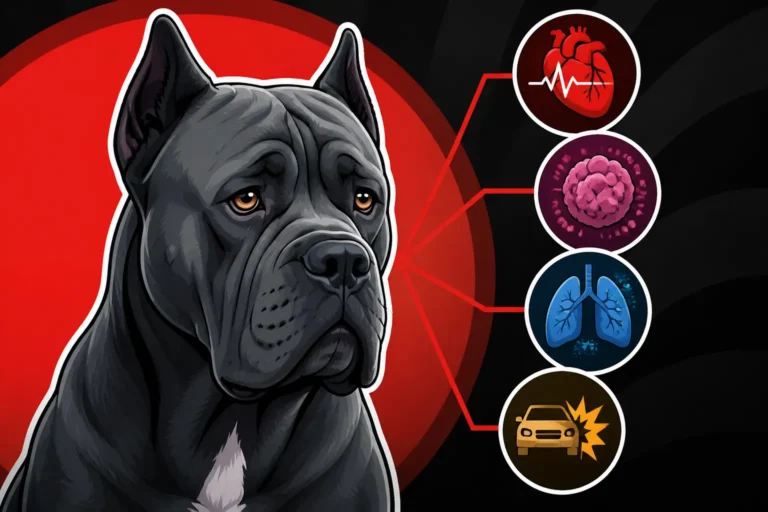
Cane Corso mortality factors include a nine to twelve year median lifespan, cancer, heart conditions, and bloat that shorten lives.

Gray Cane Corso lifespan myths explained through coat color genetics, examining the dilute gene and Color Dilution Alopecia.

Genetic theories, eumelanin pigment, and ancestral genes explain why black brindle Cane Corso dogs achieve the longest lifespans.

Cane Corso longevity research identifies a 9.3 year median lifespan, helping owners understand typical life expectancy and plan care.