How Owners Answer the Cane Corso Question in Public
When someone points at your Cane Corso and asks, “What kind of dog is that?” you may be deciding whether to give a quick answer, explain the breed, or head off a worried reaction. This guide offers calm, practical ways to handle those conversations while keeping your dog comfortable, your boundaries clear, and public outings focused on good manners.
Why people ask about Cane Corsos in public
Their appearance invites questions
A Cane Corso is a large, muscular dog with a distinctive head and a confident presence. Even people who like dogs may not recognize the breed, and people who do recognize it may have questions shaped by what they have seen online, in films, or in the news. The question may be simple curiosity, not criticism.
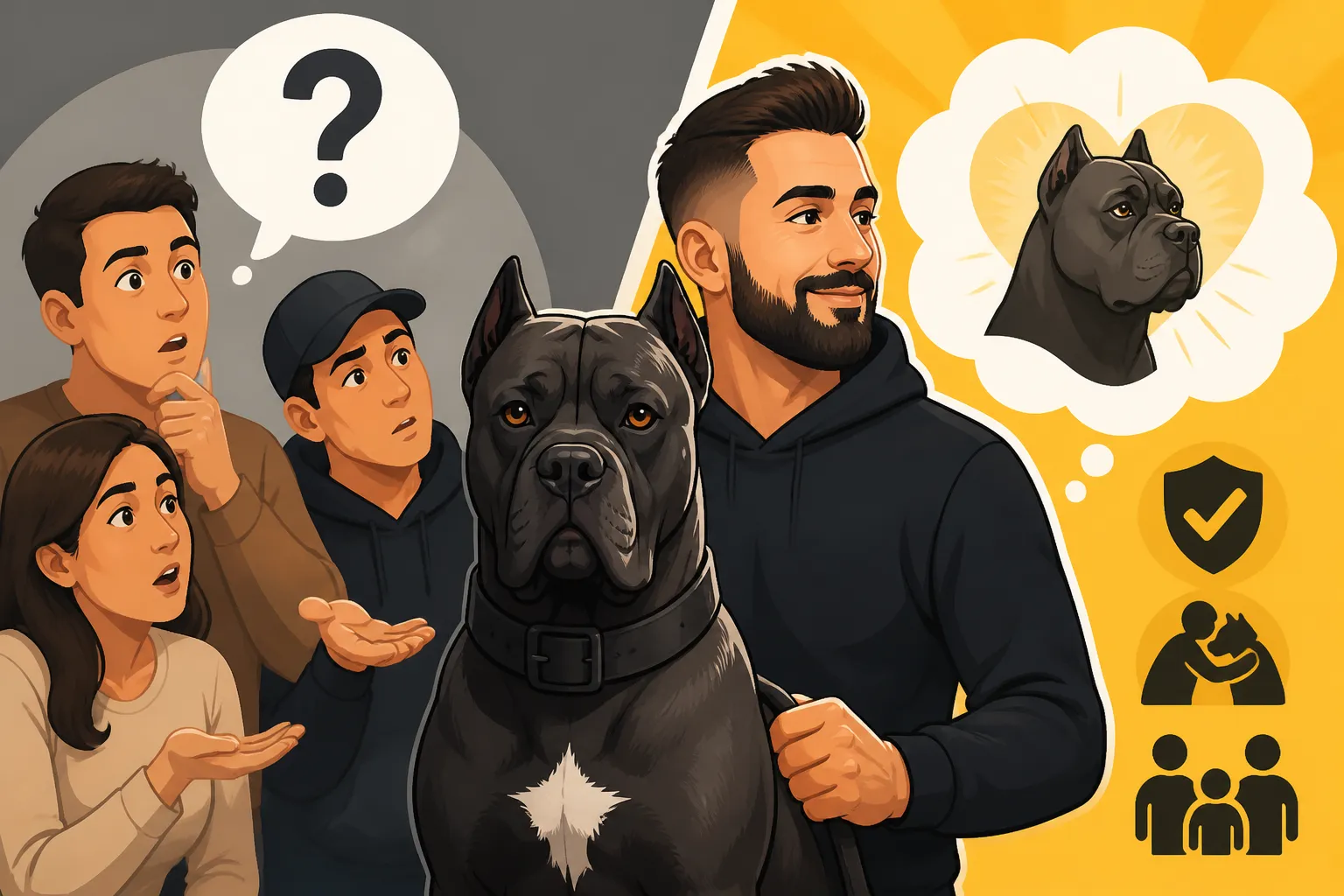
You might hear “Is that a mastiff?”, “What breed is he?”, or “Is she friendly?” as you walk through a neighborhood, visit a pet-friendly shop, or wait outside a café. Those questions can feel repetitive, especially when you are already managing a strong dog on a busy sidewalk. It is reasonable to want a short answer that doesn’t turn every outing into a public Q&A.
Cane Corsos also tend to attract attention because of their size and guardian-breed reputation. Some people may approach with confidence; others may cross the street or keep their children close. Their reactions are not a reliable assessment of your individual dog. A dog’s behavior, training, and comfort in that moment matter far more than a stranger’s assumptions about the breed.
If you want a clearer picture of how reputation and law can affect ownership, see The Cane Corso's Reputation and the Laws Behind It. For a broader look at how public attention can shape daily life, Whether Owning a Cane Corso Changes Your Neighbors explores some of the social friction owners encounter.
The question may be about safety, not breed identification
“Is he friendly?” often means “Can I come closer?” or “Can my child pet him?” It is useful to answer the question the person is really asking, rather than feeling obliged to give a full description of the breed. You can be polite and brief while still keeping control of the interaction.
For example, “He’s a Cane Corso, and we’re practicing walking calmly, so we’re not greeting today” identifies the dog and sets a clear limit. If your dog is comfortable meeting people, you can still choose not to allow an approach. A public sidewalk is not a meet-and-greet obligation.
Some owners enjoy explaining the breed’s history, purpose, and temperament. Others prefer to keep moving. Neither approach is rude. Your priority is to read your dog, maintain a safe distance, and avoid letting a stranger’s curiosity dictate what happens next. For background on the breed’s traditional role, The Farm Job the Cane Corso Was Kept For offers useful context, while What a Cane Corso's Guardian Instinct Actually Is can help distinguish breed tendencies from assumptions about any one dog.
Simple ways to answer without getting pulled into a debate
Choose a response that fits the moment
A short, steady answer is usually enough. You don’t have to persuade someone that Cane Corsos are good dogs, and you don’t have to defend your choice to own one. A calm tone, a little space, and a clear next step can end the exchange without making it tense.
| Situation | Possible response | What it communicates |
|---|---|---|
| Someone asks what breed your dog is | “She’s a Cane Corso.” | A direct answer without an invitation to debate |
| Someone asks to pet your dog | “Thanks for asking. We’re not greeting right now.” | A polite, clear boundary |
| A child rushes over | “Please stop there. She needs space.” | An immediate instruction focused on safety |
| Someone says the dog looks intimidating | “He is a large guardian breed, so we give people room.” | Acknowledges the dog’s presence without arguing |
| Someone assumes the dog is aggressive | “I can’t speak for every dog, but this one is working calmly with me.” | Brings the conversation back to the individual dog |
| You want to keep walking | “We’re on our way. Have a good day.” | Ends the interaction without hostility |
The best script is one you can say naturally when you are holding a leash, watching traffic, and keeping an eye on your dog. A rehearsed one-liner can help if you tend to freeze when strangers approach. Try saying it out loud at home so it doesn’t feel awkward in the moment.
It is also fine to give no breed explanation at all. “We’re training, please give us room” is a complete answer when your dog needs space. You are not required to share your dog’s history, training plan, or temperament with someone you have just met.
Keep the conversation honest and specific
Avoid promising that a dog is “always friendly” or “would never hurt anyone.” Even a sociable dog can be startled, uncomfortable, ill, or overwhelmed. A more accurate answer describes what is happening now: “He’s calm, but we’re not greeting,” or “She’s okay with people at a distance.”
That kind of wording protects your dog from being treated like a public attraction and helps strangers understand what to do. It also avoids putting you in the uncomfortable position of defending a blanket claim if your dog later shows stress. Owners know their dogs best, but no one can guarantee how a dog will respond in every setting.
If a person keeps asking, repeating the boundary is often more effective than adding more explanation. For example: “I understand you like dogs, but we’re not meeting today.” Then turn your body slightly, create distance, and continue on your route if it is safe. Long explanations can accidentally make a firm limit sound negotiable.
Protecting your dog’s space during public conversations
Watch your dog, not just the person asking
A stranger may see a big dog standing still and assume the dog is relaxed. You may notice something different: a closed mouth, a stiff body, a fixed stare, leaning away, repeated lip licking, or an attempt to move behind you. Those are reasons to pause the interaction and make more room, not to encourage the person to reach out.
Look for the whole picture rather than relying on one signal. A wagging tail does not always mean a dog wants to be touched, and a quiet dog may still be uncomfortable. If you see tension building, calmly guide your Cane Corso away before the situation escalates. You don’t need to wait for a growl or lunge to decide the interaction is over.
This is especially important around children, people carrying food, and strangers who move quickly or reach over the dog’s head. A child may be friendly but unpredictable, and a large dog can knock someone over without intending harm. Owners who want to learn more about neutral exposure can read Why a Cane Corso Should Meet People Without Greeting Them and Neutral Socialization for a Cane Corso at Twelve Weeks.
Make space before you need it
It helps to choose walking routes with room to step aside and to notice bottlenecks before you enter them. A narrow shop doorway, a crowded farmers’ market aisle, or a busy trailhead can make it harder to disengage from an approaching person. If you see someone heading toward you with a dog or child, crossing the street early can be more comfortable than waiting until you are face-to-face.
Give your dog a predictable job during these moments. You might cue a practiced sit at a safe distance, ask for a hand target, or keep walking in a loose arc away from the person. The goal is not to make your dog perform for strangers; it is to give the dog a familiar, low-pressure way to move through the situation with you.
Bring the gear that makes calm outings easier: a well-fitted collar or harness, a sturdy leash, high-value treats, and waste bags. Some owners use retailers such as Chewy to keep routine supplies stocked, especially treat pouches or cleanup bags they rely on during walks. If you’re comparing handling equipment, Which Collar and Lead Hold a Cane Corso is a useful related read. Gear is not a substitute for training, but dependable basics can prevent small hassles from becoming stressful distractions.
Preparing for the reactions you may get
Decide what you will say before you leave home
Public interactions are easier when you have a default answer ready. Decide in advance how you will respond to a friendly question, a request to pet your dog, and a comment that feels judgmental. Your answers can be brief and consistent, which means you won’t have to invent a response while managing the leash.
A simple plan might be: identify the breed if asked, decline greetings unless you genuinely want them, and move away from anyone who ignores the boundary. If you are walking with another person, agree on who handles conversation and who watches the dog. That avoids both humans speaking at once while the dog is left to interpret a confusing situation.
You can also prepare your dog gradually for public settings. Start in quieter places where you can keep a comfortable distance from people, reward calm attention, and leave before your dog becomes tired or overstimulated. Increase the challenge in small steps rather than beginning with a packed street festival. The aim is not to make your dog greet everyone; it is to build confidence around ordinary sights and sounds.
Some owners keep treats and cleanup supplies together so they can leave quickly without scrambling for a bag or pocket. If Chewy is part of your usual routine for pet essentials, you can use it to replenish the items you already know work for your outings. Keep treats familiar and appropriate for your dog, and avoid introducing a new food right before a busy public trip.
Respond to criticism without making your dog the center of a scene
You may hear that Cane Corsos are dangerous, that they should not be in public, or that your dog looks frightening. It can sting, especially when you have put real effort into training and responsible handling. You do not have to accept an unfair judgment as accurate, but arguing on the sidewalk rarely improves the situation.
A short response such as “I understand the breed can look imposing; we’re giving everyone space” can acknowledge the concern without escalating it. If the person continues, disengage. Your dog benefits more from a calm exit than from watching you get drawn into a heated exchange.
If the comment is paired with a practical concern—perhaps the dog is blocking a path or a child is trying to approach—address the behavior directly. Move to one side, shorten the leash without jerking, and create a clear route around the person. Showing consideration in small ways can be more persuasive than delivering a speech about the breed.
Not every public outing will go perfectly. Your dog may bark once at a sudden noise, someone may ignore your request for space, or you may feel caught off guard by a question you have answered dozens of times. That does not make the outing a failure. Notice what was difficult, adjust the next route or distance, and keep practicing the skills that help your Cane Corso stay settled. Owners often find that consistent manners—not a perfect explanation—shape the impression people take away. Why the Best Cane Corso Looks Boring in Public explores the value of calm, uneventful behavior, and What First Time Cane Corso Owners Say They Underestimated covers some of the everyday realities that can catch owners by surprise.
Disclaimer
This article is for general informational purposes only and does not constitute professional advice. Laws, prices and regulations vary by location and change over time. Consult a qualified professional for guidance on your specific situation.