What Happened to the Cane Corso After 1945
Post-war economic shifts in Italy nearly erased the Cane Corso before dedicated enthusiasts revived the breed.
Is this the right one for you?
Origins and temperament, size and coat, what living with one is actually like, and how it compares to the breeds people weigh against it.

Post-war economic shifts in Italy nearly erased the Cane Corso before dedicated enthusiasts revived the breed.

The Cane Corso history as a Southern Italian farm dog explains guarding and droving tasks on rural farmsteads.

Historical boar hunting required multiple Cane Corso dogs working in strategic teamwork to catch and hold a powerful wild boar.

Historical Italian utility dogs guarded rural estates and gripped large bulls by the nose or ear for butchers.

Cane Corso ancestry involves droving large livestock and guarding against predators rather than gentle sheep herding.

Basilicata and Campania lines of Cane Corso explain how Southern Italy preserved this historic working dog breed.
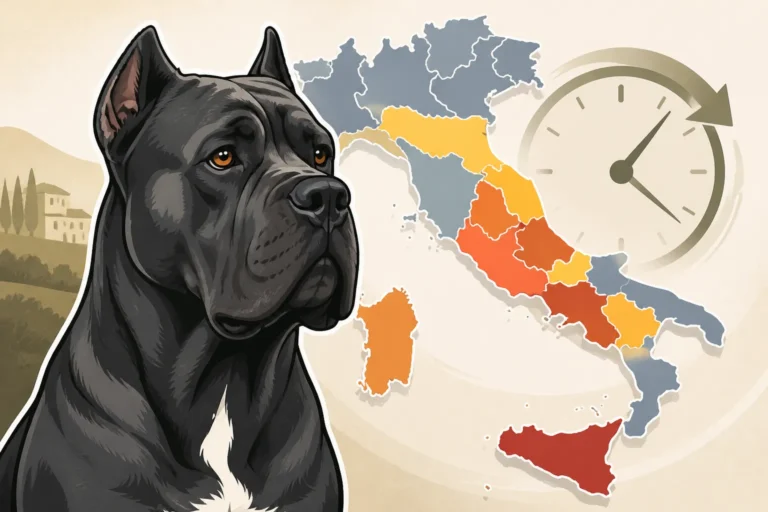
Basilicata and Campania preserved the Cane Corso longest, maintaining the historical working dog breed in rural Italy.

Cane Corso and Neapolitan Mastiff shared lineage tracing back to ancient Roman Molossers and the Canis Pugnax war dog.

Historical origins of the Cane Corso examine the claim that this breed directly descends from ancient Roman fighting dogs.

The Roman word Pireferi describes ancient Molossian dogs that guarded settlements, protected hearths, and symbolized fierce protection.