How Long a Cane Corso Puppy Lasts Between Night Trips
Bringing home a Cane Corso puppy is a thrilling adventure, but let's be honest, it often comes with a dose of sleep deprivation and the constant anxiety of overnight potty accidents. No one wants to wake up to a puddle or worse, and figuring out how long your giant breed puppy can actually hold it through the night can feel like cracking a secret code. This guide is here to demystify the process, offering realistic expectations and practical tips to help you and your Cane Corso puppy get a good night's sleep, free from unwelcome surprises.
Understanding Your Cane Corso Puppy's Bladder Development
It's easy to forget that a young Cane Corso, despite its rapid growth and imposing presence, is still very much a baby when it comes to physical development, especially bladder control. Their tiny bladders simply aren't designed to hold large volumes for extended periods, and the muscles that control urination are still maturing. This isn't a matter of them being defiant or "not getting it"; it's pure physiology.
The Science Behind Puppy Potty Breaks
Think about it this way: a newborn human baby needs diaper changes constantly. A puppy isn't much different in its early weeks. Their urinary sphincter, the muscle that holds urine in, is not fully developed or strengthened. This means that when their bladder signals "full," there's very little they can do to override that urge for long. It takes time, muscle development, and consistent training for them to build the capacity and control needed for longer stretches. This is why you'll see such a stark difference between a 9-week-old puppy and a 6-month-old one. Their bodies are literally growing into their ability to hold it.
Factors Influencing Bladder Control
Beyond age, several other factors play a significant role in how long your Cane Corso puppy can last overnight. Their individual metabolism, for instance, can affect how quickly they process food and water. A puppy that drinks a lot right before bed, even if it's not a huge amount for an adult dog, will naturally need to urinate sooner. Activity levels during the day can also play a part; a tired puppy might sleep more soundly, but also might not wake itself up even when its bladder is full, leading to accidents.
Their diet also matters. A high-quality, easily digestible puppy food formulated for large breeds helps ensure proper nutrient absorption, which can lead to less waste output. If your puppy is on a food that doesn't agree with them, you might see more frequent urination or loose stools, impacting their ability to hold it through the night. Consistency in feeding times is also key; a regular schedule helps regulate their elimination schedule, making it more predictable.
The Age-Based Rule of Thumb for Night Trips
When you're dealing with a Cane Corso puppy, size can be deceiving. They might look like little tanks, but their bladders are still developing. A common guideline veterinarians and experienced breeders share is the "month-plus-one" rule, or sometimes just "months in hours." While it's a helpful starting point, remember it's a general guide, not a strict law.
Applying the Rule to Your Cane Corso
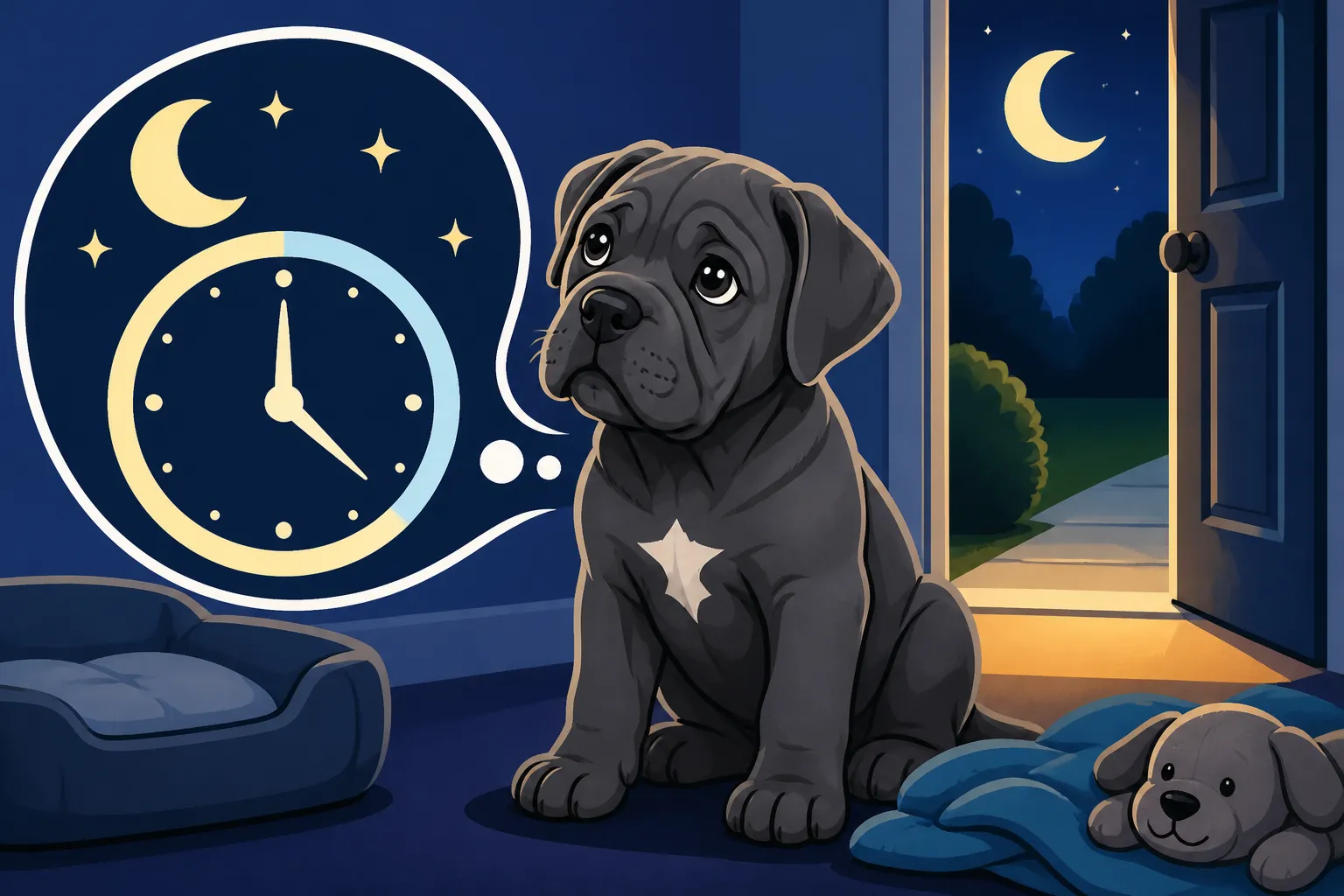
The rule suggests that a puppy can typically hold its bladder for approximately one hour for every month of its age, plus maybe an extra hour for nighttime. So, a 2-month-old Cane Corso puppy might be able to hold it for about 2-3 hours during the day, and perhaps 3-4 hours overnight. A 3-month-old could manage 3-4 hours during the day, and maybe 4-5 hours at night. This gives you a rough expectation, but it's crucial to observe your individual puppy.
Here's a simplified breakdown:
| Age of Cane Corso Puppy | Daytime Holding Time (Approx.) | Nighttime Holding Time (Approx.) |
|---|---|---|
| 8 weeks (2 months) | 2-3 hours | 3-4 hours |
| 12 weeks (3 months) | 3-4 hours | 4-5 hours |
| 16 weeks (4 months) | 4-5 hours | 5-6 hours |
| 5-6 months | 5-6 hours | 6-7 hours (potentially longer) |
| 6+ months | 6-8 hours | 8+ hours (with consistent training) |
It's really important not to push these limits, especially early on. An accident isn't a failure on your puppy's part; it's often a sign that we, as owners, asked for too much too soon. You want to set your puppy up for success, not frustration. Waking up earlier to let them out builds positive associations with potty training and prevents setbacks.
Why Nighttime Can Be a Bit Longer
You might notice that the chart suggests a slightly longer holding time at night. This isn't because their bladder magically grows when the sun goes down! It's because puppies are typically less active during sleep, and their metabolism slows down. They're not running around, playing, or drinking as frequently, which reduces the rate at which their bladder fills. However, this is only true for a truly sleeping puppy. If they're restless, awake, or anxious in their crate, they might need to go out sooner. How Long a Cane Corso Puppy Lasts Between Night Trips discusses this more directly.
Always consider their sleep quality. A puppy that is comfortable, secure, and truly resting will have a better chance of holding it. This is where a proper crate setup becomes invaluable. A cozy, den-like space can encourage deeper sleep, which indirectly helps with bladder control overnight. Just ensure the crate is appropriately sized – just enough room to stand up, turn around, and lie down, but not so much space that they can use one end as a bathroom and sleep in the other.
Strategies for Extending Nighttime Intervals
Getting your Cane Corso puppy to sleep through the night without accidents is a gradual process, not an overnight miracle. It requires consistency, patience, and a few smart strategies to support their developing bladder control and reinforce good habits. Remember, you're not just waiting for their bladder to grow; you're also teaching them good habits.
Consistent Bedtime Routine
Dogs thrive on routine, and a Cane Corso puppy is no exception. Establishing a predictable bedtime routine signals to your puppy that it's time to wind down. This might include a final play session to burn off any last energy, a quiet cuddle, and then a last potty break right before bed. This consistency helps their body clock adjust, making it easier for them to settle and, crucially, hold their bladder.
For example, if you aim for a 10 PM bedtime, make sure that last potty break is at 9:50 PM, followed immediately by crating. Avoid exciting games or giving treats and water in the crate after that final trip. Consistency here is really the linchpin. If your puppy has learned to expect an exciting treat or a game of fetch right before bed, they might not settle as easily, impacting their ability to sleep deeply and hold it.
Strategic Water and Food Restriction
This isn't about dehydrating your puppy! It's about smart timing. Generally, you want to limit water intake about 1-2 hours before bedtime. If your puppy is still actively drinking, simply pick up the water bowl. This gives them time to process the water and get one last good potty break in before their overnight stretch. Food should be removed even earlier, typically 2-3 hours before bed. This prevents them from needing to poop in the middle of the night, which can be just as disruptive as a pee accident.
Of course, use common sense. If it's a particularly hot day or your puppy has been very active, ensure they're adequately hydrated throughout the day. But as the evening winds down, reduce access. If they wake up and seem thirsty in the middle of the night, offer a very small amount of water (a few sips, not a full bowl) after a potty break, then immediately put them back in their crate. This helps prevent excessive drinking that would necessitate another trip soon after.
Crate Training for Bladder Management
Crate training is one of the most effective tools for teaching a puppy to hold its bladder. Dogs are naturally clean animals and generally won't want to soil their sleeping area. When properly introduced, the crate becomes a safe, cozy den where your Cane Corso puppy feels secure. Because they don't want to mess their bed, they learn to "hold it" until they are let out. Just remember, the crate should be appropriately sized – large enough for them to stand, turn around, and lie down comfortably, but not so big that they can relieve themselves in one corner and sleep in another.
Many new owners make the mistake of getting a crate that's far too large for their puppy, thinking they're being kind. While the intention is good, it can inadvertently sabotage potty training. A divider panel, often included with larger crates bought from places like Amazon, can be incredibly helpful. You can expand the crate size as your puppy grows and gains better bladder control. Crate Training a Cane Corso That Outgrows Every Crate offers more in-depth advice on this. The goal is to make the crate a comfortable, safe place they want to be, not a punishment.
The Midnight Potty Patrol
In the early weeks, you will likely need to set an alarm to take your Cane Corso puppy out at least once, sometimes twice, during the night. Start with what the "age in months" rule suggests, and adjust from there. For a 2-month-old, this might mean a trip every 3-4 hours. When you take them out, keep it strictly business: no play, no greetings, just out to potty, praise when they go, and then immediately back into the crate. Keep lights low and interaction minimal to reinforce that it's still nighttime.
As your puppy gets older and stronger, you can gradually extend these intervals. If your 3-month-old is consistently holding it for 4 hours, try pushing it to 4.5 or 5 hours. Watch for signs of restlessness or whining before your alarm goes off. If they start signaling earlier, you might need to revert to a shorter interval for a few nights. This gradual extension builds their physical and mental capacity to hold it for longer.
Recognizing When Your Cane Corso Needs a Trip
Knowing your Cane Corso puppy's specific cues for needing to go out is crucial for successful nighttime potty training. They can't tell you in words, so you have to become a master of canine body language and listen to their subtle (and not-so-subtle) signals. Ignoring these cues is a surefire way to end up with an accident.
Early Warning Signs from Inside the Crate
Even when crated, your puppy will usually give you clues that their bladder is full. The most common sign is restlessness. They might start shifting, circling, or fidgeting more than usual. Some puppies will whine softly at first, then escalate to louder barks or cries if ignored. These aren't necessarily signs of wanting to play; they're often a genuine plea to be let out. Pay attention to changes in their breathing or sudden alertness after a period of deep sleep.
It’s tempting to ignore a whine, especially in the middle of the night, for fear of reinforcing attention-seeking behavior. However, with a young puppy, it’s always better to err on the side of caution. If they wake up and whine, take them out immediately to their designated potty spot. If they go, great! Praise them quietly and put them back. If they don't go, it might be an attention whine, but you've at least ruled out a full bladder. A structured training program, like those offered by BAXTER & Bella, often emphasizes recognizing and responding to these early signals to build trust and prevent accidents.
What to Do During a Nighttime Potty Break
When your puppy signals they need to go out, act quickly and efficiently. Don't turn on all the lights, don't engage in play, and don't make a big fuss. Simply leash them, carry them (if small enough) or lead them calmly to their designated potty area. Use a consistent phrase like "go potty" or "hurry up" to help them associate the phrase with the action. When they go, offer quiet, calm praise, maybe one small, high-value treat, and then immediately bring them back inside and put them back in their crate.
The goal is to keep the experience as boring as possible, reinforcing that nighttime potty breaks are for business only, not for fun or extended interaction. This helps them understand that once they've done their business, it's back to sleep. If you make it a party, they might start waking you up for the fun, not because they actually need to relieve themselves. Establishing clear boundaries around nighttime behavior is vital for both your sanity and their training progress.
Handling Accidents Gracefully
Accidents will happen, especially with a Cane Corso puppy, regardless of how diligent you are. The key is how you react. Never punish your puppy for an accident, especially if you find it after the fact. They won't connect your anger to something they did hours ago. Punishment can actually make them fearful of eliminating in front of you, which will hinder future potty training efforts.
If you catch them in the act, a sharp but not angry "Ah-ah!" or clap can interrupt them. Immediately pick them up (if possible) or lead them outside to their designated spot to finish. When they go outside, praise them heavily. Clean up any indoor accidents thoroughly with an enzymatic cleaner to eliminate odors that might attract them back to the same spot. Products readily available on Amazon can help with this. Remember, every accident is a learning opportunity for both you and your puppy to refine your routine. How Long It Takes to House Train a Cane Corso provides further detail on accident prevention and management.
Disclaimer
This article is for general informational purposes only and does not constitute professional advice. Laws, prices and regulations vary by location and change over time. Consult a qualified professional for guidance on your specific situation.