The Prey Drive Behind a Cane Corso’s Boar Hunting Past
Many Cane Corso owners often find themselves perplexed and occasionally overwhelmed by a deep-seated instinct in their otherwise calm and loyal companions: a powerful prey drive. This isn't just about a casual squirrel chase; it's a profound, sometimes startling intensity that can make walks challenging and interactions with smaller animals unpredictable. Understanding this drive, which is intrinsically linked to their ancestral role as boar hunters, is crucial for fostering a harmonious life with your Cane Corso, and this guide will help you decipher its origins and manage its manifestations effectively.
The Ancient Roots of the Cane Corso's Hunt
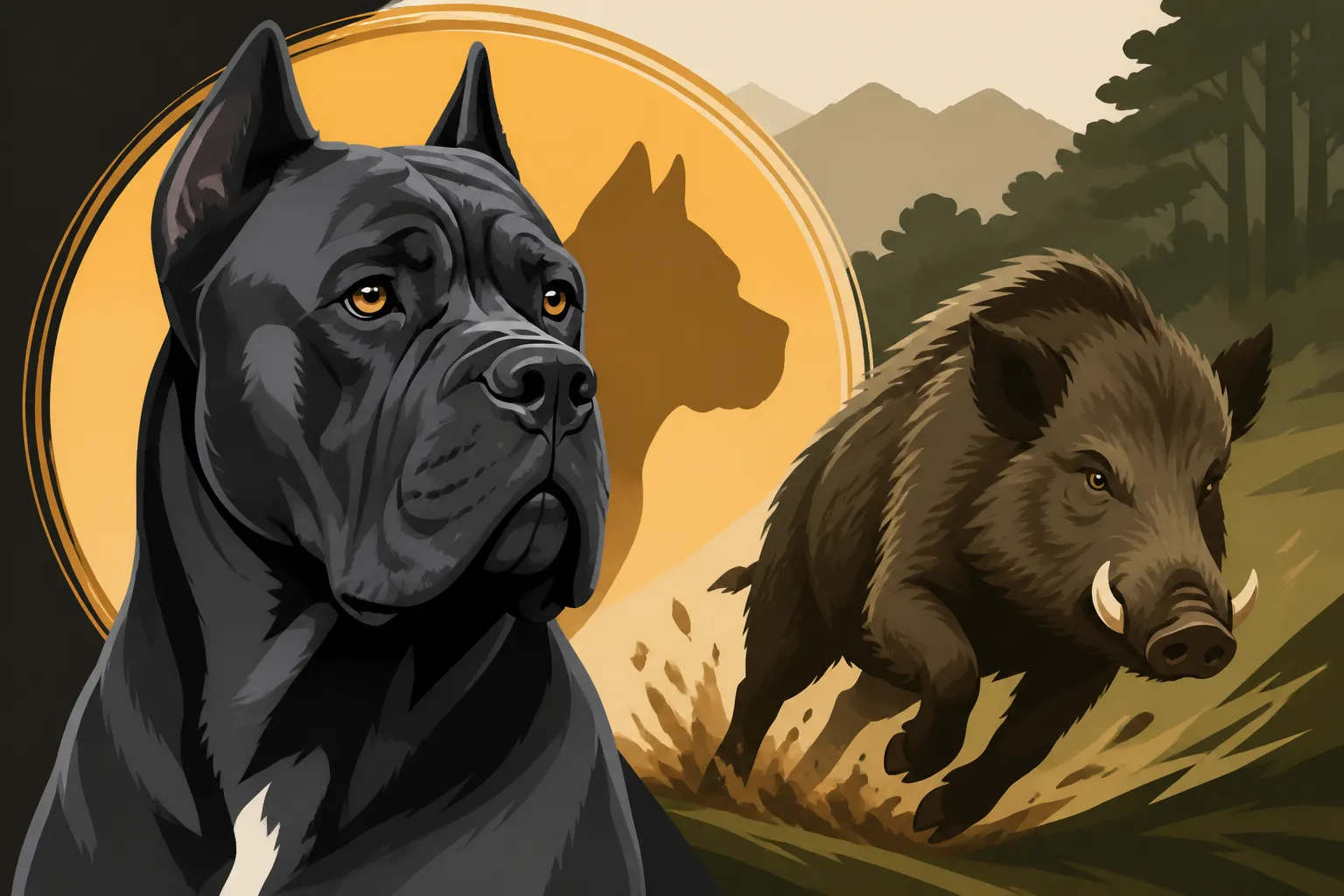
To truly understand the prey drive of a Cane Corso, we must journey back in time, far beyond the comfortable confines of our modern homes. These dogs weren't bred for companionship alone; they were forged by necessity in the rugged landscapes of ancient Italy, serving as indispensable working partners to farmers and hunters. Their very essence, their physical prowess, and their mental fortitude were honed over centuries for demanding tasks, with hunting large, dangerous game like wild boar being a significant part of their original job description.
From Farm Guardian to Boar Hunter
The Cane Corso's ancestry is deeply intertwined with the ancient Roman Molossian dogs, powerful canines used in warfare and as guardians. While their initial roles focused heavily on protecting property and livestock – think of them as the vigilant sentinels of the masseria, the traditional Italian farm – their capabilities quickly extended to the hunt. Farmers and noblemen alike recognized their exceptional strength, courage, and keen senses, making them perfect candidates for tracking and holding formidable prey. The dense, often wild forests of Italy were teeming with wild boar, a notoriously aggressive and dangerous animal that posed a threat to crops and livestock, and required a dog of immense power and unwavering bravery to confront.
Imagine a time when sustenance and safety depended on the ability to protect and hunt. A Cane Corso wasn't just a dog; it was a vital asset. They worked in packs, using their incredible sense of smell to track the boar, their powerful jaws to hold it at bay once cornered, and their sheer bulk to withstand the boar's formidable tusks and aggressive charges. This wasn't a casual retrieve; it was a life-or-death struggle where the dog's intelligence, physical strength, and unwavering commitment to the task were paramount. This historical context illuminates why their prey drive isn't merely a playful chase reflex but a deeply ingrained, purposeful behavior that served a critical function for human survival. Their work on the farm, as guardians of property, is only one part of their story; the other is vividly told in their hunting past, as explored in Hunting Wild Boar With Cane Corsos.
The Evolution of a Working Dog
Over generations, this selective breeding for hunting prowess, combined with their guarding instincts, sculpted the Cane Corso into the magnificent animal we know today. Traits like intense focus, lightning-fast acceleration, powerful bite inhibition (when trained, though the drive to "catch" remains), and immense stamina became hardwired into their genetic code. These were not traits that faded with the advent of modern agriculture or changes in hunting practices; they are foundational to the breed's character. When your Cane Corso fixates on a scurrying rabbit or a bicycle whizzing by, you're not just seeing a distraction; you're witnessing an echo of that ancient hunter, a testament to the thousands of years their ancestors spent relying on these very instincts to perform their duties.
The Cane Corso's physique also tells this story. Their muscular build, deep chest, and agile frame are perfectly adapted for both bursts of speed and sustained effort, allowing them to pursue and contain prey. Their strong heads and jaws, while intimidating, were essential tools for gripping and holding. While many modern Cane Corsos live lives of leisure and companionship, the blueprint of that formidable working dog remains, expressing itself in behaviors that can sometimes be challenging for owners who aren't prepared for such intensity. Recognizing The Roman War Dog Behind the Cane Corso helps us understand the fundamental drive that defines this majestic breed.
Modern Manifestations of Prey Drive
So, how does this rich history of boar hunting and farm guardianship translate into the everyday life of a modern Cane Corso? It's not as simple as chasing a ball; it's an intricate dance of instinct, environment, and individual temperament. This deeply embedded drive can manifest in various ways, from subtle body language cues to explosive bursts of energy, and understanding these signs is the first step toward effective management.
Spotting the Instinct in Your Cane Corso
The prey drive in a Cane Corso isn't always about outright chasing. Often, it begins with an almost imperceptible shift in their demeanor. You might notice your dog suddenly become rigid, ears swiveling forward, eyes narrowed and intently fixed on something in the distance – a squirrel, a leaf blowing, or even a shadow. This is the "orienting" phase, where they detect and lock onto a potential target. Their body might stiffen, their tail might become rigid or subtly wag with a focused, low rhythm, rather than a loose, happy swing. They may drop their head slightly, lowering their center of gravity, preparing for movement. Sometimes, you'll hear a low, rumbling growl, not of aggression, but of intense frustration or anticipation.
This focus can be incredibly powerful, sometimes to the exclusion of all else, including your commands. Once they enter this highly aroused state, they may block out other stimuli, making it difficult to redirect their attention. If the trigger moves away, they might whine, bark, or even lunge forward, trying to close the distance. This intense fascination with movement and small, fast-moving objects is a direct callback to their hunting ancestors, who needed to quickly identify and react to potential prey. Recognizing these early signs is crucial for intervention, allowing you to manage the situation before the chase impulse takes over.
The Difference Between Prey Drive and Aggression
It's absolutely vital to distinguish between prey drive and aggression, as they are fundamentally different behaviors, although they can sometimes appear similar to the untrained eye. Prey drive is typically instinctual, driven by the desire to chase, catch, and, in its purest form, dispatch a perceived prey item. It's often silent, focused, and directed at movement, not necessarily a perceived threat. A dog operating purely on prey drive might be quiet, stalk, and then burst into action, often with a "grab-and-shake" or "nip-and-release" behavior if they catch something, mimicking how their ancestors would subdue prey.
Aggression, on the other hand, is usually fear-based, resource-guarding, territorial, or related to a perceived threat. It's often accompanied by overt warning signals like prolonged growling, snarling, raised hackles, a rigid body with teeth exposed, and direct eye contact designed to intimidate. While a high prey drive can certainly be frustrating and sometimes dangerous if a dog acts on it inappropriately, it doesn't automatically equate to aggression towards people or other dogs. Many Cane Corsos with strong prey drives are perfectly gentle with their families and known companions. The danger lies in misinterpreting their intent and failing to manage the environment and training effectively, which can lead to unfortunate incidents with other animals or people, particularly children running or riding bikes. Understanding What a Cane Corso's Guardian Instinct Actually Is can further help differentiate these behaviors.
Common Triggers for the Prey Drive
Identifying the common triggers for your Cane Corso's prey drive is key to preventing unwanted behaviors. Small, fast-moving objects are almost universally stimulating. This includes:
- Small animals: Squirrels, rabbits, cats, deer, birds, and even smaller dogs running can all ignite the instinct.
- Moving vehicles: Bicycles, skateboards, joggers, cars, and even children on scooters can become targets. The speed and unpredictable movement mimic fleeing prey.
- People in motion: Children running, people playing sports, or even someone quickly passing by can inadvertently trigger the chase response, especially if the dog isn't well-socialized or trained in impulse control.
- Visual stimuli: Sometimes, even something as simple as a blowing plastic bag or a distant flag flapping in the wind can catch their eye and activate their focus.
These triggers are everywhere in a modern environment, making management a continuous effort. It's not about eradicating the prey drive – that's impossible and undesirable, as it's part of what makes a Cane Corso a Cane Corso – but rather about teaching them what is appropriate to chase and what is not, and providing acceptable outlets for this powerful instinct. For those struggling with impulse control, consistent training, as outlined in Impulse Control Work for a Cane Corso, is critical.
Managing and Channeling Prey Drive
Living with a Cane Corso with a strong prey drive means being proactive and consistent in your approach. It's about setting them up for success, not just reacting when they fail. This involves a multi-faceted strategy that combines early exposure, structured training, and providing appropriate, safe outlets for their natural instincts.
Early Socialization and Exposure
The foundation for managing a Cane Corso's prey drive is laid during puppyhood. Early, positive, and controlled exposure to a variety of environments, sights, sounds, and types of movement is critical. This doesn't mean letting your puppy chase every squirrel; it means exposing them to these stimuli from a safe distance, rewarding calm behavior, and teaching them to disengage and re-focus on you. For example, sitting with your puppy on a park bench, observing joggers and cyclists from afar, and rewarding them with high-value treats for remaining calm and attentive to you. The goal is to normalize these things without activating the full-blown chase response.
Remember, socialization isn't just about meeting other dogs and people; it's about experiencing the world in a way that builds confidence and resilience, and teaches them that not everything that moves is fair game. A well-socialized puppy will be less likely to react with intense fixation or panic when encountering new stimuli. Online training programs, such as those offered by BAXTER & Bella, can provide structured guidance for these crucial early socialization phases, helping owners navigate the various experiences their puppy needs for balanced development. Delaying this vital step, as discussed in The Socialization Window a Cane Corso Puppy Gets, can make managing prey drive significantly harder later on.
Structured Training and Impulse Control
Consistent, clear, and reward-based training is paramount for a Cane Corso with a high prey drive. This breed thrives on structure and clear communication. Key commands like "Leave It," "Look at Me," and a rock-solid "Recall" are absolute non-negotiables. "Leave It" teaches them to disengage from tempting distractions, while "Look at Me" establishes eye contact and attention on you, breaking their focus on the trigger. A reliable "Recall" is quite literally a lifesaver, allowing you to call them back even when their instincts are screaming "chase!"
Practice these commands daily in increasingly distracting environments. Start in a quiet room, then move to the backyard, a quiet park, and eventually areas with more movement and potential prey items. Use high-value rewards – something truly irresistible to your dog – to make training worth their while. For a large, powerful dog like the Cane Corso, Leash Manners Before a Cane Corso Hits Ninety Pounds is also critical. A sturdy leash and harness are essential, and tools like a long line, readily available on Amazon, can allow for safe practice of recall in open, fenced areas, giving your dog the illusion of freedom while you maintain control. Never underestimate the importance of continuous training; it's not a one-time event but an ongoing commitment to shaping a well-behaved companion.
Safe Outlets for Natural Instincts
Since you can't eliminate the prey drive, the smartest approach is to channel it into acceptable activities. Providing appropriate outlets allows your Cane Corso to engage their natural instincts in a controlled and safe manner, which is not only beneficial for their physical health but also for their mental well-being and reducing frustration.
Here are some excellent ways to provide these outlets:
- Flirt Poles: These are fantastic for simulating a chase. It's essentially a long pole with a lure (a toy or rag) attached to a rope. You can drag the lure along the ground, making it dart and weave like prey, allowing your Cane Corso to chase, pounce, and "catch" it without actually harming anything. This burns energy and satisfies the chase sequence.
- Fetch and Tug: Classic games of fetch allow for bursts of running and retrieving, mimicking parts of the hunt. Tug-of-war, with appropriate rules (e.g., dog must release on command), satisfies the desire to grip and pull. Always ensure your dog knows when the game starts and stops.
- Scent Work and Tracking: These activities tap into their incredible sense of smell, which was crucial for tracking prey. Teaching your Cane Corso to find hidden treats or follow a scent trail provides immense mental stimulation and allows them to use their natural abilities in a constructive way. Barn Hunt and Scent Trials With a Cane Corso are structured ways to do this.
- Specific Sports: Some dog sports, like lure coursing, are explicitly designed to tap into prey drive by having dogs chase a mechanical lure around a track. This offers a safe, controlled environment for them to run full-out. Others might enjoy specific types of agility or even protection work, if supervised by highly experienced and ethical trainers.
It's important to remember that these activities should always be supervised and structured. The goal is to satisfy the drive, not to heighten it indiscriminately.
Here's a comparison of historical roles and modern outlets for your Cane Corso's prey drive:
| Historical Role | Primary Instinct Satisfied | Modern Safe Outlets | Benefits |
|---|---|---|---|
| Boar Hunter | Chase, Catch, Hold | Flirt Pole, Lure Coursing, Supervised Fetch | Physical exertion, instinct fulfillment, mental engagement |
| Farm Guardian / Livestock Protector | Vigilance, Detection, Alerting | Scent Work, Tracking, "Look at Me" game | Mental stimulation, builds focus on handler, reduces inappropriate guarding |
| Pest Control (on farms) | Locate, Pursue, Dispatch | Puzzle Toys, Tug-of-War (with rules), Fetch | Problem-solving, outlet for "mouthiness," bond building |
By understanding the deep-seated history behind your Cane Corso's prey drive and implementing thoughtful management strategies, you can turn a potential challenge into an opportunity to bond with your dog, providing them with a fulfilling life that respects their ancient heritage.
Disclaimer
This article is for general informational purposes only and does not constitute professional advice. Laws, prices and regulations vary by location and change over time. Consult a qualified professional for guidance on your specific situation.