Whether Kids Can Walk a Cane Corso
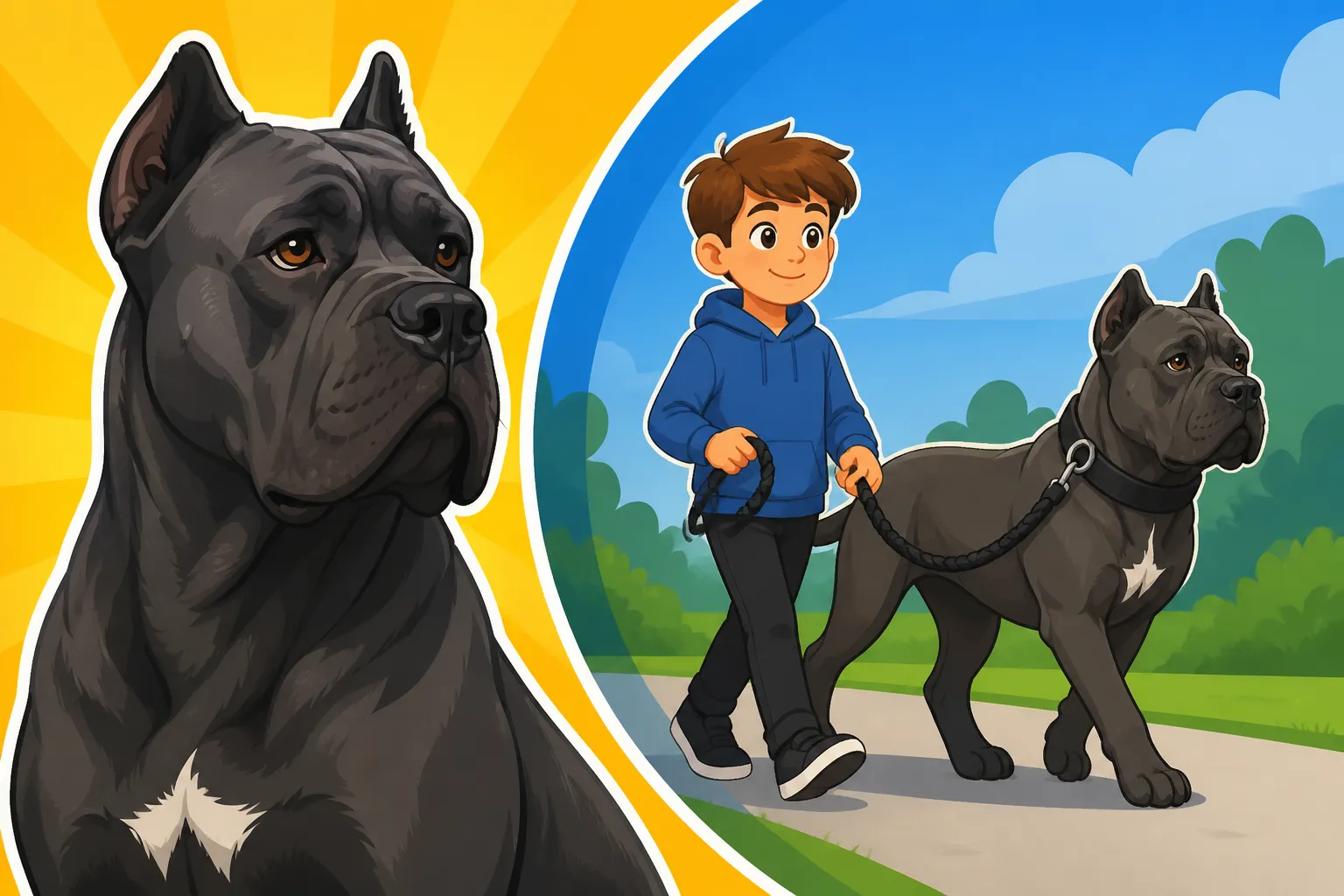
Handing a leash to your child so they can walk the family dog is a classic rite of passage, but when that dog is a powerful, heavy-boned Italian mastiff, the stakes change dramatically. Owners constantly face the heartbreaking disappointment of telling an enthusiastic ten-year-old that they cannot take their favorite companion around the block alone. This guide breaks down the physical reality, behavioral risks, and safety protocols you must understand before letting a child handle a Cane Corso on a lead.
The Physics and Physiology of a Child Walking a Cane Corso
Mass Ratios and Sudden Kinetic Energy
When assessing whether a child can handle a giant breed on a leash, mechanical advantage and body mass ratios matter far more than good intentions. An adult male Cane Corso easily weighs between 100 and 120 pounds, while an adult female typically weighs between 88 and 99 pounds. A healthy ten-year-old child, by comparison, often weighs between 70 and 90 pounds. When a dog outweighs its handler, the handler no longer retains physical control through body leverage; control becomes entirely psychological and dependent on flawless obedience.
The real danger occurs when static weight transforms into kinetic energy. If a heavy dog decides to burst forward suddenly—whether to chase a squirrel, greet another dog, or investigate a noise—the force generated is exponentially higher than the dog’s static weight. A child holding a leash attached to a lunging 110-pound mastiff will instantly lose their balance. The child is either dragged along the pavement, suffering severe abrasions, or forced to drop the lead entirely, leaving a powerful guardian dog free-roaming in a public space.
Before ever testing a public walk, owners often practice Loose Leash Walking a Cane Corso Puppy in closed settings. Even during early growth stages, the sheer pull strength of this breed catches adults off guard. Teaching a child how kinetic energy works during training sessions helps them understand that no matter how gentle their pet seems at home, physical forces in an open environment are entirely different.
Environmental Triggers and Prey Drive Forces
Every Cane Corso carries an inherent prey drive and working heritage. Historically bred for big game hunting and farm protection, these dogs possess quick reflexes and explosive explosive acceleration. On a routine neighborhood stroll, dozens of unpredictable environmental triggers occur: a neighbor’s cat darting across the lawn, a teenager speeding past on a skateboard, or an unleased small dog barking frantically from a porch.
When a sudden trigger activates a dog’s prey drive or defensive reaction, their focus narrows completely. In these high-arousal moments, verbal cues from a child often fall on deaf ears unless the dog has undergone rigorous, professional-grade impulse control conditioning. A child simply does not possess the physical weight or lower-body anchoring necessary to counter a sudden side-step or forward charge.
For families seeking extra guidance on structured obedience routines, online platforms like BAXTER & Bella offer useful home training modules that teach household members how to recognize early signs of arousal. Recognizing when a dog’s body stiffens or when its focus locks onto a target gives handlers precious seconds to redirect the animal before explosive motion begins—seconds that a child rarely knows how to utilize.
Equipment Limitations and Physical Grips
Selecting the right walking gear is crucial for giant breeds, but physical equipment cannot make up for a massive imbalance in handler weight. Many parents mistakenly believe that putting a harness on the dog will make it easy for a youth to hold. In truth, standard back-clip harnesses actually distribute the dog’s power evenly across its chest and shoulders, allowing them to pull with maximum efficiency—much like a sled dog pulling a weight.
Specialized gear, such as front-clip harnesses or head halters, can offer better mechanical leverage by redirecting the dog’s head back toward the handler when force is applied. You can easily find heavy-duty equipment options on Amazon designed specifically for large working breeds. However, even with specialized gear, a child’s hand size and grip strength present serious physical vulnerabilities.
If a dog lunges violently, a young child’s fingers can easily become entangled in leash loops, leading to sprains, dislocated joints, or fractured bones. Alternatively, if the grip breaks, the leash slips away completely. Using proper Harnesses Rated for a Cane Corso’s Pull is essential for adult handlers, but relying on gear alone to bridge the gap between a young child and a massive mastiff creates a false sense of security.
| Equipment Type | Mechanical Advantage for Handler | Child Safety Rating | Primary Risk Factor |
|---|---|---|---|
| Standard Flat Collar | Very Low | Unsafe | Direct pressure on neck; zero leverage if dog lunges. |
| Back-Clip Harness | Negative (Helps dog pull) | Unsafe | Encourages pulling by engaging chest muscles. |
| Front-Clip Harness | Moderate | Caution Required | Redirects motion, but can twist child off balance. |
| Head Halter (Gentle Leader Style) | High | Caution Required | Controls head movement; requires careful hand technique. |
| Two-Handler Dual Leash System | Maximum | Safe (With Adult) | Primary control stays with adult; child holds secondary line. |
Behavioral Considerations and Environmental Hazards
Protective Instincts and Strangers Approaching
Beyond physical pulling power, the mental processing of a guardian breed plays a critical role in public safety. The Cane Corso is a discerning, protective breed designed to monitor surroundings and react to potential threats. When an adult walks the dog, the dog typically looks to the adult as the leader and decision-maker in uncertain situations.
When a child holds the lead alone, the dynamic shifts dramatically. Many guardian dogs perceive children as vulnerable family members who require active protection. If a stranger approaches quickly to ask for directions, or if another child runs up excitedly to pet the dog, the Corso may interpret this movement as a direct threat to its young handler. Without an adult stepping in to manage the interaction, the dog may take matters into its own hands, placing itself between the child and the stranger while displaying defensive growling or snapping.
Understanding the root of these instincts is crucial. Owners should review What a Cane Corso’s Guardian Instinct Actually Is to better appreciate how these dogs evaluate environmental threats. A dog that appears calm and relaxed beside a confident adult may show heightened arousal, anxiety, or hyper-vigilance when handled solely by a young child.
Same Sex Aggression and Uncontrolled Stray Dogs
Neighborhood walks rarely occur in a controlled vacuum. One of the most unpredictable hazards facing any dog walker is the presence of off-leash or stray dogs. Mastiff breeds frequently exhibit dog selectivity or same-sex intolerance as they mature into adulthood. A situation that begins as a mild canine standoff can escalate into an active fight in a matter of seconds.
If an loose neighborhood dog rushes up to a Cane Corso being walked by a child, the situation instantly becomes high-risk:
- Escalation: The Corso moves to protect itself and its child handler, engaging defensively against the approaching dog.
- Physical Danger to the Child: In the middle of a canine altercation, a child holding the lead is at extreme risk of being knocked down, stepped on, or caught in redirected aggression.
- Inability to Break Up Fights: A child lacks the physical capability, tactical knowledge, and calm demeanor required to separate two large fighting animals safely.
When unexpected confrontations happen, adult handlers must know What to Do When a Cane Corso Lunges at a Dog. Expecting a young child or young teenager to manage an incoming aggressive stray while controlling an excited 100-pound mastiff is unreasonable and unsafe.
Legal Liability and Municipal Regulations
The legal implications of leash-handling extend far beyond basic house rules. In many municipalities, local ordinances explicitly state that any dog classified under giant breed or working categories must be under the effective control of a capable handler at all times while in public spaces. “Effective control” is legally defined as the ability to restrain and direct the animal under reasonable circumstances.
If a child is walking a dog and an incident occurs—such as the dog knocking down an elderly neighbor, causing a cyclist to crash, or biting another pet—courts often rule that the dog was legally unrestrained due to the handler’s lack of physical capability. In such cases, homeowners insurance policies may deny coverage, leaving parents fully liable for civil damages, medical bills, and potential legal penalties.
Furthermore, evaluating Whether a Ninety Pound Cane Corso Is Safe With a Toddler or young youth in public involves understanding strict liability laws. Parents must realize that letting an underage child handle a giant breed on public property carries serious legal consequences if an accident takes place.
Safe Alternatives and Supervised Walking Strategies
The Two-Lead System in Controlled Environments
Fortunately, denying a child the ability to walk the dog solo does not mean they must be excluded entirely from daily outings. The safest way to involve children in daily exercise is through a dual-lead or secondary-line setup under direct adult supervision.
In a two-lead system, the primary, heavy-duty lead is attached to the dog’s main collar or harness and held securely by an adult. A lighter, secondary lead is attached to a separate attachment point (such as a ring on a front-clip harness) and handed to the child.
This setup provides several benefits:
* Child Engagement: The child feels the pride and responsibility of walking their family pet.
* Skill Building: The child practices proper hand positioning, leash slack management, and voice commands.
* Absolute Safety: The adult maintains 100% of the physical holding power and physical leverage. If the dog makes a sudden move, the adult absorbs the force entirely, keeping both the child and the dog safe.
Using gear combinations available on Amazon, such as dual-ring training harnesses, allows parents to implement this dual-control routine seamlessly during daily neighborhood walks.
Yard-Based Heel Work and Obedience Exercises
Before taking any training steps into the public arena, the family home and fully fenced yard serve as ideal controlled training environments. A child can build real, practical handler authority by practicing basic heel work, turns, and stops within the safety of a secure boundary.
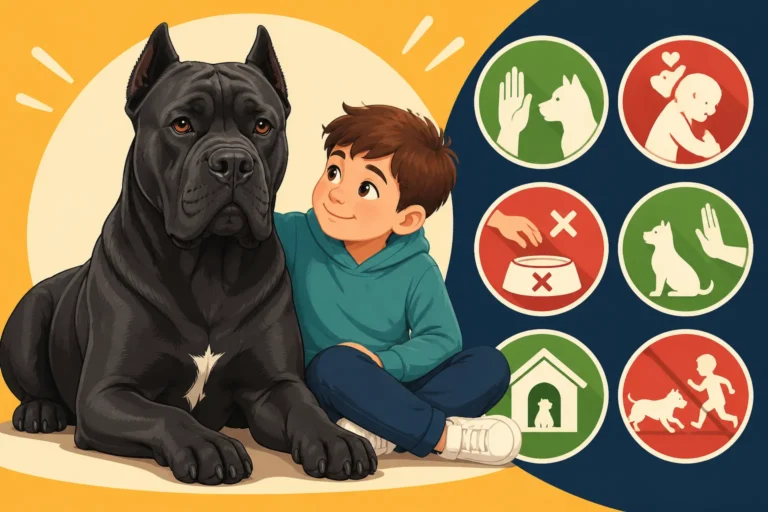
Parents should establish strict household guidelines, ensuring everyone follows Rules a Child Living With a Cane Corso Must Know. During yard practice sessions, children can work on structured exercises:
- The Stationing Hold: Teaching the dog to sit quietly at the child’s side while the child holds the lead loose.
- Directional Heel Drills: Having the child walk five paces forward, turn 180 degrees, and ask the dog to sit, rewarding the dog with treats for matching their pace.
- Doorway Thresholds: Practicing having the dog wait at open yard gates or back patio doors until the child gives a release word.
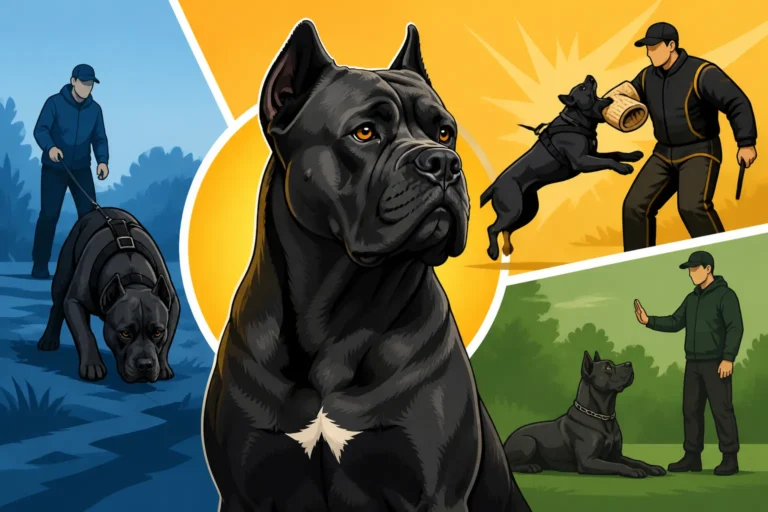
These drills build deep psychological focus. Online structured training courses from BAXTER & Bella emphasize that dogs respect clear rules and predictable handlers. When a child learns to deliver clear cues and immediate rewards in the yard, the dog learns to yield to the child’s direction without needing physical force.
Age Milestones and Handler Maturity Benchmarks
There is no universal age at which a child suddenly becomes qualified to walk a giant working breed alone. Maturity, physical strength, situational awareness, and emotional control vary greatly between individuals. However, practical benchmarks can help parents assess readiness:
- Physical Threshold: The handler should weigh at least as much as the dog, or possess sufficient physical strength and low center of gravity to anchor the animal securely.
- Age Benchmark: Generally, teenagers aged 16 and older who have actively participated in the dog’s training are better equipped to handle solo public walks.
- Behavioral Awareness: The handler must demonstrate constant situational awareness—scanning the environment for loose dogs, oncoming bicycles, and triggers long before the dog notices them.
- Emergency Preparedness: The handler must demonstrate that they can apply a emergency drop-down stance, use a basket muzzle if required, or execute Stopping a Cane Corso Before It Drags You Off Your Feet using proper body mechanics.
If a child or young teenager panics, drops the leash, or freezes when a challenge arises, they are not yet ready to walk the dog unassisted in public areas.
Training Your Cane Corso and Child for Shared Success
Establishing Handler Authority Through Structured Training
For a Cane Corso to accept direction from a younger family member, household consistency is mandatory. Working breeds tend to form strong bonds with adult primary handlers, but they may view children as playmates or equals rather than figures of authority.
To shift this dynamic, every family member must use identical verbal cues, hand signals, and boundary rules. Following principles outlined in Teaching Every Family Member the Same Cane Corso Cues prevents confusion and ensures the dog responds reliably to everyone in the home.
Children should be integrated into daily feeding routines, trick training, and basic manners practice. When a child asks the dog to perform a structured action—such as sitting before receiving food, sitting before going outside, or placing on a mat—the dog learns that yielding to the child’s direction yields positive outcomes. This builds leadership based on clarity and reward rather than physical dominance.
Practical Drills for Joint Outings
When transitioning from home training to real-world application, practice should progress gradually. Start with low-distraction environments before trying busy parks or active neighborhood sidewalks.
A recommended drill progression includes:
- Quiet Cul-de-Sacs: Practicing heel routines on quiet streets where triggers are minimal, maintaining the two-lead system with an adult present.
- Distraction Proofing: Having a second family member walk ahead with a ball or toy while the child practices keeping the dog focused on walking calmly alongside them.
- Emergency Disengagement: Teaching the child the verbal cue for an immediate “U-turn” or “About-Face.” If a distraction appears ahead, the child learns to turn away calmly while walking in the opposite direction, rewarding the dog for following instantly.
By prioritizing physical safety, clear equipment protocols, and gradual step-by-step training, parents can foster a strong, rewarding bond between their children and their giant guardian breed while keeping everyone safe.
Disclaimer
This article is for general informational purposes only and does not constitute professional advice. Laws, prices and regulations vary by location and change over time. Consult a qualified professional for guidance on your specific situation.