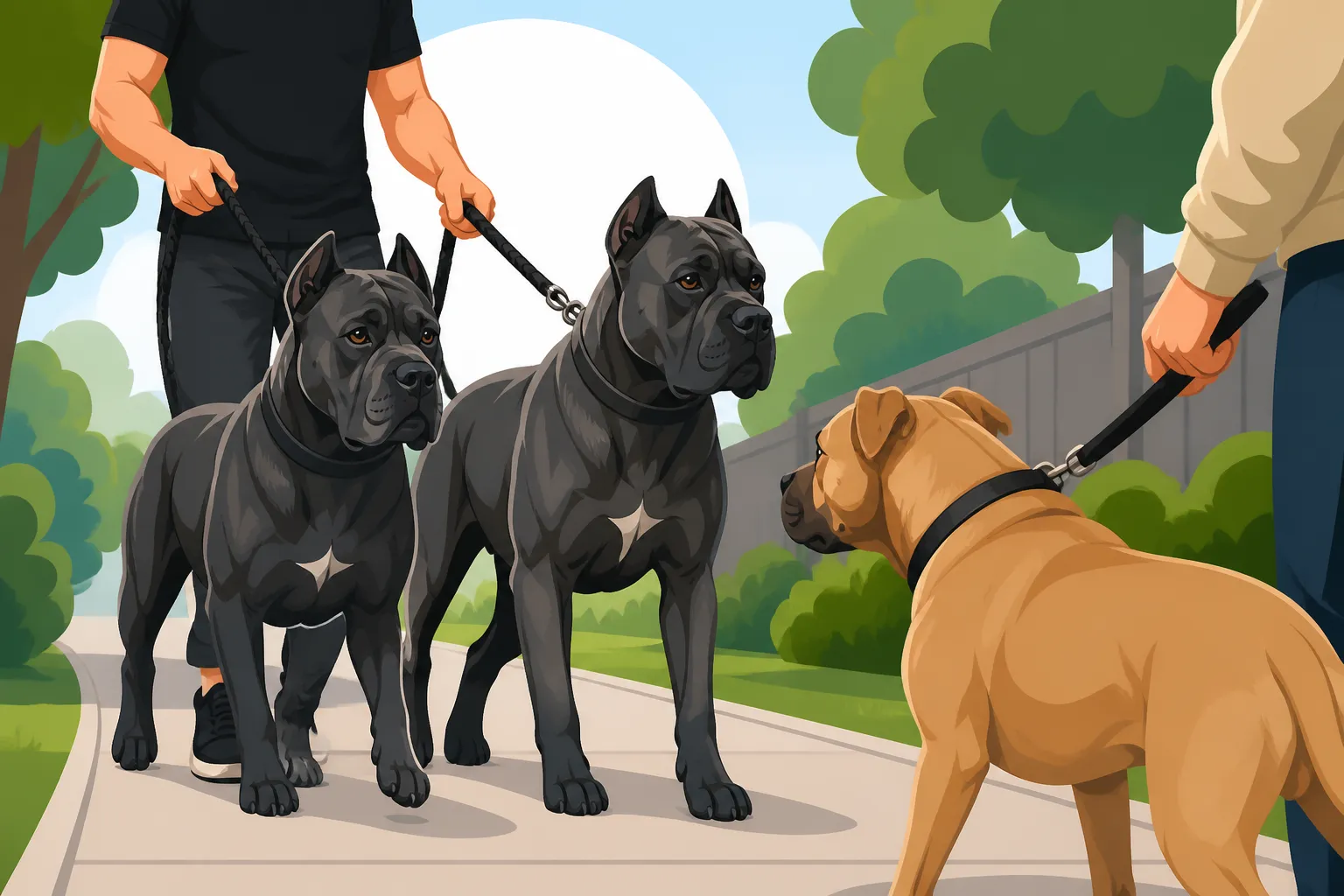
Walking a Pair of Cane Corsos Past Another Dog
Trying to walk not one, but two powerful, strong-willed Cane Corsos past another dog can feel like an Olympic sport where you're constantly on the verge of losing control. It's a scenario many multi-Cane Corso households face, and the sheer strength and protective instincts of these magnificent dogs can turn a simple stroll into a wrestling match. This guide aims to offer realistic strategies and practical advice to help you manage these challenging encounters and make your walks more enjoyable and less stressful for everyone involved.
Understanding the Challenge of Walking Two Cane Corsos
Let's be honest, walking a single well-socialized Cane Corso past another dog can be a feat of strength and focus. Add a second one to the mix, and you're not just doubling the fun; you're often multiplying the potential for chaos. It's not a reflection of your failure as an owner, but rather the unique dynamics at play with two large, guardian-breed dogs.
The Double Dog Dynamic
When you walk two dogs together, they don't simply act as two independent entities. Instead, they form a "pack" unit, even if it's just a temporary one on a leash. This dynamic can amplify certain behaviors. For instance, if one dog is a bit nervous or reactive, the other might pick up on that energy and become more reactive themselves, creating a vicious cycle. They can egg each other on, finding courage or confirmation in the presence of their companion. Imagine one Cane Corso subtly tensing up at the sight of another dog; its partner, sensing this, might then escalate with a bark or a lunge. Suddenly, you're not managing one hundred pounds of dog, but two hundred pounds of combined, reactive force. This is why Walking a Pair of Cane Corsos Past Another Dog is such a distinct challenge.
The visual impact alone of two large, formidable Cane Corsos can also change how other dog owners react, sometimes causing them to tense up, which your dogs can then sense and respond to. It creates a feedback loop where everyone's stress levels rise. You might notice that your dogs, who are perfectly well-behaved when walked individually, seem to lose their minds when they're together. This isn't unusual, and it highlights why specific strategies are needed for duo walks.
Breed-Specific Considerations for Cane Corsos
Cane Corsos are bred to be guardians. This means they are naturally alert, discerning, and often reserved with strangers – both human and canine. Their instinct is to protect their family and territory. When they see another dog, especially one they don't know, their primary concern might not be "let's play!" but rather "is this a threat to my person or my pack?" This guardian instinct, combined with their sheer size and strength, is what makes managing encounters with other dogs so critical.
They have a powerful physical presence and an equally strong drive. The Cane Corso's Reputation and the Laws Behind It often highlight these traits. They are not always "dog park dogs" in the traditional sense, and expecting them to be openly friendly with every dog they meet can be setting them up for failure, and you for a lot of frustration. Understanding that their reactivity often stems from this deeply ingrained protective nature, rather than simple aggression, can help you approach training with more empathy and a more tailored strategy. It's about channeling that protective instinct, not extinguishing it entirely.
Common Reactions to Other Dogs
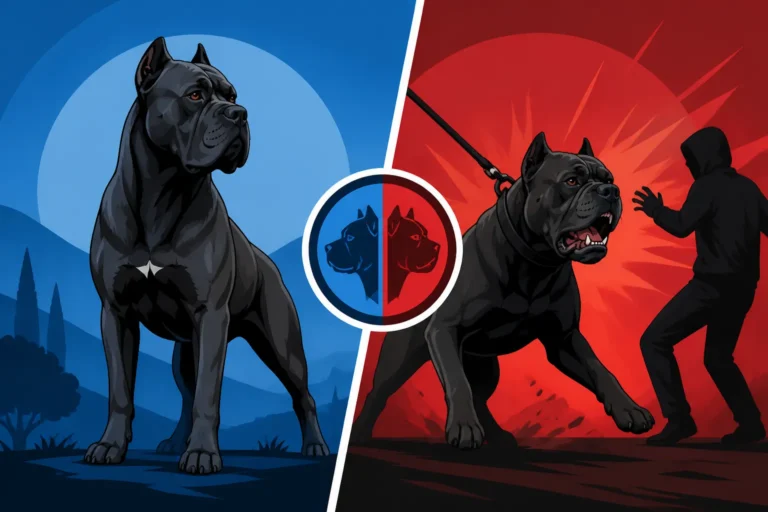
A common scenario many Cane Corso owners report is their dogs "locking on" to another dog. This might start with a hard stare, a stiff body posture, and then escalate to barking, growling, lunging, or pulling with incredible force. This kind of reaction is often labeled "leash reactivity." It can be incredibly embarrassing, frustrating, and even dangerous if you're not prepared.
Many owners feel judged, or even unsafe, when their dogs react this way. It's important to remember that this behavior is often rooted in a mix of fear, territoriality, frustration (because they can't get to the other dog), or even over-excitement. For a Cane Corso, these emotions are amplified by their physical capabilities. They can pull you off your feet, and it doesn't take much for two of them to create a dangerous situation. You might also notice that the type of reaction changes depending on the other dog – a small, yappy dog might elicit a different response than a large, calm retriever. The goal isn't necessarily to make your Cane Corsos best friends with every dog they see, but to teach them to remain calm, focused on you, and able to pass by without incident.
Essential Preparation Before the Walk
Before you even step out the door with two Cane Corsos on leashes, careful preparation is key. This isn't just about having the right equipment; it's about building a solid foundation with each dog individually and setting up your walk for success.
Individual Training First
You absolutely cannot skip the individual training. Think of it this way: if you can't reliably walk one Cane Corso past another dog, you certainly won't be able to handle two. Each dog needs to understand basic leash manners, recall, and impulse control commands on their own. This means teaching them to walk politely on a loose leash, to sit and stay, and to redirect their attention to you when cued. Loose Leash Walking a Cane Corso Puppy is a great place to start, building those fundamental skills early.
Practicing "look at me" commands in distracting environments with one dog at a time is crucial. Reward heavily when they choose to focus on you instead of the distraction. Use high-value treats that your Cane Corso truly values to capture and maintain their attention. You're building a reliable foundation where each dog knows you are the most interesting thing around, even when another dog is present. This individual reliability is the bedrock for managing two dogs together. Consider programs like those offered by BAXTER & Bella, which often provide structured online training courses that can help owners build these foundational skills at their own pace, even offering guidance on dealing with distractions.
Choosing the Right Gear for Both Dogs
Having the right gear isn't about brute force; it's about effective communication and control. For two powerful Cane Corsos, you'll want equipment that gives you leverage without causing pain or injury.
- Leashes: Sturdy, non-retractable leashes, ideally 4-6 feet long, are essential. Avoid anything flimsy. Leather or strong nylon are good choices. You might even consider a coupler or a double leash system if your dogs walk well side-by-side, but often, having two separate leashes gives you more independent control.
- Harnesses/Collars: For Cane Corsos, many owners find front-clip harnesses effective for mitigating pulling, as they redirect the dog's forward momentum. Brands like Freedom No-Pull Harness are often recommended for strong pullers. Whether a Front Clip Harness Stops a Cane Corso Pulling is a good read. Alternatively, a well-fitted martingale collar can be useful for preventing slip-outs without choking, especially for dogs with thick necks. Some owners might also consider a head halter for added control, particularly during the initial stages of training, but this requires careful introduction and positive reinforcement. Whether a Prong Collar Is Needed on a Cane Corso explores another tool, but remember that proper fitting and training are paramount, and they're not for every dog or every owner. I personally recommend exploring a variety of options on Amazon and reading reviews from other large breed owners.
Here's a quick comparison of common leash and collar setups for two Cane Corsos:
| Gear Type | Pros | Cons | Best For |
|---|---|---|---|
| Two Separate Leashes | Maximum individual control; flexibility in handling | Requires strong handler; dogs can tangle easily | Owners confident in handling two powerful dogs independently |
| Double Coupler/Leash | One hand manages both dogs; keeps dogs close | Limited individual control; tangling if dogs don't walk in sync | Dogs that walk well side-by-side; less reactive pairs |
| Front-Clip Harness | Reduces pulling; provides good control without neck pressure | Can restrict shoulder movement if ill-fitting; dogs can still get tangled | Dogs prone to pulling; offers handler better leverage |
| Martingale Collar | Prevents slip-outs; less harsh than choke chains when fitted correctly | Doesn't stop pulling; less direct steering than harnesses or head halters | Dogs with slender necks; secondary control alongside a harness |
| Head Halter (Halti/Gentle Leader) | Excellent control over head direction; prevents pulling | Requires careful introduction; some dogs dislike them intensely | Dogs with very strong pulling habits or high reactivity; for experienced handlers |
Whatever you choose, ensure it's comfortable and safe for your dogs, and practice using it in low-distraction environments first.
Strategic Walk Planning
Don't just head out the door aimlessly. Plan your routes.
- Timing: Walk during off-peak hours when fewer dogs (and people) are out. Early mornings or late evenings are often best. This reduces the number of potential triggers and allows you to practice in a less overwhelming environment.
- Location: Start in quiet areas where you have plenty of space to maneuver. Wide-open parks, less-trafficked sidewalks, or even large empty parking lots can be good starting points. Avoid narrow paths, crowded urban centers, or popular dog parks until your dogs are rock-solid in their training.
- Escape Routes: Always be aware of your surroundings and identify potential "escape routes" or places to create distance if an unexpected dog appears. Can you duck behind a parked car? Step into someone's yard (with permission, of course)? Cross the street? Having a plan B can significantly reduce your stress in a pinch. Remember, it's always better to avoid a confrontation than to manage one.
Techniques for Successfully Passing Other Dogs
Now for the practical stuff – what to do when another dog inevitably appears on your path. These techniques focus on managing the situation proactively rather than reactively.
The "Engage and Disengage" Method
This method is about teaching your Cane Corsos to notice another dog, then immediately look to you for a reward, effectively "disengaging" from the distraction.
- Spot the Trigger Early: The moment you see another dog, before your Cane Corsos do, start preparing. If they spot the dog first and tense up, you've missed your window. The goal is to catch their attention before they're over threshold (too excited or stressed to listen).
- Create Distance: Your first instinct should always be to create more space between your dogs and the approaching dog. This might mean crossing the street, stepping behind a bush, or simply taking a wide arc around the other dog. The more space, the less intense the trigger, and the more likely your dogs will remain calm enough to listen.
- Engage with a Cue: As soon as your dogs notice the other dog (but are still calm), say a clear "Look at me!" or "Focus!" cue. As soon as their eyes flicker toward you, immediately mark that moment with a verbal "Yes!" or a clicker, and then deliver a very high-value treat (something they only get for this specific task). Repeat this several times as the other dog passes. You're essentially saying, "Other dog means good things from me!"
- Disengage: Once the other dog has passed and is out of sight (or at least no longer a strong trigger), you can stop the high-value treats and return to your normal walking routine. The key is to make the experience positive and to reward the calm, focused behavior. This helps them associate the presence of other dogs with positive outcomes when they respond to you. The Reward a Cane Corso Actually Values is often something irresistible and smelly!
Creating Distance and Utilizing the Environment
Sometimes, a quick "engage and disengage" isn't enough, or you might not have enough space. This is where strategic use of your environment comes in.
- U-Turns: If you see another dog approaching and you know your Cane Corsos are likely to react, don't walk directly towards it. Instead, execute a smooth U-turn and walk in the opposite direction until the other dog is out of sight or far enough away that you can pass calmly. Once they're calm, you can turn around again. This is a simple but highly effective way to prevent a reaction before it starts.
- Blocking: Use your body to create a visual barrier. If another dog is approaching from the front, gently step between your Cane Corsos and the other dog. Your body language can communicate to your dogs that you've got this, and you're handling the situation. This also physically prevents them from locking eyes or lunging.
- Environmental Shields: Look for natural barriers like parked cars, large trees, fences, or buildings you can use to briefly block your dogs' view of the approaching dog. This momentary break in sight can be just enough to help them reset and refocus on you. Even stepping onto a driveway or into a wide grassy verge can provide critical extra feet of space. Remember, every foot of distance can make a difference in lowering their arousal.
Managing Unexpected Encounters
Despite all your best planning, unexpected encounters happen. A dog might pop out from behind a hedge, or an off-leash dog might charge your way. This is where your preparedness truly shines.
- Stay Calm: Your dogs will feed off your energy. If you panic, they will too. Take a deep breath. You're the leader of your pack, and they need you to be composed.
- Verbal Interruption/Redirection: If your Cane Corsos start to react, use a firm, clear verbal cue that you've practiced, like "Leave it!" or "Enough!" Immediately follow with your high-value treat, trying to get their focus back on you. It's about interrupting the undesirable behavior and redirecting it towards something positive. This might even involve using a sound cue, like a sharp clap, to break their focus for a second so you can redirect.
- Physical Management: This is where your proper gear is vital. If they lunge, use your harnesses or head halters to gently but firmly steer them away or keep them close to your side. Never yank or jerk the leash, as this can escalate their stress. Instead, apply steady pressure and guide them. Sometimes, a quick "About turn!" while simultaneously turning your body can break their focus and get them moving in the other direction.
- Muzzle Training: For dogs with significant reactivity or a history of altercations, muzzle training is a responsible safety measure. A well-fitted basket muzzle allows your dogs to pant, drink, and take treats, but provides peace of mind that no one will be bitten if an incident occurs. Why Every Cane Corso Should Be Muzzle Trained Early is an important topic to consider for safety. This isn't a punishment; it's a tool that allows you to safely continue working on their training and socialization without undue risk.
Maintaining Progress and Seeking Professional Help
Walking two reactive Cane Corsos is a journey, not a destination. Consistent effort and knowing when to ask for help are crucial for long-term success.
Consistency and Continued Training
Consistency is the absolute backbone of success with Cane Corsos. These intelligent dogs thrive on routine and clear expectations. Every walk is a training opportunity. Don't assume that because they did well on one walk, they'll be perfect on the next.
- Daily Practice: Continue practicing your engage-and-disengage games, loose leash walking, and impulse control exercises in varying environments. The more repetitions they have, the stronger their positive associations and polite habits will become. The Length of a Cane Corso's Attention Span means keeping sessions short and engaging.
- "Set Ups": If you have a trusted friend with a calm, neutral dog, you can arrange "set up" encounters in controlled environments. Start at a significant distance, reward heavily for calm behavior, and gradually decrease the distance over many sessions. This controlled exposure is far more beneficial than random, stressful encounters.
- Manage Expectations: There will be good days and bad days. Don't get discouraged by setbacks. Acknowledge them, learn from them, and move forward. Celebrate the small victories – a shorter reaction, a quicker recovery, or even just noticing another dog without reacting at all. Patience is a virtue, especially with two powerful, opinionated dogs.
When to Call in a Professional
You don't have to tackle this alone. Sometimes, despite your best efforts, you hit a wall, or the problem feels too big to manage. That's when a qualified professional can make a world of difference.
- Certified Professional Dog Trainer (CPDT-KA): Look for trainers who specialize in reactivity, force-free methods, and have experience with large, guardian breeds like Cane Corsos. They can assess your specific situation, identify triggers you might be missing, and provide personalized coaching. What to Look For in a Cane Corso Trainer emphasizes finding someone knowledgeable about the breed's unique needs.
- Certified Dog Behaviorist (CDBC or CAAB): If the reactivity is severe, involves aggression, or you suspect underlying anxiety, a behaviorist can provide a more in-depth analysis and develop a comprehensive behavior modification plan, sometimes in conjunction with your veterinarian for medication if needed.
- Specialized Programs: Some trainers offer specific "leash reactivity" classes or private sessions tailored to dogs struggling with passing other dogs. Organizations like BAXTER & Bella also have robust online resources and virtual coaching that can be an accessible way to get expert guidance, especially for initial assessments or specific training modules. Don't be afraid to ask for help; it's a sign of a responsible owner committed to their dogs' well-being.
Celebrating Small Wins
It's easy to get caught up in the struggle and only focus on the perfect, problem-free walk. But with two Cane Corsos and the complexities of other dogs, perfection is a rare commodity. Instead, shift your focus to progress.
Did they only bark twice instead of a full minute? That's a win! Did one dog pull less than usual? Celebrate it! Did you successfully make a U-turn and avoid a meltdown? High five yourself! Acknowledging these small victories keeps you motivated and reinforces the positive changes you're working towards. Share your progress with your trainer, friends, or online communities. Your journey with your Cane Corsos is unique, and every step forward, no matter how small, is a testament to your dedication and their capacity to learn.
Navigating walks with two Cane Corsos requires patience, strength, and smart training, but it is absolutely achievable. With the right preparation, tools, and consistent effort, you can transform stressful encounters into manageable moments, leading to a happier, calmer life for both you and your magnificent companions.
Disclaimer
This article is for general informational purposes only and does not constitute professional advice. Laws, prices and regulations vary by location and change over time. Consult a qualified professional for guidance on your specific situation.