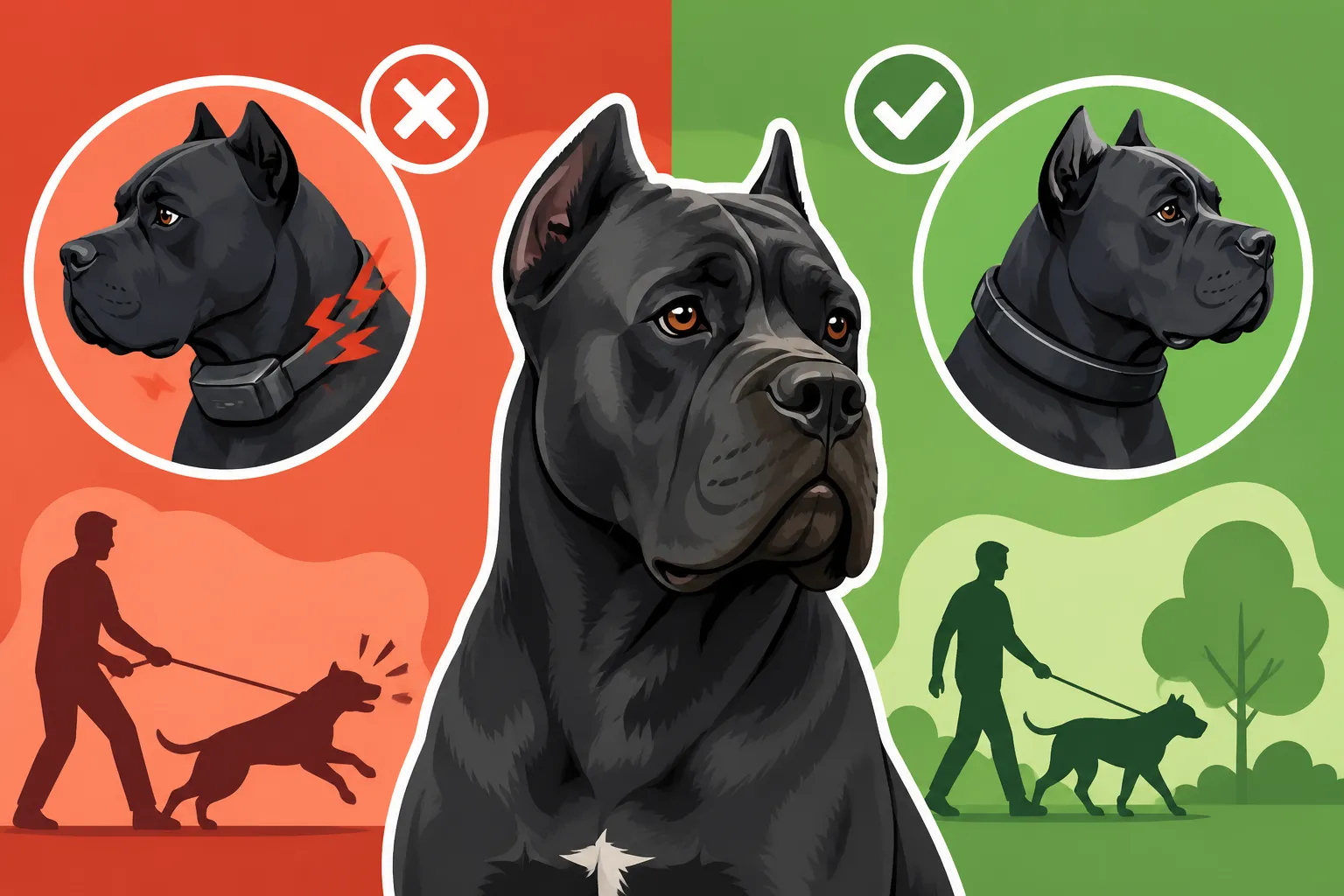
Whether an E Collar Suits a Cane Corso’s Threshold
Let's be real, managing a powerful, intelligent breed like the Cane Corso can sometimes feel like a full-time job. Their immense strength and formidable drive, while wonderful traits, can also make training a real challenge, especially when distractions hit their peak. Many owners find themselves wondering if traditional methods are enough, and if an e-collar, often misunderstood, could be the key to clearer communication and greater freedom. This guide dives deep into understanding your Cane Corso's unique temperament and explores whether an e-collar might be a suitable and ethical tool for your training journey.
Understanding the Cane Corso Temperament and Threshold
Before we even consider how a tool works, we need to talk about the dog it's meant for. The Cane Corso is not your average Golden Retriever. They are a magnificent, ancient breed, bred for guarding and working, and their minds and bodies reflect that heritage. This deep-seated drive and focus are what make them so effective at their jobs, but also what can make them a handful without proper guidance.
The Cane Corso's Drive and Focus
Your Cane Corso possesses an incredible amount of drive. This isn't just about wanting to chase a ball; it's about an intense, singular focus on a task or stimulus. When a Cane Corso locks onto something – be it a squirrel, a perceived threat, or even just an interesting scent – it can be incredibly difficult to break that focus with verbal cues alone. They're intelligent, yes, but also incredibly self-assured and, at times, stubborn. They have an independent streak that means they'll often weigh your request against their own immediate interest.
Think about it: you're walking your ninety-pound powerhouse, and suddenly, a rabbit darts across the path. Your voice might become a distant whisper as their prey drive kicks in, and they're off, dragging you with them if your leash skills aren't absolutely impeccable. This isn't defiance; it's instinct. It’s a powerful, primal urge that overrides polite requests. Validating this frustration is important because many owners feel like they're failing when their dog "chooses" not to listen. It's not a failure on your part, but rather a testament to the strength of their inherent drives. Understanding this is the first step toward finding tools that can effectively communicate with them in these high-stakes moments.
Reactivity and High Thresholds
Every dog has a "threshold" – the point at which they can no longer process information rationally and simply react. For many Cane Corsos, especially those with strong guarding instincts or a history of under-socialization, this threshold can be reached very quickly and intensely. A mild distraction might be ignored, but a sudden loud noise, a person approaching their perceived territory, or another dog acting boisterously can send them over the edge from calm observation to intense reaction in a flash.
When a Cane Corso crosses that threshold, they can become incredibly difficult to redirect. Their hearing might seem to disappear, and their focus becomes entirely fixated on the trigger. It’s like their brain just switches gears into "react mode." This is particularly challenging for owners who want to enjoy walks or public outings but constantly worry about their dog's reaction to unexpected stimuli. In these situations, your verbal commands or even a strong leash correction might simply be absorbed by their sheer physical power and mental intensity. This is where tools that offer a more direct, immediate form of communication can become appealing, especially when you're trying to call a Cane Corso back once it has locked on to something.
What Is an E-Collar and How Does It Work?
The term "e-collar" often conjures up negative images of harsh electric shocks, but the reality for most modern, ethical trainers is very different. It's crucial to understand what this tool actually is and how it's intended to be used responsibly.
Demystifying the E-Collar
An e-collar, or electronic collar, is primarily a remote communication device. It consists of a collar with contact points that deliver a mild, static electrical stimulation (often compared to a TENS unit or a muscle stimulator used in physical therapy), a vibratory pulse, or an audible tone, all controlled by a handheld remote. The key here is "mild" and "static." The goal is not to inflict pain but to create a sensation that gets your dog's attention, much like a tap on the shoulder.
Modern e-collars, like those you might find on Amazon, offer a wide range of intensity levels, often from 1 to 100 or more, allowing for incredibly precise adjustments. This means a responsible owner can find the absolute lowest level of stimulation that their individual dog perceives – often just a slight muscle twitch or a head tilt – and use that as their "working level." This "tickle" level is far from the harsh "shock" that many people imagine. It’s about interruption and awareness, not punishment or fear. The vibration or tone features can also be incredibly useful for initial conditioning or for dogs that are particularly sensitive.
The Principle of Communication
At its core, an e-collar, when used correctly, is about enhancing communication, especially at a distance where verbal cues or leash pressure become ineffective. Imagine trying to get your Cane Corso's attention when they're 50 yards away and focused on something. Your voice might not carry, or they might simply choose to ignore it. The e-collar provides a consistent, unmistakable signal that says, "Hey, I need your attention now."
The most critical aspect of e-collar training is conditioning. You don't just put it on and start correcting. First, the dog learns to associate the e-collar's sensation with known commands they already understand. For example, the low-level stimulation is paired with a verbal "come" and a long line to guide them back. Over many repetitions, the dog learns that the sensation means "come" or "pay attention." It becomes another language, a gentle reminder. Once this association is solid, the e-collar can be used to reinforce commands reliably, even when distractions are high. It adds a layer of clarity and consistency that can be invaluable for a strong-willed breed, helping them to understand exactly what you are asking of them, even when their focus is elsewhere. The Reward a Cane Corso Actually Values
Assessing If an E-Collar Is Right for Your Cane Corso
Deciding whether to use an e-collar is a personal choice, and it's certainly not a one-size-fits-all solution. It requires careful consideration of your dog's temperament, your training goals, and your commitment to learning how to use the tool properly.
The Importance of Foundation Training
Let me be absolutely clear: an e-collar is not a substitute for basic obedience and positive reinforcement. It's a supplementary tool designed to enhance and proof commands your dog already knows. If your Cane Corso doesn't reliably respond to "sit," "stay," or "come" in a low-distraction environment, an e-collar isn't going to magically fix that. It would be like trying to teach a child to read by giving them a dictionary – they need the alphabet and basic words first.
Your Cane Corso needs a solid foundation of engagement, clear verbal markers, and positive reinforcement training. This means spending time on leash manners before a Cane Corso hits ninety pounds, building a strong recall in controlled environments, and teaching impulse control. This is where programs like BAXTER & Bella can be incredibly helpful for establishing those fundamental skills before you even consider advanced tools. If your dog doesn't understand what you're asking on a regular leash and collar, applying an e-collar without that prerequisite knowledge can be confusing and counterproductive, potentially leading to fear or anxiety rather than improved communication. Think of it as adding a turbocharger to an engine that hasn't learned to idle yet. What to Look For in a Cane Corso Trainer
When an E-Collar Might Be Beneficial
For many Cane Corso owners, an e-collar can be a game-changer, especially when dealing with the breed's inherent challenges:
- Reliable Recall: This is often the primary reason owners consider e-collars. A Cane Corso with strong prey drive can bolt in an instant. An e-collar provides an immediate, consistent way to interrupt that focus and bring them back, even if they're far away. Imagine the freedom of being able to safely let your Cane Corso off-leash in appropriate areas, knowing you have a reliable way to call them back from that distant squirrel or another dog. Recall Training a Cane Corso in an Open Field
- Mitigating Prey Drive: For dogs that are relentless in their pursuit of small animals, the e-collar can be used to consistently interrupt the chase, allowing you to redirect their attention before they get into a dangerous situation (e.g., running into traffic).
- Proofing Commands in High Distraction: You want your "sit" or "stay" to hold, even when other dogs, people, or interesting smells are present. The e-collar can help reinforce these commands when your verbal cues are drowned out by the environment.
- Off-Leash Freedom: For breeds like the Cane Corso that thrive on mental and physical exercise, off-leash adventures can be incredibly enriching. An e-collar, used properly, can provide the safety net needed to grant them that freedom, allowing them to truly stretch their legs and explore.
When to Reconsider E-Collar Use
While beneficial for many, e-collars are not for every dog or every owner. It's important to be honest with yourself about whether this tool aligns with your dog's needs and your capabilities:
- Fearful or Anxious Dogs: If your Cane Corso is naturally timid, highly anxious, or exhibits fear-based aggression, an e-collar could exacerbate these issues. The stimulation, even low-level, could be perceived as threatening and lead to increased fear or reactivity. These dogs typically require a different, often more gentle and confidence-building approach.
- Owners Unwilling to Learn: This tool requires commitment. You must invest time in learning how to use it correctly, consistently, and ethically. Simply strapping it on and pushing buttons without understanding the conditioning process can damage your relationship with your dog and create new problems. If you're looking for a quick fix without the educational investment, an e-collar is not for you.
- Aggression Rooted in Fear or Resource Guarding: While an e-collar can be used to interrupt certain behaviors, it rarely addresses the underlying emotional cause of aggression. For complex behavioral issues, a qualified behaviorist is usually needed, and they may or may not incorporate an e-collar as part of a larger treatment plan. It's never a standalone solution for deep-seated aggression.
Ethical Considerations and Responsible E-Collar Use
The ethical use of an e-collar boils down to one thing: does it improve your dog's quality of life and safety, and is it used as a communication tool rather than a punitive device? For a Cane Corso, a breed that thrives on clear leadership and consistent boundaries, responsible e-collar use can certainly lead to a more harmonious life.
Finding a Qualified Trainer
This is perhaps the single most critical piece of advice for anyone considering an e-collar. Do not attempt to use this tool without the guidance of an experienced, balanced trainer who specializes in e-collar conditioning and understands powerful breeds like the Cane Corso. A good trainer will teach you how to communicate with your dog using the e-collar, ensuring the experience is positive and effective, not confusing or frightening.
When searching for a trainer, ask these questions:
- What is their philosophy on e-collar use? Do they emphasize low-level communication or high-level corrections? Look for someone who prioritizes low-level stimulation and positive reinforcement.
- Can you observe a training session? Watch how they interact with dogs and how the e-collar is introduced.
- Do they offer hands-on coaching for owners? A trainer who just takes your dog for a "board and train" without teaching you how to maintain the training isn't doing you any favors in the long run.
- Do they understand the specific nuances of guarding breeds? A Cane Corso's intensity requires a trainer who respects their drives.
A truly qualified trainer will spend significant time showing you how to find your dog's "working level" – the lowest point of stimulation they reliably perceive – and how to condition them to the sensation. They will ensure you understand that it is simply another tool in your toolbox, and it should always be used with respect for your dog's intelligence and sensitivity. Think of this as getting private work for your Cane Corso, ensuring you learn alongside your dog. Whether Balanced Training Suits a Cane Corso
Training Protocol and Conditioning
The process of introducing an e-collar to your Cane Corso is methodical and patient, never rushed:
- Collar Acclimation: Start by simply having your Cane Corso wear the e-collar for short periods without it being turned on. This helps them get used to the feel of it without associating it with any training.
- Finding the Working Level: With the trainer's guidance, you'll find the lowest level of stimulation your Cane Corso reliably responds to. This might be a slight ear twitch, a head turn, or a quick glance at you. It should not be a yelp or a jump. This "tickle" level is your primary communication signal.
- Conditioning to Known Commands: This is where the magic happens. You'll pair the low-level e-collar stimulation with a command your dog already knows and responds to on a leash. For example, simultaneously say "come," give a gentle leash pull (if needed), and apply the low-level stimulation. As your dog complies, release the stimulation and offer praise and a reward. Over time, your dog learns that the e-collar stimulation means "do the command you already know."
- Proofing in Distraction: Once your Cane Corso consistently responds in a low-distraction environment, you gradually introduce distractions, using the e-collar to maintain clear communication when their focus might wander. This allows you to build a rock-solid recall and reinforce commands even when your dog is highly engaged elsewhere. Using a Long Line With a Cane Corso
Long-Term Benefits and Safety
When implemented correctly by a responsible owner under professional guidance, an e-collar can significantly enhance your Cane Corso's life. It allows for a level of off-leash freedom and safety that might otherwise be impossible for such a powerful and driven breed. Imagine being able to take your Cane Corso on long hikes, knowing that if a deer bounds across the path, you have a reliable way to call them back, protecting both your dog and wildlife. Or having the confidence that your dog will stay by your side in a busy park, despite the temptation of other dogs or interesting smells. This clarity of communication builds confidence in both the dog and the owner, fostering a stronger bond and a more fulfilling life together.
| Feature / Consideration | Pros of E-Collar Use for Cane Corsos | Cons / Risks of E-Collar Use for Cane Corsos |
|---|---|---|
| Communication Clarity | Provides immediate, consistent feedback, even at a distance. | Misuse can lead to confusion, anxiety, or learned helplessness. |
| Off-Leash Freedom | Enables safe off-leash activities by ensuring reliable recall and control. | Can be seen as a shortcut, neglecting fundamental training. |
| Prey/Guard Drive Control | Helps interrupt strong instinctive behaviors (e.g., chasing, guarding). | Does not address underlying causes of reactivity or fear-based aggression. |
| Safety | Enhances safety by preventing dangerous situations (e.g., running into traffic). | Improper use can cause physical discomfort or emotional distress. |
| Owner Confidence | Boosts owner confidence in managing a powerful breed in various environments. | Requires significant owner education and consistent application. |
| Consistency | Delivers consistent correction/reinforcement regardless of handler's voice/strength. | Can lead to over-reliance on the tool if basic training isn't prioritized. |
| Problem Solving | Effective for addressing specific, persistent behavioral challenges. | Not suitable for all dogs, especially those with severe fear or anxiety issues. |
Ultimately, whether an e-collar suits your Cane Corso's threshold and your lifestyle depends on your commitment to learning, ethical application, and the guidance of a skilled professional. When used responsibly, it can unlock a new level of communication and freedom for both you and your magnificent companion, allowing you to truly enjoy the incredible potential of this breed. Remember, owning a Cane Corso isn't just about having a dog; it's about forming a partnership with a powerful and intelligent animal, and giving them the consistent, clear communication they need to thrive. Why a Cane Corso Is Not a First Dog and The Handler a Cane Corso Respects are crucial considerations for anyone bringing one of these dogs into their home. Spending Ninety Minutes a Day and a Cane Corso's Mind is vital, and sometimes a tool like an e-collar can make those ninety minutes more impactful, especially when you need to maintain control Holding a Cane Corso Steady When a Dog Charges the Fence.
Disclaimer
This article is for general informational purposes only and does not constitute professional advice. Laws, prices and regulations vary by location and change over time. Consult a qualified professional for guidance on your specific situation.