The Surfaces and Noises a Cane Corso Meets Before Sixteen Weeks
Bringing a new Cane Corso puppy home is incredibly exciting, but it also comes with a unique set of challenges. One of the biggest worries for new owners is ensuring their powerful, protective companion grows up to be well-adjusted and confident, rather than fearful or reactive, especially when encountering unfamiliar environments. This guide is designed to walk you through the crucial process of exposing your Cane Corso puppy to a wide variety of surfaces and noises before they reach the critical sixteen-week mark, laying the groundwork for a calm, resilient adult dog.
The Critical Window: Why Early Exposure Matters for Your Cane Corso
For any dog, but especially for a guardian breed like the Cane Corso, the period from birth up to around sixteen weeks of age is immensely important for their development. This isn't just about meeting other dogs and people; it's about building a rich tapestry of experiences that teach them the world isn't a scary place.
Understanding the Canine Socialization Period (0-16 weeks)
Think of your Cane Corso puppy's brain during this time as a sponge, eagerly soaking up every sight, sound, and sensation. This is the primary socialization period, a relatively short window where puppies are most open to new experiences and form lasting impressions about their environment. Everything they encounter during this time, whether positive or negative, helps shape their adult personality and their perception of the world. A well-socialized puppy learns that different surfaces aren't dangerous, and strange noises are usually nothing to worry about. If your puppy misses out on these varied experiences during this crucial time, it can lead to lifelong anxieties and fears, which are far more difficult to address later on. We've talked before about The Socialization Window a Cane Corso Puppy Gets, and it cannot be stressed enough how vital this early period is.
The Dangers of Inadequate Early Exposure
Without proper, positive exposure during this formative stage, a Cane Corso puppy can become overly sensitive or fearful. Imagine a powerful, intelligent dog that has never heard a vacuum cleaner, experienced walking on linoleum, or encountered the distinct thump-thump of a basketball. When these novel stimuli finally appear in their life as an adult, they can be perceived as threats. This isn't just about mild spooking; it can manifest as extreme fear, leading to barking, lunging, or even attempts to escape, especially when your dog is already a massive animal. For a breed meant to be confident and stable, a lack of early exposure can undermine their natural temperament and make them a liability rather than a trusted companion. This isn't just a hypothetical; many owners find themselves trying to rehabilitate an adult Cane Corso who was never taken out, which is a much tougher road, as explored in Rehabilitating a Cane Corso That Was Never Taken Out.
Building a Foundation of Confidence, Not Fear
The goal of early exposure isn't to desensitize your puppy to everything by forcing them through uncomfortable situations. It's about creating positive associations with a wide range of stimuli, fostering confidence and resilience. Each new surface they walk on, each new sound they hear, when introduced gently and paired with something pleasant like a high-value treat or a favorite toy, builds a brick in their foundation of confidence. This proactive approach helps them develop a "nothing phases me" attitude that is invaluable for a large guardian breed. You want your Cane Corso to be curious, not terrified, when faced with the unknown. This positive foundation is what allows them to confidently fulfill their role as a stable family member and protector, rather than being a nervous wreck.
Navigating the World of Surfaces: Making Every Step a Positive Experience
When you think about socialization, most people immediately think of meeting other dogs and people. But the ground beneath your Cane Corso's paws is just as important! Puppies need to experience a huge variety of textures and sensations to develop balance, coordination, and confidence in different environments.
Indoor Adventures: Different Textures Underfoot
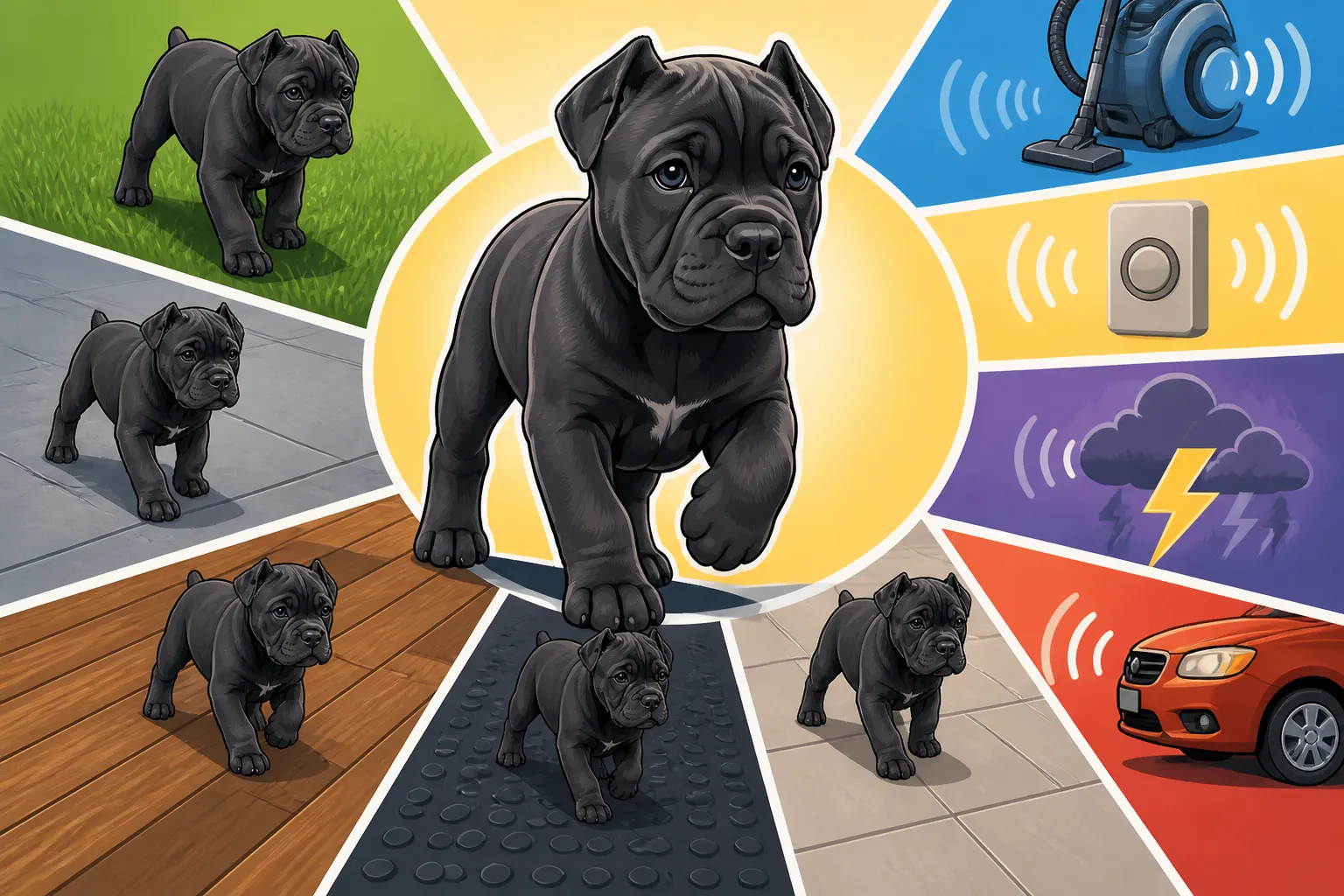
Your home, and the homes of trusted friends, offer an excellent starting point for surface exposure. Don't just stick to the carpet. Think about all the different materials your puppy might encounter indoors:
- Hardwood Floors: These can be slippery and intimidating for a puppy accustomed to carpet. Start by placing treats directly on the hardwood, or sitting on the floor yourself and encouraging them to come to you.
- Tile/Linoleum: Cold and smooth, these can feel very different. Again, use treats to make it a fun game, gradually increasing the distance they need to walk.
- Rugs/Mats: Varying thicknesses and textures can be interesting.
- Stairs: Introducing stairs slowly and safely is critical for a large breed like the Cane Corso. Start with just one or two steps, using treats as lures, and always supervise to prevent falls. Remember, repeated, uncontrolled stair climbing is not ideal for growing joints, but controlled introduction to the sensation is valuable. Why Stairs Matter for a Cane Corso Puppy's Joints offers more insight into this.
- Non-slip surfaces: Bath mats, yoga mats, or even a towel spread out on a slippery floor can offer a safe transition point.
Make these experiences short, positive, and never force your puppy onto a surface they seem scared of. The idea is gentle encouragement and reward, not coercion. You can even find training mats and toys on Amazon designed to encourage puppies to explore different textures.
Outdoor Explorations: Beyond the Backyard Grass
Once your puppy has had their initial vaccinations and your vet gives the all-clear for safe outdoor excursions, the world opens up. Your own backyard, while a safe haven, won't cut it for comprehensive surface exposure.
- Pavement/Concrete: This is a given in most urban and suburban areas. Start on cool, clean pavement, using a leash and harness.
- Gravel/Crushed Stone: The sound and feel of walking on these can be new. Let your puppy investigate at their own pace, and again, use treats to make it a positive association.
- Dirt/Mud: Embrace a little mess! Let them walk through soft dirt or even shallow mud puddles. It's a great sensory experience.
- Sand: If you have access to a beach or even a sandbox, sand offers a unique, shifting texture.
- Leaf Piles: In autumn, a pile of dry leaves can be a fun, rustling surface to explore.
- Wood Chips/Mulch: Common in parks and landscaping, these present a different kind of give underfoot.
- Metal Grates/Drain Covers: These can be particularly intimidating due to their appearance and the sound they make when walked on. Start by walking around them, then near them, and finally, with high-value treats, encourage a quick step over.
Always be mindful of temperature when on outdoor surfaces like pavement. Hot asphalt can burn delicate puppy paws. Keep sessions short and full of praise.
Introducing Unstable and Novel Surfaces
Beyond the everyday, introducing slightly unstable or novel surfaces helps build profound confidence and body awareness. These aren't meant to be regular occurrences but specific, controlled introductions.
- Wobbly Bridges/Planks: If you find a small, safe, slightly wobbly plank in a park, or even create a low one at home, let your puppy experience the feeling of unstable footing. Always spot them carefully.
- Cardboard Boxes/Tunnels: A large, sturdy cardboard box, perhaps from a recent Amazon delivery, can be a fun "cave" or a low tunnel to crawl through, offering a different sensory experience.
- Bubble Wrap: Lay a sheet of bubble wrap down and let them walk over it. The popping sounds and strange sensation are often a hit!
- Tarps/Plastic Sheeting: The crinkling sound and slippery feel can be very new. Start by laying it flat, putting treats on it, and letting them explore.
- Small Steps/Curbs: Practicing stepping up and down low obstacles helps with spatial awareness and strengthens their developing muscles.
Remember, the key is gentle introduction and positive reinforcement. If your puppy seems genuinely distressed, back off and try again another day with a less intense version of the surface. We're aiming for curiosity and confidence, not fear.
Soundscapes for Success: Acclimating Your Cane Corso to Common Noises
Just like surfaces, sounds are everywhere, and your Cane Corso puppy needs to learn that most of them are harmless background noise rather than impending doom. Sound exposure should be gradual, positive, and never overwhelming.
Everyday Household Hustle and Bustle
Your home is a symphony of everyday sounds that can be startling to a young puppy. Introducing these in a controlled, positive manner is essential.
- Vacuum Cleaners: Start by having the vacuum in a different room, then running it in a visible but distant spot. Offer treats and praise. Gradually move closer over several sessions.
- Blenders/Food Processors: Similar to vacuums, introduce these from a distance. The loud, whirring sounds can be quite alarming.
- Dishwashers/Washing Machines: The hum and clunking of appliances are part of daily life. Let your puppy hear them, associating them with calm moments or treat time.
- Doorbells/Knocking: These are critical sounds for a guardian breed. Start by ringing the doorbell softly and immediately giving a treat. Gradually increase the volume. The goal is a calm, alert response, not a frantic bark.
- Television/Radio: Different voices, music, and sound effects from the TV or radio can be a good, low-key way to introduce varied auditory stimuli.
- Children's Toys: If you have children, the sounds of their toys – squeaks, beeps, crashes – need to be introduced carefully.
- Dropping Utensils/Pans: Accidents happen. It's helpful if your puppy has heard sudden clattering noises and learned they aren't harmful. Drop a spoon from a low height, then offer a treat.
The trick is to start with low intensity and volume, pairing the sound with something wonderful, and gradually increasing the exposure. Never just spring a loud noise on them without warning.
Outdoor Sounds: Traffic, Sirens, and Strangers
Once your puppy is ready for the outside world, they'll encounter a whole new array of sounds that require gentle introduction.
- Traffic Noise: Cars, trucks, motorcycles, and buses all sound different. Start in a quiet area near a road, offering treats as vehicles pass. Gradually move closer to busier areas.
- Sirens: Police cars, fire trucks, and ambulances can be incredibly loud. Play recordings of sirens at a low volume at home, or expose your puppy to distant sirens while actively distracting and rewarding them. The goal is for them to acknowledge, then ignore, not panic.
- Construction Noise: Jackhammers, saws, and heavy machinery are common. Again, distance and positive association are your friends. If you live near a construction site, make walks during quiet times, and gradually increase exposure during noisier periods if your puppy is comfortable.
- Children Playing/Screaming: Kids can be loud and unpredictable. Expose your puppy to the sounds of children playing at a distance, rewarding calm behavior. A Cane Corso Around Visiting Children delves into navigating this specific challenge.
- People Talking/Laughing Loudly: The varied tones and volumes of human voices should be a normal part of their experience.
- Other Dogs Barking: While you want Why a Cane Corso Should Meet People Without Greeting Them and maintain neutrality, hearing other dogs bark from a distance is a common outdoor sound they need to acclimate to without reacting fearfully or aggressively.
These exposures should be structured, like short trips to a park bench where they can observe from a safe distance, receiving treats for calm behavior. Many online training programs, like BAXTER & Bella, offer guidance and resources on how to implement these outdoor socialization techniques effectively.
Addressing Sudden and Startling Noises
Some noises are inherently startling. The goal isn't to make your Cane Corso love them, but to tolerate them without panicking or becoming reactive.
- Thunderstorms: This is a common phobia. Start playing thunderstorm sounds at a very low volume at home, increasing volume only if your puppy remains calm and happy, perhaps during a game or treat time.
- Fireworks: Similar to thunderstorms, these can be terrifying. Early, positive exposure to recordings at low volumes is crucial.
- Dropping Heavy Objects: Intentionally (but safely) drop a book or a small box from a low height. Immediately follow with a treat and praise.
- Unexpected Loud Claps/Yells: If someone accidentally claps loudly or shouts, observe your puppy's reaction. If they startle, remain calm yourself and offer reassurance, then redirect with a game or treat.
The key with startling noises is always to remain calm yourself. Your reaction will heavily influence your puppy's. If you act stressed, they will too. A confident, calm owner is the best buffer against scary sounds.
Strategies for Positive Exposure: How to Introduce New Stimuli
Introducing new surfaces and sounds isn't just about presence; it's about making those experiences positive and meaningful. A structured approach yields the best results.
The "Observe, Don't Interact" Approach
Especially for a Cane Corso, teaching neutrality is paramount. This means your puppy learns to observe new things without feeling the need to interact directly or react strongly.
- Passive Exposure: Instead of forcing your puppy to touch every new surface or greet every person, simply take them to places where these stimuli exist. Sit on a bench at a park and let them watch people walk by on different paths (gravel, pavement). Let them hear the sounds of cars passing from a distance.
- Reward Calmness: Whenever your puppy is calmly observing a new surface or sound, quietly offer treats. You're rewarding their ability to simply exist in the presence of new things without fuss. This builds a positive association: "new things mean yummy treats." This approach is fundamental to Neutral Socialization for a Cane Corso at Twelve Weeks.
- Focus on the Environment, Not the "Thing": The goal is for your puppy to register the new stimulus as part of the normal environment, not as something that requires their direct attention or intervention. For example, when introducing construction sounds, you're not focusing on the excavator, but on your puppy remaining relaxed despite the noise.
This strategy prevents your Cane Corso from developing an overly intense or reactive response to novelty, which is crucial for a breed of their size and protective instincts.
Pairing New Experiences with High-Value Rewards
This is where the magic happens! Every time your puppy encounters a new surface or sound, you want them to think, "Wow, this is great! I get tasty things!"
- Treats, Treats, Treats: Use small, soft, incredibly delicious treats that your puppy absolutely loves. Cheese, hot dogs, cooked chicken bits – whatever makes their eyes light up.
- Sequential Association: As your puppy looks at or hears the new stimulus, immediately offer a treat. If they take a step onto a new surface, treat. If a loud truck passes, treat. The timing is critical – the treat needs to follow the stimulus almost instantly.
- Play and Praise: For some puppies, a quick game with a favorite toy or enthusiastic verbal praise can be just as rewarding as food. Tailor your reward to what your individual puppy values most.
- Short, Sweet Sessions: Keep these exposure sessions brief – often just a few minutes. You want to end on a high note, before your puppy gets tired or overwhelmed. This leaves them wanting more and reinforces the positive association.
By consistently pairing novelty with positive reinforcement, you're building resilience and a positive outlook. This principle applies to all training, including vital skills like Building a Cane Corso's Recall From Eight Weeks.
Knowing When to Take a Step Back
Socialization isn't a race; it's a marathon. Pushing your Cane Corso puppy too hard, too fast, can backfire dramatically, leading to fear instead of confidence.
- Read Your Puppy's Body Language: Learn to recognize signs of stress: lip licking, yawning (when not tired), averted gaze, tucked tail, flattened ears, trembling, trying to hide or get away. Even a subtle stiffness in their body can indicate discomfort.
- The Threshold Concept: Every puppy has a "threshold" – a point beyond which they can no longer cope positively. Your job is to stay under that threshold. If they're showing mild signs of discomfort, you might be at their threshold. If they're actively panicking, you've gone way over.
- Move Away: If your puppy shows signs of fear or overwhelm, immediately increase distance from the scary stimulus or remove them from the situation entirely. Don't scold them for being scared; that only makes things worse.
- Adjust and Retry: Once your puppy is calm again, make a mental note of what pushed them over the edge. Next time, approach the situation with less intensity – greater distance, lower volume, shorter duration. It might take many small, positive exposures to overcome a challenge. For example, if they're scared of traffic, try sitting across the street from a quiet park instead of directly on a busy sidewalk.
Remember that patience and understanding are your most valuable tools. Each puppy is an individual, and their journey through socialization will be unique.
Avoiding Common Pitfalls in Early Socialization
Even with the best intentions, it's easy to make mistakes during this crucial period. Being aware of potential pitfalls can help you navigate puppyhood more successfully.
Overwhelm and Flooding: Too Much, Too Soon
One of the biggest mistakes owners make is thinking "more is better" when it comes to socialization. This can lead to "flooding," where a puppy is exposed to so much novelty at once that they become completely overwhelmed.
- The "Sensory Overload" Trap: Imagine taking your young Cane Corso puppy to a bustling fair or a loud, crowded dog park for their first outing. They're hit with hundreds of new sights, sounds, smells, people, and dogs all at once. This isn't socialization; it's sensory overload.
- Resulting Fear: Instead of becoming confident, a flooded puppy often becomes fearful, withdrawn, or even reactive. Their brain simply can't process all the input, and they learn that new situations are terrifying. This can lead to long-term anxiety, which is a major concern for such a large and powerful breed.
- Individual Pace: Always respect your puppy's individual comfort level. Some puppies are naturally bolder, others more sensitive. What's a good challenge for one might be overwhelming for another. Keep exposures short, controlled, and positive. This is particularly important for breeds with guarding instincts, as overwhelming experiences can lead to an anxious dog rather than a confident one.
The Myth of "Tough Love" for a Cane Corso
There's an old-school belief that you need to be "tough" with guardian breeds, to push them through their fears to make them brave. This is simply not true and can be detrimental.
- Building Trust, Not Breaking Spirit: A Cane Corso thrives on a strong, trusting relationship with its owner. If you continually force your puppy into scary situations, you erode that trust. They learn that you don't listen to their cues, and you won't protect them.
- Creating Fear and Reactivity: "Tough love" often results in a puppy that is suppressing its fear, not overcoming it. This suppressed fear can explode later as reactivity or aggression when they finally feel they have no other choice. A fearful Cane Corso is a dangerous Cane Corso.
- Positive Reinforcement is Key: Modern, force-free training methods, based on positive reinforcement, are far more effective at building a confident, well-adjusted Cane Corso. You want your dog to choose to be brave because they trust you and associate new experiences with good things, not because they're afraid of your correction. If you're looking for guidance, programs like BAXTER & Bella provide excellent resources focused on positive training. This approach is much better for The Firm Hand a Cane Corso Is Said to Need than punitive methods.
Balancing Socialization with Health Protection
This is a dilemma every new puppy owner faces: how to socialize them before their vaccinations are complete without exposing them to disease.
- The Vet's Guidance: Always follow your veterinarian's advice regarding when it's safe for your puppy to be exposed to public areas. They will guide you on the local disease risks and vaccine schedule.
- Safe Socialization Options:
- Car Rides: Simply taking your puppy for car rides allows them to see new sights and hear new sounds from the safety of your vehicle.
- Carried Exposure: Carry your puppy in a sling or a sturdy bag through pet-friendly stores (like a local hardware store) or parks. They get exposure without touching the ground where other dogs might have been.
- Trusted, Vaccinated Dogs: Arrange playdates with adult dogs you know are fully vaccinated, healthy, and have good temperaments.
- Clean, Low-Traffic Areas: If your vet approves, choose low-traffic areas where chances of encountering unvaccinated dogs are minimal, such as quiet neighborhood sidewalks or a friend's sanitized yard.
- Puppy Classes: Many reputable puppy classes require proof of vaccinations and thoroughly clean their facilities, offering a safe environment for early social interaction and exposure to new things. Putting a Cane Corso Puppy in a Group Class can be incredibly beneficial.
It's a delicate balance, but with careful planning, you can ensure your Cane Corso gets the crucial early exposure they need while minimizing health risks.
Here's a quick overview of different surface and sound exposures:
| Type of Stimulus | Examples | Introduction Method | Key Considerations |
|---|---|---|---|
| Indoor Surfaces | Hardwood, tile, carpet, rugs, stairs, mats | Place treats, gentle encouragement, short guided walks | Watch for slippage, gradual introduction to stairs, positive reinforcement |
| Outdoor Surfaces | Pavement, gravel, dirt, grass, sand, grates | Leashed exploration, reward calm walking, observe from a distance, then approach | Temperature of surface (hot pavement), cleanliness of area, vary textures |
| Unstable Surfaces | Wobbly planks, bubble wrap, tarps, boxes | Supervised play, treats on surface, gentle coaxing, support puppy if needed | Always ensure safety, never force, keep sessions very brief |
| Household Noises | Vacuum, blender, doorbell, TV, dropped items | Start distant/low volume, pair with treats, gradually increase intensity | Introduce when puppy is relaxed, never sneak up on them, consistency |
| Outdoor Noises | Traffic, sirens, construction, people, barking | Observe from a distance, reward calm focus, use treats to distract if needed | Environmental awareness, timing (avoid rush hour initially), create positive associations |
| Startling Noises | Thunder, fireworks, sudden loud sounds | Play recordings at low volume, pair with high-value treats/play, remain calm | Your calm reaction is critical, never punish fear, focus on positive desensitization |
Ultimately, raising a confident, well-adjusted Cane Corso puppy requires dedication and a thoughtful approach to their early experiences. By diligently exposing your puppy to a diverse range of surfaces and sounds in a positive, controlled manner before they hit that sixteen-week mark, you're investing in a lifetime of stability and happiness for both of you.
Disclaimer
This article is for general informational purposes only and does not constitute professional advice. Laws, prices and regulations vary by location and change over time. Consult a qualified professional for guidance on your specific situation.