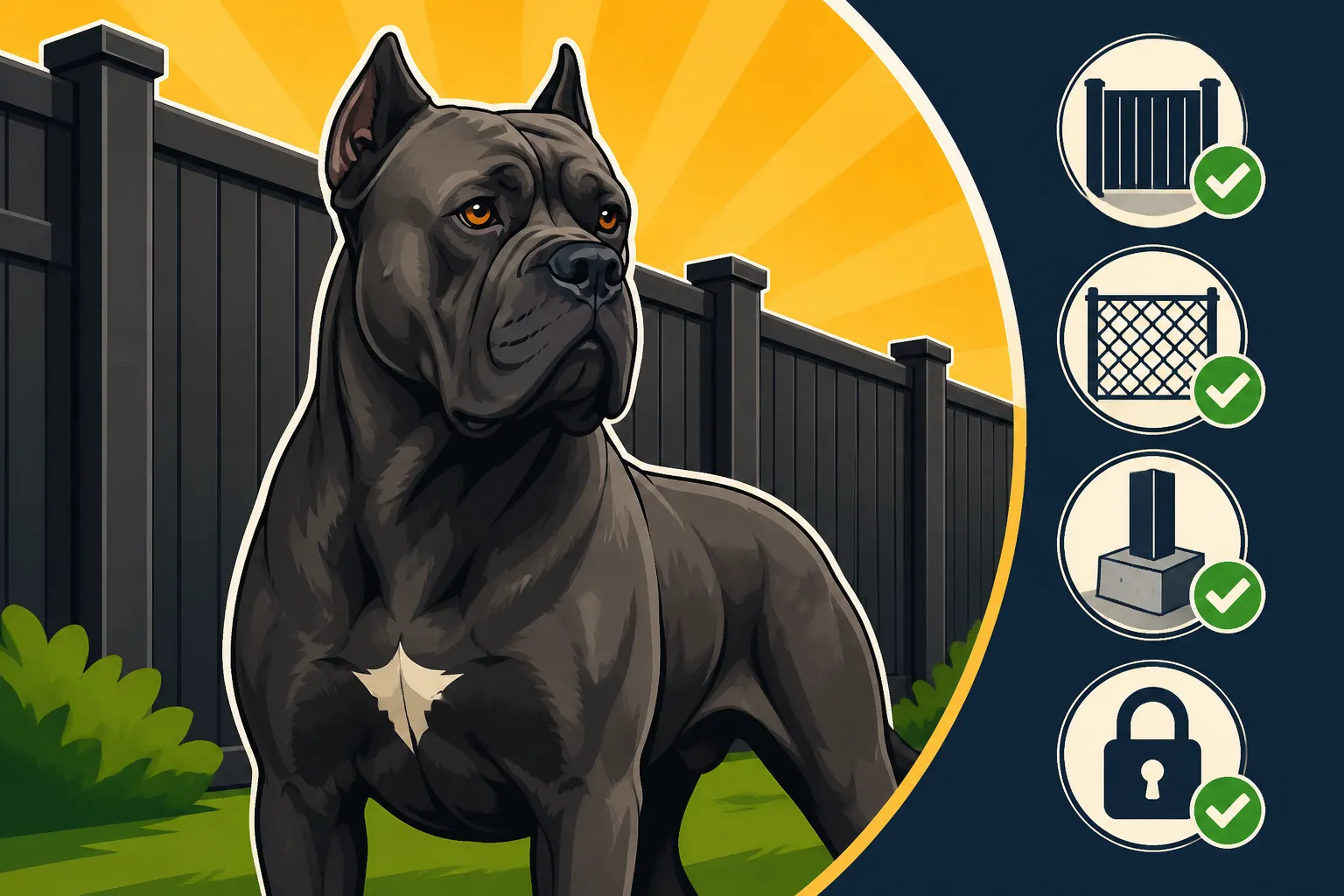
What Fostering a Cane Corso Demands of Your Fencing
Considering fostering a Cane Corso can feel overwhelming, especially when you picture their sheer size, incredible strength, and keen intellect. Many potential foster parents worry endlessly about whether their existing home, particularly their yard, is secure enough to safely contain such a powerful and often misunderstood breed. This guide is here to walk you through exactly what your fencing needs to look like, both physically and functionally, to ensure the safety and well-being of a foster Cane Corso and everyone around them.
Understanding the Cane Corso's Natural Instincts and Abilities
Before we even talk about specific fence types, it's crucial to understand the dog you're potentially bringing into your home. A Cane Corso isn't just a big dog; they are an ancient guardian breed, originally tasked with protecting property, livestock, and family. This heritage shapes their behavior and instincts in ways that directly impact your containment needs.
Firstly, their sheer physical prowess is astounding. A full-grown Cane Corso can weigh anywhere from 90 to 120 pounds, sometimes more, and they are incredibly muscular and agile. This isn't a fluffy, easily deterred dog. They have powerful jaws, immense body strength, and surprisingly good jumping ability when motivated. A weak fence won't even slow them down if they decide they want to be on the other side, whether to chase a squirrel, investigate a passerby, or simply explore.
Secondly, their intelligence and problem-solving skills are top-notch. These dogs aren't just brute force; they think. They can figure out gate latches, test fence lines for weaknesses, and remember escape routes. A Cane Corso isn't likely to just stand there and bark at a fence if there's a way around it; they'll often methodically work to find that way. This means a fence needs to be not just sturdy, but also smart-dog proof.
Thirdly, the breed's natural guardian instinct means they are highly alert to their surroundings. They notice everything, and their drive to protect their perceived territory and family can be intense. While this is a desirable trait in the right hands and environment, it also means they might be highly stimulated by things outside the fence—other dogs, people, cars, wildlife. This heightened awareness, coupled with their strength, means that an insecure fence becomes a constant source of stress for both the dog and the foster parent. It's not just about keeping the dog in, but also about managing their interactions with the outside world.
Finally, many Cane Corsos, particularly those in rescue, may have had inconsistent training or even negative experiences in their past. They might have learned to escape previous environments, or they might be anxious or fearful, which can increase their drive to bolt. A foster dog's history is often a bit of a mystery, so you must assume the dog will test boundaries and look for exits. This really hammers home the need for truly impenetrable fencing right from the start.
Essential Fencing Specifications for Containing a Cane Corso
So, what does this all mean for your actual fence? It means you need to think like a Cane Corso, anticipate their moves, and build a fortress. A casual, decorative fence just isn't going to cut it.
Height and Material Matter Most
The absolute minimum height for any Cane Corso containment fence should be six feet, and ideally, you'd aim for eight feet. Remember, these are athletic dogs. A four-foot fence is essentially an open invitation to jump, and even a five-foot fence can be cleared by a determined or agile Cane Corso without much effort. You need significant verticality to deter them.
As for material, chain link is often seen as a standard, but for a Cane Corso, you need heavy-gauge chain link, not the flimsy residential stuff. A standard residential chain link can be bent, climbed, or even broken by a strong dog. If you opt for chain link, look for a thicker gauge (9-gauge or even 6-gauge is better than the common 11.5 or 12.5 gauge) and ensure the top and bottom rails are reinforced. However, even heavy-gauge chain link can be climbed if a dog has enough motivation and foothold. Many foster parents find that solid fencing is preferable.
Wood privacy fences, if constructed robustly, can offer a good solution, as they block visual stimuli which can often trigger a Cane Corso's guardian instincts or prey drive. However, the wood itself must be strong, and the posts must be deeply set and sturdy. A cheaply built wood fence can be pushed over or jumped, especially if the dog can get a running start. Consider pressure-treated lumber and make sure the fence panels are securely attached to the posts. A Cane Corso leaning on a fence can quickly find weak spots. For comprehensive advice, check out Fencing That Actually Holds a Cane Corso.
Vinyl fences can be a mixed bag; some are incredibly strong, while others are brittle and can snap under impact or pressure. If you're considering vinyl, research the specific product thoroughly for its tensile strength and durability against large, powerful dogs. Metal ornamental fences can look beautiful, but the gaps between the pickets must be small enough to prevent the dog from getting stuck or squeezing through, and the material itself needs to be industrial strength, not decorative aluminum.
| Fencing Type | Minimum Height for Cane Corso | Recommended Material Strength | Visual Barrier | Digging Deterrence | Gate Security Needs | Considerations |
|---|---|---|---|---|---|---|
| Heavy-Gauge Chain Link | 6-8 feet | 9-gauge or 6-gauge | Low | Moderate | Padlocked, double latched | Climbable if motivated; good for visibility, but not always ideal for reactivity. |
| Solid Wood Privacy | 6-8 feet | Pressure-treated, thick panels | High | Moderate | Spring-loaded, deadbolt | Blocks visual triggers; can be pushed/jumped if not robustly built; requires maintenance. |
| Vinyl Privacy | 6-8 feet | High-density, impact-resistant vinyl | High | Moderate | Spring-loaded, deadbolt | Quality varies greatly; can be brittle; excellent for low maintenance. |
| Wrought Iron/Steel | 6-8 feet | Solid steel or thick iron | Medium | High | Self-closing, key-locked | Very strong; gaps must be narrow; expensive; excellent long-term solution. |
| Welded Wire Panel | 6-8 feet | Heavy-gauge welded wire | Medium | High | Padlocked, heavy-duty latch | Secure, but can be visually stimulating if not paired with a barrier. |
Preventing Digging and Jumping
A Cane Corso is not typically a prolific digger like some terrier breeds, but a bored or determined dog can certainly tunnel under a fence if the opportunity arises. To prevent this, consider burying a wire mesh (like hardware cloth) or L-footing (a bent section of fence material that extends horizontally underground) along the bottom of your fence line. Concrete reinforcement along the base is the gold standard for preventing both digging and pushing.
For jumping, beyond height, consider "coyote rollers" or inward-sloping extensions at the top of your fence. These make it impossible for a dog to get a firm grip and vault over. This might sound extreme, but for a powerful foster dog whose history you don't fully know, it's about creating layers of safety. For more details on fence height, refer to The Fencing Height a Cane Corso Needs.
Gate Security is Paramount
Your gate is often the weakest point in your fencing system. For a Cane Corso, a simple latch is a recipe for disaster. You need multiple, strong latches—at least two, positioned high and low. Consider adding a padlock or a heavy-duty carabiner for extra security. Spring-loaded gates that automatically close and latch are an excellent investment, but don't rely solely on them; still add a secondary manual latch. Double-gating, creating a small, enclosed area immediately inside your main gate, is an ideal solution for an extra layer of protection, particularly if you have guests or deliveries. You don't want a curious or protective Cane Corso escaping when the mail carrier approaches!
Beyond the Physical Fence: Layers of Security
While a robust physical fence is non-negotiable, it's just one part of a comprehensive containment strategy for a foster Cane Corso. Think of it as creating a multi-layered security system, where each layer backs up the others.
Constant Supervision and Engagement
Even the best fence in the world isn't a substitute for supervision. When your foster Cane Corso is outside, you or a trusted adult should be with them, actively monitoring their behavior. This isn't just about preventing escapes; it's about understanding the dog. Are they pacing the fence line? Are they fixating on something outside? Are they trying to dig? Active supervision allows you to intervene before a problem escalates and helps you learn their triggers and habits. If you can't be outside with them, they shouldn't be unsupervised in the yard. This can be especially important given How Many Hours a Cane Corso Can Be Left Alone without sufficient enrichment and attention.
Engaging your Cane Corso with toys, training, or interactive play during yard time can also reduce the likelihood of them becoming bored and looking for trouble. A strong chew toy from Chewy or a puzzle feeder filled with their favorite kibble can keep their mind occupied and their jaws busy, diverting them from fence-testing behaviors.
Training for Boundaries and Recall
Formal training, even for a foster dog, is incredibly important. Teach your Cane Corso strong recall cues and boundary training. This means teaching them what "off-limits" areas are, both inside and outside the house. While you should never rely on training alone to contain such a powerful dog, it serves as a crucial layer of backup. If they manage to get out, a solid recall could be the difference between a safe return and a dangerous incident.
Consistency is key here, and every member of the household needs to be on board with the training protocols. Even simple cues like "stay" and "wait" can be invaluable when managing gates or doorways. Many Cane Corso rescues work with experienced trainers, and it’s always a good idea to lean on their expertise. Sometimes, the rescue organization might even cover the cost or connect you with resources for The Training Bill a Cane Corso Owner Cannot Skip.
Indoor Containment and Management
Your home needs to be just as secure as your yard. When unsupervised indoors, especially initially, a foster Cane Corso should be crated. A sturdy, appropriately sized crate provides a safe den for them and prevents destructive behaviors or accidental escapes through open doors. Ensure you have The Crate Size a Grown Cane Corso Needs before your foster dog arrives. Many standard crates are too small or flimsy for an adult Cane Corso, so invest in a heavy-duty, reinforced crate.
Additionally, use baby gates or secure indoor barriers to limit access to certain parts of the house, especially near external doors. This prevents "door-dashing" incidents. Teach everyone in the household, particularly children, how to properly open and close doors, and always ensure a Cane Corso isn't crowding the exit. This also links back to The Structure a Cane Corso Needs Every Single Day, as consistent rules and boundaries inside the home reinforce good behavior.
Emergency Protocols
Even with all the preventative measures, accidents can happen. Have an emergency plan in place. This includes:
- Keeping an up-to-date ID tag on your foster Cane Corso at all times, with your contact information and the rescue's details.
- Ensuring they are microchipped and registered.
- Knowing your local animal control number and emergency vet clinic location.
- Having a photo of your foster dog readily available to share if they go missing.
Consider having pet insurance for your own pets and discussing with the rescue what coverage their foster dogs have. Unexpected vet visits can be costly, and services like Healthy Paws can help manage these expenses for your personal pets, though foster care usually falls under the rescue's umbrella.
Preparing Your Home and Mindset for a Foster Cane Corso
Fostering a Cane Corso isn't just about the physical structures; it's also about your readiness as a foster parent. The best fence in the world won't compensate for a lack of commitment or understanding.
Assessing Your Current Setup
Before you even fill out a foster application, take an honest look at your current fencing. Walk the perimeter as if you were a Cane Corso looking for weaknesses.
- Are there any gaps under the fence where a dog could dig out?
- Are there any loose boards or panels they could push through?
- Is the gate latch strong enough to withstand a hundred pounds of determined dog?
- Is the fence high enough to deter jumping?
- Are there any objects near the fence (firewood piles, garbage cans, patio furniture) that a dog could use as a launchpad to get over?
If your fencing doesn't meet the robust standards discussed, you need to either upgrade it or acknowledge that fostering a Cane Corso might not be feasible for your current living situation. Some rescues will perform a home check, which is a great opportunity to get expert feedback on your setup. This is why The Home Check a Cane Corso Rescue Runs is such a critical step in the fostering process. They are looking out for the dog's safety as much as yours.
Working Closely with the Rescue Organization
The rescue organization is your greatest resource. They understand the breed, and they know the specific needs and potential challenges of the dog you're considering fostering. Be completely transparent with them about your living situation and your fencing. They might have specific requirements, provide advice, or even offer resources for temporary improvements.
Remember that many Cane Corsos end up in rescue around eighteen months, often due to their size, strength, and behavioral needs that overwhelmed previous owners. This means your foster dog might come with some challenges or unmet needs, making robust containment even more important. Read up on Why Cane Corsos Land in Rescue at Eighteen Months to better understand the background of many foster dogs.
Continuous Vigilance
Even after the initial setup, vigilance remains key. Fences can degrade over time, latches can wear out, and a clever dog might eventually discover a new weakness. Regular fence checks should become part of your routine. After a storm, always inspect your fence line for damage. If you notice your foster Cane Corso paying unusual attention to a particular spot along the fence, investigate immediately.
It’s also crucial to remember that certain types of fencing are simply inadequate. Whether an Invisible Fence Holds a Cane Corso is a question frequently asked by aspiring owners, and the answer, especially for a guardian breed like the Cane Corso, is almost always a resounding no. These dogs are powerful, often have a high pain tolerance, and their protective instincts can override the deterrent of an electronic correction if they perceive a threat or a strong lure.
Fostering a Cane Corso is an incredibly rewarding experience, offering these magnificent dogs a second chance at a loving home. By prioritizing secure fencing and implementing layers of responsible containment and management, you can provide a safe and stable environment for your foster dog to thrive.
Disclaimer
This article is for general informational purposes only and does not constitute professional advice. Laws, prices and regulations vary by location and change over time. Consult a qualified professional for guidance on your specific situation.