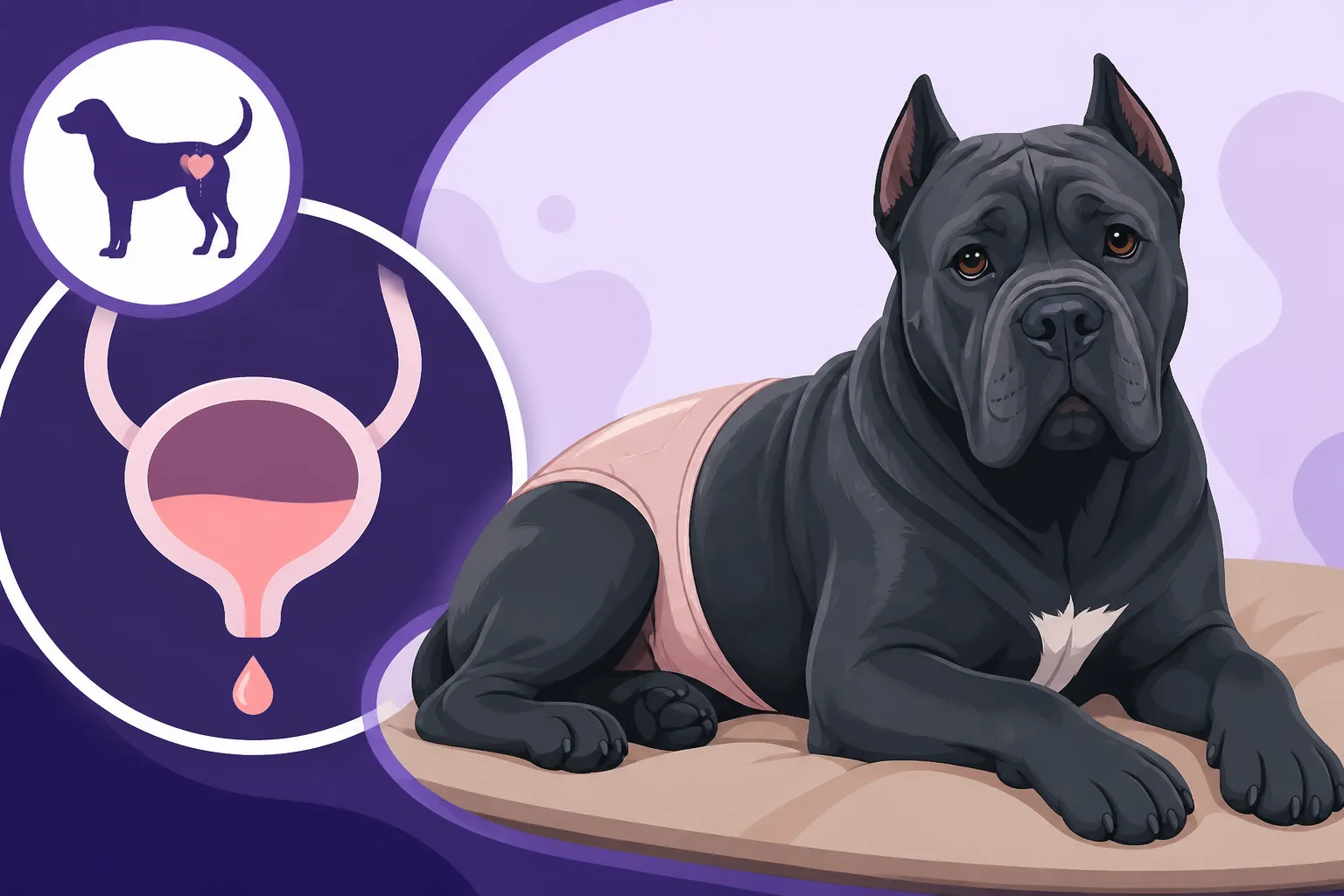
Incontinence in a Spayed Cane Corso
It’s incredibly frustrating, and let’s be honest, a little disheartening when your otherwise perfectly house-trained Cane Corso suddenly starts having accidents, especially if she's already spayed. You’ve done all the right things, committed to her training, and then one day you wake up to a puddle or discover a damp spot where she was sleeping. This guide is here to walk you through understanding why incontinence can strike a spayed Cane Corso, what’s happening, and the paths you can take to help her—and you—get back to a dry, comfortable life.
Understanding Urinary Incontinence in Spayed Cane Corsos
When you bring a beautiful, powerful breed like a Cane Corso into your home, you sign up for a lot – intense loyalty, rigorous training, and a deep, loving bond. What most people don't anticipate is dealing with unexpected leaks, especially after a routine procedure like spaying. It’s a common issue, more so in large breeds, and it's not a sign of poor training or bad behavior; it's often a medical condition that needs understanding and treatment.
Why Spaying Can Lead to Incontinence
The primary reason spaying can trigger incontinence in dogs, particularly in larger breeds, is something called hormone-responsive incontinence or spay incontinence. When a female dog is spayed, her ovaries are removed, which means her body no longer produces estrogen. Estrogen plays a crucial role in maintaining the muscle tone of the urethral sphincter—the little valve that keeps urine in the bladder. Without adequate estrogen, this sphincter can become weakened or lax.
Imagine a faucet that’s supposed to be tightly shut, but over time, the rubber washer inside wears down and it starts to drip. That’s essentially what happens with a weakened urethral sphincter. It's not a sudden gush, but rather a slow, involuntary leakage, often when your Cane Corso is relaxed, asleep, or changing positions. It’s completely outside of her control, which is why punishment or frustration does absolutely no good. She simply can't help it. This condition can sometimes appear immediately after spaying, but it's not uncommon for it to develop months or even years later, catching owners completely off guard when their once perfectly dry girl starts wetting the bed.
Differentiating Incontinence from Other Issues
When you first notice your Cane Corso leaking urine, it's natural to jump to conclusions, or perhaps worry about behavioral problems. However, it's incredibly important to distinguish true urinary incontinence from other issues that might present similarly. True incontinence means your dog is leaking urine involuntarily, often without even realizing it’s happening. You might find wet spots where she’s been sleeping or resting, or notice a dribble when she gets up. There’s no straining, no obvious squatting, just an unconscious release of urine.
On the other hand, if your Cane Corso is frequently squatting to urinate, straining, passing small amounts of urine often, or showing signs of discomfort during urination, it's highly likely to be something else. These symptoms could point to a urinary tract infection (UTI), bladder stones, or even inflammation. A UTI, for instance, makes urination uncomfortable and urgent, leading to accidents because the dog has to go, not because she's leaking without knowing it. Similarly, increased thirst and urination could be signs of kidney disease or diabetes.
This is why a trip to the vet is absolutely non-negotiable. They can perform a thorough physical examination, take a urine sample for analysis and culture to rule out infections, and potentially recommend blood work to check for other systemic diseases. Without a proper diagnosis, you could be treating the wrong problem, prolonging your dog's discomfort and your own frustration. You want to make sure you're addressing the root cause, not just the symptom.
Common Causes and Risk Factors Beyond Spaying
While spaying is a significant factor in many cases of female canine incontinence, it's not the only piece of the puzzle. Several other elements can contribute to or exacerbate urinary control issues in a majestic breed like the Cane Corso. Understanding these can help you better manage the situation and work with your veterinarian to develop the most effective treatment plan.
Age, Weight, and Genetics
As our beloved Cane Corsos move into their senior years, just like us, their bodies undergo changes. One of these changes can be a general weakening of muscles, including those involved in bladder control. An older spayed Cane Corso might experience a more pronounced decline in urethral sphincter tone simply due to age-related muscle atrophy, even if she's been fine for years. It's a natural, albeit unwelcome, part of What Changes in a Cane Corso After Its Eighth Birthday. You might notice the leaking becomes more frequent or heavier as she ages.
Weight also plays a critical role. A Cane Corso that is overweight or obese carries extra pounds that put additional pressure on her bladder and surrounding structures. This constant pressure can further compromise an already weakened urethral sphincter, making leaks more likely and potentially more severe. Keeping a Cane Corso lean and at a healthy weight is crucial not just for joint health—What Extra Weight Does to a Cane Corso's Hips is a real concern—but also for bladder control. It reduces the strain on her entire system, allowing her body to function more optimally.
While not exclusively a genetic condition for incontinence, large and giant breeds are generally more predisposed to hormone-responsive incontinence after spaying. Breeds like the Cane Corso, Boxers, Doberman Pinschers, and Great Danes often appear on lists of breeds with higher incidences. This suggests there might be an underlying genetic component or anatomical difference that makes their urethral sphincters more susceptible to estrogen deficiency. While you can't change her breed, being aware of this predisposition means you're more prepared to address the issue should it arise.
Underlying Health Conditions
Sometimes, incontinence isn't solely about a weakened sphincter, or it might be exacerbated by other medical problems. A thorough veterinary workup is crucial to rule out these possibilities.
One of the most common culprits is a Urinary Tract Infection (UTI). These are bacterial infections that cause inflammation and irritation in the bladder and urethra. A dog with a UTI will often feel an increased urgency to urinate, leading to accidents that might be mistaken for incontinence. However, with a UTI, the dog is usually aware she's urinating, may strain, or urinate more frequently and in smaller amounts. They can also cause blood in the urine or foul-smelling urine. Thankfully, UTIs are generally straightforward to treat with a course of antibiotics.
Bladder stones are another potential cause. These mineral formations can irritate the bladder lining, cause inflammation, and obstruct the flow of urine, leading to frequent urination, straining, and sometimes, leakage. The type of stone dictates the treatment, which can range from dietary changes to dissolve certain stones, to surgical removal for others.
Conditions like Kidney Disease or Diabetes can also manifest with increased urination, often leading to accidents. Dogs with kidney disease may produce more dilute urine, causing them to drink and urinate more frequently. Similarly, diabetic dogs often drink and urinate excessively. These systemic diseases require comprehensive management to control symptoms, including urinary accidents.
Finally, Spinal Issues or neurological conditions can affect bladder control by disrupting the nerve signals between the brain and the bladder. If there's damage to the nerves that control the urethral sphincter or bladder muscles, your Cane Corso might lose the ability to hold or release urine properly. This can be particularly challenging to diagnose and treat, sometimes requiring advanced imaging like an MRI or consultation with a veterinary neurologist. Symptoms might include weakness in the hindquarters or changes in gait, which could lead to you wondering When a Limping Cane Corso Needs an X-Ray. Always bring up any changes in mobility with your vet during an incontinence evaluation.
Navigating Diagnosis and Treatment Options
Facing incontinence with your Cane Corso can feel overwhelming, but the good news is that most cases are manageable, and many dogs can regain full bladder control. The journey begins with a precise diagnosis and then moves into selecting the most appropriate treatment plan for your individual dog.
The Veterinary Diagnostic Process
When you suspect your spayed Cane Corso has incontinence, the first step is always a thorough veterinary visit. Don't try to self-diagnose or treat based on online advice, as many conditions mimic each other. Your vet will start with a comprehensive history, asking about when the leaking occurs, how much, how often, and if there are any other symptoms.
Next, a detailed physical examination will be performed. They'll pay close attention to her abdomen, external genitalia, and perform a rectal exam to assess muscle tone and any abnormalities.
A urine analysis (UA) is crucial. This involves collecting a fresh urine sample (ideally through cystocentesis, where the vet draws urine directly from the bladder with a needle, minimizing contamination) and examining it for signs of infection, crystals, abnormal cells, or changes in specific gravity, which can indicate kidney function. If a UTI is suspected, a urine culture and sensitivity test will be performed to identify the specific bacteria and determine which antibiotics will be most effective.
Blood work, including a complete blood count (CBC) and a biochemistry panel, might be recommended to screen for systemic diseases like kidney disease, liver issues, or diabetes, which can all contribute to excessive urination and subsequent accidents.
If initial tests are inconclusive or point to more complex issues, your vet might recommend imaging. This could include abdominal X-rays to check for bladder stones or significant anatomical abnormalities, or an ultrasound of the bladder and kidneys for a more detailed view of the organ structure. In rare, complex cases, a referral to a veterinary internal medicine specialist or surgeon for urodynamic studies might be necessary to directly assess bladder and urethral function.
Medical Management Strategies
Once a diagnosis of hormone-responsive incontinence is confirmed, there are several effective medical treatments available. The goal is to strengthen the urethral sphincter or supplement the missing hormones.
The most common first-line treatment is Phenylpropanolamine (PPA), often sold under the brand name Proin. This medication works by increasing the tone of the smooth muscle in the internal urethral sphincter, essentially helping it to close more tightly. It's usually given orally, once or twice daily. PPA is generally very effective, with many dogs showing significant improvement or complete resolution of symptoms. Side effects are typically mild, such as restlessness or increased heart rate, but your vet will discuss these with you. It's a game-changer for many Cane Corso owners, allowing their dogs to return to a normal, dry life.
Another effective option is estrogen therapy. This directly addresses the hormonal deficiency caused by spaying. Medications like Diethylstilbestrol (DES) or Estriol (Incurin) are synthetic estrogens that help restore the tone of the urethral sphincter. DES is typically given for a loading period and then tapered to the lowest effective dose, often just once or twice a week. Incurin is a more targeted estrogen for urinary incontinence. While estrogen therapy is effective, it comes with potential side effects, including bone marrow suppression in rare cases (especially with higher doses) and changes in vulvar appearance or attractiveness to males. Your vet will weigh the benefits and risks carefully.
In some cases where primary medications aren't fully effective, or if there are other contributing factors, your vet might explore other options. Bethanechol can help if the bladder muscle itself isn't contracting effectively. Imipramine, an antidepressant, also has anticholinergic effects that can help increase bladder capacity and urethral tone. It's often used in combination with other drugs.
Lifestyle and Supportive Care at Home
Medical treatments are often highly successful, but integrating supportive care at home can make a huge difference in managing incontinence and maintaining your Cane Corso's comfort and dignity.
First and foremost, regular and frequent potty breaks are essential. Even if she's leaking, making sure she has ample opportunities to empty her bladder voluntarily can help reduce the volume of accidental leaks. Taking her out right before bed and first thing in the morning, and perhaps a final quick trip just before you turn in for the night, can be beneficial.
Absorbent bedding is a lifesaver. Invest in washable waterproof blankets or bed pads that can protect your furniture and her bed. Products like Molly Mutt crate covers, or even simple waterproof mattress pads designed for humans, can be incredibly useful. Doggy diapers or belly bands can also provide a temporary solution for catching leaks, especially overnight or when you're away from home. Just be sure to change them frequently to prevent skin irritation.
Weight management continues to be a cornerstone of care. We mentioned earlier that extra weight puts pressure on the bladder. Working with your vet to ensure your Cane Corso maintains a lean body condition can significantly improve incontinence and overall health, especially if you're mindful of The Weight an Old Cane Corso Should Hold.
While you should never restrict your dog's access to water, timing water intake can be helpful. For example, ensuring her main water intake is earlier in the day and reducing it slightly (but not cutting it off entirely) a couple of hours before bedtime can sometimes reduce overnight leaks.
Finally, cleanliness is vital. Urine can irritate the skin, leading to urine scald or dermatitis. Regularly checking and gently cleaning her hindquarters, especially in skin folds, with a mild, pet-safe wipe can prevent discomfort and secondary infections.
For those unexpected vet bills, having pet insurance can be a huge relief. Providers like Healthy Paws offer plans that can cover a significant portion of diagnostic tests, medications, and even surgeries for conditions like incontinence, provided it's not pre-existing. It's worth looking into when your Cane Corso is still young and healthy.
When Surgical Intervention Might Be Considered
While most cases of spay incontinence in Cane Corsos respond well to medical management, there are situations where surgery becomes a viable or even necessary option. These are typically cases where medication hasn't achieved satisfactory control, or when there's an anatomical abnormality that simply can't be fixed with pills.
Urethral Sphincter Implants or Collagen Injections
For dogs where medication fails to adequately control leaks, or if they experience unacceptable side effects from drugs like PPA or estrogen, specialized surgical procedures focusing on the urethral sphincter might be considered.
One approach involves urethral bulking agents, such as collagen injections. In this procedure, a veterinary specialist (often a veterinary internal medicine specialist or a surgeon) injects a substance, like bovine collagen, directly into the wall of the urethra. The goal is to bulk up the urethral tissue, making the sphincter tighter and more effective at holding urine. This is a minimally invasive procedure, often performed endoscopically. The effects can be temporary, requiring repeat injections over time, and success rates vary, but it can be a good option for some dogs.
Another, more involved, surgical option is the placement of an artificial urethral sphincter or a hydraulic occluder. This device is surgically implanted around the urethra and can be manually inflated or deflated to control the opening. This is a highly specialized procedure, typically reserved for severe, refractory cases, and carries risks associated with any major surgery, including infection and device malfunction. However, for a Cane Corso with intractable incontinence, it can be a life-changing solution. These procedures are usually only recommended after all medical management options have been exhausted and a specialist has determined the dog is a good candidate.
Addressing Anatomical Abnormalities
Sometimes, the incontinence isn't due to a weak sphincter at all, but rather to a structural defect that was present from birth, even if symptoms only become apparent later. For example, ectopic ureters are a condition where one or both ureters (the tubes that carry urine from the kidneys to the bladder) bypass the bladder and instead open into another location, such as the urethra or vagina. This means urine never makes it to the bladder to be stored and simply leaks out continuously. This is often seen in puppies, but mild cases might go unnoticed until adulthood. Surgical correction involves re-implanting the ureter into the bladder, which can completely resolve the incontinence.
Other less common anatomical issues might include vaginal strictures or other malformations that lead to pooling of urine, which then leaks out. These are often diagnosed with imaging or endoscopy and can sometimes be corrected surgically.
It's important to understand that these surgical interventions are not routine and require an experienced veterinary surgeon, often one who specializes in soft tissue surgery or urology. The diagnostics for such conditions can also be extensive, sometimes involving advanced imaging or contrast studies. While the thought of surgery for your large Cane Corso can be daunting, especially considering Anesthesia Risk in a Deep Chested Cane Corso, for the right candidate, it offers the best chance at a permanent solution to a frustrating problem.
It's also why having pet insurance, such as through Healthy Paws, can provide incredible peace of mind when facing these more complex and costly diagnostic and surgical procedures. Knowing you have support for those big bills allows you to focus on getting your beloved Cane Corso the best possible care.
Comparison of Common Incontinence Treatments
| Treatment Type | How it Works | Typical Success Rate | Pros | Cons |
|---|---|---|---|---|
| Phenylpropanolamine (PPA) | Strengthens urethral sphincter muscle tone | High (70-90%) | Oral, generally well-tolerated, readily available | Requires daily dosing, potential for mild side effects |
| Estrogen Therapy | Replaces missing estrogen, improves sphincter tone | High (60-90%) | Oral, effective, less frequent dosing (e.g., weekly) | Potential side effects (bone marrow suppression, vulvar changes) |
| Collagen Injections | Bulks urethral tissue to tighten sphincter | Moderate (50-70%) | Minimally invasive, good for non-responders | Temporary (requires repeat injections), specialized vet |
| Surgical Repair (Ectopic Ureters) | Re-implants ureter into bladder | High (80-90%) | Often a permanent cure for anatomical defects | Invasive surgery, anesthesia risks, recovery time |
| Artificial Sphincter Implant | Manually controlled device to close urethra | Variable | Last resort for severe cases | Highly invasive, specialized, risks of infection/malfunction |
Disclaimer
The information provided in this guide is for general informational purposes only and does not constitute veterinary advice. Always consult with a qualified veterinarian for any health concerns or before making any decisions about your Cane Corso's medical care. Individual results and recommendations may vary.