Whether a Straw Cane Corso Has a Gray Mask
A pale, straw-colored Cane Corso with a gray mask can leave new owners wondering whether the dog has an unusual coat, a color fault, or a problem with its pigmentation. The short answer: a gray mask can occur on a fawn-colored Cane Corso, but “straw” is an informal label, not a precise color category. Here’s how to tell what the description means and what to check.
Can a straw Cane Corso have a gray mask
What “straw” usually describes
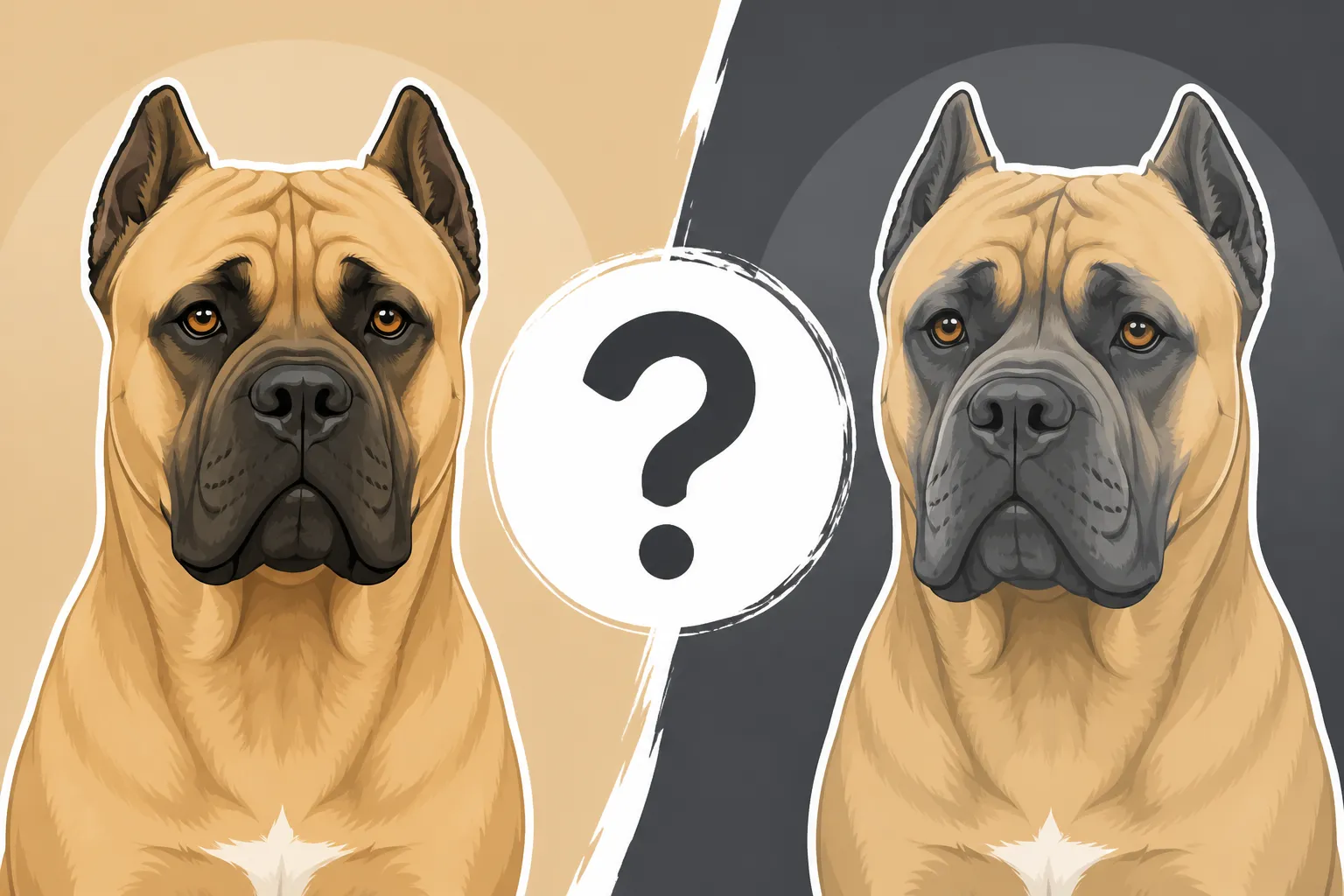
“Straw” is generally used informally for a very pale, yellowish or creamy fawn coat. It is not a distinct color category in the Cane Corso breed standard, so one breeder may use the word for a shade another breeder would simply call light fawn. Photographs can complicate things: sunlight, indoor lighting, camera settings, and a dog’s age can all make the same coat look warmer or cooler.
The more useful question is whether the dog’s overall coat fits an accepted color description, rather than whether the word “straw” appears in its advertisement or pedigree. A very light fawn dog may be described with several overlapping terms, including cream, pale fawn, or straw. Those labels alone do not establish the dog’s registration color, pedigree, or quality.
For a broader look at accepted coat descriptions, see Every Color a Cane Corso Is Allowed to Be and Black, Gray, Fawn and Red Cane Corsos. These can help put a pale dog’s appearance in context without treating every breeder’s marketing vocabulary as an official classification.
Is a gray mask allowed on a pale fawn coat
Yes. Cane Corsos described as fawn or red may have a black or gray mask. The mask is the darker coloration around the muzzle and face; its presence does not automatically mean the dog’s body coat is gray. A pale fawn coat paired with a gray mask is therefore not, by itself, an unusual or disqualifying combination.
The breed standard’s color language is more specific than many casual descriptions: it discusses fawn and red coats with black or gray masks, and describes limits on how far the mask should extend. If you are assessing a dog for conformation or registration, check the relevant registry’s standard and ask an experienced, responsible breeder to explain how they describe that individual dog.
It also helps to separate color from facial pattern. A gray mask is a feature of the face; a gray or blue-looking body coat is a different description. The Mask a Cane Corso Is Required to Carry explains the facial marking in more detail, while Why Breeders Call a Gray Cane Corso Blue covers the common use of “blue” for gray-looking coats.
| Description you may hear | What it generally refers to | What it does not prove |
|---|---|---|
| Straw | An informal description for a very pale, yellowish or creamy coat | A separate official Cane Corso color category |
| Fawn | A recognized coat color family that can range from lighter to darker shades | That the dog has a particular pedigree or health status |
| Gray mask | Gray coloration on the face, especially around the muzzle | That the dog’s whole coat is gray |
| Blue or gray | Often used informally for a gray-looking body coat | That a pale fawn dog with a gray mask is a blue dog |
Does a gray mask make the dog a Formentino
Not necessarily. Formentino is commonly used for a pale fawn or diluted-looking Cane Corso with a gray or blue-toned mask and other gray pigmentation. The exact way breeders use the word can vary, and a gray mask by itself is not enough to identify a dog as Formentino. The shade of the body coat, nose, and other visible pigmentation matters too.
A pale coat can also look different in photographs than it does in person. Ask to see recent pictures taken in natural light, and, if possible, meet the dog. A breeder should be able to describe the parents’ colors and explain the terminology they use without presenting an informal color label as a guarantee of rarity, quality, or health.
If you want to understand the label more carefully, What Formentino Means on a Cane Corso is a useful comparison. Keep in mind that terms such as Formentino and straw can be used differently from one kennel or conversation to another. The dog’s actual appearance and the registry’s stated color categories are more informative than a sales description alone.
How to assess the coat and mask in real life
Look at the whole dog, not one close-up
Start by viewing the dog in indirect daylight, where the coat’s overall tone is easier to judge. A close-up of the muzzle may make a gray mask look nearly black, while a shaded photo can make a pale fawn body appear grayish. Compare the face, ears, back, and legs in several images rather than drawing a conclusion from a single edited or heavily filtered picture.
Next, check whether the darker facial area is a mask or simply shadow, dirt, or staining. A true mask is part of the dog’s coat pigmentation and generally remains visible after the face is clean. If the fur around the mouth is damp or stained, or the dog has recently been eating, that can change how the area looks in a photograph.
When browsing images or listings, don’t treat color names as a substitute for seeing the dog. A breeder should be willing to share clear photos and explain whether “straw” is their own descriptive term or a color they have recorded through a registry. If you are comparing a pale fawn dog with other color varieties, What Colors a Cane Corso Litter Can Throw may help explain why puppies from the same litter do not necessarily look identical.
Check whether the color changes as the puppy grows
Puppies can look different from their adult selves. The coat may become a little deeper or appear more even as the puppy matures, and lighting or seasonal coat condition can affect what you see. That does not mean every puppy’s mask will dramatically change, or that an owner can predict the adult color from a single picture with certainty.
Ask the breeder what they have observed in related dogs, but treat that as helpful context rather than a promise. A breeder who has raised several generations may be able to describe how the coats of parents or older offspring developed. Still, an adult dog’s appearance can vary, and informal words like straw are not precise enough to guarantee an exact future shade.
If the mask seems to be changing alongside other skin or coat concerns, such as irritation, hair loss, or a sudden patch of discoloration, ask a veterinarian rather than assuming it is a normal color shift. A stable gray mask on a healthy dog is a different matter from a new change in the skin or coat.
Color, breeding, and health questions
Does coat color tell you whether the dog is healthy
Coat color alone is not a reliable health assessment. A straw-colored coat or gray mask cannot tell you whether a puppy’s parents received appropriate health screening, whether the dog has a sound temperament, or whether it will develop a particular medical condition. Those questions call for health records, thoughtful breeding practices, and veterinary care—not color-based assumptions.
When considering a puppy, ask about the parents’ health testing and request documentation you can understand. Ask how the breeder evaluates temperament, how puppies are raised, and what support is available if questions come up after the puppy goes home. A dramatic color description should never distract from those practical checks.
The same caution applies to claims that one color is inherently better, rarer in a meaningful way, or more desirable for health. Whether Coat Color Predicts Anything About a Cane Corso discusses why appearance is not a dependable shortcut for judging a dog’s wellbeing. And if a seller leans heavily on a rare-color pitch, Why Rare Color Cane Corsos Worry the Breed Club offers context for why breed enthusiasts pay attention to how color is marketed.
What should you ask a breeder
Keep questions straightforward and specific. Ask what color the breeder records for the puppy, what they mean by “straw,” and whether they consider the mask gray or black. Then ask to see clear pictures of both parents and, where available, older dogs from related lines. A thoughtful breeder should be comfortable explaining their terminology and pointing you toward relevant records.
It is also reasonable to ask whether the puppy’s color description is based on a registry standard or is simply the breeder’s visual shorthand. Those are different things. A registry’s color categories may not use every term you see in advertisements, and a breeder’s preferred wording does not automatically change how a registry classifies the dog.
If a seller cannot explain the label, pressures you to pay extra for “rare” color, or avoids questions about health testing and the parents, pause before making a decision. The coat may be beautiful, but buying a Cane Corso is a long-term commitment. Health, temperament, responsible breeding, and whether the dog suits your household matter far more than whether its pale fawn coat is called straw.
Caring for a pale coat without overreacting
A light coat can make dirt or tear staining more noticeable, but the color itself does not mean the dog needs special treatment. Use gentle, dog-appropriate grooming products, and ask your veterinarian before using anything near the eyes or on irritated skin. If you’re comparing basic grooming supplies, Chewy is one place owners may browse, alongside local pet shops and veterinary clinics.
Pay attention to changes rather than trying to “correct” normal pigment. A gray mask is not dirt to scrub away, and repeated washing or strong products can irritate the skin. If the coat develops redness, persistent itching, bald spots, or an unusual odor, arrange a veterinary check instead of assuming the shade is the cause.
When looking at product descriptions on Chewy or elsewhere, choose items intended for dogs and follow the label. Chewy can be a convenient place to compare everyday grooming options, but a product listing cannot diagnose a skin concern or determine a dog’s official color. For eye discharge, ongoing staining, or skin changes, ask your veterinarian what care is appropriate for that individual dog.
What to remember about a straw Cane Corso with a gray mask
A pale coat called “straw” is usually an informal description, often referring to a very light fawn shade. A gray mask can occur with fawn-colored Cane Corsos, and it does not automatically make the dog a gray or blue Cane Corso. The word Formentino may be used for a related pale, gray-toned appearance, but a gray mask alone is not enough to settle that label.
If you’re evaluating a puppy, look at the whole dog in natural light, ask what the breeder means by the color term, and verify health and parent information separately. Treat color as one part of the dog’s appearance—not as proof of pedigree, health, or value.
Disclaimer
This article is for general informational purposes only and does not constitute professional advice. Laws, prices and regulations vary by location and change over time. Consult a qualified professional for guidance on your specific situation.