The Safe Hours to Walk a Cane Corso in August
Walking a massive, powerful Cane Corso can be an incredible bonding experience, but when August rolls around, the scorching heat turns a simple stroll into a potential hazard. The risk of overheating for these deep-chested, often dark-coated guardians is very real, and understanding the safe windows for exercise isn't just a recommendation—it's a necessity for their well-being. This guide will help you navigate the summer heat, ensuring your beloved Cane Corso stays cool, comfortable, and safe during your daily outings, especially in the dog days of August.
The Hidden Dangers of August Heat for Your Cane Corso
When the summer sun beats down, what feels like a pleasant walk to us can quickly become a dangerous situation for our Cane Corsos. These magnificent dogs are built for power and protection, not for enduring extreme heat, and their physiology makes them particularly vulnerable to heat-related illnesses. Understanding these inherent risks is the first step in keeping them safe.
Why Cane Corsos Are Particularly Vulnerable
Cane Corsos, with their dense coats, large muscle mass, and often dark pigmentation, absorb and retain heat much more readily than smaller, lighter-colored, or less muscular breeds. Think about trying to cool down a large engine compared to a small one – it takes more effort and more time. Unlike humans who sweat across their entire skin surface, dogs primarily cool themselves by panting. While effective to a degree, this method becomes less efficient in high humidity, as the evaporating moisture from their tongues and respiratory tracts can't dissipate as effectively into the already saturated air. This means a humid 85-degree day can feel far more dangerous to your Cane Corso than a dry 85-degree day. Furthermore, their deep chests, a characteristic of the breed, can sometimes be associated with a slightly less efficient respiratory system when under severe stress, making them work even harder to cool down.
Consider a black Cane Corso, for instance. That beautiful, sleek black coat, while stunning, acts like a sponge for solar radiation. On a sunny day, it draws in and holds heat, raising their body temperature faster than a fawn or grey coat. This is why you'll often hear discussions about Why a Black Cane Corso Overheats First. It's not just an aesthetic difference; it's a significant factor in their heat tolerance and dictates how carefully you must plan their outdoor activities when temperatures soar. Every minute they spend under direct sun in August adds to their internal temperature load, bringing them closer to a dangerous threshold.
The Pavement Problem
One of the most overlooked hazards of summer walking is the temperature of the ground itself. While the air temperature might be a balmy 85 degrees Fahrenheit, asphalt or concrete surfaces can easily reach 120-140 degrees or even higher when exposed to direct sunlight. Imagine walking barefoot on a sizzling blacktop – that's what your Cane Corso's paw pads are enduring, even if the air feels tolerable to you. Their paw pads are tough, yes, but they are not impervious to burns. Serious burns can happen quickly and are incredibly painful, leading to infection and prolonged recovery.
To gauge pavement temperature, try the "seven-second rule": place the back of your hand on the pavement. If you can't hold it there comfortably for at least seven seconds, it's too hot for your Cane Corso's paws. This simple test can be a literal lifesaver, especially when you consider how long a typical walk lasts and how much exposure those pads will get. Remember that even grass can retain heat if it's been baking in the sun all day, so seek out truly cool, shaded surfaces whenever possible, or stick to early morning and late evening strolls.
Identifying the "Golden Hours" for Summer Walks
Successfully navigating August heat with your Cane Corso requires a strategic approach to their exercise schedule. You need to identify and commit to the times of day when the sun is least intense and ambient temperatures are at their lowest. These are what we affectionately call the "golden hours."
The Early Morning Advantage
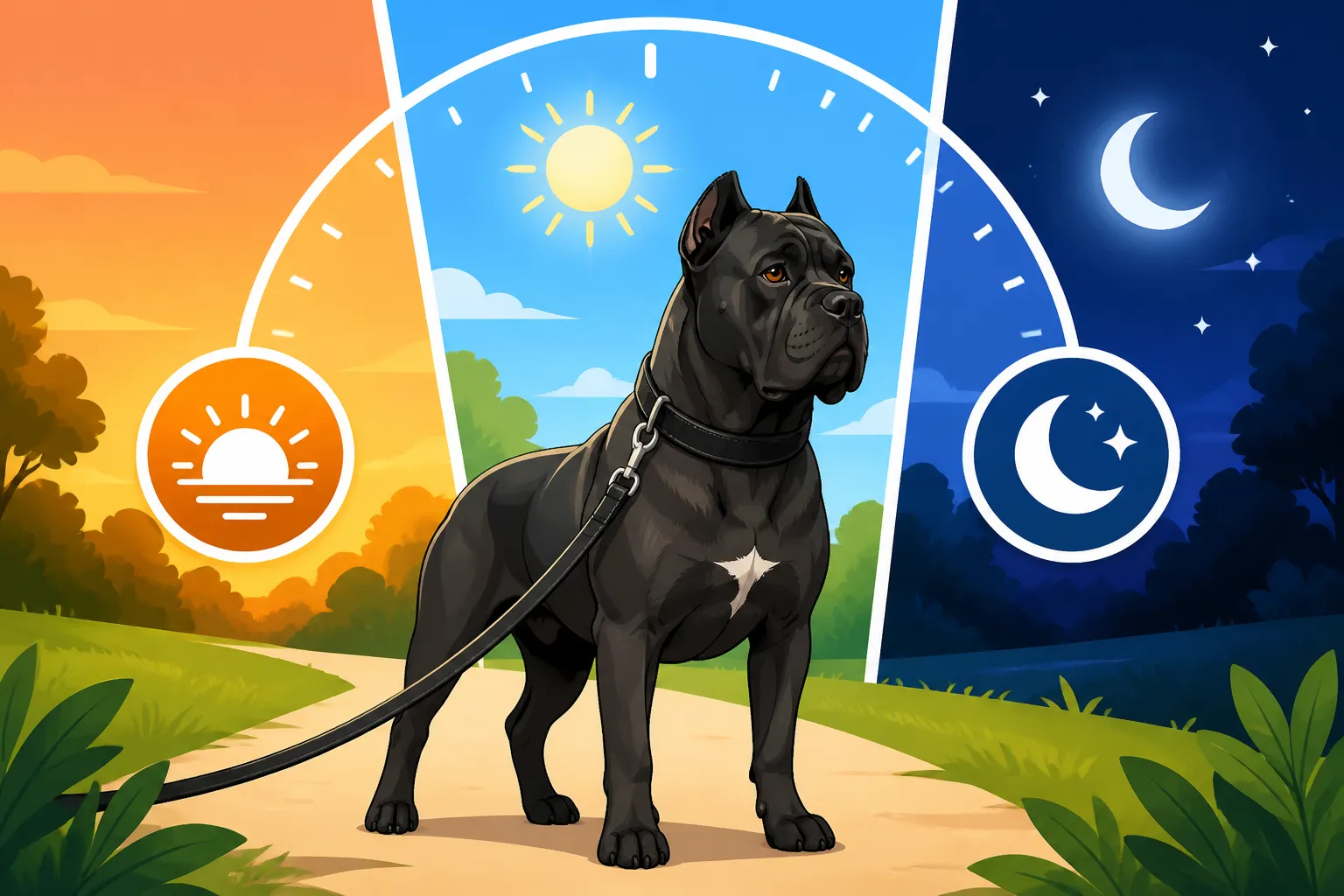
For most of us, rolling out of bed before the sun truly gets going can feel like a chore, but for your Cane Corso, it's a critical safety measure in August. The period right after sunrise, typically between 5:00 AM and 8:00 AM, offers the coolest air temperatures of the entire day. The ground has had all night to cool down, and the sun's rays are still weak, meaning the pavement hasn't had a chance to become a scorching griddle. This is your prime window for longer, more vigorous walks or even some outdoor training sessions.
During these early hours, the air is usually crisper, and humidity might not have built up to its peak yet, offering a more comfortable and safer environment for your large companion. It's the perfect time to let them sniff around, enjoy a good stretch, and get their mental and physical stimulation in without the danger of overheating. Think of it as beating the heat before it even starts. If you wait even an hour or two past this window, especially in southern states or heat-prone regions, you'll feel the difference, and more importantly, your Cane Corso will too. Even on days when you might want to sleep in, remember that this small sacrifice can make a huge difference in your dog's health and comfort.
Evening Opportunities and Cautions
The other potential "golden hour" window falls in the late evening, typically after 7:00 PM or 8:00 PM, once the sun has dipped below the horizon and begun its descent. The challenge with evening walks, however, is that while the sun might be gone, the ambient temperature can remain quite high for several hours as the ground and air slowly release the heat they absorbed all day. This is particularly true in urban areas where concrete and asphalt act as heat sinks.
Always apply the seven-second rule to the pavement before heading out, even if the air feels cooler. A breezy evening might mask still-hot surfaces. Humidity can also be a greater factor in the evenings, especially after a hot day, further reducing your Cane Corso's ability to cool itself effectively through panting. So, while evening walks offer a second chance for exercise, they require just as much vigilance, if not more, to ensure pavement temperatures are safe and your dog isn't simply moving from direct sun exposure to still-hot surroundings. It's always best to err on the side of caution.
Here’s a general guideline for walking your Cane Corso based on air temperature, but remember to always check pavement temperature as well:
| Air Temperature (Fahrenheit) | Risk Level for Cane Corso | Recommended Activity |
|---|---|---|
| Below 70°F | Low | Normal walks, training |
| 70-79°F | Moderate | Shorter walks, frequent breaks, water |
| 80-89°F | High | Very short, essential walks only. Stick to shade. Early/late hours only. |
| 90°F and above | Extreme | Avoid walks entirely. Potty breaks only, directly to grass. |
This chart highlights the general temperature ranges, but individual factors like humidity, direct sun exposure, and your dog's specific health (age, weight, existing conditions) can shift these risk levels. An older Cane Corso or one that carries a little extra weight will be at higher risk even in moderate temperatures. The Age a Cane Corso Is Counted as Old means their ability to regulate temperature is often diminished.
Essential Preparations and Gear for Hot Weather Outings
Even during the safe "golden hours," a little preparation goes a long way in ensuring your Cane Corso's comfort and safety. You wouldn't head out for a summer hike without water, and your dog needs the same consideration.
Hydration is Key
Never, ever leave the house for a walk in August without a water bottle and a portable bowl for your Cane Corso. Even a short 15-minute stroll can lead to dehydration in hot weather, especially for a large dog. Offer water frequently, even if they don't seem overly thirsty. A good rule of thumb is to offer water every 10-15 minutes if you're out for more than a quick potty break. You can find excellent portable water bottles with attached bowls, or collapsible silicone bowls, readily available on sites like Amazon or Chewy. Keeping them well-hydrated helps their body's internal cooling mechanisms work more efficiently.
Beyond walks, make sure your Cane Corso has constant access to fresh, cool water at home. Consider adding ice cubes to their water bowl during the day to keep it appealingly cold. Some owners even use specialized dog-friendly electrolyte solutions in their water bowls after particularly warm outings, though it's always best to discuss this with your vet first. Remember, a dog that drinks enough water is better equipped to handle any heat stress that might arise. Don't assume that just because you walk them in the early morning that they won't need ample water before, during, and after the excursion. Why a Cane Corso Empties Its Water Bowl by Noon is a common experience, so be prepared to refill often!
Cooling Gear and Paw Protection
There’s a surprising array of gear available now to help keep dogs cool. Cooling vests, which you soak in water before putting on your dog, can significantly lower their core body temperature through evaporative cooling. While not every Cane Corso will tolerate a vest, for those that do, it can make a moderate-temperature walk much more comfortable. These are often available through pet supply retailers like Chewy. You might also consider cooling bandanas or even a simple damp towel draped over their back before and after a walk.
For paw protection, if you absolutely must walk during slightly warmer hours or on questionable surfaces, dog booties can provide a barrier against hot pavement. However, not all Cane Corsos tolerate booties well, and they can sometimes trap heat if worn for too long in direct sun. A good paw balm, applied regularly, can help toughen and moisturize their paw pads, offering some resilience, but it's no substitute for avoiding hot surfaces altogether. Always prioritize walking on grass or shaded dirt paths when temperatures climb, and use the seven-second rule without fail to test the ground before you ask your Cane Corso to walk on it.
Recognizing and Responding to Heat Stress
Even with the best precautions, accidents can happen, and sometimes a dog can still get too hot. Knowing the signs of heat stress and heatstroke, and how to react quickly, is crucial for any Cane Corso owner.
Early Warning Signs and Progression
The earliest sign of a Cane Corso getting too hot is often excessive panting that seems more labored or faster than usual for their activity level. They might also start drooling heavily, perhaps producing thicker, ropier saliva. Their gums might appear a brighter red than normal as their body tries to push blood to the surface to cool. As heat stress progresses into heatstroke, you might notice more severe symptoms:
- Lethargy or weakness: They may seem unusually tired or stumble.
- Vomiting or diarrhea: The digestive system can be one of the first to show distress.
- Bright red or purple gums: Indicating severe circulatory issues.
- Glazed eyes and dizziness: A sign of neurological impact.
- Wobbly gait or collapse: Loss of coordination.
- Seizures: In severe cases, the brain can be affected.
It's vital to recognize these signs early. Do not wait for your Cane Corso to collapse or start seizing before you act. The moment you suspect your dog is overheating, even if it's just excessive panting, you need to intervene immediately. This is particularly important with large, powerful breeds where the onset can be sudden and the progression rapid. I've often worried about Heat Stroke in a Working Cane Corso because their drive can sometimes override their instinct to slow down.
Emergency Measures for Overheating
If you suspect your Cane Corso is overheating, here's what you need to do, and do it quickly:
- Get to Shade and Cool Air: Immediately move your dog to the coolest, shadiest spot you can find. If you're near your car with AC, get them in there.
- Offer Water: Give them small amounts of cool (not ice cold) water to drink, but don't force it down them if they're struggling.
- Cool Them Down: This is the most critical step.
- Wet their body: Use cool (again, not ice cold) water to wet their entire body, focusing on the paws, belly, inner thighs, and neck. These areas have major blood vessels close to the surface, and cooling them directly helps cool the blood circulating through their body. Do not douse them with freezing water, as this can cause blood vessels to constrict and actually hinder cooling.
- Use a fan: If possible, direct a fan onto their wet body to aid in evaporative cooling.
- Apply cool, wet towels: Place cool, damp towels over their back, armpits, and groin, replacing them frequently as they warm up. You can read more about effective techniques in Cooling a Cane Corso After Hard Work.
- Seek Veterinary Attention: Even if your Cane Corso seems to recover quickly, heatstroke can cause internal organ damage that isn't immediately apparent. Call your vet or the nearest emergency veterinary clinic while you are cooling your dog and let them know you're on your way. They will need to assess your dog for secondary complications like kidney damage or neurological issues. Timely professional intervention significantly improves the outcome.
Remember, prevention is always the best medicine. By respecting the power of the August sun and taking smart precautions, you can ensure your Cane Corso remains a happy, healthy companion all summer long. Avoiding walks during the hottest parts of the day is a simple but critical measure, particularly when the ambient temperature climbs past The Temperature a Black Cane Corso Should Not Walk In.
Disclaimer
This article is for general informational purposes only and does not constitute professional advice. Laws, prices and regulations vary by location and change over time. Consult a qualified professional for guidance on your specific situation.