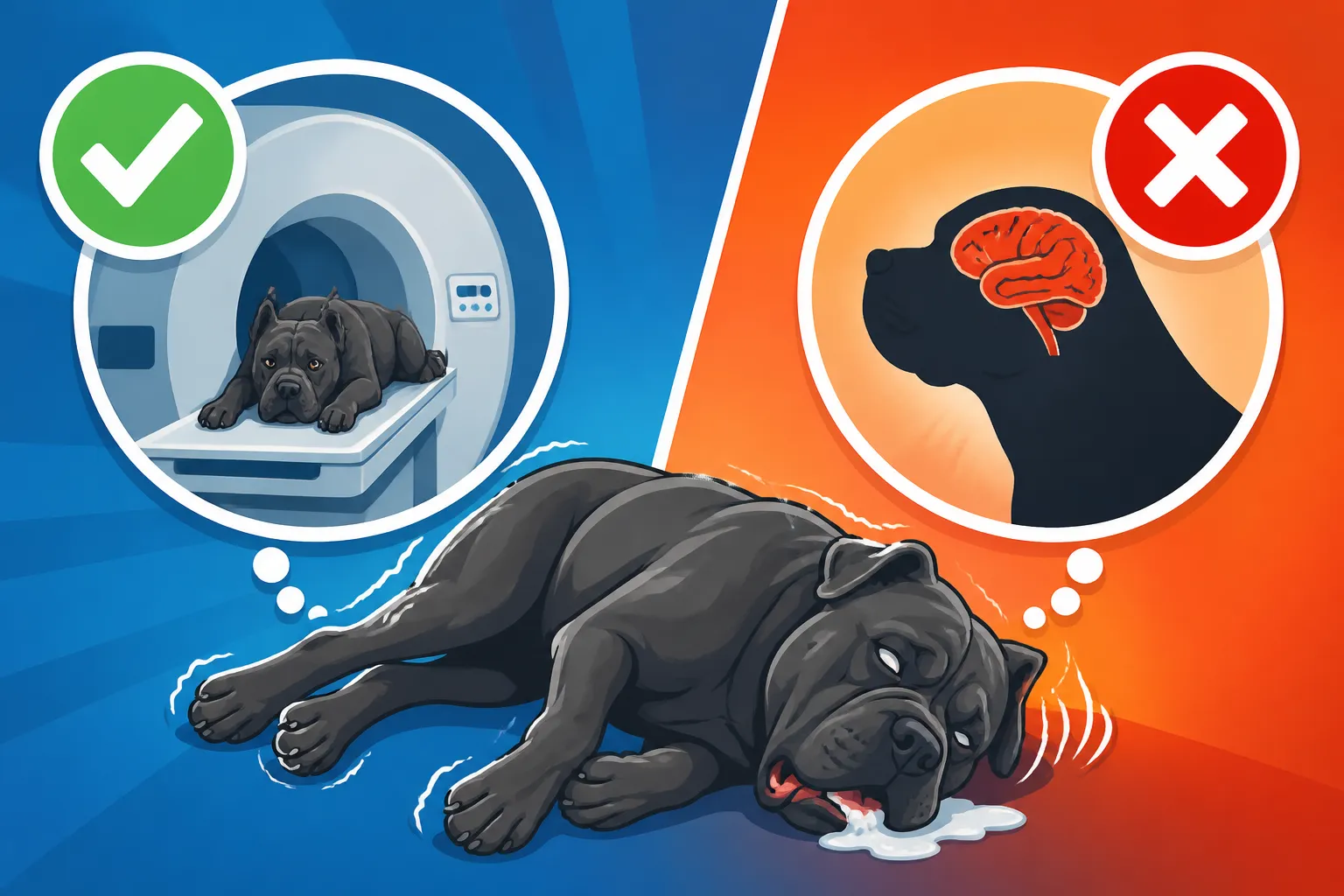
Whether an MRI Is Worth It on a Seizing Cane Corso
Watching your beloved Cane Corso suddenly drop to the ground, muscles convulsing, and eyes vacant is one of the most terrifying experiences any dog owner can face. It’s natural to feel utterly helpless and desperate for answers. This guide will walk you through the complex decision of whether an MRI is a necessary and worthwhile step in understanding and managing seizures in your Cane Corso, exploring what it can tell you, what it can't, and the practical considerations involved.
Understanding Seizures in Your Cane Corso: The Terrifying Reality
The first time your Cane Corso has a seizure, it's often a deeply distressing and confusing event. One moment they might be playing, or simply resting, and the next they are experiencing involuntary movements, drooling, losing bladder or bowel control, and seeming utterly disconnected. It's a stark reminder of their vulnerability, and your heart clenches with the fear of the unknown. Many owners describe feeling paralyzed with fear, not knowing how to help their giant companion through such a violent episode. You might rush them to the emergency vet, only to be told that for many dogs, the cause remains a mystery, or that further investigation is needed. What a Cane Corso's First Seizure Actually Looks Like details some of these frightening initial presentations.
Seizures in dogs, particularly in large breeds like the Cane Corso, can manifest in various ways, from generalized "grand mal" seizures involving the whole body, to focal seizures affecting only a part of the body, or even just subtle changes in behavior. Regardless of the type, they are all indicative of abnormal electrical activity in the brain. The big question that immediately arises is why is this happening? Is it something serious and treatable, or is it something more chronic? This uncertainty is incredibly difficult to live with, especially when you have a powerful, intelligent dog like a Cane Corso, whose well-being is so dependent on their neurological health.
For many Cane Corsos, seizures often begin around a certain age, commonly in their middle years. The Seizures That Start in a Cane Corso Around Two is a common concern among Cane Corso owners, highlighting a genetic predisposition that can sometimes make its appearance in young adulthood. While some seizures can be triggered by external factors like toxins or heatstroke, recurrent seizures usually point towards an underlying neurological issue. This is where the veterinary journey often diverges, leading to a series of diagnostic choices, with an MRI often being presented as the gold standard for peering inside the skull.
The Diagnostic Journey: Why an MRI is Considered for Seizures
When your Cane Corso experiences repeated seizures, your veterinarian will likely suggest a diagnostic workup to try and pinpoint the cause. This often starts with blood tests to rule out metabolic issues, liver or kidney disease, or toxins that could be affecting brain function. If these initial tests come back normal, and the seizures continue, the focus shifts directly to the brain itself. This is where advanced imaging, specifically an MRI (Magnetic Resonance Imaging), enters the conversation. An MRI provides incredibly detailed images of the brain's soft tissues, far surpassing what standard X-rays or even CT scans can offer.
The primary reason an MRI is recommended is to differentiate between two main categories of seizures: structural epilepsy and idiopathic epilepsy. Structural epilepsy means there's an identifiable physical lesion in the brain causing the seizures. This could be a brain tumor, inflammation (encephalitis), a stroke, a congenital malformation, or even fluid build-up (hydrocephalus). Catching these issues early can be critical, as some structural causes are treatable, sometimes even curable with surgery or specific medications. Imagine the relief of finding a treatable cause versus simply managing symptoms indefinitely.
On the other hand, if the MRI (and often a cerebrospinal fluid tap) comes back completely normal, and all other potential causes have been ruled out, your Cane Corso is likely to be diagnosed with idiopathic epilepsy. This means there's no identifiable structural lesion; the brain simply has an inherent predisposition to seizure activity. This diagnosis, while not as immediately alarming as a tumor, still requires lifelong management. The MRI essentially helps your vet refine the treatment plan and set appropriate expectations for prognosis. Without it, you're often left guessing, treating symptoms without knowing the full picture. The Bill for a Cane Corso's Seizure Workup can be substantial, and an MRI is a significant part of that cost.
Weighing the Pros and Cons of an MRI for Your Cane Corso
Deciding whether to pursue an MRI for your seizing Cane Corso is a deeply personal and often financially daunting choice. It involves balancing the potential benefits of a definitive diagnosis against the costs, risks, and emotional toll. As a large, often anxious breed, the logistics of an MRI alone can be a challenge.
The Benefits and What an MRI Can Reveal
The most compelling argument for an MRI is the potential for a definitive diagnosis. If a structural lesion is found, it opens up avenues for targeted treatment that might not have been considered otherwise. For instance, discovering a treatable brain tumor could lead to surgery, radiation, or specific chemotherapy, potentially extending your Cane Corso's life or significantly improving their quality of life. Without an MRI, you'd be treating empirically, essentially throwing different medications at the problem hoping something sticks, without knowing if you're addressing the root cause. A clear diagnosis also provides peace of mind, even if the news isn't what you hoped for. Knowing exactly what you're dealing with can empower you to make more informed decisions about long-term care, daily medication regimens like those discussed in Daily Medication for a Cane Corso With Epilepsy, and even future breeding decisions, as explored in Whether an Epileptic Cane Corso Should Ever Be Bred. It allows you to focus your energy and resources more effectively.
The Costs, Risks, and Considerations
However, the reality of an MRI for a Cane Corso comes with significant considerations. Firstly, there's the cost. Advanced imaging like an MRI is expensive, often ranging into thousands of dollars. This isn't a simple blood test; it requires specialized equipment, a veterinary neurologist, and general anesthesia for your dog, given they must remain perfectly still for the duration of the scan. Many owners, even those who meticulously budget for their Cane Corso, find themselves unprepared for this kind of expense. This is where pet insurance, if you have it, can be a lifesaver. Companies like Healthy Paws often cover a significant portion of diagnostic tests for unexpected illnesses, provided the condition isn't pre-existing. It's vital to check your policy details.
Then there's the risk of anesthesia. While generally safe, any time a large breed like a Cane Corso goes under anesthesia, there are risks involved. Their deep chests can sometimes be a concern for anesthesia protocols. Your vet will conduct pre-anesthetic bloodwork and potentially chest X-rays to assess these risks, but they are never zero. For older or frail Cane Corsos, these risks might weigh heavily on your decision.
Finally, you must consider the potential outcomes. What if the MRI shows a devastating, untreatable tumor? Are you prepared for that news? What if it shows nothing, confirming idiopathic epilepsy, leaving you with a large bill but no "cure"? The goal is always to improve your dog's life, but sometimes the answer, even a definitive one, can be heartbreaking. It’s important to have an honest conversation with your vet about all possible scenarios and what you are emotionally and financially prepared to handle.
Here’s a quick overview of the decision points:
| Feature | Pros of MRI | Cons of MRI |
|---|---|---|
| Diagnosis | Identifies structural causes (tumors, inflammation, stroke) | May find untreatable conditions |
| Treatment | Allows for targeted, potentially curative treatments | Diagnosis of idiopathic epilepsy means lifelong management, no "cure" |
| Peace of Mind | Provides clear answers, reduces uncertainty | Can deliver devastating news or simply confirm idiopathic epilepsy |
| Cost | Potentially offsets long-term empirical treatment if a cause is found | Significant upfront expense, often thousands of dollars |
| Procedure | Non-invasive (imaging) | Requires general anesthesia, carrying inherent risks, especially for large breeds like Cane Corsos |
| Prognosis | More accurate prognosis and informed treatment plan | May reveal a poor prognosis, leading to difficult decisions like Knowing When a Cane Corso Has Had Enough |
Beyond the MRI: Living with a Seizing Cane Corso
Regardless of whether you choose to pursue an MRI or what the results reveal, living with a seizing Cane Corso means adapting to a new normal. If your Cane Corso is diagnosed with idiopathic epilepsy, or if an MRI reveals a structural cause that is not surgically treatable, the focus shifts to managing the seizures and maintaining their quality of life. This typically involves anticonvulsant medications. Monthly Phenobarbital Costs for a Cane Corso or other antiepileptic drugs become a regular part of your budget and routine. Finding the right medication and dosage is often a process of trial and error, working closely with your vet.
Many owners find comfort and guidance in online communities or support groups for owners of epileptic dogs. Sharing experiences and tips for monitoring, seizure first aid (like Holding a Hundred Pound Cane Corso Through a Seizure), and adjusting daily life can be invaluable. You'll learn to recognize potential triggers for seizures, like stress, excitement, or even certain sounds, as discussed in What Sets Off a Cane Corso's Seizures. Diet can also play a role, and some vets might suggest specialized prescription diets. For these, online retailers like Chewy often offer convenient delivery services. Even boutique fresh food brands like Ollie might be considered for dogs with very specific dietary needs, though always consult your vet before making significant dietary changes.
Ultimately, the decision to get an MRI for your seizing Cane Corso is a deeply personal one. It requires careful consideration of financial resources, emotional capacity, and your dog's overall health and prognosis. No matter what you decide, the most important thing is to work closely with your veterinarian, advocate for your Cane Corso, and provide them with the best quality of life possible. Sometimes, even without a definitive diagnosis via MRI, effective seizure management can allow your Cane Corso to live a full and happy life for many more years, a testament to their resilience and your unwavering care.
Disclaimer
This article is for general informational purposes only and does not constitute professional advice. Laws, prices and regulations vary by location and change over time. Consult a qualified professional for guidance on your specific situation.