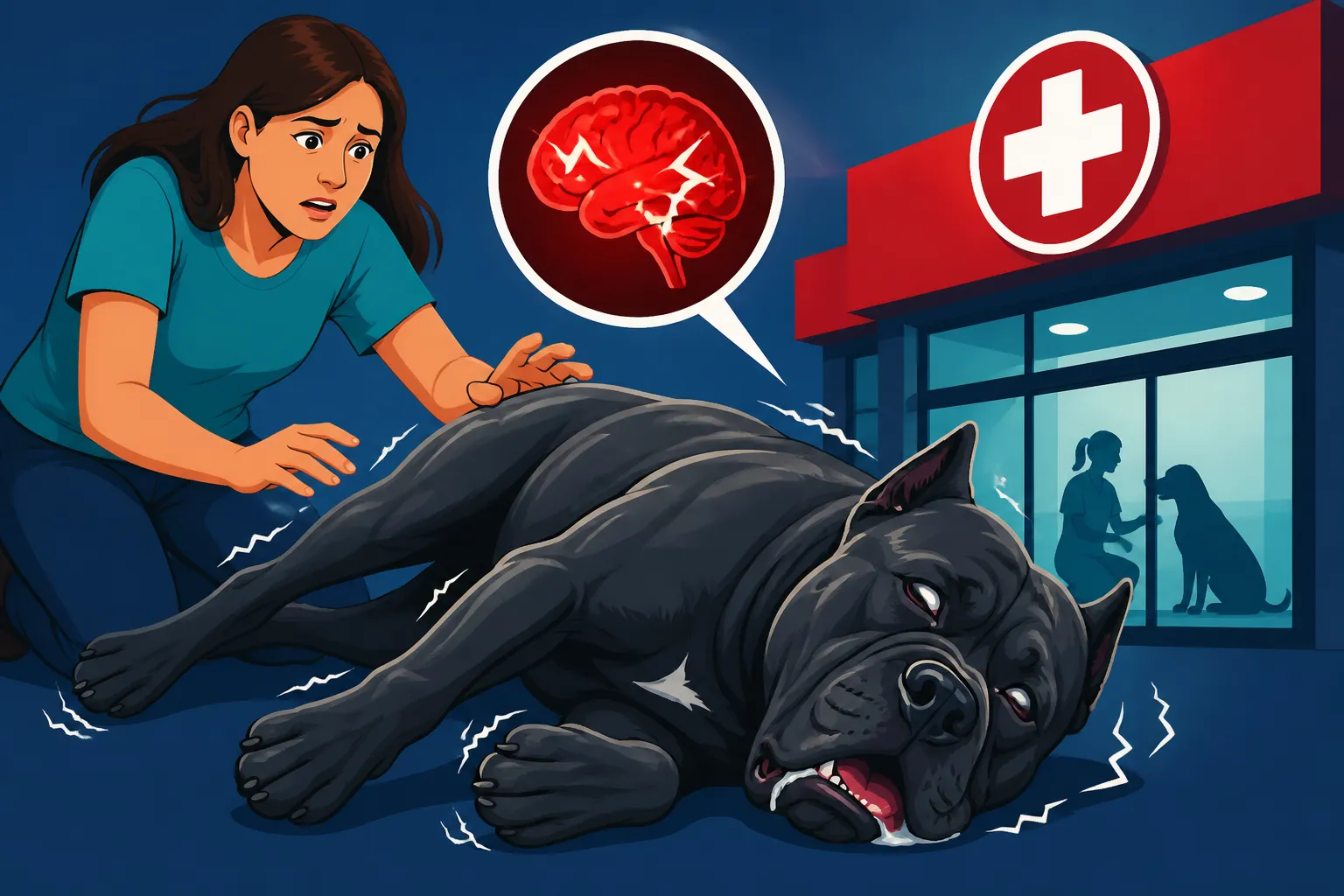
When a Seizing Cane Corso Needs the Emergency Vet
The moment your powerful Cane Corso begins to seize, a cold dread washes over you. One minute they're perfectly fine, perhaps enjoying a nap, and the next they're on the floor, convulsing, drooling, and completely unresponsive. It's a terrifying experience, and in the chaos and fear, it can be incredibly hard to know when to rush to the emergency vet and when it's safe to manage at home while waiting for your regular veterinarian's office to open. This guide aims to bring clarity to those frightening moments, helping you identify the critical signs that demand immediate emergency care for your seizing Cane Corso.
Understanding When a Seizure Becomes a Critical Emergency
Not all seizures are created equal, and for a large, robust breed like the Cane Corso, understanding the difference between a typical, though distressing, seizure and one that poses an immediate life threat is paramount. It’s natural to want to rush your dog in for every seizure, but knowing the specific red flags can help you make informed decisions when panic threatens to take over.
Recognizing Prolonged Seizures and Status Epilepticus
A seizure that lasts an unusually long time is one of the most dangerous situations your Cane Corso can face. While most typical seizures in dogs, even generalized ones, resolve within 1 to 2 minutes, a seizure that continues past this timeframe can quickly become life-threatening. When a seizure goes on for five minutes or longer without stopping, this is defined as status epilepticus.
In this state, the brain is continuously firing abnormal electrical signals, leading to excessive heat generation, oxygen deprivation to brain tissues, and potential irreversible damage. The larger the dog, the more pronounced these effects can be. Your Cane Corso's massive muscle groups working uncontrollably for minutes on end will quickly raise their body temperature to dangerous levels, leading to hyperthermia, which itself can cause further organ damage. Beyond the initial five minutes, the risk of brain damage and systemic complications increases exponentially. This is an absolute emergency. You should be in the car, on your way to the nearest veterinary emergency clinic, the moment the seizure hits the five-minute mark. Don't wait, don't try to manage it at home.
Identifying Cluster Seizures
Another extremely dangerous scenario is when your Cane Corso experiences multiple seizures within a short period, known as cluster seizures. This isn't just one long seizure, but rather several distinct seizure events with only brief periods of partial recovery or no full recovery in between. For instance, your dog might seize for two minutes, recover for thirty seconds, and then immediately go into another seizure.
While the individual seizures might not last five minutes each, the cumulative effect on your Cane Corso's brain and body can be just as severe as status epilepticus. The brain doesn't get a chance to reset, and the body doesn't get a break from the intense physical exertion. Cluster seizures often indicate a more severe underlying neurological issue and can be harder to control once they start. If your Cane Corso has a second seizure before fully recovering from the first, or experiences three or more seizures within a 24-hour period, it's time for an emergency vet visit. The goal is to break the cycle before it escalates further and causes more profound damage. This is a situation where getting prompt veterinary intervention can literally be life-saving.
Observing Severe Post-Seizure Behavior
The period immediately following a seizure, known as the post-ictal phase, can vary greatly in dogs. Some Cane Corsos might bounce back quickly, while others can be disoriented, wander aimlessly, temporarily blind, or extremely anxious for hours. However, certain post-seizure behaviors warrant immediate emergency attention, as they can indicate complications or a more severe underlying issue than initially thought.
If your Cane Corso experiences extreme aggression or uncharacteristic fear that makes them a danger to themselves or others, especially if they are thrashing or attempting to bite, professional intervention is needed. Similarly, if they remain unresponsive or comatose for a prolonged period after the convulsions have stopped, this is not a normal post-ictal phase and requires urgent assessment. Furthermore, if your dog is struggling severely to breathe, collapses, or shows signs of extreme weakness and inability to stand, this could indicate cardiac or respiratory distress brought on by the seizure, demanding immediate veterinary care. You can learn more about things like What a Cane Corso’s First Seizure Actually Looks Like to better prepare for these events.
When to Contact Your Vet Immediately vs. Head to Emergency
Deciding whether to simply call your regular vet (even after hours) or rush directly to an emergency clinic can be a tough call. It often boils down to the severity and duration of the seizure activity, as well as the immediate aftermath.
Assessing the Immediate Post-Seizure State
After the convulsions cease, observe your Cane Corso carefully. If the seizure was brief (under 2-3 minutes) and they quickly return to a relatively normal state – perhaps a little confused, hungry, or sleepy, but otherwise able to walk and respond – a call to your regular vet during business hours is usually sufficient. You'll want to schedule an appointment to discuss the event, especially if it's their first seizure. Keeping a detailed log of seizure activity, including date, time, duration, and any observed triggers, is invaluable information for your vet. This can also help you understand What Sets Off a Cane Corso’s Seizures.
However, if your Cane Corso remains deeply disoriented, is stumbling uncontrollably, cannot recognize you or their surroundings, or seems to be in severe pain, this suggests a more significant impact on their brain or body. While not necessarily an immediate rush-to-ER situation if the seizure itself was short and isolated, it warrants an urgent call to your vet or the emergency clinic for advice on whether to come in right away. Pay close attention to their breathing, gum color, and general responsiveness. Any signs of labored breathing, blue-tinged gums, or complete unresponsiveness need immediate action.
The Importance of Diagnostic Workups
Even if a seizure appears mild, it's crucial to follow up with your vet. A single seizure can sometimes be an isolated incident, but it can also be the first sign of an underlying health problem. Your vet will likely recommend a full diagnostic workup to rule out other causes of seizures, such as metabolic imbalances, toxins, infections, or even structural brain issues like tumors. This can include blood tests, urinalysis, and sometimes more advanced imaging like an MRI.
Understanding the root cause is vital for proper management and to potentially prevent future, more severe episodes. For instance, knowing if it's epilepsy or something else like a liver shunt can drastically change the treatment approach. Don't skip these steps, even if your Cane Corso seems perfectly fine after the event. Early diagnosis and intervention can prevent escalation and improve their long-term prognosis. It’s important to understand the typical cost of such investigations, as The Bill for a Cane Corso’s Seizure Workup can be substantial. Pet insurance providers like Healthy Paws can often help with these unexpected veterinary expenses.
What to Do While Waiting for Emergency Care
When you’ve determined that your Cane Corso needs immediate emergency care, the time between the decision and arrival at the clinic can feel like an eternity. Knowing how to safely assist your dog during this stressful period can make a difference.
Safe Handling of a Seizing Cane Corso
First and foremost, prioritize safety – both yours and your dog's. A seizing Cane Corso is not aware of their actions and may involuntarily bite or thrash. Never put your hands near their mouth during a seizure; they cannot swallow their tongue, and you risk a severe bite. Instead, focus on creating a safe environment. Move any furniture or sharp objects away from them to prevent injury.
If possible and safe to do so, gently cushion their head with a pillow or blanket. Keep noise and light levels low. Speak in a calm, soothing voice, even if they can't hear you. This helps you stay calm too. For larger dogs, like a Cane Corso, trying to physically restrain them is usually futile and dangerous. If you need to move them, for instance, to get them into a car, wait until the active convulsion phase has passed and they are in the post-ictal phase. Even then, proceed with extreme caution, as they might still be disoriented and reactive. Having a plan for Holding a Hundred Pound Cane Corso Through a Seizure can be incredibly challenging but vital.
Transporting Your Giant Breed to the Clinic
Getting a large, possibly disoriented or seizing Cane Corso into a vehicle and to the emergency vet can be a significant logistical challenge. If your dog is actively seizing or remains severely impaired, a two-person lift might be necessary. Use a sturdy blanket, a large towel, or even a piece of plywood as a makeshift stretcher if you have one available. Slide it carefully under them, with one person supporting the head/shoulders and the other supporting the hips/rear. Lift slowly and steadily, aiming to keep their body as level as possible to avoid further injury.
Ensure your vehicle has enough space and is set up for safe transport. A large SUV, truck, or van is ideal. Have blankets or towels ready for padding and to absorb any bodily fluids. Call the emergency clinic on your way to give them a heads-up that you're coming and explain your Cane Corso's condition. This allows them to prepare their staff and equipment for your arrival, saving precious minutes. Remember, in an emergency, your vet’s office or a pet insurance provider like Healthy Paws can often provide guidance on nearby emergency clinics.
Long-Term Management and Support After an Emergency
Surviving an emergency seizure event is just the first step. For many Cane Corsos, seizures become a chronic condition requiring ongoing management and a dedicated approach to care. This can mean a significant adjustment to your daily routine and a deeper partnership with your veterinary team.
Working with Your Veterinarian on a Treatment Plan
After an emergency seizure event, your vet will work to stabilize your Cane Corso and then focus on diagnosis and developing a long-term treatment plan. If the seizures are recurrent and idiopathic (meaning no identifiable underlying cause other than epilepsy), your dog will likely be started on anti-epileptic medications. These medications aren't a cure, but they aim to reduce the frequency, severity, and duration of seizures. Common medications include phenobarbital, potassium bromide, Levetiracetam (Keppra), and Zonisamide.
The dosage will be carefully adjusted by your vet based on your Cane Corso's weight and individual response, often requiring regular blood tests to monitor drug levels and potential side effects. It's a journey of finding the right balance, and it might take time to get the seizures under optimal control. Sticking to the medication schedule precisely is crucial for effectiveness. You'll need to discuss topics like Daily Medication for a Cane Corso With Epilepsy and Whether Seizure Medication Dulls a Cane Corso with your vet.
Financial Planning for Ongoing Care
The reality of managing a chronic condition like epilepsy in a giant breed dog like a Cane Corso is that it can be expensive. From emergency vet visits and diagnostic tests to ongoing medication and potential specialized diets, the costs can add up quickly. This is where proactive financial planning becomes essential.
Pet insurance can be a huge help in mitigating these expenses. Policies from companies like Healthy Paws can cover a significant portion of accident and illness costs, including emergency visits, diagnostic workups, and even some medications, provided the condition isn't pre-existing before you enroll. Researching different pet insurance plans early on, ideally when your Cane Corso is a puppy, can provide a financial safety net for unexpected health challenges. Beyond insurance, consider setting up a dedicated savings account for pet emergencies or exploring options like veterinary credit lines if you haven't already. Being prepared financially can reduce stress during already difficult times.
Lifestyle Adjustments and Support for Your Cane Corso
Living with a Cane Corso prone to seizures requires certain lifestyle adjustments to minimize triggers and maximize their quality of life. Maintaining a consistent routine for feeding, exercise, and medication can be beneficial. Stress can sometimes be a trigger, so creating a calm and predictable home environment is important.
While regular exercise is vital for a Cane Corso's overall health, avoid extreme exertion or situations that might lead to overheating, as these can potentially trigger seizures in some dogs. Discuss with your vet if any dietary changes or supplements could be beneficial; sometimes, specific nutrient profiles or ingredients are thought to support neurological health. Most importantly, continue to provide love, patience, and understanding. A Cane Corso with epilepsy can still live a full and happy life with dedicated care. Joining online forums or local support groups for owners of epileptic dogs can also provide invaluable emotional support and practical advice, ensuring you don't feel alone in this journey.
| Condition | Symptoms | Action Required |
|---|---|---|
| Status Epilepticus | Seizure lasts 5 minutes or longer. | IMMEDIATE EMERGENCY VET VISIT (Begin transport immediately). |
| Cluster Seizures | Multiple seizures with incomplete recovery between or 3+ seizures in 24 hours. | IMMEDIATE EMERGENCY VET VISIT (Begin transport immediately). |
| Severe Post-Seizure Complications | Unconsciousness, comatose state, severe breathing difficulty, blue gums, collapse, extreme uncharacteristic aggression/fear. | IMMEDIATE EMERGENCY VET VISIT (Begin transport immediately). |
| Prolonged Disorientation | Remains disoriented, stumbling, or non-responsive for hours after a short, isolated seizure. | Call your regular vet or emergency vet for advice urgently. |
| First-Time Seizure (short, isolated) | Seizure lasts less than 2-3 minutes, full or near-full recovery within an hour. | Contact your regular vet for an appointment and discussion (during business hours). |
| Known Epileptic (short, isolated) | Typical seizure for your dog, short duration, normal recovery. | Follow your established vet-approved seizure protocol. Call vet if any changes or concerns. |
You can gain more knowledge about The Seizures That Start in a Cane Corso Around Two, which is a common age for onset. Also, understand that sometimes other conditions, such as The Heart Muscle Disease Behind a Cane Corso’s Cardiac Test, can sometimes present with seizure-like symptoms, making a proper diagnosis from a veterinary professional crucial. Knowing What Ends a Cane Corso’s Life Most Often can also help you prioritize health concerns.
Disclaimer
This article provides general information and guidance regarding Cane Corso health. It is not a substitute for professional veterinary advice, diagnosis, or treatment. Always seek the advice of your veterinarian or other qualified animal health provider with any questions you may have regarding a medical condition for your pet. Never disregard professional veterinary advice or delay in seeking it because of something you have read here.