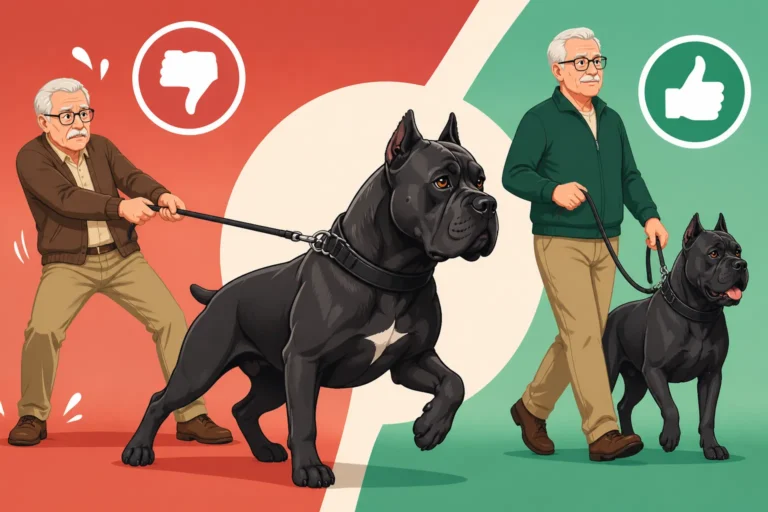
Whether a Cane Corso Guards the Children Too
The idea of a powerful, loyal Cane Corso standing guard over your precious children is a vision many prospective owners hold dear. It’s a comforting image, conjured from tales of ancient guardians and the breed’s formidable presence. However, the reality of living with a giant, protective breed like the Cane Corso and young children is far more complex than a simple fairytale. This guide will help you understand the true nature of their guardian instincts, how they interact with children, and the immense responsibility involved in ensuring a safe, harmonious home for everyone.
Understanding the Cane Corso's Guardian Instinct
The Cane Corso is, at its heart, a protector. They were bred for centuries in Italy to guard property, livestock, and their human families. This isn't a casual trait; it's deeply ingrained in their genetic makeup, a powerful instinct that manifests in their watchful nature and impressive physical presence. But when it comes to children, this instinct needs to be understood and carefully managed, rather than blindly trusted.
The Nature of Their Protection
When we talk about a Cane Corso's "guarding," it usually means their tendency to survey their environment, alert to perceived threats, and be prepared to act if their territory or family unit is challenged. This might look like a deep, rumbling bark at the mail carrier, a watchful stance when a stranger approaches the fence, or a calm, confident presence by your side in public. This protective drive is a double-edged sword when children are involved. While they are often incredibly tolerant and gentle with their family's children, their protective instinct isn't always about "guarding for the children" in a cuddly, gentle way.
It's more about guarding the entire family unit and the territory those children inhabit. Sometimes, this can mean an adult Cane Corso will position itself between a child and a stranger, or bark at someone it perceives as a threat to a child. The challenge arises when a dog’s natural instincts misinterpret innocent actions, or when their guarding behavior becomes possessive of the children themselves. We've seen situations where a Cane Corso becomes intensely focused on "protecting" a child, even from another parent, a visiting grandparent, or other dogs, leading to resource guarding of the child. This is not the benevolent protection most people envision; it's a dangerous path towards potential reactivity.
When Instinct and Children Collide
The robust guarding instincts of a Cane Corso can become problematic if not carefully channeled and managed. Children, especially young ones, are often unpredictable – they run, scream, play-fight, and make sudden movements. A Cane Corso, even one that adores your kids, might misinterpret these actions. A child's wrestling match with a friend could be seen as an attack, triggering a protective response that is swift and powerful. This is not because the dog is "bad" or aggressive, but because its deeply ingrained instinct kicks in without the nuanced human understanding of the situation.
Another common collision point is resource guarding of the children. This is where the dog begins to see the children as a "resource" to protect, similar to how it might guard its food bowl or a favorite toy. If the dog decides it is responsible for the children's safety, it might begin to block other adults, children, or even pets from approaching, growling or posturing defensively. Imagine a Cane Corso placing itself between your child and their friend, preventing interaction because it feels the need to "protect." This can lead to a very stressful and potentially unsafe home environment. It's crucial to establish yourself as the ultimate protector and decision-maker for your children, not your dog. Whether a Cane Corso Should Be Corrected for Growling is a great resource for understanding dog communication in these scenarios.
Setting Up for Success: Management and Training
To navigate the powerful instincts of a Cane Corso in a home with children, proactive management and consistent training are not just advisable; they are absolutely essential. Relying solely on the hope that your dog will instinctively be "good" with kids is a recipe for disaster. You need to build a framework of safety and clear expectations.
Creating a Safe Environment
The golden rule for any guardian breed, and especially a Cane Corso, living with children is never leave them unsupervised. This means if you step out of the room, even for a moment, the dog should either come with you, be in its crate, or behind a secure barrier. This isn't a sign of mistrust; it's responsible ownership. Even the most well-behaved dog can react unpredictably in a split second, and with a Cane Corso's size and strength, those reactions can have serious consequences.
Physical barriers are your best friends. Baby gates, secure kennels, and crates (you can find robust, large-breed crates on platforms like Amazon) create essential boundaries that protect both your children and your dog. These barriers allow the dog to have its own safe space, away from the constant stimulation of children, and prevent accidental interactions when you cannot actively supervise. Teaching children to respect the dog's space, especially when it's resting or eating, is just as important. They need to understand that when the dog is in its crate or on its place cot, it's off-limits. You might find our post, Supervising a Cane Corso With Children on the Floor, offers more practical advice on daily supervision.
Foundation Training for a Family Guardian
Before you even think about integrating a Cane Corso into a family with children, a solid foundation of obedience training is non-negotiable. Commands like "sit," "stay," "down," "come," and especially "place" are paramount. The "place" command, in particular, teaches your dog to go to a designated spot and remain there calmly, which is invaluable when visitors arrive, during mealtimes, or when children are playing rambunctiously. We delve deeper into this specific command in Teaching a Cane Corso to Hold a Place Cot.
This training needs to start from puppyhood, even before you bring the pup home, by understanding the commitment required. Desensitization and broad, positive socialization are also critical. Your Cane Corso needs to be exposed to a wide variety of people, sounds, environments, and other animals in a controlled and positive way during its critical socialization window. This helps them learn what is normal and not a threat, reducing the likelihood of over-the-top reactions. Programs like BAXTER & Bella offer structured online training that can guide you through these crucial early stages, providing consistency and expert advice right from your living room. Remember, a well-trained dog is a safe dog, and a well-socialized dog is less likely to view innocent interactions as threats. This commitment to consistent training is part of The Structure a Cane Corso Needs Every Single Day.
Managing Specific Scenarios with Children
The theoretical ideal of a Cane Corso with children needs to translate into practical, day-to-day management. This involves being extremely proactive in how you orchestrate interactions and recognizing potential red flags before they escalate.
Interactions with Known Children
When your Cane Corso interacts with your own children, these moments must always be structured and fully supervised. Teach your children how to behave around the dog – no pulling ears, riding the dog, or invading its personal space when it's resting. Simultaneously, teach your dog to be calm and respectful around children. This means no jumping, body-slamming, or mouthing. Cane Corsos are big, powerful dogs, and even playful antics can accidentally injure a small child. Consistent training to stop these behaviors is vital. If your Cane Corso has a tendency to be overly exuberant, our article The Cane Corso That Knocks Small Children Over provides helpful strategies, and you can also find more general tips in Teaching a Cane Corso Not to Body Slam.
Practicing polite greetings and teaching your dog to settle quietly next to a child, rather than hovering protectively, helps reinforce appropriate behavior. Reward calm, gentle interactions lavishly. If your dog gets too excited or intense, calmly separate them or send the dog to its "place" to settle down before resuming interaction. The goal is a respectful coexistence, not a free-for-all.
Handling Visiting Children and Strangers
This is often where the protective instincts of a Cane Corso can become most challenging. When visiting children or strangers enter your home, your Cane Corso should always be on a leash, in its crate, or in a separate room behind a secure barrier. It is unfair and potentially dangerous to expect your Cane Corso to differentiate between a family member and a perceived threat when new people, especially noisy, excited children, enter its territory. This is particularly true if the dog is still learning its boundaries.
The "place" command is a lifesaver here. Instead of having your dog bark aggressively at the door or hover anxiously, you can send it to its designated spot. This allows it to be part of the household without being directly in the thick of potentially overwhelming new interactions. It also allows you to control greetings on your terms, showing your dog that you are in charge of assessing new arrivals. Our post A Cane Corso Meeting Guests at the Front Door offers further guidance on managing these crucial moments. If you plan to introduce your dog to new people, do so calmly, one at a time, with the dog on a leash and you in control, rewarding calm, neutral behavior.
Recognizing and Redirecting Problem Behaviors
Learning to read your Cane Corso's body language is paramount. Signs of stress, over-arousal, or guarding can be subtle: a stiff body, a hard stare, growling, lip licking, yawning, or turning its head away. These are all warnings that the dog is uncomfortable or about to react. Never punish a growl; a growl is a dog's way of saying "I'm uncomfortable, please stop." Punishing it teaches the dog to skip the warning and go straight to a bite. Instead, acknowledge the growl and immediately intervene by removing the dog from the situation or creating more space.
Redirect problem behaviors immediately with a calm, clear command. If your dog starts to get too focused on a child, call it to you, have it perform a known command like "sit" or "down," and reward it. Then, redirect its attention to an appropriate activity, like a puzzle toy or chew from Amazon, or a short training session away from the children. Consistency is key. Every time you redirect appropriately, you reinforce that you are the leader and you handle potential threats, allowing your Cane Corso to relax and trust your judgment.
The Long-Term Commitment to Safety
Bringing a Cane Corso into a family with children is not a "set it and forget it" endeavor. It requires a long-term commitment to vigilance, ongoing training, and a deep understanding of your dog's evolving needs.
Ongoing Education and Vigilance
Cane Corsos are not fully mature until they are typically two to three years old, meaning they go through a prolonged adolescence that can bring new behavioral challenges. A dog that was fine with children as a puppy might test boundaries or develop new guarding tendencies as it matures. This is why continuous training and refresher sessions are so vital. Think of it like a lifelong education for your dog. You might find our article Getting a Cane Corso Through Adolescence helpful in understanding this crucial developmental stage.
Stay vigilant, even with an older, seemingly reliable Cane Corso. A dog's behavior can change due to age, health issues, pain, or environmental stressors. Regularly assess their interactions with children, and if you notice any changes in temperament or guarding behaviors, address them immediately. Don't assume a problem will just "go away." Consult with a professional trainer or behaviorist if you're ever in doubt. Your family's safety depends on your proactive and informed approach.
Choosing the Right Cane Corso for a Family
The foundation of a safe family dog begins long before you bring a puppy home. If you have children, selecting a Cane Corso from an ethical, reputable breeder is paramount. Such breeders prioritize stable temperaments, health-test their breeding stock, and will be transparent about the personalities of their puppies and the parents. They should be able to tell you about the parents' temperaments around children and other dogs.
A good breeder will also spend time socializing their puppies and can help you select a puppy with a suitable temperament for a family environment – often, this isn't the most dominant or pushy puppy, but one that is confident, calm, and resilient. Avoid breeders who focus solely on "toughness" or appearance, or those who sell puppies without a contract or health guarantee. While DNA testing primarily covers genetic diseases, a reputable breeder's commitment to the health and temperament of their lines is often reflected in how thoroughly they screen their dogs and educate prospective owners. This due diligence is crucial for bringing a truly stable dog into a family with children.
Here’s a quick overview of how to prioritize safety:
| Aspect | Relying on Instinct (Risky) | Responsible Management (Safe) |
|---|---|---|
| Supervision | Assumes dog will always be good; intermittent watch | Constant, active supervision; never left alone with children |
| Boundaries | Dog has free roam of house; children can approach anytime | Gates, crates, "place" command; dog has dedicated safe space |
| Training Focus | Minimal obedience; hopes dog "figures it out" | Foundation obedience (recall, stay, place); ongoing reinforcement |
| Socialization | Limited exposure; dog interacts only with immediate family | Broad, positive exposure to diverse people, places, sounds |
| Managing Visitors | Dog freely interacts with guests, including children | Dog on leash, in crate, or separate room; controlled introductions |
| Interpreting Behavior | Punishes growling; ignores subtle stress signals | Understands dog body language; redirects before escalation |
| Children's Behavior | Allows children to treat dog like a toy; no rules | Teaches children respect for dog's space and boundaries |
Disclaimer
This article is for general informational purposes only and does not constitute professional advice. Laws, prices and regulations vary by location and change over time. Consult a qualified professional for guidance on your specific situation.