The Length of a Cane Corso’s Attention Span
One of the biggest frustrations Cane Corso owners face, especially in those early months, is feeling like their giant puppy simply isn't listening, or worse, completely tuning them out. You might be standing there, repeating a cue, while your massive pup stares intently at a squirrel, a leaf, or even just a particularly interesting patch of grass, making you wonder if they're ignoring you on purpose or if their brain just hasn't caught up to their body. This guide is here to shed light on the reality of a Cane Corso's attention span, what influences it, and how you can work with it to build a responsive, focused companion, rather than constantly battling for their focus.
Understanding the Cane Corso's Unique Focus
It's easy to assume that a dog as intelligent and powerful as a Cane Corso would have laser-like focus from day one, but the reality is far more nuanced. Their attention span isn't a fixed, unwavering thing; it's a dynamic trait influenced by their breed instincts, individual personality, and the environment they're in. Many owners mistake selective listening for a short attention span, and while the two can sometimes overlap, understanding the difference is key to effective training.
The Instinctive Guardian's Attention
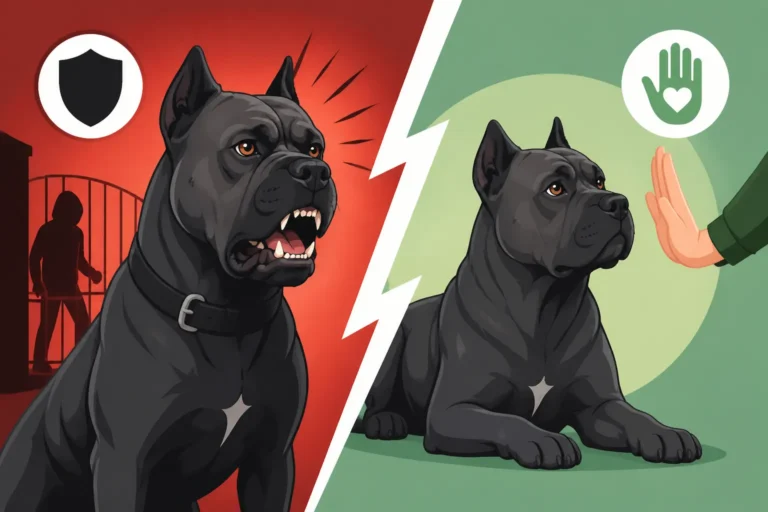
The Cane Corso, by nature, is a guardian breed. Their historical role involved patrolling vast properties, protecting livestock, and being acutely aware of their surroundings. This means their attention is often outward-focused, scanning for anything that might be out of place or a potential threat. While this is a desirable trait for a protection dog, it can be a challenge in a busy modern environment. A rustling bush, a distant siren, or a stranger walking by isn't just background noise to your Corso; it's information that needs to be processed, potentially acted upon. Their attention might seem scattered to us, but to them, they're simply doing their job of assessing the world around them. This inherent instinct means that simply asking for their attention in a distracting environment can feel like asking them to ignore their very purpose.
This deep-seated guardian instinct means that their "attention" isn't always directed at you. When you're trying to teach a new trick in the backyard, and they keep glancing at the fence line, they aren't being disrespectful. They're performing thousands of years of programmed behavior. It’s vital for owners to recognize this and not take it personally. Understanding this fundamental aspect of their breed helps manage expectations and shapes how you approach training and engagement. You're not just competing with a squirrel; you're competing with their ancestral programming to be vigilant.
Dispelling Misconceptions: "Stubborn" vs. "Selective"
Many Cane Corso owners, myself included, have muttered the word "stubborn" under their breath more times than they can count. It's an easy label to put on a dog that seems to defy your commands. However, more often than not, what appears as stubbornness is actually selective attention. A Cane Corso isn't necessarily ignoring you because they're being obstinate; they might simply be prioritizing something else they perceive as more important or interesting at that moment. This is especially true if the reward for paying attention to you isn't compelling enough, or if the distraction is incredibly high-value to them.
For example, if you call your Corso while they're deeply engrossed in a scent trail, their brain is likely sending signals that the smell is a far more rewarding experience than whatever you're offering. It's not malice; it's canine economics. They're making a choice based on perceived value. Acknowledging this difference is crucial because it shifts your approach from trying to "break" their stubbornness to making you the most compelling thing in their environment. This means being more engaging, using higher value rewards, and gradually increasing the difficulty of their environment during training. It's about building a partnership where they want to pay attention to you.
Key Factors Shaping Your Cane Corso's Focus
A Cane Corso's attention span isn't a static number, like a score on a test. It's a fluctuating quality that changes throughout their life and even throughout the day, depending on a myriad of internal and external factors. Understanding these elements can help you tailor your training and daily interactions to maximize their focus.
Age and Developmental Stages
Just like human children, Cane Corso puppies have much shorter attention spans than adult dogs. A young puppy, especially under four months old, might only be able to focus intensely for a few minutes at a time, if that. Their world is new, everything is exciting, and their brains are still developing the capacity for prolonged concentration. You might find that The Age a Cane Corso Puppy Starts Formal Training coincides with a slight increase in their ability to focus, but it's still fleeting. As they grow into adolescence (typically from around six months to two years), their attention span might fluctuate wildly. They're experiencing a second "fear period," hormonal changes, and a strong urge to test boundaries.
| Age Stage | Typical Attention Span (Approx.) | Key Characteristics | Training Focus |
|---|---|---|---|
| 8-16 Weeks | 1-3 minutes | Easily distracted, highly curious, short bursts of energy, rapid learning. | Very short, frequent sessions; positive reinforcement; exposure to novel sights/sounds. |
| 4-12 Months | 5-10 minutes (variable) | Adolescence begins, pushes boundaries, easily overstimulated, increasing strength. | Reinforce basics, introduce distractions gradually, consistent routine; Five Minute Cane Corso Sessions Twice a Day. |
| 1-2 Years | 10-15 minutes (variable) | Peak adolescence, high energy, testing limits, developing guardian instincts, some "selective hearing." | Advanced obedience, proofing commands, impulse control; continued socialization; mental enrichment. |
| 2+ Years (Adult) | 15-30+ minutes (with training) | Matures into stable guardian, capable of sustained focus in appropriate environments, strong bond with handler. | Refinement, complex tasks, maintenance of manners, advanced sports or work. |
During these developmental stages, it's crucial to adapt your expectations. Don't punish a puppy for having a short attention span; instead, capitalize on their brief moments of focus with high-value rewards and end the session before they lose interest. An adolescent Cane Corso might need more structure and consistency to help them navigate their turbulent phase and reinforce good habits. This is where programs like BAXTER & Bella can be incredibly helpful, offering structured lessons that account for these developmental shifts and provide guidance on how to keep your young Corso engaged without overwhelming them.
Environmental Distractions and Management
The environment plays an enormous role in how well your Cane Corso can focus. A quiet living room with no other animals or people is a much easier place for them to pay attention than a bustling dog park or a busy street corner. Every new smell, sound, or moving object is a potential distraction that can pull their focus away from you. For a Cane Corso, with their keen senses and guardian instincts, these environmental stimuli are often amplified. A distant car backfiring isn't just noise; it's something to investigate. A person walking by isn't just a person; it's a variable in their perceived territory.
Effective attention training often involves a progression: starting in a low-distraction environment and gradually introducing more complex settings as your Corso's focus improves. Trying to teach a complex command for the first time in a high-distraction area is setting both you and your dog up for failure. It's like asking a child to do their calculus homework in the middle of a carnival. Managing their environment means sometimes choosing to work in a quiet room, or using a long line in a secure, open field to practice recall before attempting it at the park. Remember, you want to set them up for success, not test their limits beyond what is fair at their current stage of training.
The Role of Training and Handler Consistency
Perhaps the most significant factor in a Cane Corso's attention span is the quality and consistency of their training. A dog isn't born knowing how to focus on a human in a world full of interesting distractions; it's a skill that must be taught and continually reinforced. Dogs, especially intelligent breeds like the Cane Corso, thrive on clear communication and predictable routines. If your commands are inconsistent, if your rewards are infrequent or unexciting, or if you only try to engage them when you need something, their motivation to pay attention will naturally wane.
Imagine if your boss only gave you clear instructions sometimes, and other times just vaguely hinted at what they wanted, and your paycheck was entirely unpredictable. You probably wouldn't be very motivated! It's the same for your Cane Corso. Consistent training, using positive reinforcement methods, helps them understand what's expected and makes you the source of all good things. The Structure a Cane Corso Needs Every Single Day includes dedicated training time, even if it's just a few minutes, to build and maintain that connection. A well-trained Cane Corso isn't just one that knows commands; it's one that chooses to pay attention to its handler, even when there are tempting distractions around. This takes time, patience, and unwavering consistency from everyone in the household.
Practical Strategies to Build and Sustain Attention
Improving your Cane Corso's attention span is not about force or intimidation; it's about building value in paying attention to you. It's a game you want them to want to play. The good news is there are many effective strategies you can employ to make yourself the most interesting and rewarding part of their world.
Keeping Training Sessions Short and Sweet
This is perhaps the most critical piece of advice, especially for puppies and adolescents. A Cane Corso, even as an adult, won't sustain peak focus for an hour-long training marathon. Instead, aim for multiple short sessions throughout the day. For a young puppy, sessions might be as brief as 1-3 minutes, focusing on just one or two cues. As they mature, you can extend this to 5-10 minutes, perhaps up to 15-20 minutes for a well-trained adult working on complex tasks. Five Minute Cane Corso Sessions Twice a Day can yield far better results than one long, frustrating session.
The key is to always end on a high note, before your Corso gets bored or makes a mistake. This keeps training fun and leaves them eager for the next session. If you push too long, you risk them tuning out, getting frustrated, or associating training with boredom, which is the opposite of what you want. Think of it as bite-sized learning that keeps their powerful brains engaged without overwhelming them. These short bursts of focus, when rewarded appropriately, build the habit of offering attention and checking in with you.
High-Value Rewards and Engagement
To compete with the fascinating smells, sights, and sounds of the world, you need to offer something truly enticing. Standard kibble might work in a quiet living room, but out in the real world, you'll need "high-value" treats – things like small pieces of cooked chicken, cheese, hot dogs, or liverwurst. Experiment to find The Reward a Cane Corso Actually Values most. Beyond food, engage with them! Use an excited tone of voice, praise enthusiastically, and incorporate play. A quick game of tug or a chase with a favorite toy can be an excellent reward for focus, especially for a working breed that enjoys interaction.
The element of surprise can also keep them hooked. Don't always make the reward predictable. Sometimes a treat, sometimes a toy, sometimes just enthusiastic praise. This keeps them guessing and more engaged. For many Cane Corsos, food is a powerful motivator, so don't be afraid to leverage that. Brands available on Amazon offer a wide variety of high-quality training treats that can be easily broken into small, potent rewards. Remember, the goal is to make you the most exciting thing around. If they're constantly looking to you for what amazing thing might happen next, their attention span will naturally lengthen.
Structured Play and Mental Stimulation
Physical exercise is crucial for a Cane Corso, but mental exercise is just as important for their attention span. A bored Cane Corso is an inattentive Cane Corso. Incorporate structured play that requires thought and interaction. Tug-of-war (with rules), fetch, hide-and-seek with toys or treats, and puzzle toys can all be fantastic for building focus. These activities teach them to engage with you or a task for a sustained period. Toys from brands available on Amazon, like Kong or Nina Ottosson puzzle toys, can provide excellent mental stimulation.
Scent work is another incredible tool. Allowing your Cane Corso to use their powerful nose in a directed way, like searching for hidden treats, can be incredibly enriching and mentally tiring. This taps into their natural instincts and channels their energy into a focused activity. Even just 10-15 minutes of dedicated mental work can be as tiring, and more engaging, than a longer, less focused physical walk. Remember, a mentally satisfied Cane Corso is often a more attentive and well-behaved Cane Corso.
Integrating Attention Work into Daily Life
Improving your Cane Corso's attention span isn't just about formal training sessions; it's about weaving focus-building activities into your everyday routine. This breed demands consistency, and every interaction is a chance to reinforce the value of paying attention to you.
Setting Realistic Expectations for a Powerful Breed
It's easy to look at perfectly behaved dogs on social media or in dog shows and feel discouraged by your own Cane Corso's occasional lapse in focus. But remember, they are a powerful, independent-thinking guardian breed with strong instincts. Expecting them to have the attention span of a border collie or a golden retriever, especially in a distracting environment, is often unrealistic and sets both of you up for frustration. Their attention might not be constant, but when you have it, it is often intense and unwavering.
Instead, celebrate the small victories. Did they look at you for an extra second longer than usual before diving for that dropped crumb? Praise them! Did they check in with you on a walk before reacting to a squirrel? Reward that! Understand that there will be days when their focus just isn't there, and that's okay. Pushing through those moments often backfires. On those days, scale back your expectations, focus on simple, known cues, and maybe just enjoy a sniffy walk together instead of intensive training. Your relationship with your Cane Corso is a marathon, not a sprint, and building consistent attention is a continuous process.
When to Seek Professional Guidance
While many attention challenges can be addressed with consistent positive reinforcement and environmental management, there are times when professional help is invaluable. If your Cane Corso's lack of attention is leading to serious behavioral issues, such as reactivity on leash, an inability to focus even in low-distraction environments, or extreme difficulty with recall, it might be time to consult with an experienced professional. A certified professional dog trainer or a canine behaviorist can observe your dog, identify underlying issues, and develop a customized training plan.
Sometimes, what appears to be an attention problem might stem from anxiety, over-arousal, or a lack of appropriate socialization. A professional can help diagnose these root causes and provide targeted strategies. Look for trainers who specialize in guardian breeds and use modern, positive reinforcement techniques. Organizations like BAXTER & Bella also offer extensive resources and support that can supplement in-person training. Don't view seeking help as a failure; view it as a proactive step to ensure your Cane Corso reaches their full potential as a well-adjusted, attentive companion. Investing in a professional can truly make a difference in understanding and shaping your powerful dog's focus.
Disclaimer
This article is for general informational purposes only and does not constitute professional advice. Laws, prices and regulations vary by location and change over time. Consult a qualified professional for guidance on your specific situation.