Scent Work and Sniff Walks for a Cane Corso
Many Cane Corso owners find themselves scratching their heads, wondering why their powerful, impressive dog still seems to have an abundance of restless energy, even after a good romp in the yard or a brisk walk. It’s a common misconception that these intelligent, working dogs only need physical exercise. The truth is, their formidable brains crave stimulation just as much, if not more, than their bodies. This guide will take you through the wonderfully enriching world of scent work and sniff walks, revealing how you can tap into your Cane Corso's incredible natural abilities and provide them with the deep mental engagement that leads to a truly content and well-adjusted companion.
The Cane Corso's Instinctual Drive: Beyond Just Exercise
It’s easy to fall into the trap of thinking a big dog needs big physical activity, and while that's certainly true to an extent, it's rarely the complete picture. You might be spending hours walking, playing fetch, or even running with your Cane Corso, only to observe them still pacing, nudging you for attention, or finding less-than-desirable ways to entertain themselves once you're back home. This isn't a sign of defiance; it's often a clear indicator that their keen minds aren't getting the workout they truly need.
Why Physical Exertion Isn't Always Enough
Imagine trying to fall asleep after a physically exhausting day, but your brain is still buzzing with unanswered questions or unsolved problems. That’s a bit like what some of our Cane Corsos experience. Their history as guardian dogs and working companions meant they weren’t just brawn; they were thinkers, problem-solvers, and strategists. A simple walk, while good for their legs, might not engage the complex neural pathways that made them such effective partners in their traditional roles. If your Cane Corso is still getting into mischief, chewing inappropriate items, or exhibiting nuisance barking even after you feel you've "exercised" them, it's a strong signal that they're mentally understimulated. They need outlets that challenge their cognitive abilities and satisfy their deep-seated drives.
Tapping into Their Ancient Hunting and Guarding Roots
The Cane Corso's lineage stretches back to ancient Roman war dogs, and later, they became indispensable farm dogs in rural Italy, guarding property, managing livestock, and even participating in hunts for wild boar. These were not passive roles. They required incredible focus, discernment, the ability to assess situations, and a highly developed sense of smell to track, alert, and protect. When we bring these incredible animals into our modern suburban or urban environments, we must actively seek ways to honor and channel these powerful, innate drives. Scent work, in its many forms, is a perfect avenue for this. It gives them a "job" that feels profoundly natural and fulfilling, allowing them to use their most powerful sense in a constructive and engaging way. If you’re curious about their origins, The Roman War Dog Behind the Cane Corso offers fascinating insights into their history and purpose.
Sniff Walks: A World of Discovery for Your Cane Corso
Forget the idea of a brisk, power-walk where you're both focused on covering as much ground as possible. A sniff walk is a fundamentally different experience, a deliberate slowing down that transforms a routine outing into an incredible olfactory adventure for your Cane Corso. It’s about relinquishing control of the pace and route, allowing your dog to dictate the journey through their nose, and truly understanding that their sense of smell is their primary and most profound way of experiencing the world around them.
Letting Your Cane Corso Lead the Nose
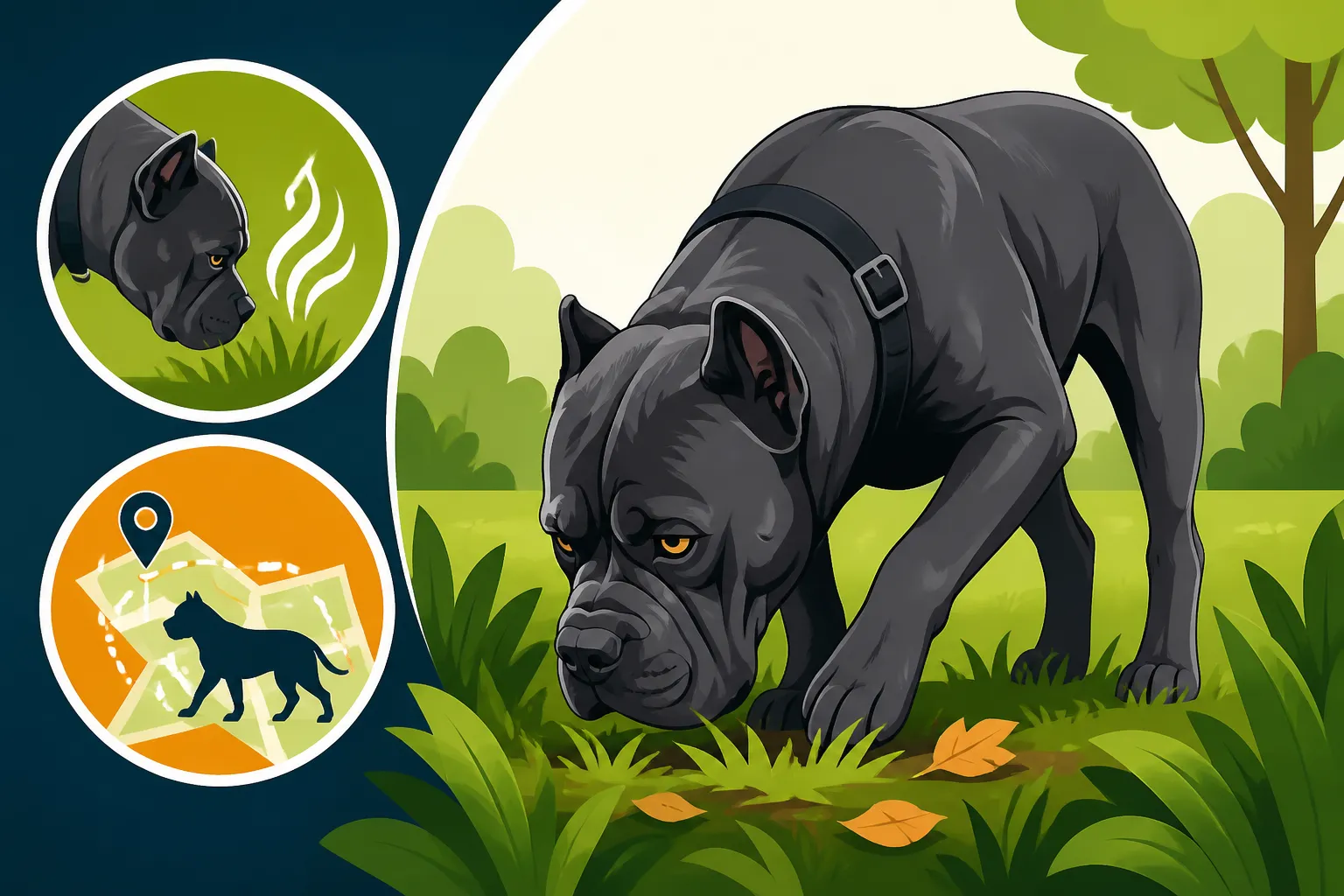
Think of your Cane Corso's nose as an incredibly sophisticated, real-time newsfeed. Every single sniff is a download of complex information: who has been here, what they’ve eaten, where they might be headed, even their emotional state. On a sniff walk, your role shifts from conductor to quiet observer. You’re giving your dog the invaluable gift of time – time to pause for minutes at a particularly fascinating patch of grass, to meticulously investigate a lamppost that holds a world of stories, or to follow a faint, invisible trail along the sidewalk. This can feel agonizingly slow, especially if you’re accustomed to a more goal-oriented walk, but the mental and emotional satisfaction your dog gains is immeasurable. I often find that using a longer leash, perhaps a 10-15 foot biothane lead, gives my Cane Corso the freedom to explore deeply without feeling constantly reined in, while still maintaining safety and connection. While the focus changes, don't forget that Leash Manners Before a Cane Corso Hits Ninety Pounds is still crucial for managing a powerful dog in any environment.
The Profound Benefits of Mindful Sniffing
The advantages of incorporating sniff walks into your Cane Corso's routine extend far beyond mere mental stimulation. They are incredibly powerful stress-reducers. When a dog is deeply immersed in sniffing, processing all those intricate odors, their cortisol levels—the stress hormones—can actually decrease, leading to a visibly calmer, more relaxed state. For a formidable and often intense breed like the Cane Corso, this can be an absolute game-changer, helping them to decompress and settle. These walks also build immense confidence as your dog successfully "solves" the invisible puzzles presented by the myriad smells. Moreover, they deeply strengthen the bond between you and your Cane Corso, as you are actively supporting and validating one of their most fundamental and natural behaviors. My own experience has shown that after a good, unhurried sniff walk, my Cane Corso returns home looking far more tired and genuinely content than after a much longer, faster-paced physical exercise session, despite exerting less physical energy.
Getting Started with Scent Work: Fun for Beginners
Bringing structured scent work into your home might sound daunting, but it doesn't require any specialized equipment or a degree in canine behavior. You can begin with incredibly simple, engaging games that leverage your Cane Corso's natural curiosity and powerful nose, turning everyday items and spaces into exciting challenges. The key is to start easy, build success, and keep it fun!
"Find It" Games: The Foundation of Scent Work
The "Find It" game is arguably the perfect entry point into formal scent work. Start with your Cane Corso in the room, watching you. Take a high-value, small, soft treat – something really enticing – and toss it just a few feet away, making sure they see where it lands. Enthusiastically say "Find It!" As soon as they go to it and eat it, praise them lavishly. Repeat this several times, always ensuring they see the treat being hidden, so they grasp the concept of "searching." Once they understand, you can gradually increase the difficulty: hide the treat behind a chair leg, under a towel, or tucked beneath a small, overturned bowl. The golden rule here is to make it easy enough that they always succeed, which builds their confidence, enthusiasm, and understanding of the game. As they progress, you can start hiding multiple treats or moving to other rooms. This game not only engages their problem-solving skills but also deeply satisfies their innate desire to forage.
Introducing Scent Articles and Boxes
Once your Cane Corso is a master of the basic "Find It" game, you can introduce the concept of a "scent article." This could be a cotton swab with a drop of a specific essential oil (like birch, anise, or clove, which are commonly used in competitive scent work, always diluted and introduced cautiously), or even just a unique household item that you designate as the "target scent" and use only for these games. The immediate goal isn't to become a detection dog, but to teach them to seek out a specific smell. Start by placing the scent article right next to a treat, then hiding them together. Gradually, you’ll separate the treat from the article, so your dog has to rely on the smell of the article to earn the reward.
A fantastic way to practice this is with cardboard boxes. Gather a few identical boxes – perhaps a multi-pack you ordered from Amazon – and set them up in a line. Place the scent article and a high-value treat in one box, and leave the others empty. Encourage your Cane Corso to sniff each box, rewarding them generously only when they investigate or indicate the correct box. This game teaches discrimination and deep focus. Integrating these kinds of stimulating activities can significantly enhance The Structure a Cane Corso Needs Every Single Day, providing mental exercise alongside physical routines.
Advancing Your Cane Corso's Scent Skills
Once your Cane Corso is confidently finding hidden treats and successfully identifying a specific scent article, you're ready to explore more complex and deeply rewarding scent challenges. These advanced exercises build upon their foundational skills, pushing their mental capabilities further and truly harnessing the incredible genetic gifts of this magnificent breed.
Trailing and Tracking: Following a Scent Trail
Trailing and tracking are perhaps the most instinctually satisfying forms of scent work for a Cane Corso, as they directly tap into their ancestral abilities to follow a ground scent. This activity involves teaching your dog to follow a specific scent left by a person or an animal. To begin, have a family member walk a short, straight line across a grassy area, dropping a very high-value, pea-sized treat every few steps. Immediately after they've completed the "track," put your Cane Corso on a long line and encourage them to follow the trail, using a consistent cue like "Track!" or "Find!" Reward them with immense praise and the dropped treats as they follow the path.
As your dog grasps the concept, you can gradually increase the length of the trails, introduce gentle turns, and space the treats out more widely, requiring them to work harder to maintain the scent. Ultimately, the goal is for them to follow a longer, more complex trail to find a "missing person" (your family member) or a specific hidden article at the end. This is a phenomenal way to develop sustained focus, mental endurance, and deep problem-solving skills, and it's incredibly bonding for both handler and dog.
Object Discrimination: Finding Specific Scents
This takes the basic scent article game to a much more sophisticated level. Instead of merely finding a hidden scent, your Cane Corso learns to distinguish one very specific target scent from a variety of other distracting odors. For example, if your chosen target scent is birch essential oil on a cotton swab, you might set up several cotton swabs in a grid: one with birch, others with different essential oils (like anise or clove), and some with no scent at all. Your Cane Corso's challenging task is to identify and indicate only the birch-scented swab, ignoring all the others.
This type of work demands incredible concentration, a refined understanding of specific odors, and clear communication from your dog about what they've found. It's often performed in a grid search pattern, utilizing multiple containers or articles. You can find dedicated scent work kits online that include the common target oils and training aids, allowing you to train with recognized scents used in actual competitive trials. This focused, detailed work truly showcases What a Cane Corso's Guardian Instinct Actually Is, demonstrating their capacity for intense focus and discernment.
Tools and Resources for Scent Work Success
Embarking on or progressing with scent work for your Cane Corso doesn't need to be complicated or expensive. A few basic tools and access to the right guidance can significantly enhance the training experience, ensuring both effectiveness and safety for your powerful companion.
Essential Gear for Scent-Focused Activities
For sniff walks and tracking, a comfortable, well-fitting harness is highly recommended over a collar. It distributes pressure evenly across your Cane Corso's chest, eliminating any strain on their neck if they pull intensely while investigating a particularly fascinating scent. A long line, such as a 15-foot or 20-foot biothane leash, is also incredibly useful. It provides your dog with ample freedom to explore and follow scents without you having to constantly keep pace or worry about them darting off. These can easily be found on online marketplaces like Amazon.
For indoor scent games, small, high-value, and easily consumable treats are an absolute must. Think soft, stinky morsels that your Cane Corso can eat quickly without losing focus. You’ll also need various containers – empty cardboard boxes (the more varied, the better), plastic tubs, or even a muffin tin – to hide treats or scent articles. A yoga mat or a piece of carpet can help delineate a designated search area indoors. If you decide to delve into specific scent work (like training for specific essential oils), many online retailers offer starter kits that include target oils and associated training aids, perfect for home-based practice.
When to Seek Professional Guidance and Online Resources
While you can certainly initiate many scent work activities on your own, a bit of professional guidance can be invaluable, especially as you transition to more advanced techniques like tracking or formal scent discrimination. Many certified dog trainers now offer scent work classes, both in-person and virtually, which can provide structured lessons, valuable feedback, and help you navigate common challenges. These classes help you learn to "read" your dog's subtle indications and refine your own handling skills.
Additionally, a wealth of excellent online training platforms offers step-by-step video tutorials, written guides, and sometimes even community forums for support. Comprehensive programs, such as those offered by BAXTER & Bella, include extensive sections on mental enrichment and nose work within their broader dog training curricula. Such resources can be incredibly beneficial for Cane Corso owners seeking detailed, professional instruction from the convenience of their home, helping them to better understand their dog’s cues and progress efficiently. Consulting What to Look For in a Cane Corso Trainer might be helpful if you're considering an in-person instructor.
Integrating Scent Work into Your Cane Corso's Daily Life
Making scent work a consistent part of your Cane Corso's routine is about achieving a harmonious balance and understanding that mental engagement is just as, if not more, crucial than sheer physical exercise. It's not about replacing walks entirely, but rather enhancing them and providing diverse outlets for their extraordinary sensory and cognitive abilities.
Balancing Physical Exercise with Mental Engagement
Think of your Cane Corso’s daily regimen as a well-rounded fitness plan that encompasses both body and mind. While a couple of vigorous physical walks, runs, or energetic play sessions are absolutely essential for their physical health and to burn off excess energy, it’s vital to intersperse these with dedicated sniff walks or short, focused indoor scent games. For instance, you might start the day with a brisk, structured walk, then dedicate a portion of the afternoon to a leisurely sniff walk, or engage in a quick "Find It" game before dinner.
The key to success is variety and consistency. By integrating both types of activities, you are not only ensuring your Cane Corso is physically tired but also deeply satisfying their profound cognitive needs. This holistic approach can lead to a significantly calmer, more content dog who is less prone to developing destructive behaviors born out of sheer boredom or pent-up mental energy. Remember, consistent engagement is paramount, and a Cane Corso typically thrives on Ninety Minutes a Day and a Cane Corso's Mind dedicated to meaningful interaction and activity, combining both physical and mental stimulation.
Troubleshooting Common Scent Work Challenges
It’s perfectly normal to encounter a few hurdles as you introduce your Cane Corso to scent work. Some dogs, especially those new to the concept, might initially be overly excited, attempting to use their eyes to find treats rather than truly engaging their noses. In these instances, make your treats even smellier and your hiding spots undeniably easy, gently guiding them with your hand or body toward the scent. Others might become frustrated if the task is too difficult; if you observe signs of disengagement or stress, immediately simplify the game. Always aim to end each session on a high note, with a successful and rewarded find, reinforcing the positive association.
Another common challenge is a Cane Corso attempting to eat the scent article itself. If this occurs, switch to using non-food items that have the target scent applied to them (like a rubber toy or a specific fabric swatch), and then reward them with a separate, high-value treat after they successfully indicate the correct scented item. Patience, as in all aspects of training a Cane Corso, is your most valuable tool. Remember that you are building a new skill set and strengthening your bond, and every small success, no matter how minor, is a significant win for both you and your impressive companion.
| Scent Work Activity | Description | Primary Benefit for Cane Corso | Recommended Gear |
|---|---|---|---|
| Sniff Walk | A leisurely, leashed walk focused solely on allowing your dog to thoroughly investigate environmental scents. | Reduces stress, provides deep mental satisfaction, builds confidence through discovery, and enhances relaxation. | Comfortable chest harness, long line (10-20 ft) for freedom of exploration. |
| "Find It" Games | Hiding high-value treats around the house or yard, encouraging your dog to locate them using their nose. | Introduces basic scent association, develops problem-solving skills, and builds focused attention. | Small, high-value, soft treats; various household hiding spots (under towels, boxes, furniture). |
| Scent Article/Box Game | Your dog identifies a specific target scent (e.g., essential oil on a cotton swab) among several distracting, empty, or differently-scented containers. | Develops precise scent discrimination, sharpens concentration, and fine-tunes their nose work abilities. | Cotton swabs, diluted essential oils, multiple identical cardboard boxes or plastic containers. |
| Trailing/Tracking | Your dog follows a ground-level scent trail left by a person or a hidden object, often over longer distances. | Satisfies deep instinctual drives, dramatically improves focus and mental endurance, and strengthens handler-dog bond. | Long line (15-30 ft), high-value treats, a designated "track layer" (person creating the trail). |
Disclaimer
This article is for general informational purposes only and does not constitute professional advice. Laws, prices and regulations vary by location and change over time. Consult a qualified professional for guidance on your specific situation.