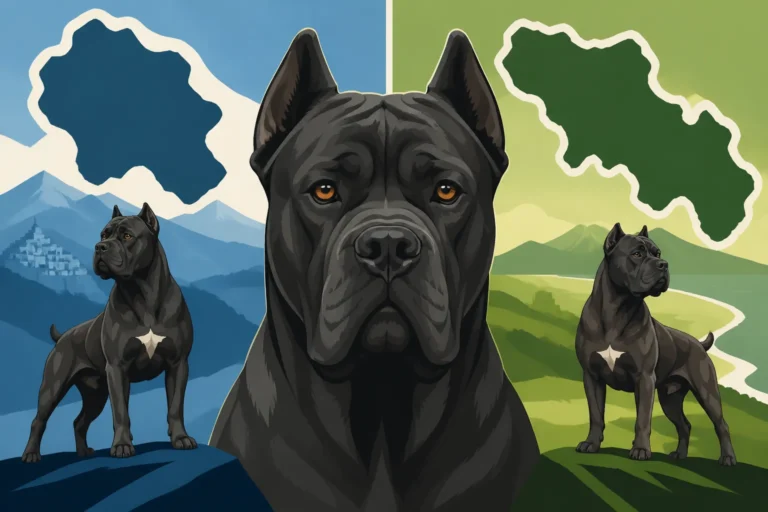
Why Breeders Call a Gray Cane Corso Blue
A gray Cane Corso can look unmistakably blue in certain light, even though the breed’s recognized color is called gray. The nickname comes from how diluted black pigment appears across the coat—not from blue dye or a separate blue pigment. This guide explains the color genetics, how gray differs from brindle and formentino, and what to check when choosing a puppy.
Why a gray Cane Corso is called blue
The nickname describes an appearance, not a separate color
“Blue” is a familiar dog-world term for a coat that looks like slate, steel, or charcoal gray. It is not a literal description of the pigment, and it does not mean the dog has blue fur. On a Cane Corso, people often use “blue Cane Corso” and “gray Cane Corso” to describe the same general coat color.
That difference between everyday language and breed terminology can make puppy listings confusing. A breeder may advertise a “blue” puppy because buyers recognize the term, while a breed description or show standard may refer to the color as gray. If you are comparing dogs, ask what the breeder means by blue and request clear, natural-light photos of the puppy and its parents.
The label also says nothing by itself about a dog’s quality, temperament, or health. A striking coat can catch your eye, but it cannot tell you whether a puppy was responsibly bred or whether its parents had appropriate health screening. For the broader question of how much coat color can tell you, see Whether Coat Color Predicts Anything About a Cane Corso.
How diluted black pigment creates a gray coat
A gray coat is generally associated with dilution of black pigment. In simple terms, the pigment that would appear black is distributed or expressed in a way that makes the coat look lighter and gray. That is why gray Cane Corsos can range from a pale, silvery shade to a deep charcoal that looks almost black indoors.
Breeders and geneticists may use more precise terms than the casual word “blue.” The key point for an owner is that the gray appearance has a genetic basis; it is not created by grooming, diet, or a special product. The shade can look different depending on lighting, the dog’s age, and the surrounding colors in a photograph. A coat that appears dark gray in a shaded yard may look much lighter in direct sun.
The word “blue” is used for similar gray shades in several dog breeds, but it does not mean every breed has the same inheritance patterns or the same health risks. It is better not to assume that information about “blue” dogs in another breed applies directly to Cane Corsos. If you want a broader look at the breed’s coat palette, Black, Gray, Fawn and Red Cane Corsos explains the main color families.
Telling gray apart from brindle and formentino
Gray can be solid or patterned
A solid gray Cane Corso has an overall gray-looking coat, though the shade may vary across the body. A gray brindle dog, by contrast, has a gray base with darker stripes or streaks. Those markings can be subtle, especially when the coat is dark or the lighting is poor, so a quick glance at a small photo may not show the pattern clearly.
Check the shoulders, ribs, and sides in daylight. Brindle markings often become easier to see when you look across the coat rather than straight at it. A breeder should be able to describe whether a puppy is solid gray, gray brindle, or another recognized color pattern, and should be willing to show more than one photograph if the pattern is difficult to make out.
People sometimes call a brindle dog “blue” because its overall impression is cool gray, even when the coat is patterned. That makes the label less useful on its own. If you are comparing a solid gray puppy with a striped one, How to Tell a Brindle Cane Corso From a Solid One offers a useful way to think about the distinction.
Formentino is not simply another name for gray
Formentino is a fawn-toned coat with gray or blue-gray pigment in areas such as the mask and nose. It can look pale and muted, so it is sometimes mistaken for a light gray dog in photos. But the overall coat impression is different: a gray dog has a gray coat, while a formentino dog has a fawn or tan base with gray-toned features.
Lighting can make these colors especially hard to judge online. Warm indoor bulbs may make a gray coat look brownish, while bright sunlight can wash out a fawn coat. A photo taken on a phone can also shift the color depending on exposure and screen settings. When the exact color matters to you, look at the dog in person or ask for recent photos taken outdoors without filters.
Formentino is a color description, not a guarantee of health or personality. The same is true of gray. To explore that specific color family in more detail, see What Formentino Means on a Cane Corso and Whether a Formentino Cane Corso Lives as Long.
| Coat appearance | What you may notice | Common point of confusion |
|---|---|---|
| Solid gray | A coat ranging from silver-gray to charcoal | Often advertised as blue |
| Gray brindle | A gray base with darker striping | Stripes can be hard to see in dark coats or poor lighting |
| Formentino | A pale fawn or tan base with gray-toned features | May look grayish in cool light or edited photos |
| Black brindle | A dark base with lighter brindle markings | May be mistaken for solid black in a small image |
What color can and cannot tell you about health
Do not assume every gray Cane Corso has a skin problem
Questions about gray coats often lead to concerns about skin, hair loss, or allergies. It is reasonable to pay attention to your dog’s skin, but it is not sound to assume that a gray Cane Corso will automatically develop a coat-related condition. Coat-color concerns vary between breeds, and a color label alone cannot diagnose an individual dog.
Watch the dog in front of you rather than relying on a prediction based on color. Persistent itching, recurring sores, thinning hair, or irritated patches deserve attention regardless of whether a Cane Corso is gray, black, fawn, or brindle. A veterinarian can assess the symptoms and help distinguish among causes such as parasites, infection, irritation, or allergies. For more on the breed-specific questions owners raise, read Why a Gray Cane Corso Gets More Skin Trouble.
Everyday care should also stay straightforward. Brush as needed, check the skin while grooming, and use products suited to your dog rather than trying treatments based on coat color alone. If you are comparing ingredient labels for shampoos or basic grooming supplies, retailers such as Chewy may be one place to look; ask your veterinarian before using a medicated product for a skin problem. Chewy product listings can help you compare labels, but a product listing is not a diagnosis or a substitute for veterinary guidance.
Health screening matters more than a color promise
A breeder who focuses heavily on “rare” or “blue” coloring but has little to say about health testing is giving you a reason to ask more questions. Ask about the parents’ health records, temperament, and the screening recommended for the breed. You can also request the registered names of the sire and dam so you can check records rather than relying only on a verbal assurance.
Be cautious of claims that a particular color guarantees a longer life, better health, or a special temperament. Those claims turn a visible trait into a promise it cannot support. The same goes for claims that all gray Cane Corsos have a specific health problem. A responsible conversation should be specific about the individual dogs and their documented health, not built around sweeping statements about color.
If a breeder provides grooming recommendations, ask what signs would warrant a veterinary visit instead of simply suggesting a product. Chewy may carry routine coat-care supplies, but persistent itching or hair loss needs professional assessment. For a closer look at what screening records mean, What a Cane Corso CHIC Number Actually Certifies explains the role and limits of a CHIC number.
Choosing a gray Cane Corso puppy with clear expectations
Ask useful questions about the puppy and its parents
When you contact a breeder, ask whether the puppy is solid gray or gray brindle and how the breeder describes its color on the litter paperwork. Ask to see recent photos of the puppy in natural light and, if possible, photos of both parents. A breeder should be able to explain the color without using it to distract from questions about health, temperament, and care.
It is also worth asking what the puppy has experienced so far: handling, household sounds, short periods away from littermates, and age-appropriate introductions to people and environments. Color is easy to see in a photo; the early care behind a confident, well-adjusted dog takes more discussion. A thoughtful breeder should welcome questions and ask you about your home and experience, too.
Do not let urgency or color scarcity pressure you into sending a deposit before you have reviewed the breeder’s practices and paperwork. “Blue” may be a popular search term, but popularity does not make a puppy a good fit. For a wider view of how coat shades are described, see Why Breeders Call a Gray Cane Corso Blue—and keep your focus on the individual dog, its parents, and the breeder’s transparency.
Make the decision around the whole dog
A Cane Corso is a large, powerful working breed, so choosing one involves more than liking its coat. Think about the daily training, exercise, socialization, grooming, and veterinary care you can realistically provide. A gray puppy will grow into the same kind of substantial, committed companion as a black, fawn, or brindle one.
If skin care is one of your concerns, build a simple routine: look over the coat regularly, note changes, and contact your veterinarian when symptoms persist or worsen. For ordinary grooming supplies, you can compare products sold through Chewy or another retailer, but avoid treating a suspected condition without professional advice. Chewy is a shopping option, not a reason to choose a puppy or a substitute for a veterinary plan.
The most useful takeaway is simple: “blue” is a common nickname for a gray-looking Cane Corso. It helps describe appearance, but it does not tell you everything about the dog. Ask what the breeder means by the term, look at the coat in reliable lighting, and weigh health, temperament, and responsible breeding more heavily than color.
Disclaimer
This article is for general informational purposes only and does not constitute professional advice. Laws, prices and regulations vary by location and change over time. Consult a qualified professional for guidance on your specific situation.