Giovanni Bonnetti and the Early Cane Corso Breeders
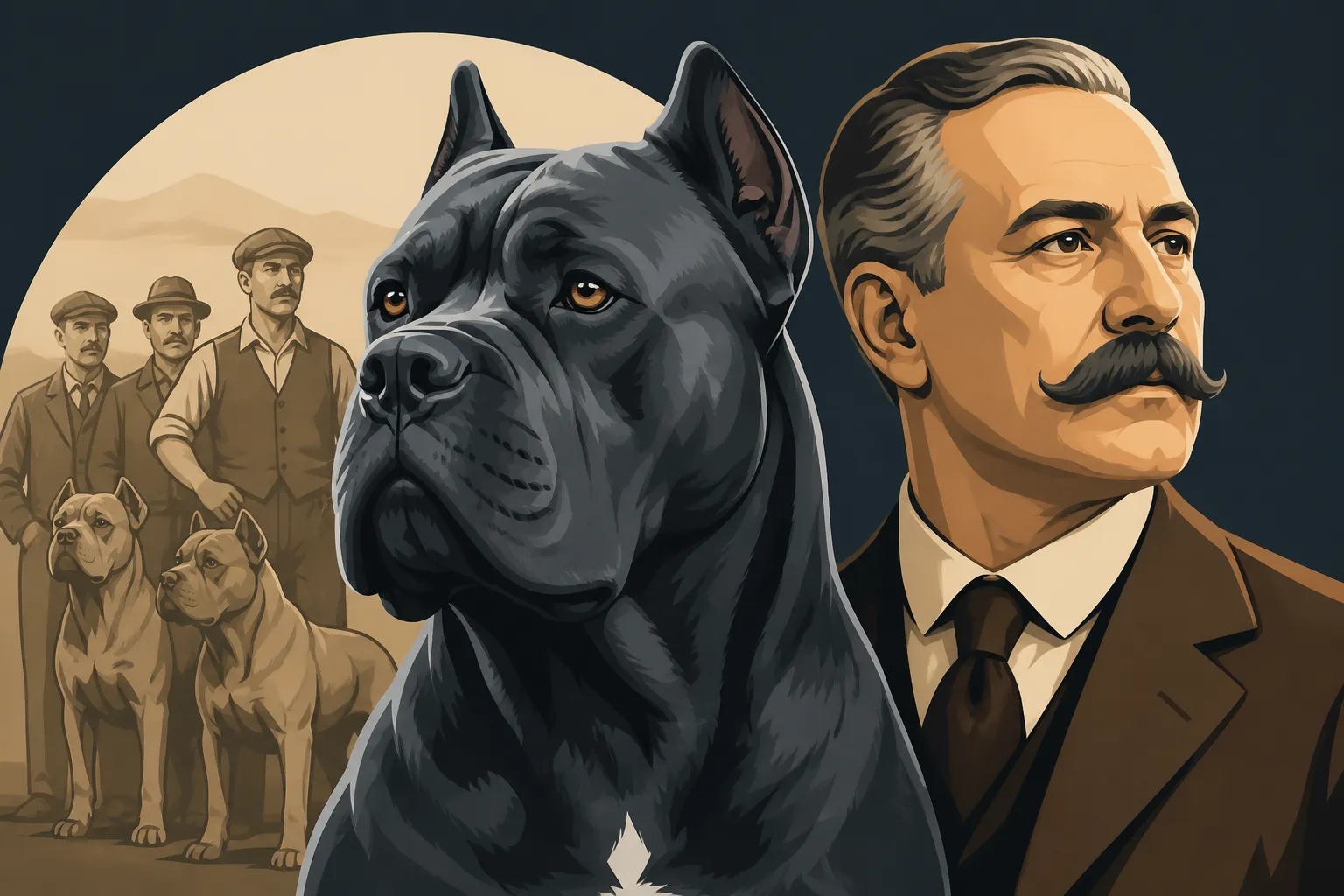
If you've ever admired the regal bearing of a Cane Corso, you might not realize the breed was once teetering on the edge of oblivion. The journey from near extinction to the respected guardian we know today is a dramatic one, marked by the unwavering dedication of a few passionate individuals. This guide will shine a light on the crucial role played by early Cane Corso breeders, most notably Giovanni Bonnetti, who spearheaded the monumental effort to save these magnificent dogs.
The Shadow of War and the Near Extinction of the Cane Corso
Imagine a time when the very existence of a cherished dog breed hung by a thread. That was the grim reality for the Cane Corso in the wake of two World Wars. These conflicts didn't just devastate human lives and infrastructure; they decimated animal populations, particularly working breeds like the Cane Corso, whose utility and numbers declined sharply.
The Disruption of Post-War Italy
Italy, like much of Europe, was a nation in recovery after World War II. Food was scarce, poverty was widespread, and the focus shifted entirely to human survival and rebuilding. Dogs, especially large working breeds, became a luxury many couldn't afford to feed or keep. Their roles on farms as guardians or hunters diminished as agricultural practices modernized, further reducing their perceived value. The traditional "masseria" – the fortified farmsteads where Cane Corsos once thrived – were slowly being abandoned or repurposed, taking with them the centuries-old lifestyle that sustained these dogs. It was a perfect storm of social, economic, and agricultural changes that pushed the Cane Corso into obscurity.
The historical records and oral traditions that might have helped preserve knowledge of the breed were largely lost or fragmented during these tumultuous times. The old ways of passing down breeding wisdom from generation to generation were interrupted. Families who once boasted generations of Corsos found themselves unable to continue the practice, or they moved to urban areas where a large working dog was simply impractical. The once-common sight of a Cane Corso confidently striding across a southern Italian landscape began to fade, becoming a rare and almost mythical vision.
Loss of Purpose and Numbers
The Cane Corso had been the quintessential Italian farm dog, performing vital roles that defined its very existence. They guarded livestock, drove cattle, protected property, and even hunted wild boar. The Farm Job the Cane Corso Was Kept For was not just a historical tidbit; it was the core of their identity. But as farming became mechanized and rural populations moved to cities, these traditional jobs evaporated. Why keep a large, expensive-to-feed dog when a tractor could do the work of several draft animals, and rural theft wasn't the same pervasive threat it once was?
With their primary purpose gone, the Cane Corso's numbers dwindled drastically. They weren't bred as frequently, and those that remained were often mixed with other local dogs, diluting their pure lineage. By the 1970s, many believed the breed was extinct or so diluted that it was beyond saving. The knowledge of their distinct characteristics, temperament, and physical standard was mostly kept alive in the memories of a few elderly farmers and enthusiasts who clung to the hope that their beloved "Cani Corsi" might one day make a comeback. It was a period of profound uncertainty, where the breed existed more as a whisper of the past than a living, breathing presence.
Giovanni Bonnetti's Passion and the Initial Search
In this bleak landscape, a spark of hope ignited in the form of Giovanni Bonnetti. He was one of the earliest and most passionate individuals who refused to let the Cane Corso fade into history. His story is one of profound dedication, recognizing the immense value in what many had written off as lost.
A Vision to Rediscover and Preserve
Giovanni Bonnetti was more than just a dog lover; he was a visionary. He understood the historical and cultural significance of the Cane Corso, recognizing it as a living piece of Italian heritage, a descendant of the ancient Roman Molossers. While others might have seen only common farm dogs, Bonnetti saw the remnants of a noble lineage, a testament to strength, intelligence, and unwavering loyalty. He didn't just want to save a breed; he wanted to resurrect a legacy. The Roman War Dog Behind the Cane Corso was a crucial piece of this puzzle for him.
Bonnetti's vision wasn't just about finding dogs; it was about identifying those true to the ancient type, dogs that still carried the distinct physical and temperamental traits of the historical Cane Corso. He spent countless hours poring over old texts, speaking with elders in remote villages, and seeking out any scrap of information that could guide his search. He knew that scattered across the rural south of Italy, there had to be pockets where the true breed had somehow survived, perhaps isolated and unknown to the wider world. His determination was the driving force that set the entire revival movement in motion, a commitment that would eventually inspire others to join his quest.
The Challenging Quest for Authentic Stock
The actual search undertaken by Bonnetti and his early collaborators was no easy feat. It was a grueling, often frustrating endeavor, akin to a treasure hunt across rugged, remote terrain. They traveled through the forgotten corners of southern Italy, specifically in regions like Puglia, Basilicata, and Campania, Which Italian Regions Kept the Cane Corso Longest venturing into areas largely untouched by modern development. This wasn't a matter of visiting a kennel; it was about knocking on farmhouse doors, asking wary farmers if they still kept the "old dogs."
Often, the response was skepticism or disinterest. Farmers saw their dogs as working animals, not as subjects for preservation efforts. Identifying purebred specimens amidst generations of mixed-breed dogs required an expert eye and a deep understanding of the breed's historical appearance and character. Bonnetti and his team learned to recognize subtle traits – the specific head shape, the powerful build, the distinctive gait, and most importantly, the characteristic temperament that defined the Cane Corso. How Few Cane Corsos Were Left in the 1970s is a stark reminder of the immense challenge they faced, making every discovery a small victory. This painstaking process laid the groundwork for the modern breed, ensuring that the dogs they found were as close to the original type as possible.
Collaborating for a Comeback: Other Enthusiasts Join the Cause
Giovanni Bonnetti's tireless efforts did not go unnoticed. His passion and initial groundwork attracted other dedicated individuals who would prove instrumental in the Cane Corso's revival. This collaborative spirit was essential, as no single person could undertake such a monumental task alone.
Paolo Breber and the Documentation Efforts
One of the most pivotal figures to join Bonnetti was Dr. Paolo Breber. Breber was not only an avid dog enthusiast but also a meticulous researcher and ethnologist. His scientific approach complemented Bonnetti's boots-on-the-ground exploration perfectly. Breber began compiling historical data, interviewing elderly farmers, and most crucially, documenting the characteristics of the few remaining "old type" dogs he found. His work helped create the first informal standard for the breed, giving a concrete definition to what a Cane Corso should look like and act like. The 1976 Article That Started the Cane Corso Revival by Breber was a landmark publication that brought the plight of the Cane Corso to wider attention, sparking interest among a new generation of Italian dog lovers.
Breber's contributions extended beyond mere documentation; he was a vocal advocate, using his academic background to legitimize the breed's historical claims and genetic integrity. He understood that without proper records and a clear, written standard, any revival effort would lack credibility and direction. The dogs they found had to be measured, photographed, and their temperaments assessed against historical accounts. This careful cataloging was a foundational step, ensuring that the new breeding program was based on authentic and consistent traits, rather than just subjective preferences. Today, when you research Cane Corsos, you'll find an abundance of information and products on sites like Chewy to support their care, a stark contrast to the sparse knowledge available during Breber's time.
The Dogs of Puglia: The Genetic Goldmine
The search for genuine Cane Corsos led the revivalists primarily to the region of Puglia, particularly the southern parts, where the traditional farm life persisted longer. It was here, amidst ancient olive groves and rustic farmsteads, that small, isolated pockets of the breed had managed to survive. These "dogs of Puglia" became the genetic backbone of the modern Cane Corso. They were often working dogs, hardy and functional, not necessarily bred for aesthetics but for their utility and guarding instincts. The Dogs of Puglia That Rebuilt the Breed were the living link to the past, embodying the traits that Giovanni Bonnetti and Paolo Breber had envisioned.
These foundational dogs were carefully selected, not just for their appearance, but for their health, temperament, and working abilities. It was a rigorous process, as the goal was not merely to produce more dogs, but to revive a true Cane Corso. The discovery of a robust, healthy, and characteristic specimen was cause for celebration, as it meant another valuable thread in the genetic tapestry could be preserved. The early breeders understood the immense responsibility they held: to carefully manage the limited genetic pool to avoid inbreeding and to solidify the breed's characteristics for future generations. It was a monumental task requiring keen observation, historical knowledge, and a commitment that transcended simple breeding.
Establishing the Breed: First Litters and Formal Recognition
With foundational dogs identified and dedicated enthusiasts on board, the next crucial step was to move from discovery to formal preservation and development. This involved organized breeding programs and the creation of an official body to oversee the breed.
The Società Amatori Cane Corso is Born
The collaborative efforts of Giovanni Bonnetti, Paolo Breber, and other key figures like Dr. Antonio Morsiani culminated in the formalization of their work. In 1983, a group of passionate fanciers established the Società Amatori Cane Corso (SACC), or the Society of Cane Corso Lovers. This was a critical turning point. The SACC provided a structured framework for the breed's development, moving it beyond informal revival efforts into a recognized, organized movement. The Founding of the Società Amatori Cane Corso in 1983 marked the official start of the breed's modern history.
The SACC's primary goals were clear: to identify, select, and breed Cane Corsos true to the historical type, to establish a detailed breed standard, and to eventually seek official recognition from national and international kennel clubs. It was within this society that the first carefully planned breeding programs took place. Dogs brought in from the rural areas were assessed, and mating pairs were chosen with the utmost consideration for preserving genetic diversity and strengthening desirable traits. Every decision was made with the long-term health and integrity of the breed in mind, understanding that they were building from a very narrow genetic foundation.
Defining the Breed Standard from Foundational Dogs
One of the most important tasks of the SACC was to define a comprehensive breed standard. This wasn't a theoretical exercise; it was based directly on the characteristics observed in the foundational dogs discovered in Puglia and other southern regions. The standard described the ideal physical attributes – head shape, body proportions, coat color, and structure – as well as the desired temperament, emphasizing courage, intelligence, and a balanced guardian instinct. This written standard became the blueprint for all future breeding efforts, ensuring consistency as the breed grew. What the Standard Says a Cane Corso Should Look Like was born from these intense observations and discussions.
This rigorous process of defining the standard, selecting breeding stock, and carefully documenting pedigrees eventually led to official recognition. In 1994, the Cane Corso was recognized by the Ente Nazionale della Cinofilia Italiana (ENCI), the Italian Kennel Club, and subsequently by the Fédération Cynologique Internationale (FCI) in 1996. These recognitions were monumental achievements, validating years of hard work and finally securing the Cane Corso's place among the world's established breeds. From there, the breed's popularity grew internationally, eventually reaching the American Kennel Club (AKC) Working Group, a far cry from its near-forgotten status decades earlier. For today's owners, finding breed-specific information or supplies for grooming or training is simple, with platforms like Chewy offering a vast array of choices that early breeders could only have dreamed of.
Here's a look at some of the key figures and milestones in the Cane Corso's journey back from the brink:
| Event/Figure | Date/Period | Contribution | Significance |
|---|---|---|---|
| World War II | 1939-1945 | Decimation of breed numbers and purpose | Pushed the Cane Corso to near extinction. |
| Giovanni Bonnetti | 1970s | Initiated the search for surviving dogs | Visionary who started the revival movement. |
| Dr. Paolo Breber | 1970s | Researched, documented, and published first article | Brought scientific rigor and public attention to the breed. |
| The Dogs of Puglia | 1970s | Genetic foundation for the modern breed | Provided the authentic stock to rebuild from. |
| Società Amatori Cane Corso (SACC) | 1983 | Formally established breed club and breeding program | Organized the revival efforts and defined the standard. |
| ENCI Recognition | 1994 | Italian Kennel Club recognition | First official national recognition. |
| FCI Recognition | 1996 | International Kennel Federation recognition | Global acceptance and further spread of the breed. |
The story of the Cane Corso's revival is a powerful reminder of what passion and dedication can achieve. Giovanni Bonnetti and his fellow enthusiasts faced immense challenges, but their unwavering commitment ensured that this magnificent breed not only survived but thrived, allowing us all to enjoy these incredible guardians today.
Disclaimer
This article is for general informational purposes only and does not constitute professional advice. Laws, prices and regulations vary by location and change over time. Consult a qualified professional for guidance on your specific situation.