Cleaning the Wrinkles Above a Cane Corso’s Nose
If you share your home with a magnificent Cane Corso, you know their majestic, powerful presence is undeniable. But you also know that their impressive facial features, particularly those adorable wrinkles above their nose, can become a magnet for all sorts of grime, moisture, and even some not-so-pleasant odors. It’s a common frustration for Cane Corso owners, a silent battle against red, irritated skin and that tell-tale "doggy funk." This guide will walk you through everything you need to know to keep those precious facial folds clean, healthy, and smelling fresh, ensuring your companion is as comfortable as they are regal.
Understanding Your Cane Corso's Facial Folds
Those deep, expressive wrinkles on your Cane Corso's face are part of what makes them so captivating, but they also create a unique environment that requires consistent attention. It’s not just about aesthetics; it's a vital part of their overall hygiene and health that, if neglected, can lead to some pretty uncomfortable situations for your big buddy.
Why Wrinkles Need Special Attention
Imagine having perpetually moist, warm folds of skin on your own face, constantly exposed to the elements. That's essentially what your Cane Corso experiences. These wrinkles, especially the deeper ones around the muzzle and above the nose, are perfect breeding grounds for bacteria and yeast. They trap moisture from drinking, food particles from eating, and even environmental debris like dust and pollen. Without regular cleaning, this cocktail of trapped substances creates an ideal warm, moist, and dark environment for microorganisms to thrive, leading to skin irritation, foul odors, and potentially severe infections. It's a silent problem that can quickly escalate if you don't stay on top of it.
Many owners often notice a distinct, sometimes yeasty, smell emanating from these areas. This isn't just "dog smell"; it's a sign that yeast and bacteria are colonizing, which can progress to an actual skin infection, or what veterinarians often refer to as skin fold dermatitis. This is why a proactive approach is so much better than a reactive one when it comes to wrinkle care. It's about preventing discomfort and potential pain for your beloved companion.
The Anatomy of a Cane Corso's Muzzle
The Cane Corso, like many Mastiff-type breeds, possesses a broad, powerful muzzle with varying degrees of wrinkling. While some individuals might have fewer, shallower folds, others can have quite pronounced creases, particularly around the bridge of the nose and extending towards the eyes. These folds are more than just skin; they often involve specialized glandular tissue which can contribute to moisture and oil production, further complicating hygiene.
The depth and number of these folds are often genetically determined, and they can also become more pronounced as your Cane Corso ages or gains weight. A deeper fold means a more enclosed space, making it even harder for air to circulate and keep the area dry. This lack of airflow, combined with the natural warmth of the body and any trapped moisture, quickly becomes a perfect storm for skin issues. Understanding that these wrinkles aren't just superficial, but rather complex areas susceptible to unique problems, is the first step in providing effective care. You might even notice that Whether a Cane Corso's Muzzle Folds Get Sore is a common complaint among owners who aren't regularly cleaning these areas.
Essential Tools and Products for Wrinkle Care
Alright, so we've established why those wrinkles need attention. Now, let's talk about the how, specifically what you'll need to gather to make this routine successful and gentle for your Cane Corso. The right tools make all the difference, transforming a potentially unpleasant experience into a bonding moment.
Gentle Cleansers and Wipes
When it comes to cleaning your Cane Corso's facial folds, gentleness is key. You're dealing with sensitive skin that can easily become irritated by harsh chemicals or strong fragrances. The best approach is to use products specifically designed for canine skin, ideally those that are hypoallergenic and free of alcohol.
- Veterinary-Recommended Wipes: These are often pre-moistened pads formulated with ingredients like chlorhexidine or ketoconazole, which are antifungal and antibacterial. They're incredibly convenient for daily wipe-downs and can be a lifesaver for managing early signs of yeast or bacterial overgrowth. You can often find these at your vet's office or through online retailers like Chewy or Amazon. Look for brands that explicitly state they are safe for facial folds and around the eyes (though be careful in the eyes).
- Mild Dog Shampoos or Facial Cleansers: For a more thorough cleaning, especially if the folds are particularly dirty or smelly, a gentle, soap-free dog shampoo can be used. Dilute a small amount in water, apply with a soft cloth or cotton ball, and make sure to rinse thoroughly with a separate damp cloth. Some brands even make dedicated "tearless" facial cleansers for dogs that are perfect for this job.
- Warm Water and Soft Cloths: For daily maintenance on folds that aren't yet showing signs of irritation or infection, simply warm water and a clean, soft cloth or cotton ball can be very effective. This helps remove debris and excess moisture without introducing new chemicals. Always use a fresh cloth each time to avoid spreading bacteria.
It's crucial to avoid human baby wipes, as they often contain perfumes and alcohol that can dry out and irritate your Cane Corso's delicate skin. The goal is to clean and dry, not to strip natural oils or introduce potential allergens. If your Cane Corso already has Skin Allergies That Flare on a Cane Corso, choosing the right cleanser is even more critical.
Protective Balms and Moisture Barriers
Cleaning is only half the battle; keeping the folds dry and protected is equally important. Once the area is clean and thoroughly dry, applying a protective barrier can help prevent future irritation and moisture accumulation.
- Zinc Oxide Creams (Non-Nano): A thin layer of a non-nano zinc oxide cream can work wonders. Zinc oxide is known for its skin-soothing and moisture-repelling properties. It creates a physical barrier that helps keep moisture, yeast, and bacteria from settling into the folds. Be sure to choose a product formulated for dogs, as some human creams might contain ingredients that aren't safe if ingested. Always apply a very thin layer so it doesn't cake up in the folds.
- Petroleum Jelly or Paw Balms: While not medicated, plain petroleum jelly or a high-quality paw balm can create a simple, non-irritating moisture barrier. These products are generally safe even if licked, and they help reduce friction between skin folds, which can prevent chafing and irritation. Again, apply sparingly.
- Antifungal/Antibacterial Powders: In some cases, a very light dusting of a veterinary-grade antifungal or antibacterial powder might be recommended by your vet to help keep the area dry. However, powders can clump and become irritating if applied too thickly or if they mix with moisture, so use with extreme caution and only under professional guidance.
Remember, the key is to apply these products thinly and evenly after the folds are completely dry. You don't want to create a thick, greasy mess that traps more moisture. The aim is a subtle, protective layer. You might find a good selection of these specialized balms and creams on sites like Chewy or Amazon, often under categories like "skin care for dogs" or "wrinkle balms."
A Step-by-Step Guide to Cleaning Your Cane Corso's Nose Wrinkles
Now that you have your supplies ready, let's get into the nitty-gritty of the cleaning process. This isn't just a quick swipe; it's a careful, methodical routine that will ensure those folds stay healthy and your Cane Corso remains comfortable. Consistency and patience are your best friends here.
Establishing a Routine
The most crucial aspect of wrinkle care is consistency. A once-a-month clean just won't cut it. These folds need regular attention, ideally daily, especially after meals or drinking.
Start by choosing a time when your Cane Corso is relaxed. Perhaps after a walk when they're a bit tired, or during a quiet evening cuddle session. Make it a positive experience from the get-go. Offer high-value treats and plenty of verbal praise. Your Cane Corso needs to associate this routine with good things, not with stress or discomfort. Start slowly, perhaps just gently touching the area, then move to a quick wipe, gradually extending the time as they get more accustomed to it. A structured routine helps manage expectations for both of you.
Consider incorporating wrinkle cleaning into your daily grooming checklist. Just like you might do Wiping a Cane Corso's Eyes Every Morning, add a quick wrinkle check. For some Cane Corsos with very deep folds or a history of skin issues, a twice-daily routine might be necessary. Pay close attention to the weather; humid conditions can exacerbate moisture problems, requiring more frequent checks. This regular interaction also allows you to spot any potential problems, like redness or a developing odor, before they become severe.
The Cleaning Process
Okay, let's get hands-on. Here's how to actually clean those wrinkles effectively and safely.
- Gather Your Supplies: Have everything laid out before you begin: your chosen wipes or cleanser, soft cloths, and protective balm. Make sure you have plenty of treats within reach.
- Position Your Cane Corso: Have your dog in a comfortable position, ideally sitting or lying down. If they're a puppy, you might need someone to gently hold them while you work. For an adult Cane Corso, a "stay" command on a mat or bed can be helpful.
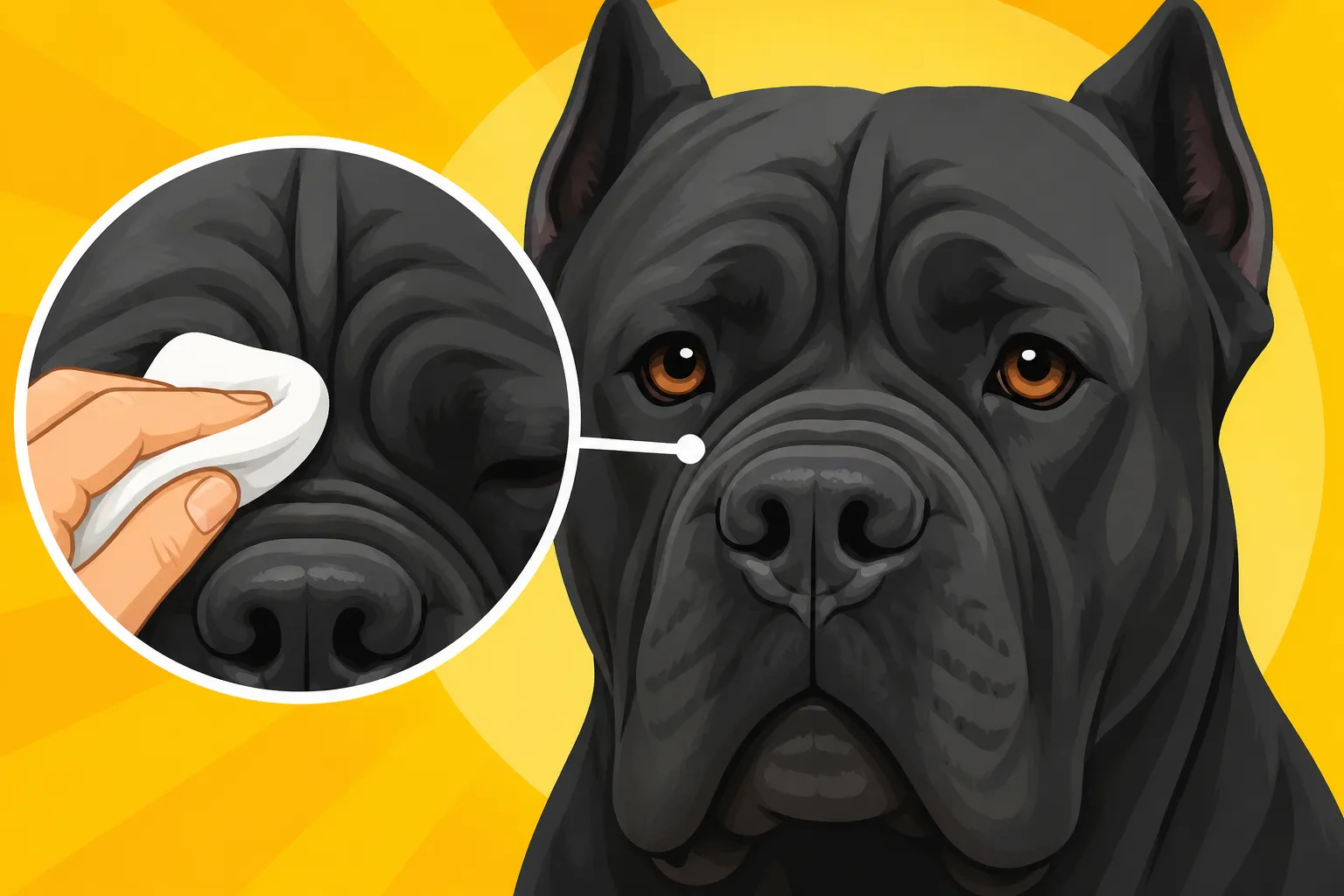
- Examine the Folds: Gently lift and spread the skin folds above their nose. Take a good look. Are they red? Do you see any debris, discharge, or signs of irritation? Notice any smell. This initial inspection is important for gauging how thorough you need to be.
- Wipe Down: Take a clean wipe or a soft cloth dampened with your chosen cleanser. Gently wipe inside each fold, working from the inside out. Be meticulous. You might need to use your fingers to really open up the deeper creases. Don't be afraid to get in there, but always be gentle. Change wipes or rinse your cloth frequently if the area is very dirty to avoid re-depositing grime. Pay extra attention to the deepest part of the fold where moisture and gunk tend to accumulate.
- Thorough Drying: This step is absolutely critical. After cleaning, use a separate, clean, dry cloth (or even a cotton ball for smaller areas) to thoroughly dry each fold. Fan the area if you can, or gently hold the folds apart to allow air circulation for a moment. Any residual moisture is an invitation for yeast and bacteria to return. You want these folds to be bone dry before you move on.
- Apply Protective Barrier (Optional but Recommended): Once completely dry, apply a very thin layer of your protective balm or zinc oxide cream. Lightly spread it with your finger into the folds. The goal is a barely visible, protective film, not a thick, clumpy paste. If you apply too much, it can trap moisture itself.
Throughout this process, keep talking to your Cane Corso in a calm, soothing voice. Offer those high-value treats liberally, especially if they are tolerating the process well. The more positive associations you build, the easier future cleanings will be.
Post-Cleaning Care
The care doesn't stop once the last wipe is done. What you do immediately after, and how you integrate this into their lifestyle, matters just as much.
After cleaning and drying, continue with the praise and treats. You want your Cane Corso to feel rewarded for their cooperation. If you noticed any significant redness or irritation during the cleaning, make a mental note to monitor it closely. Sometimes, the cleaning itself can initially reveal issues that were previously hidden by debris.
Consider how your Cane Corso eats and drinks. Does their muzzle get soaked every time they take a sip of water? Investing in a deep, narrow water bowl or a "water-friendly" design can help minimize how much water drips into their folds. Similarly, if they're a messy eater, wiping their face after meals can significantly reduce the amount of food particles that end up in their wrinkles. For some dogs, this might mean a quick wipe-down with a damp cloth after every meal, in addition to the deeper daily clean. Remember, preventing the buildup is always easier than cleaning it once it's caked on.
Finally, think about their environment. Do they spend a lot of time in dusty areas or rolling in dirt? While you can't prevent every bit of outdoor fun, understanding how their lifestyle impacts their wrinkle hygiene can help you anticipate needs. If your Cane Corso loves to dig or forage with their nose, you might need to clean those wrinkles more frequently.
Common Issues and When to Call the Vet
Even with a diligent cleaning routine, sometimes problems can arise. It's important to know what to look for and when it's time to seek professional veterinary help. Ignoring persistent irritation or infection can lead to deeper skin problems and discomfort for your Cane Corso.
Recognizing Infection and Irritation
While a little redness after a vigorous cleaning might be normal, persistent or worsening signs are red flags. Here's what to watch out for:
- Increased Redness and Inflammation: Beyond a temporary flush, if the skin in the folds is consistently bright red, swollen, or warm to the touch, it indicates significant inflammation.
- Foul Odor: A strong, pungent, or yeast-like smell that persists even after cleaning is a classic sign of bacterial or yeast overgrowth. This isn't just "doggy odor"; it's a smell that tells you something is wrong. The Yeast Smell on a Cane Corso's Skin Folds is often the first indicator for many owners.
- Discharge: Look for pus, thick yellowish or greenish discharge, or excessive dark, waxy buildup. This is a clear sign of infection.
- Pain or Sensitivity: If your Cane Corso pulls away, growls, or tries to bite when you touch their muzzle, they are likely experiencing pain. This warrants immediate veterinary attention.
- Hair Loss or Skin Lesions: Patchy hair loss, raw spots, scabs, pimple-like bumps, or open sores within the folds are all serious indicators of a skin problem that needs professional diagnosis and treatment.
- Excessive Licking or Rubbing: If your Cane Corso is constantly pawing at their face, rubbing their muzzle on furniture, or licking their paws and then rubbing their face, it could be a sign of irritation or itchiness in the folds.
Don't wait for these symptoms to become severe. The earlier you address a potential infection, the easier and less costly it will be to treat. What starts as mild irritation can quickly escalate into a deep skin infection (pyoderma) that requires oral antibiotics or antifungal medications, sometimes for several weeks.
Preventing Future Problems
Prevention really is the best medicine when it comes to wrinkle care. Beyond the daily cleaning routine, there are a few other strategies that can help keep those facial folds healthy.
- Regular Vet Check-ups: During your routine veterinary visits, ask your vet to specifically check your Cane Corso's facial folds. They can offer advice, prescribe specific medicated wipes or ointments if needed, and catch any subtle issues you might miss. If your Cane Corso is prone to Skin Allergies That Flare on a Cane Corso, discussing this with your vet can lead to better management strategies, including specialized diets or allergy medications.
- Dietary Considerations: Sometimes, skin issues can be exacerbated by diet. If your Cane Corso frequently suffers from skin fold dermatitis, discuss with your vet whether a change in diet could help. Some dogs are sensitive to certain proteins or ingredients, and switching to a limited ingredient diet or a novel protein source (perhaps even trying a fresh food brand like Ollie, or finding specific sensitive skin formulas on Chewy) could reduce overall skin inflammation.
- Weight Management: Keeping your Cane Corso at a healthy weight can sometimes reduce the prominence and depth of their skin folds, making them easier to clean and less prone to trapping moisture. A lean, healthy body condition is good for their joints, heart, and skin.
- Environmental Control: While you can't keep your dog in a bubble, being mindful of overly dusty environments or areas with high pollen counts during allergy season can help. If your Cane Corso gets their face wet frequently (e.g., swimming, playing with water), ensure a thorough towel-drying session afterwards, paying extra attention to the folds.
Ultimately, preventing future problems is about being attentive to your Cane Corso's unique needs. Every dog is an individual, and what works perfectly for one might need slight adjustments for another. Don't be afraid to experiment with different gentle wipes or balms to find what suits your dog best, always with your vet's guidance if irritation is already present.
Here's a quick comparison of common cleaning methods for Cane Corso facial folds:
| Method | Pros | Cons | Best For |
|---|---|---|---|
| Veterinary Wipes | Convenient, medicated, effective for bacteria/yeast | Can be more expensive, some dogs dislike the scent | Daily maintenance, early signs of irritation |
| Warm Water & Cloth | Inexpensive, gentle, no added chemicals | Less effective against existing infections, requires thorough drying | Basic daily cleaning, dogs with sensitive skin |
| Diluted Dog Shampoo | Good for thorough cleaning of very dirty folds | Requires careful rinsing, takes more time | Occasional deep cleaning of smelly or gunky folds |
| Protective Balms | Creates barrier, prevents moisture/chafing | Must be applied to dry skin, can feel greasy if too much applied | Post-cleaning protection, preventing recurrence of irritation |
Disclaimer
This article is for general informational purposes only and does not constitute professional advice. Laws, prices and regulations vary by location and change over time. Consult a qualified professional for guidance on your specific situation.