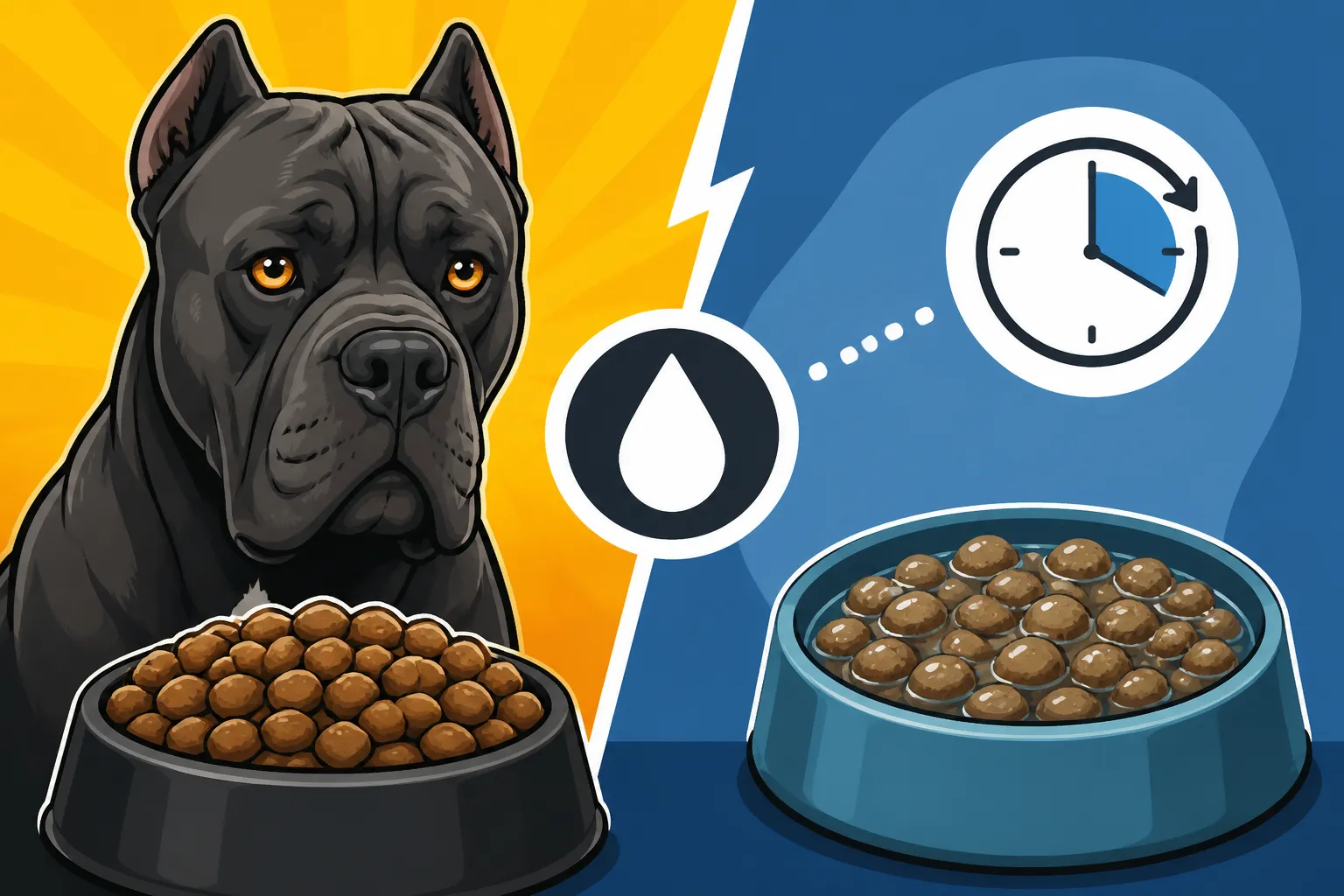
Whether Soaking a Cane Corso’s Kibble Slows It Down
It's a common sight for Cane Corso owners: you put down a fresh bowl of kibble, and before you can even turn around, it's gone. Swallowed whole, it seems, in a matter of seconds. This lightning-fast eating isn't just a minor annoyance; for a deep-chested breed like our beloved Cane Corso, it can be a serious health concern. Many of us wonder if simply soaking their kibble in water could be the magic bullet to slow them down, reducing the risks associated with such hasty meals. This guide will dive deep into whether soaking kibble truly impacts eating speed and explore other strategies to ensure your Cane Corso eats at a healthier pace.
The Urgent Need to Slow Down a Fast-Eating Cane Corso
Let's be honest, watching your Cane Corso practically inhale their dinner can be a bit alarming. It feels unnatural, and instinct tells us it can't be good for them. You're right to feel that way. For our breed, the stakes are unfortunately quite high when it comes to fast eating.
Why Fast Eating Is a Real Concern for Deep-Chested Breeds
The primary and most terrifying concern for any owner of a deep-chested breed like the Cane Corso is bloat, or Gastric Dilatation-Volvulus (GDV). This isn't just an upset stomach; it's a life-threatening emergency where the stomach fills with gas and often twists, cutting off blood supply and trapping everything inside. When a Cane Corso eats too quickly, they tend to gulp down a lot of air along with their food. This excess air can contribute to the stomach distending rapidly, a critical first step towards a bloat episode. Imagine filling a balloon too fast – it's going to expand quickly, right? The same principle applies here. Recognizing Bloat in a Cane Corso Before It Turns is essential for every owner, and preventing it starts with mealtime habits.
Beyond the air intake, fast eating can also mean a less settled stomach overall. The sudden influx of a large amount of unchewed food can put stress on their digestive system, especially for such a large dog. Their anatomy, with that impressive, deep chest, makes them predisposed to this nightmare scenario. Anything we can do to reduce the risk of bloat, even seemingly small adjustments to their feeding routine, is well worth the effort. This is why discussions around mealtime habits, like whether to use Raised Bowls and a Cane Corso's Bloat Risk, are so prevalent among Cane Corso enthusiasts.
Beyond Bloat: Other Problems With Bolting Food
While bloat is the most severe risk, a Cane Corso who bolts their food can experience a host of other uncomfortable and unhealthy issues. Think about how you feel after eating too fast yourself – often you're left with indigestion, a stomach ache, or even heartburn. Our dogs aren't all that different.
For one, eating too quickly often means insufficient chewing. While dogs aren't exactly known for their meticulous chewing habits, especially with kibble, gulping down hard, dry pieces means less surface area for digestive enzymes to work on. This can lead to inefficient digestion, where nutrients aren't absorbed as effectively as they should be. You might find undigested food particles in their stool, which is a clear sign that their system isn't breaking things down properly.
Then there's the risk of choking. Large, unchewed pieces of kibble, especially when swallowed rapidly, can get lodged in the throat. This is a terrifying experience for both you and your dog and can quickly become an emergency. Over-excitement around food can also lead to regurgitation, where the food comes back up shortly after eating because the stomach simply can't handle the sudden volume. This isn't vomiting, but it's still unpleasant and a sign that their eating pace is problematic. Ultimately, a calm, measured approach to mealtime promotes better overall gastrointestinal health and comfort for your powerful companion.
Does Soaking Kibble Actually Work to Slow Down Eating?
So, the big question: does soaking kibble really make a difference? It seems like a simple, logical solution, and for some dogs, it can certainly help. But it's not a universal fix, and understanding how it works (or doesn't) is key.
How Soaking Changes Kibble Texture and Consumption
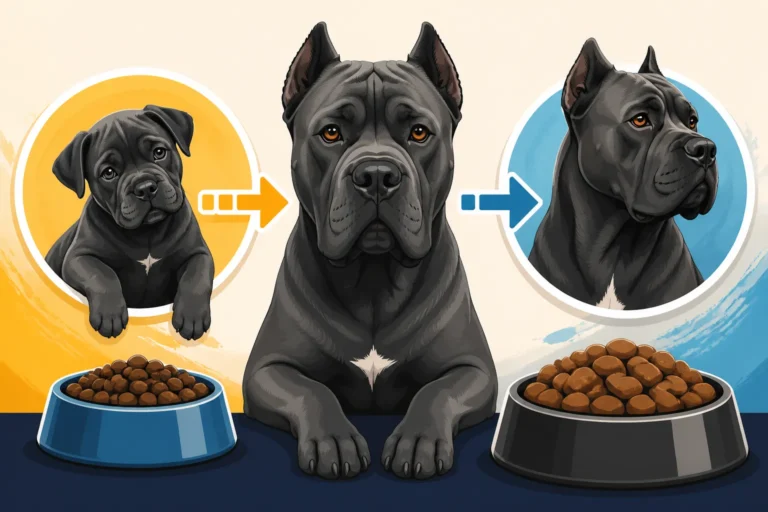
When you add water to dry kibble, several things happen. First, the kibble begins to absorb the liquid and expand. Those hard, crunchy nuggets become softer, larger, and more pliable. Imagine the difference between eating a handful of dry rice versus a spoonful of cooked rice – the texture is entirely different.
The theory behind soaking is that this softened, expanded texture makes it harder for a dog to simply "vacuum" up their food. The pieces might stick together more, requiring a bit more effort to pick up and swallow. It also means less dry, hard kibble hitting the stomach, which some believe reduces the amount of air swallowed. The softened texture is often easier on the teeth and gums, particularly for puppies or older Cane Corsos who might have dental sensitivities. From a purely mechanical standpoint, it makes sense that a dog would struggle to gulp down soft, wet mush as quickly as small, dry pellets. It also ensures your Cane Corso is getting extra hydration with their meal, which is a nice bonus.
The Practical Reality: Does Your Cane Corso Really Slow Down?
Here's where the rubber meets the road: while the theory is sound, the practical reality can be a mixed bag. Some Cane Corsos, faced with a bowl of soft, soupy kibble, will indeed slow their roll. They might take more deliberate bites, or the sheer volume of the expanded food might make them feel full faster. For these dogs, soaking can be an excellent, simple tool.
However, other Cane Corsos, driven by a powerful food motivation, simply adapt. Instead of gulping dry pellets, they might learn to gulp larger mouthfuls of soft, wet mush. The primary goal of reducing air intake might still be achieved to some extent, as the kibble is already saturated, but the speed of consumption might not decrease significantly. Think of a very hungry human eating soup – they can still eat it quite quickly! It depends heavily on the individual dog's eating style and personality.
Observing your own Cane Corso after switching to soaked kibble is crucial. Do they still inhale it? Are they still gulping huge amounts of air? You might find that while soaking offers some benefits, it might not be the complete solution for your particular dog's rapid eating habits. It's a tool, but often best used in conjunction with other strategies.
Alternative Methods for Pacing a Rapid Eater
If soaking alone isn't quite cutting it, or you're looking for additional ways to tackle your Cane Corso's fast-eating habits, there are plenty of other effective methods to explore. The goal is to make mealtime an activity, not just a race.
The Power of Slow Feeder Bowls and Puzzles
One of the most effective tools for slowing down a fast eater is a slow feeder bowl. These aren't just regular bowls; they feature ridges, labyrinths, or obstacles that physically prevent your Cane Corso from taking large gulps. They have to work around the design, nudging kibble out of crevices, which naturally extends mealtime. You can find a huge variety of these bowls online, for instance, on platforms like Amazon or Chewy, offering different levels of difficulty.
For an even greater challenge, consider puzzle feeders or enrichment toys. These might be hollow toys that dispense kibble gradually as your dog rolls or manipulates them, or more complex puzzles that require pawing, nosing, and problem-solving to release the food. This turns eating into a mental exercise, which is fantastic for a smart breed like the Cane Corso. It engages their brain, burns mental energy, and ensures they eat at a much slower, more deliberate pace. Ninety Minutes a Day and a Cane Corso's Mind highlights the importance of mental stimulation, and mealtime puzzles are a great way to incorporate that daily.
Feeding Smaller, More Frequent Meals
Sometimes, the speed-eating stems from intense hunger. If your Cane Corso is only getting one or two large meals a day, they might feel an overwhelming urge to eat as much as possible, as fast as possible, as if they're afraid the food will disappear. One simple yet powerful strategy is to break their daily ration into several smaller meals throughout the day.
Instead of two huge meals, try three or even four smaller meals. This reduces the amount of food in front of them at any one time, making it less overwhelming and potentially lessening that desperate drive to gulp everything down. It also helps keep their metabolism steady and can prevent them from feeling overly hungry between meals. Just be sure that the total amount of food remains the same to maintain their ideal weight. This approach aligns with the principle of The Daily Ration an Adult Cane Corso Actually Needs being split.
Making Mealtime a Game: Enrichment and Training
Beyond specialized bowls and multiple meals, you can actively make mealtime a more engaging and slower activity through enrichment and basic training. Instead of just putting a bowl down, try scatter feeding. Take a portion of their kibble and scatter it across a clean, designated area – perhaps a snuffle mat, a towel spread on the floor, or even just a patch of grass in the yard. Your Cane Corso then has to sniff out and pick up each piece individually, which takes significantly longer than eating from a bowl.
You can also incorporate training into mealtime. Make them perform a "sit" or "down" and "stay" before you even put the bowl down. Ask for a "wait" cue as you lower the bowl, releasing them only after a few seconds. This teaches impulse control and makes them think before they eat. You can even use a portion of their kibble as rewards during short training sessions throughout the day. This not only paces their eating but also strengthens your bond and reinforces good behavior. Impulse Control Work for a Cane Corso is vital, and mealtime is an excellent opportunity to practice it.
Considerations and Best Practices for Soaked Kibble
If you decide to incorporate soaked kibble into your Cane Corso's diet, there are a few important details to get right to ensure it's both effective and safe. It's not just about dumping water in the bowl; a little thought goes a long way.
The Right Way to Soak Kibble: Temperature and Quantity
The ideal way to soak kibble involves using warm, but not boiling, water. Hot water can sometimes degrade certain vitamins, especially water-soluble ones. Lukewarm or room temperature water is generally sufficient. The amount of water you use will dictate the consistency:
- Slightly Moist: Just enough water to soften the kibble, but it still holds its shape. This is usually about a 1:1 ratio of water to kibble by volume, soaked for 10-15 minutes.
- Mushy: More water will create a softer, almost porridge-like consistency, which can be great for really slowing down a gulping dog. This might be a 2:1 ratio or more, soaking for 20-30 minutes, or even overnight in the fridge.
For a Cane Corso, you're going to be soaking a significant amount of food. Six to Nine Cups Across Two Cane Corso Meals is a lot of kibble, so make sure you have a large enough container. Experiment with the soaking time and water ratio to find the consistency your dog tolerates best and that achieves the desired slowing effect. Remember, the goal is to soften, not just moisten.
Hygiene and Freshness: Preventing Bacterial Growth
This is a critical point when dealing with soaked food. Wet kibble creates a much more hospitable environment for bacterial growth than dry kibble, especially if left at room temperature. Imagine leaving wet food out on the counter – it spoils quickly. The same happens with your dog's soaked kibble.
Always prepare soaked kibble for immediate consumption. If you need to pre-soak a large batch, perhaps for multiple meals, store it in an airtight container in the refrigerator for no more than 24 hours. Before serving, bring it back to room temperature to avoid shocking their stomach with cold food. Never leave uneaten soaked kibble in their bowl for extended periods, especially in warm weather. If they don't finish it within a reasonable timeframe (say, 30 minutes), discard it. This proactive hygiene prevents the ingestion of harmful bacteria that could lead to gastrointestinal upset.
Hydration Benefits and Nutrient Absorption
Beyond slowing down eating, soaking kibble offers a couple of other valuable advantages for your Cane Corso. One obvious benefit is increased hydration. Many dogs don't drink as much water as they should, and incorporating water directly into their food can help them meet their daily fluid requirements. This is especially helpful if you live in a warm climate or if your Cane Corso has a tendency to [Drink Too Fast] from their water bowl, which can also be a bloat risk.
While some claims suggest that soaking kibble significantly improves nutrient absorption, the scientific evidence for this is not universally conclusive. Commercial kibble is formulated to be digested as is, and the dog's digestive system is generally efficient. However, a softer, more broken-down food might be easier on the stomach and could potentially aid in digestion for dogs with sensitive systems or those who struggle with hard kibble. It certainly won't hurt, and for some dogs, it might lead to a more comfortable digestive process overall, potentially reducing issues like The Gas a Cane Corso Produces and What Causes It. Just remember that soaking is an aid, not a replacement for a high-quality, nutritionally complete dog food. Brands like Ollie, known for their fresh, moist food, implicitly illustrate the digestibility of non-dry options, but even with kibble, adding water can help.
Final Thoughts on Slowing Down Your Cane Corso's Mealtime
Ultimately, whether soaking your Cane Corso's kibble effectively slows them down is something you'll need to observe for yourself. It's not a guaranteed solution for every dog, but it's a simple, low-cost method that offers additional hydration and might make digestion a little easier.
For many Cane Corso owners, a multi-pronged approach works best. Combining soaked kibble with a slow feeder bowl, splitting meals into smaller portions, or incorporating enrichment games can provide the best results. The key is to be consistent and patient. Your Cane Corso's health is paramount, and taking proactive steps to manage their eating speed is a responsible part of caring for this magnificent breed. Keep an eye on their digestion, their comfort, and their overall well-being. By making mealtime a more mindful activity, you're doing your part to protect your beloved companion from serious risks and ensure they live a long, happy, and healthy life.
Disclaimer
This article is for general informational purposes only and does not constitute professional advice. Laws, prices and regulations vary by location and change over time. Consult a qualified professional for guidance on your specific situation.