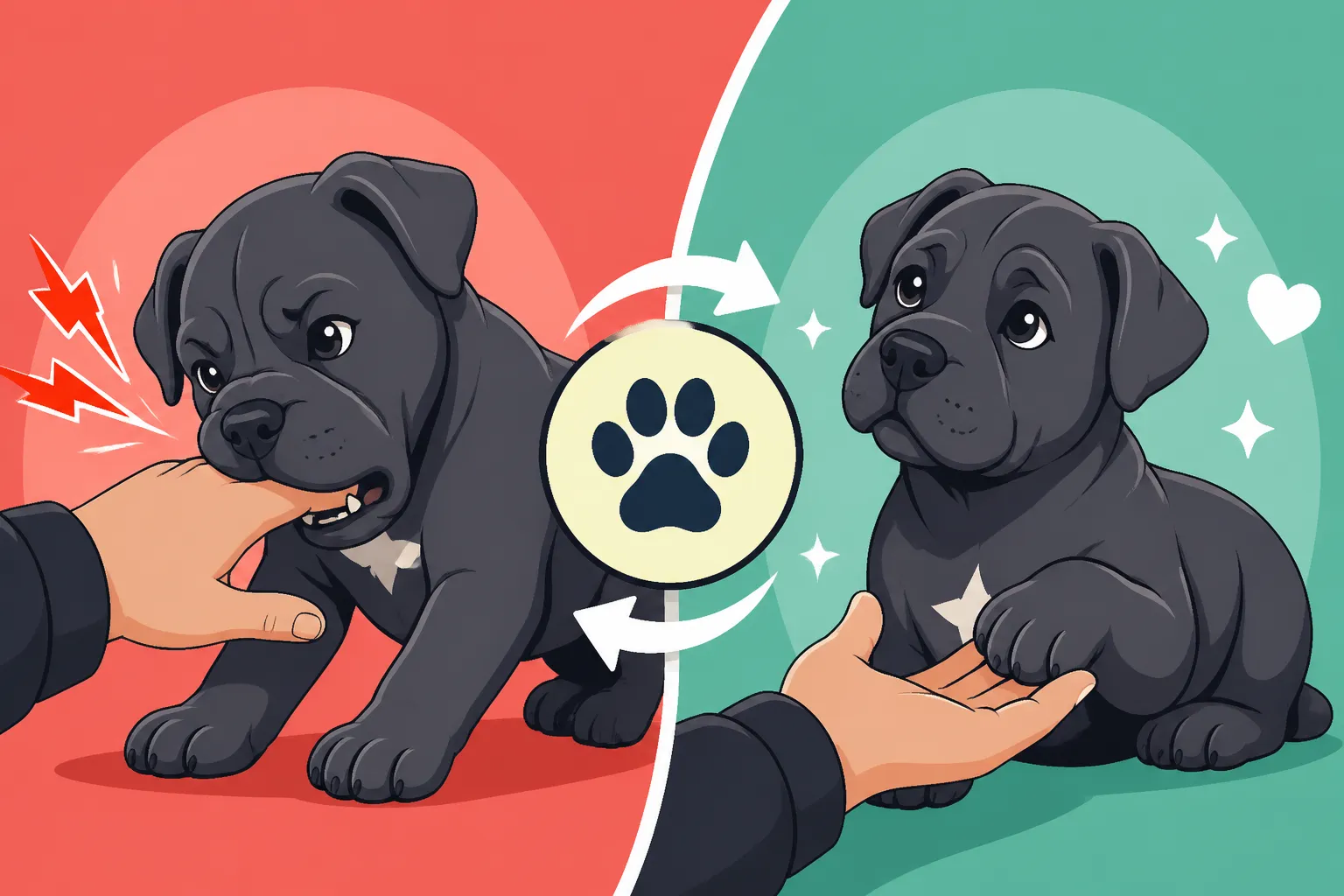
The Month a Cane Corso Puppy Stops Biting Hands
Ah, the notorious puppy piranha stage! If you've just welcomed a tiny, adorable Cane Corso land shark into your home, you know exactly what I'm talking about. Those needle-sharp puppy teeth can make every interaction feel like a wrestling match, and you're probably wondering, with aching hands and forearms, when on earth this relentless nipping will finally stop. It's a common frustration for new Cane Corso owners, a rite of passage almost, but rest assured, with consistent effort and understanding, those sharp little jaws will learn to be gentle. This guide will walk you through the normal developmental stages of puppy biting, practical strategies to teach bite inhibition, and what to expect as your Cane Corso matures.
Understanding the "Why" Behind Those Puppy Nips
It's easy to take puppy nipping personally, especially when your little buddy seems determined to gnaw on your fingers and toes. But understanding why your Cane Corso puppy is biting is the first step toward effectively managing the behavior. It’s not aggression; it's a completely normal, instinctual part of their development.
Normal Puppy Behavior and Exploration
Think of it from your puppy's perspective: their world is a giant, exciting, and sometimes overwhelming place, and their mouths are their primary tool for exploration. Much like human babies put everything in their mouths, Cane Corso puppies use their jaws to investigate textures, communicate, and play. When they mouth you, they're not trying to hurt you; they're trying to figure out who you are, what you are, and how you interact.
In a litter, puppies learn crucial bite inhibition from their siblings and mother. If a puppy bites too hard during play, another puppy will yelp and stop playing, teaching the offender that strong bites end the fun. The mother dog will also correct overly zealous biters with a growl or a firm muzzle grab. Unfortunately, when they come to us, we don't speak "dog" fluently, and our skin isn't covered in fur, making those playful nips feel a lot more painful. They need us to translate those lessons into human terms.
The Teething Process and Discomfort
Just like human babies, Cane Corso puppies go through a significant teething phase. Their baby teeth are incredibly sharp, and by the time they're around 3-4 months old, these teeth start falling out to make way for their much larger, adult teeth. This process can be uncomfortable, even painful, for your puppy. Imagine the ache of new teeth pushing through gums – it’s no wonder they seek relief by chewing on anything and everything, including your hands, furniture, and anything else within reach.
During this period, chewing is a natural instinct to soothe their aching gums. Providing appropriate chew toys becomes paramount. Think variety: hard rubber toys that can be frozen, textured dental chews, or even a frozen carrot can offer relief. If you notice an increase in nipping around the 3-6 month mark, teething is almost certainly a major factor. Be patient, provide outlets, and remember this phase is temporary, even if it feels eternal.
Strategies for Gentle Mouths: Teaching Bite Inhibition
Since stopping biting entirely isn't realistic (and wouldn't be healthy for a dog that needs its mouth for so much!), our goal is to teach "bite inhibition"—the understanding of how much pressure their jaws can exert without causing harm. This is a critical life skill for a large, powerful breed like the Cane Corso.
The "Yelp" and Redirection Method
This is perhaps the most widely recommended and effective method. It mimics how puppies learn from each other. When your Cane Corso puppy bites you too hard, even playfully:
- Emit a high-pitched "yelp" or "ouch!" Make it sharp and sudden, just like a puppy would.
- Immediately withdraw your hand/body part and ignore the puppy. Turn away, cross your arms, or even step out of the play area for 10-20 seconds. This teaches them that hard bites end the fun.
- After the short "time-out," re-engage with a suitable chew toy. Offer them something appropriate to bite instead of your skin. If they bite the toy, praise them. If they nip you again, repeat the yelp and time-out.
The key here is consistency. Every family member needs to respond the exact same way every single time. Your Cane Corso puppy needs clear, consistent feedback to understand the rules. For strong chewers, durable toys found on platforms like Amazon are essential to redirect their powerful jaws.
Progressive Bite Inhibition Training
As your puppy starts to understand that hard bites stop play, you can refine their bite inhibition. The goal isn't just to stop hard bites, but to teach them to be truly gentle.
Start by gradually reducing the acceptable pressure. In the beginning, any painful bite warrants a yelp and time-out. Once your puppy is consistently biting softer, you can start yelping and withdrawing even for bites that don't really hurt, but are still firmer than you'd like. The idea is to teach them that any teeth on human skin, beyond a very soft mouthing, means play stops.
This progressive method helps your Cane Corso learn a scale of bite pressure. This is invaluable, especially as they grow larger and their jaws become more powerful. A soft mouth is a safe mouth.
| Puppy Biting Stage | Common Behavior | Appropriate Intervention | Desired Outcome |
|---|---|---|---|
| 8-12 Weeks | Frequent, hard nips during play, exploring with mouth | Yelp and immediate withdrawal; Redirection to chew toys | Puppy learns hard bites stop play |
| 12-16 Weeks | Teething intensifies, increased chewing on objects | Provide a variety of suitable chews; Continue yelp/withdrawal | Puppy channels chewing onto appropriate items; Softer bites |
| 16-24 Weeks | Still nipping, but hopefully softer; Adolescence emerging | Refine bite inhibition (yelp for softer bites); Consistent redirection | Puppy learns no teeth on skin; Gentle mouth regardless of play |
| 6 Months+ | Occasional mouthing; Testing boundaries; Less frequent | Firm "No Bite" command; Immediate time-out if persists | Consistent gentle interactions; Solid bite inhibition |
Environmental Management and Consistency
Beyond direct training, managing your puppy's environment and maintaining a consistent routine are crucial.
- Provide appropriate chew toys: Always have a variety of sturdy chew toys readily available. Rotate them to keep things interesting. Puzzle toys filled with treats can also keep them engaged and their mouths busy in a positive way.
- Avoid using your hands as toys: This seems obvious, but it's easy to fall into the habit. If you wrestle or play tug-of-war with your hands, your Cane Corso will learn that hands are for biting. Use toys exclusively for interactive play.
- Supervise interactions: Especially with children or guests, always supervise your Cane Corso puppy. A tired, overstimulated puppy is more likely to nip. Ensure children understand the rules about interacting with the puppy and never punishing them for nipping.
- Consistent routine: A predictable schedule for feeding, potty breaks, play, and naps helps create a secure environment, reducing anxiety that can sometimes contribute to excessive nipping. This consistent structure is vital for a Cane Corso. You might find resources like BAXTER & Bella helpful for setting up a solid routine for your puppy's early development.
Navigating the Developmental Timeline: When Biting Should Subside
The question on every owner's mind is, "When will it stop?" The truth is, there isn't one magical month where all biting ceases. It's a gradual process, heavily influenced by your consistent training. However, we can look at a general timeline for when you should expect significant improvements.
The Peak Nipping Period: 8-16 Weeks
Typically, the most intense period for puppy nipping is between 8 and 16 weeks of age. This is often when they've just come home, are exploring their new world, and their baby teeth are at their sharpest. This stage requires maximum patience and consistency from you. Every single nip needs a response. It can feel relentless, but this foundational work is incredibly important. If you’re struggling with managing this stage, consider enrolling in a good online puppy training program or a local group class. Putting a Cane Corso Puppy in a Group Class can provide structured socialization and expert guidance.
Teething Transition and Decreased Severity: 4-6 Months
As your Cane Corso puppy enters the 4-6 month range, they'll be heavily involved in teething. You might notice more focused chewing on objects and a slight decrease in direct hand-nipping if you’ve been diligent with bite inhibition training. The intensity of the nips on your skin should lessen, transforming into softer mouthing as they start losing their baby teeth. However, don't mistake this for the end of biting entirely. They're still learning, and their discomfort from teething might lead to some regression. Make sure you're providing plenty of appropriate The Chewing Stage a Cane Corso Goes Through options during this time.
Adolescence and Solidifying Good Habits: 6-12 Months
By 6 months of age, your Cane Corso puppy should have most, if not all, of their adult teeth. The need for constant chewing to relieve teething pain should subside. If you've been consistent with bite inhibition, you should see a significant reduction in unwanted nipping. Any mouthing that occurs should be very soft and easily interrupted.
However, this is also the onset of adolescence for many Cane Corsos, a period where they might "test" boundaries. Don't be surprised if an occasional firm nip reappears as they try to assert themselves or get attention. This is where your consistent training from the earlier months really pays off. A firm "no bite" command, followed by a time-out if they persist, should quickly remind them of the rules. The expectation is that by 6-8 months, they are reliably using a soft mouth or no mouth on human skin, and by 10-12 months, hand-nipping should be a rare, easily corrected occurrence.
When Biting Persists or Becomes Problematic
If your Cane Corso is consistently biting hard, breaking skin, or showing signs of aggression (growling, snapping with stiff body language) past 4-5 months of age, it's time to seek professional help. This could indicate underlying issues beyond normal puppy behavior.
A certified professional dog trainer or a veterinary behaviorist can assess the situation and provide tailored guidance. They can help identify potential triggers, refine your training techniques, and address any behavioral concerns early. Never hesitate to reach out for expert assistance; addressing issues early is always easier than trying to fix entrenched problems later, especially with a powerful breed like the Cane Corso.
Beyond Nipping: Holistic Puppy Rearing for a Well-Adjusted Cane Corso
While stopping the hand-biting is a major goal, it's just one piece of the puzzle in raising a well-adjusted Cane Corso. A comprehensive approach to training and socialization will naturally support the development of good mouth manners and overall stellar behavior.
The Importance of Early Socialization
Socialization isn't just about playing with other dogs; it's about positive exposure to a wide variety of sights, sounds, people, and environments. A well-socialized Cane Corso is less likely to be fearful or anxious, which can sometimes manifest as nipping or snapping. From a very young age, your puppy should be exposed to new things in a controlled, positive way.
Take your puppy on short, positive outings to places where they can observe the world without being overwhelmed. Think quiet parks, hardware stores (if allowed), or even just sitting in your car watching people pass by. The goal is to create positive associations with novelty. Remember, The Socialization Window a Cane Corso Puppy Gets is critical and closes surprisingly quickly, so make the most of those early weeks. A puppy that trusts its world is less likely to resort to desperate measures like fear biting.
Foundation Obedience and Impulse Control
Teaching basic obedience commands like "sit," "stay," "down," and "leave it" provides your Cane Corso with a framework for understanding rules and responding to your cues. Impulse control exercises, such as making them wait for their food bowl or waiting at the door before going outside, are invaluable. These exercises teach your puppy to think before they act, which directly translates to better bite inhibition.
A program like BAXTER & Bella’s online training offers excellent resources for building these foundational skills from day one. Consistent, positive reinforcement training not only teaches them commands but also strengthens your bond and establishes you as a reliable leader. This kind of The Structure a Cane Corso Needs Every Single Day is non-negotiable for a Cane Corso.
Mental and Physical Exercise Outlets
A tired Cane Corso is a good Cane Corso. These intelligent, athletic dogs need significant mental and physical stimulation. A bored puppy with pent-up energy is much more likely to find undesirable outlets for that energy, like excessive chewing and nipping.
Ensure your Cane Corso gets daily walks, play sessions, and mental enrichment. Puzzle toys, training sessions, and even scent games can tire their minds as much as their bodies. For a young puppy, short, frequent bursts of activity are better than one long, strenuous session to protect their growing joints. As they mature, these exercise needs will only grow, so plan for it. Make sure they have safe, engaging toys that can stand up to a Cane Corso's powerful jaws – checking reviews on Amazon for durable options is always a good idea. Avoiding The Damage a Bored Cane Corso Does Indoors is crucial.
Remember, every Cane Corso is an individual, and their development might vary slightly. However, with unwavering patience, consistency, and a proactive approach to training and socialization, you can guide your puppy through the biting phase and foster a well-mannered, gentle giant.
Disclaimer
This article is for general informational purposes only and does not constitute professional advice. Laws, prices and regulations vary by location and change over time. Consult a qualified professional for guidance on your specific situation.