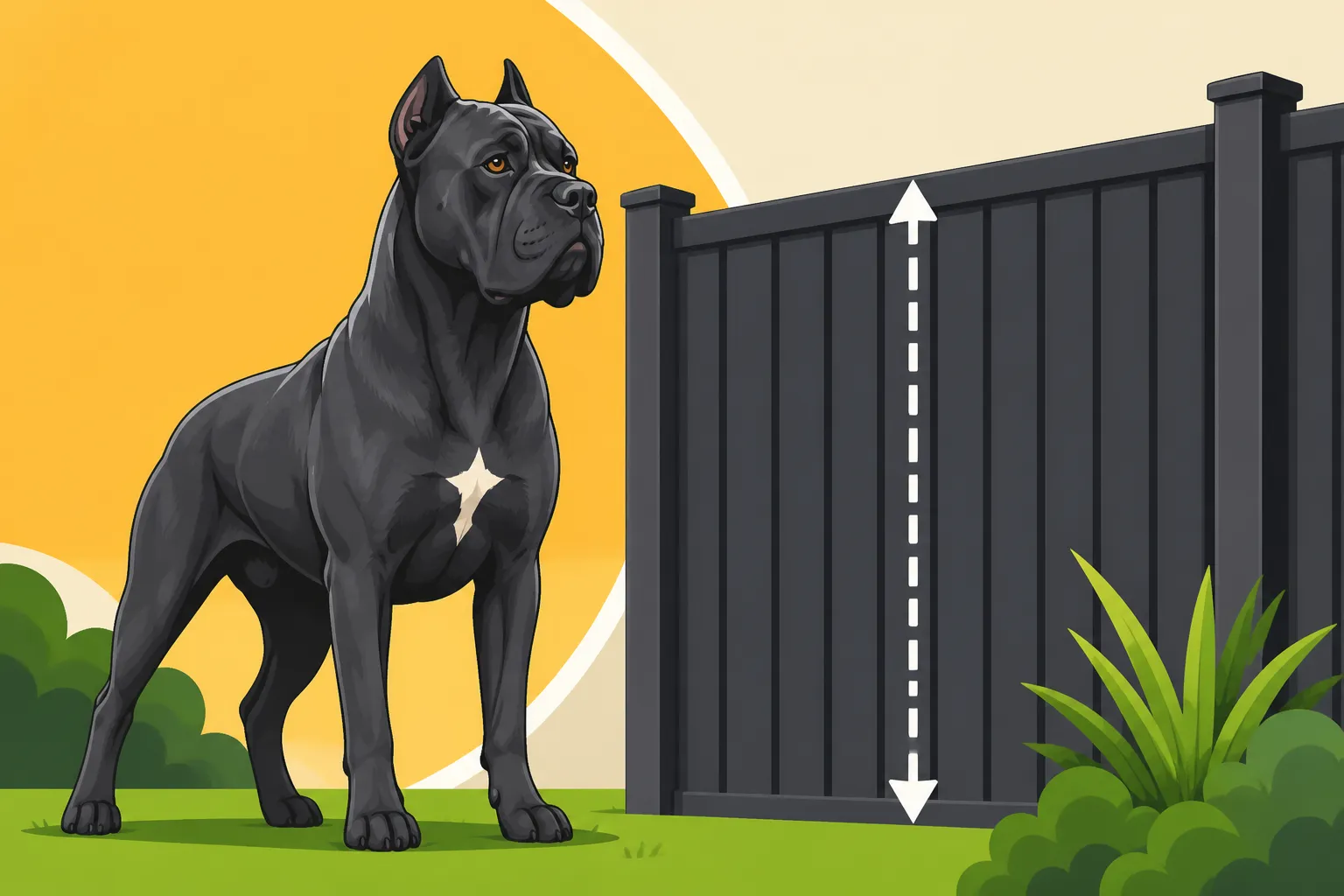
The Fencing Height a Cane Corso Needs
One of the biggest anxieties for any Cane Corso owner, or prospective owner, is how to keep such a powerful, independent, and protective breed safely contained. It’s not just about keeping your beloved giant in your yard; it’s about ensuring the safety of your community and managing the strong instincts of a dog bred for guarding. This guide will walk you through exactly what kind of fencing height and security measures you need to create a secure environment for your Cane Corso, and give you peace of mind.
Why Fencing Is Non-Negotiable for a Cane Corso
Let’s be real, a Cane Corso isn’t your average backyard dog that’s content with a little picket fence. These are formidable animals, both in their physical prowess and their mental makeup. Skipping proper fencing is not only irresponsible but can lead to heartbreaking consequences.
Understanding Their Instinct to Guard
Cane Corsos were historically bred to be guardians of property and livestock, and sometimes even people. This isn't just a learned behavior; it's deeply ingrained in their genetic code. When they see a perceived threat or anomaly outside their territory, their instinct is often to investigate, deter, or confront. A flimsy or low fence does nothing to manage this. Imagine your Cane Corso seeing a new delivery driver, a jogger, or even a child walking by your property. If they can easily see and react to these stimuli, and then, even worse, escape, you've created a dangerous situation. Your fence isn't just a boundary; it's a critical management tool for their innate guardian drive. It helps them understand their territory and limits their ability to engage with perceived threats, ultimately keeping everyone safer.
The Power and Agility of a Mature Cane Corso
Don't let their imposing size fool you; Cane Corsos are incredibly agile and powerful. They aren't just big, they're athletic, capable of surprising feats of strength and vertical leap. A full-grown male Cane Corso can easily weigh over a hundred pounds and, given the right motivation, can clear fences that would stop many other large breeds. I've heard countless stories of Corsos who seemingly "vanished" over fences that owners thought were adequate. They can jump, they can climb if there are footholds, and they can absolutely burst through weaker barriers if they feel the need. This isn't just about a playful jump; it's about raw power combined with intense focus. You need fencing that respects their capabilities, not underestimates them.
Recommended Fencing Heights for Cane Corsos
When it comes to keeping a Cane Corso contained, height truly matters. This isn't a situation where "good enough" is good enough. You need to aim for secure, knowing that your dog has the potential to test those limits.
The Absolute Minimum: Six Feet Tall
For most adult Cane Corsos, a six-foot fence is considered the absolute minimum. Anything less than this is truly asking for trouble. Many dogs, including athletic large breeds like the Cane Corso, can clear a four-foot fence with ease. A five-foot fence might deter a casual jumper, but a determined Cane Corso, especially one with a high prey drive or strong guarding instincts, will likely see it as a challenge rather than a barrier. They can stand on their hind legs and get a full view over a five-foot fence, which can often be enough to trigger a jump or a forceful push. Remember, a Cane Corso is often still filling out until two years of age, so a fence that seemed high enough for your year-old pup might be easily cleared by the time they hit full maturity. The Month a Cane Corso Stops Growing Taller and Why a Cane Corso Keeps Filling Out Until Two highlight this prolonged growth period.
Ideal and Secure: Eight Feet or More
While six feet is the minimum, an eight-foot fence is truly the ideal for most Cane Corsos, especially if you have a particularly athletic individual or live in an area with a lot of external stimuli (like frequent foot traffic, other dogs, or wildlife). An eight-foot fence significantly reduces the likelihood of jump-overs, and also provides a greater visual barrier, helping to minimize reactivity to things happening outside your property. For particularly escape-prone or high-drive individuals, or those who might use nearby structures (like sheds or trees) to gain leverage, even higher fencing or additional anti-climb measures might be necessary. Some owners opt for very tall privacy fences to reduce visual stimulation entirely, which can be a game-changer for a reactive or highly vigilant Cane Corso. It’s an investment, absolutely, but the peace of mind it offers is invaluable.
Beyond Height: Other Essential Fencing Considerations
Just putting up a tall fence isn't always enough. A Cane Corso's intelligence and determination mean you need to think about more than just vertical reach.
Material Matters for Strength and Durability
The type of material your fence is made from is just as crucial as its height. A six-foot chain-link fence made from flimsy, light-gauge wire can be bent, climbed, or even broken through by a powerful Cane Corso. Opt for heavy-gauge chain link (at least 9-gauge, preferably 6-gauge) if you go this route, and ensure it’s properly installed with strong posts. Solid wood fencing needs to be robust, without horizontal rails on the inside that your Corso could use as a ladder. Make sure boards are securely fastened and butt up against each other to prevent pushing through gaps. Vinyl fencing can be an option, but again, ensure it’s commercial grade and installed correctly, as some cheaper vinyl can become brittle over time. A solid masonry fence is, of course, the most robust option but also the most expensive and permanent. Always consider your dog's strength; they will test the weakest point.
Preventing Digging and Climbing Escapes
Cane Corsos aren't usually prolific diggers like some terrier breeds, but a determined dog, especially one motivated by prey drive or escape, can certainly dig their way under a fence. To prevent this, consider:
- L-footers: These are wire mesh extensions buried horizontally along the bottom of the fence, extending inward. When your dog starts digging, they hit the L-footer, which discourages them.
- Concrete Skirts: A concrete trench or barrier poured along the entire base of the fence line makes digging impossible.
- Buried Wire: Heavy-gauge wire mesh buried several inches down at the base of the fence provides a similar deterrent to L-footers.
For climbers, especially with chain link or fences with internal footholds, solutions like "coyote rollers" (spinning tubes along the top edge) can prevent them from getting purchase to go over. Ensure there are no large rocks, stacked firewood, or outdoor furniture near the fence that could give your clever Corso a boost. Fencing That Actually Holds a Cane Corso delves deeper into these practical solutions.
Gate Security and Maintenance
Your fence is only as strong as its weakest link, and often, that’s the gate. Invest in heavy-duty gates that match the height and strength of your fence. They should be installed with sturdy hinges that can handle the weight and a reliable, dual-locking latch system that a Cane Corso can't accidentally (or intentionally) open. Many owners use a padlock for extra security, especially if guests or children might be using the gate.
Regular maintenance is crucial. Walk your fence line at least once a month, checking for:
- Loose boards or bent chain link.
- Areas where digging has begun.
- Rust or rot that could compromise integrity.
- Weak gate hinges or latches that are showing wear.
A small repair now can prevent a major headache (or worse) later. Don't assume that because your fence was installed years ago, it's still as secure as the day it went in. Nature, weather, and even your own dog can cause wear and tear.
What Not to Use: Unsuitable Fencing Options
Just as important as knowing what to use is knowing what definitely not to use for a Cane Corso. Some popular fencing options simply do not provide the level of security and safety these dogs require.
Invisible Fences and Cane Corsos
Let me be absolutely clear: an invisible fence is not suitable for a Cane Corso. I've seen too many owners try this, hoping it will be an easy solution, only to find themselves in a terrible predicament. Invisible fences, which use a buried wire to deliver a static correction when a dog crosses a boundary, rely on pain to deter. While some smaller, less driven dogs might be contained by them, a Cane Corso's pain tolerance, coupled with their strong drive to guard or pursue prey, often overrides the correction. They can (and often will) run right through the static shock if sufficiently motivated, whether it’s to chase a squirrel, confront another dog, or "protect" against a perceived threat.
The biggest problem? An invisible fence only keeps your dog in if they respect it. It does absolutely nothing to keep other animals or people out. This leaves your Cane Corso vulnerable to external threats and, more critically, creates a liability risk if your dog decides to breach the boundary to engage with something or someone on the other side. For a breed with protective instincts, this is an unacceptable risk. Whether an Invisible Fence Holds a Cane Corso explores this topic in more detail.
Low Fences and Decorative Barriers
Any fence under six feet tall, including standard four-foot picket fences, decorative wrought iron, or split rail fences, is completely inadequate for a Cane Corso. These dogs, even when well-trained and temperamentally sound, are large, powerful animals with instincts. A low fence is an invitation to jump or lean over, which can quickly escalate into an escape. A small child leaning over a low fence to pet your dog, or another dog on a walk getting too close, can turn into a dangerous interaction if your Cane Corso isn't properly contained. These types of fences are designed for aesthetics or to simply mark a boundary, not to contain a large, driven guardian breed. They are a gamble you simply cannot afford to take with a Cane Corso.
Planning Your Cane Corso's Outdoor Space
Beyond the fence itself, consider the entire outdoor environment where your Cane Corso will spend time. A well-planned space contributes to their well-being and overall security.
Creating a Secure Play Yard
Even with the best fencing, an unstimulating yard can lead to a bored Cane Corso, who might then look for ways to entertain themselves, potentially by testing your fence. Create an enriching environment within your secure play yard. This might include:
- Shade and Shelter: Essential for a large, often dark-coated dog, especially in warmer climates.
- Water Access: A large, tip-proof water bowl or even a kiddie pool for cooling down.
- Sturdy Chew Toys: Invest in heavy-duty, indestructible toys from places like Chewy that can stand up to a Cane Corso's powerful jaws.
- Designated "Potty" Areas: Helps keep the rest of the yard cleaner.
- Supervision: Even in a perfectly fenced yard, especially when you first bring your Cane Corso home or if they are prone to mischief, direct supervision is key. No fence is foolproof if your dog is left unsupervised for extended periods, or if a gate is accidentally left open.
For areas where your Cane Corso might be particularly prone to testing boundaries, such as near a busy sidewalk, consider a double-fencing system where a smaller, inner fence creates a buffer zone from the main perimeter fence.
Professional Installation and Permitting
Installing a secure fence for a Cane Corso is often a significant undertaking, and it's usually best left to professionals. A reputable fencing company will understand the need for sturdy posts, deep footings, and robust materials. They can also advise on local zoning laws and homeowner association (HOA) restrictions, which may dictate acceptable fence heights, materials, or setbacks from property lines. Trying to cut corners with a DIY installation for a Cane Corso's enclosure can lead to costly mistakes down the road, both in terms of repairs and potential liability if an escape occurs. Get multiple quotes, check references, and ensure the company understands the specific needs of containing a powerful breed like the Cane Corso.
Comparing Cane Corso Fencing Options
| Fence Type | Minimum Recommended Height | Pros | Cons | Suitability for Cane Corso |
|---|---|---|---|---|
| Chain Link | 6-8 feet | Durable, good visibility, relatively cost-effective. | Can be climbed if gauge is too light; does not offer privacy. | Good (if heavy-gauge) |
| Solid Wood | 6-8 feet | Offers privacy, can be aesthetically pleasing, difficult to climb. | Requires maintenance (staining/sealing), can be chewed through. | Excellent |
| Vinyl Privacy | 6-8 feet | Low maintenance, offers privacy, smooth surface (hard to climb). | Can be more expensive; some lower-grade vinyl can be brittle. | Excellent |
| Masonry/Brick | 6-8+ feet | Extremely durable, offers maximum security and privacy. | Most expensive, permanent, requires professional installation. | Exceptional |
| Wrought Iron | 6-8 feet | Aesthetically pleasing, very strong. | Can be very expensive, gaps allow visibility/reach-through. | Good (if gaps are narrow) |
| Invisible Fence | N/A | No physical barrier. | Does not contain a Cane Corso, does not keep others out. | Unsuitable |
| Short Decorative | < 6 feet | Aesthetically pleasing. | Easily jumped, climbed, or pushed through by a Cane Corso. | Unsuitable |
The Fencing Height a Cane Corso Needs is a clear indicator that security is paramount for these magnificent dogs. Making the right choices for your fencing ensures years of happy, safe companionship.
Disclaimer
This article is for general informational purposes only and does not constitute professional advice. Laws, prices and regulations vary by location and change over time. Consult a qualified professional for guidance on your specific situation.