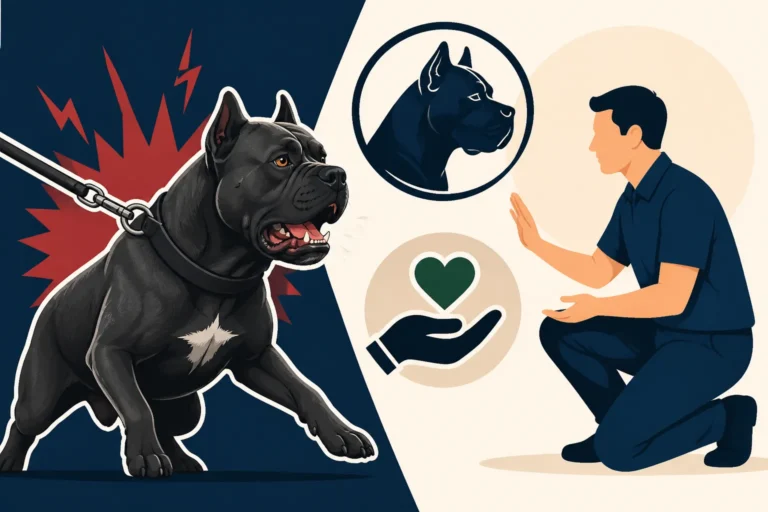
Why Cane Corsos Land in Rescue at Eighteen Months
It's a heartbreaking reality that many Cane Corsos find themselves looking for a new home around the age of eighteen months. This isn't just a coincidence; it's a critical period in their development when many owners, often unprepared for the sheer scale of commitment this breed demands, reach their breaking point. This guide will explore the common reasons why these magnificent dogs end up in rescue at such a young, formative age, offering insights into the challenges and how prospective owners can avoid contributing to this unfortunate trend.
The Adolescent Cane Corso: A Challenging Phase
Imagine a human teenager, but instead of angst and Snapchat, you've got a hundred-pound animal with boundless energy and a rapidly developing sense of self, testing every boundary you thought you had established. That's essentially what owning an eighteen-month-old Cane Corso can feel like. This period, often called adolescence, is a significant hurdle for many, separating those who are truly prepared from those who were swayed by the idea of a formidable guardian without understanding the daily grind.
The "Teenage" Rebellion: When Maturity Doesn't Mean Mellow
Around eighteen months, a Cane Corso is physically imposing, but mentally, they're still very much in their "teenager" phase. They’re no longer the cuddly, manageable puppy, but they haven't yet settled into the calm, discerning adult many envision. This is when they truly start asserting their independence, challenging your authority, and pushing boundaries. What might have been an easily redirected puppy nipping now becomes a powerful, uninhibited chew on furniture or even a person. That little puppy bark at strangers transforms into a booming, intimidating declaration that can send guests running. It’s a time when their instinctual drives, especially their guarding instincts, really start to kick in, often with a force that catches unsuspecting owners off guard.
Think about it: they're full of juvenile bravado, overflowing with energy, and their brain is still very much under construction. This means they might "forget" their training cues, become suddenly leash reactive, or decide that your carefully laid rules no longer apply. This isn't out of malice, but simply a stage of development where their hormones are raging, and they're figuring out their place in the world. It requires unwavering consistency, patience, and a deep understanding of canine behavior – qualities many new owners simply don't possess or anticipate needing in such quantities.
The Shifting Boundaries of an Eighteen-Month-Old
During this adolescent period, the boundaries you set during puppyhood can feel like they're being re-evaluated daily. A Cane Corso who once respected your space might now push past you through a doorway, or ignore a "stay" command if something more interesting catches their eye. Their confidence is soaring, but their judgment isn't quite there yet. This can lead to confrontations, not just with other dogs or strangers, but within the household itself, especially if the owner hasn't established clear leadership and consistent rules from day one.
Consider the simple act of walking. A ninety-pound, strong-willed dog that decides to pull can quickly become unmanageable for even a physically capable adult. If leash manners weren't solidified before they hit this growth spurt, an eighteen-month-old Cane Corso can drag you down the street, making daily walks a terrifying ordeal rather than an enjoyable bonding experience. This is often when owners start feeling overwhelmed and confined, realizing their home life has been completely dictated by their dog's burgeoning will and strength.
Growth Plate Closure and Bursting Energy
Physically, most Cane Corsos are still developing at eighteen months, though their major bone growth plates are often closing around this time. This means they are nearing their full size and strength, but their internal energy levels can still be incredibly high. They need significant outlets for this energy, both physical and mental. Simply letting them out in the backyard isn't enough; they need structured exercise, training, and mental stimulation daily.
An under-exercised Cane Corso is a destructive Cane Corso. They'll find their own "jobs" to do, and those jobs usually involve chewing your furniture, digging up your yard, or barking incessantly. Many owners get a Cane Corso thinking a big yard is sufficient, only to discover their adolescent dog needs more than just space – they need purpose. Without proper outlets, their frustration can manifest as anxiety, reactivity, or destructive behaviors that quickly strain the owner's resolve. This is a common point where people realize they simply cannot provide the intense daily engagement this breed demands.
Unrealistic Expectations vs. Reality
The image of the Cane Corso is powerful: a stoic, protective guardian, loyal to their family. And while this breed certainly embodies those traits, the reality of living with and training such a dog often clashes dramatically with romanticized notions. Many people are drawn to the breed for its imposing appearance and reputation, without fully understanding the immense responsibility that comes with it.
The Allure of the "Protector" Image
So many people are captivated by the idea of owning a magnificent, protective dog like a Cane Corso. They envision a loyal companion that will stand watch over their home and family, an impressive figure that commands respect. However, this vision often comes from movies, social media, or hearsay, and doesn't account for the thousands of hours of training, socialization, and management required to mold that potential into a well-behaved, stable guardian.
The truth is, a Cane Corso doesn't magically become a "protector" just by existing. Without proper guidance, that natural guarding instinct can easily devolve into fear-based aggression, reactivity towards strangers or other dogs, or even resource guarding within the home. What was intended as protection can become a liability, making it impossible to have guests over or walk your dog in public without anxiety. Owners often fail to understand the difference between a naturally discerning guardian and a poorly managed, reactive dog that is a danger to itself and others. If you’re interested in understanding the nuances of their protective nature, you might find What a Cane Corso's Guardian Instinct Actually Is sheds some light.
Underestimating the Daily Management Needs
Owning a Cane Corso isn't just about feeding them twice a day and taking them for a quick walk. It's a lifestyle. These dogs require consistent rules, boundaries, and expectations from day one, enforced by every member of the household. They thrive on routine and structure, and without it, they can quickly become confused, anxious, and pushy.
Think about the sheer physical presence of a Cane Corso. Everything from car travel to vet visits, from nail trims to simply moving around the house, becomes a major event that requires careful management. They can easily knock over a child or an elderly person without meaning to. They need proper containment – not just a fence, but a fence that can actually hold a powerful, determined dog. Fencing That Actually Holds a Cane Corso is a topic many owners learn about the hard way. The level of daily vigilance and proactive training needed to integrate such a powerful breed safely into society is often severely underestimated.
The Disconnect Between Puppy Cuteness and Adult Demands
When someone brings home an 8-week-old Cane Corso puppy, it's all adorable floppy ears and clumsy paws. They're tiny, manageable, and seem eager to please. It's easy to overlook the potential for a 120-pound adult dog in that small bundle. As the puppy grows, rapidly passing milestones and gaining weight almost weekly, the disconnect becomes glaringly apparent. The cute puppy behaviors that were tolerated, like jumping up for attention or mouthing, become dangerous habits in an adolescent or adult dog.
Many first-time Cane Corso owners are simply unprepared for the rapid growth and the physical and mental maturity that follows. They might have a vision of a giant, cuddly teddy bear, but the reality is a powerful, intelligent working dog with strong instincts. This is why it's often said that Why a Cane Corso Is Not a First Dog. The demands escalate exponentially with their size and age, and by 18 months, when they are largely physically mature but still mentally immature, the gap between expectation and reality can be so wide that owners feel completely overwhelmed and unable to cope.
Lack of Early Socialization and Training
One of the most critical factors leading to Cane Corsos landing in rescue at 18 months is a profound lack of appropriate early socialization and consistent training. The window for truly impactful socialization closes surprisingly early, and what's missed in those formative months can be incredibly difficult, if not impossible, to fully rectify later on.
Missed Opportunities in the Critical Puppy Window
The socialization window for a Cane Corso puppy is vital, typically running from about 8 to 16 weeks of age. During this time, puppies are sponges, absorbing experiences and forming their understanding of the world. They need to be exposed to a wide variety of sights, sounds, people, other friendly dogs, different environments, and surfaces in a positive, controlled manner. This isn't just about "meeting people"; it's about neutral exposure and positive association. For more on this, check out The Socialization Window a Cane Corso Puppy Gets.
Unfortunately, many owners, either due to misinformation, fear of disease (before all shots are complete), or simply underestimating its importance, miss this crucial period. They might keep their puppy isolated at home, or only expose them to a very limited set of circumstances. The result is an adolescent Cane Corso that views novel situations, unfamiliar people, or other dogs with suspicion, fear, or over-excitement, leading to reactivity and guarding behaviors that can be challenging to manage in a large, powerful dog.
The Escalation of Undesirable Behaviors
Without consistent training and socialization, what begin as minor behavioral quirks in a puppy can escalate into serious problems by the time the dog is 18 months old. A puppy that barks at the mailman might become an adult Cane Corso that lunges and barks aggressively at anyone approaching the property. A dog that wasn't taught bite inhibition can deliver a painful accidental bite during play. An undersocialized puppy might develop fear-based aggression towards other dogs, making dog parks or even neighborhood walks impossible.
These issues don't appear overnight; they develop over time, often exacerbated by the owner's lack of knowledge or consistent intervention. By 18 months, these ingrained behaviors are much harder to change. It takes significant time, effort, and often professional help to modify them. Many owners find themselves overwhelmed by the sheer force and determination of their adolescent Corso, unable to control behaviors that could have been prevented with early, proactive work.
The Cycle of Ineffective Training Methods
Adding to the problem is the prevalence of ineffective or even harmful training methods. Some owners, struggling with a challenging adolescent Cane Corso, might resort to harsh, punishment-based techniques, mistakenly believing a "dominant" breed needs a "firm hand." These methods often backfire, eroding trust, increasing fear, and potentially escalating aggressive behaviors.
Conversely, some owners might be too permissive, allowing the Cane Corso to dictate terms, which leads to a dog that lacks boundaries and respects no authority. Neither extreme is beneficial. What a Cane Corso truly needs is consistent, positive reinforcement-based training that establishes clear communication, builds confidence, and fosters a strong bond. Daily, short training sessions, even just Five Minute Cane Corso Sessions Twice a Day, can make a huge difference, but when these are neglected or poorly implemented, the dog's behavior deteriorates, and the owner-dog relationship frays, often culminating in the decision to rehome.
Financial Strain of a Giant Breed
Another significant, yet often overlooked, reason Cane Corsos end up in rescue is the sheer financial commitment involved in owning a giant breed. Many prospective owners focus on the initial purchase price, perhaps not fully appreciating that the cost of acquiring the dog is often the smallest expense over its lifetime.
Unexpected Veterinary Bills and Dietary Needs
Cane Corsos, like all large and giant breeds, come with their own set of health considerations. They can be prone to conditions like hip and elbow dysplasia, bloat, and certain cancers. While responsible breeders health-test their breeding stock, there's never a 100% guarantee. A sudden illness or an accident can quickly lead to veterinary bills that run into the thousands. Imagine your 18-month-old Corso suddenly showing signs of bloat – Recognizing Bloat in a Cane Corso Before It Turns is critical, but the emergency surgery is incredibly expensive. Without pet insurance, these costs can be devastating.
Beyond emergencies, the routine costs are higher too. Medications, flea and tick preventatives, and even vaccinations are often dosed by weight, meaning a hundred-pound Cane Corso will cost more than a twenty-pound terrier. Then there's food. A fully grown Cane Corso can eat Six to Nine Cups Across Two Cane Corso Meals daily, and good quality kibble, or even fresh food options like Ollie, can be a substantial monthly expense. Many owners are shocked by the food bill, especially when their adolescent Corso is still growing and eating an incredible amount. The idea of feeding a cheap, low-quality food to save money might seem tempting, but it can lead to health issues down the line, ironically increasing vet bills.
The High Cost of Professional Training and Containment
When an adolescent Cane Corso develops behavioral issues, professional help often becomes necessary. A good trainer or behaviorist, especially one experienced with guardian breeds, is invaluable, but they are not cheap. The Training Bill a Cane Corso Owner Cannot Skip can easily add hundreds or even thousands of dollars to the annual budget, particularly if private sessions or board-and-train programs are required. Many owners, already stretched thin, find this additional expense unmanageable.
Beyond training, proper containment is a necessity. A Cane Corso requires a secure yard with a fence that is tall and sturdy enough to prevent escape. Installing a six-foot privacy fence around an entire property can be a significant investment. Then there are crates, durable leashes, harnesses, and indestructible toys, all of which cost more when scaled up for a giant breed. Chewing habits, especially during adolescence, can lead to destroyed household items, further adding to the financial burden.
Insurance Challenges for a "Restricted" Breed
Insuring a Cane Corso can also present unique financial challenges. While pet insurance can be a lifesaver for unexpected vet bills, finding affordable coverage for a large, "restricted" breed like the Cane Corso can be difficult. Some carriers may charge higher premiums or even refuse coverage. Monthly Pet Insurance Premiums on a Cane Corso can be significantly higher than for other breeds. Providers like Healthy Paws are often sought out for their comprehensive coverage, but owners still need to budget for the monthly cost.
Homeowners' insurance is another hurdle. Many insurers have breed restrictions and may deny coverage or charge exorbitant rates for homes with a Cane Corso. This means owners might have to switch policies, find specific liability riders, or even face non-renewal. This can be a huge, unexpected financial and logistical stressor for families. Homeowners Policies That Exclude a Cane Corso are a harsh reality for many seeking to be responsible owners. The cumulative effect of these various costs can simply become too much for many families to sustain, leading to the difficult decision to rehome.
| Cost Category | Initial Investment (Example) | Monthly/Annual (Example) | Common Unexpected Expenses (Example) |
|---|---|---|---|
| Purchase Price | $1,500 – $5,000 | N/A | N/A |
| Food & Treats | $50 (first bag) | $100 – $200+ | Special diets for allergies, prescription foods |
| Veterinary Care | $300 – $700 (puppy shots) | $50 – $100+ (annual exam, preventatives) | Emergency bloat surgery, orthopedic repairs, seizure workup |
| Training | $150 – $300 (group class) | N/A | Private behaviorist sessions ($500-$2000+), specialized training |
| Equipment | $200 – $500 (crate, leash, bowls) | $20 – $50 (toys, beds) | Replacing destroyed furniture, escape-proof fencing |
| Insurance | N/A | $50 – $150+ (pet insurance) | Increased homeowners' premiums, liability policies |
Note: All prices are illustrative and vary widely based on location, provider, and specific needs.
Breed-Specific Challenges: Guarding and Reactivity
Cane Corsos possess inherent traits that, while desirable in their intended role as guardians, can become significant challenges without careful management, especially during their adolescent period. Their strong protective instincts and formidable presence require an owner who understands how to channel these drives appropriately.
The Natural Progression of Guarding Instincts
As Cane Corsos mature, their natural guarding instincts typically become much more pronounced. What might have been a tentative "woof" at a stranger from a puppy can transform into a full-blown, deep-chested bark and a hard stare from an 18-month-old. They start to distinguish between "their" people and strangers, "their" property and public spaces. This discernment is precisely what makes them excellent guardians, but without careful socialization and training, this can manifest as suspicion, territoriality, and even aggression towards anyone perceived as an intruder, whether real or imagined.
The issue arises when owners haven't taught their Cane Corso appropriate ways to handle perceived threats or new stimuli. A delivery driver at the door, a neighbor walking past the fence, or a new guest entering the home can trigger an intense reaction. If the dog hasn't learned that the owner has control of these situations and that barking or lunging isn't always necessary, the dog takes it upon itself to "manage" the situation. This becomes a major problem when the dog is large and powerful, creating a stressful and potentially dangerous environment for owners and visitors alike.
When Reactivity Becomes Unmanageable
Reactivity, often stemming from fear, overstimulation, or a lack of confidence, is a common issue that becomes particularly challenging with an adolescent Cane Corso. An 18-month-old Cane Corso who barks and lunges at other dogs on walks, or who snaps at strangers who approach too quickly, is not just a nuisance; they are a serious safety concern. The strength of these dogs means that once they've fixated on something, they can be incredibly difficult to redirect or control.
Owners who initially found their puppy's "alert barking" charming often find themselves unable to manage a reactive adult dog. They might avoid walks altogether, leading to more pent-up energy and frustration for the dog, or resort to increasingly harsh methods that only worsen the dog's anxiety and reactivity. This cycle can quickly lead to an owner feeling completely overwhelmed, trapped in their home, and desperate for a solution.
Managing an Untrained Powerhouse in Public
Taking an untrained or poorly managed 18-month-old Cane Corso out in public is a recipe for disaster. Their sheer size and strength mean that a simple walk can become a dangerous tug-of-war if they decide to chase a squirrel, lunge at another dog, or greet a stranger inappropriately. Even if the dog means no harm, their enthusiasm can easily injure someone or cause panic.
Many owners who find their Cane Corso unmanageable in public settings eventually stop taking them out. This isolates the dog further, preventing any opportunity for improvement and increasing their anxiety about novel experiences. It creates a dog that is confined to the home and yard, unable to experience the world in a balanced way. The perceived embarrassment, combined with the physical exertion and potential liability, makes owners realize they simply cannot handle their powerful, untrained adolescent Cane Corso, leading them to seek rehoming options.
The Ripple Effect: When Rehoming Becomes the Only Option
For many owners, the decision to rehome their Cane Corso is not made lightly. It’s often a last resort, born out of exhaustion, fear, and a profound sense of failure. By the time a dog reaches 18 months, if issues haven't been addressed, the situation can feel insurmountable, leading to a heartbreaking choice.
The Emotional Toll on Families and Dogs
Making the decision to surrender a beloved pet, especially one that has been a part of the family for over a year, takes an immense emotional toll. Owners often feel guilty, sad, and frustrated. They mourn the loss of the companion they envisioned and the bond they hoped to have. The dog, too, experiences significant stress, confusion, and grief. They are taken from the only home they’ve known, often placed in a loud, unfamiliar shelter environment, and left to wonder what they did wrong.
For a guardian breed like the Cane Corso, who bonds deeply with their family, this upheaval can be particularly devastating. It can exacerbate existing behavioral issues or create new ones, making them even more challenging for rescue organizations to place. This emotional burden is something that weighs heavily on everyone involved, and it’s a situation that everyone wants to avoid.
The Reality of Rescue Overload
When a Cane Corso is surrendered, they typically end up in either a general animal shelter or a breed-specific rescue. The unfortunate reality is that many rescues, especially those dedicated to large, powerful breeds, are often operating at or beyond capacity. These organizations pour their limited resources into rehabilitating and rehoming dogs, but the sheer volume of surrenders, especially of young, powerful dogs with behavioral issues, can be overwhelming.
An 18-month-old Cane Corso with reactivity or guarding issues requires specialized care, experienced foster homes, and intensive training. This is a huge undertaking for any rescue. They must assess the dog's temperament, address any medical needs, and invest significant time and money into training and behavior modification before the dog can even be considered for adoption. The journey to a new, permanent home can be long and arduous for these dogs, and some may struggle to adapt, further highlighting Why Cane Corsos Land in Rescue at Eighteen Months.
What a Cane Corso Rescue Demands of Your Fencing
Breed-specific rescues, like the Cane Corso Rescue, often have very stringent requirements for potential adopters, particularly regarding fencing and prior experience. They understand the challenges of these dogs and aim to place them in homes where they will thrive and not end up back in the system. They might perform extensive home checks, interview multiple references, and require specific types of fencing or containment measures before even considering an application. For instance, The Home Check a Cane Corso Rescue Runs can be quite thorough, focusing heavily on secure outdoor spaces.
For an 18-month-old Cane Corso, especially one with a history of escape attempts or territorial behavior, a rescue might demand an incredibly secure, tall fence, perhaps even recommending a fully enclosed kennel run within a fenced yard. They know that an unsecured Cane Corso is a risk, and they are committed to ensuring the safety of the dog and the community. This often means that even well-meaning families might be turned down if their property doesn't meet the rigorous standards necessary for a powerful, potentially flight-risk or reactive dog.
Disclaimer
This article is for general informational purposes only and does not constitute professional advice. Laws, prices and regulations vary by location and change over time. Consult a qualified professional for guidance on your specific situation.