Traveling Often With a Cane Corso Left at Home
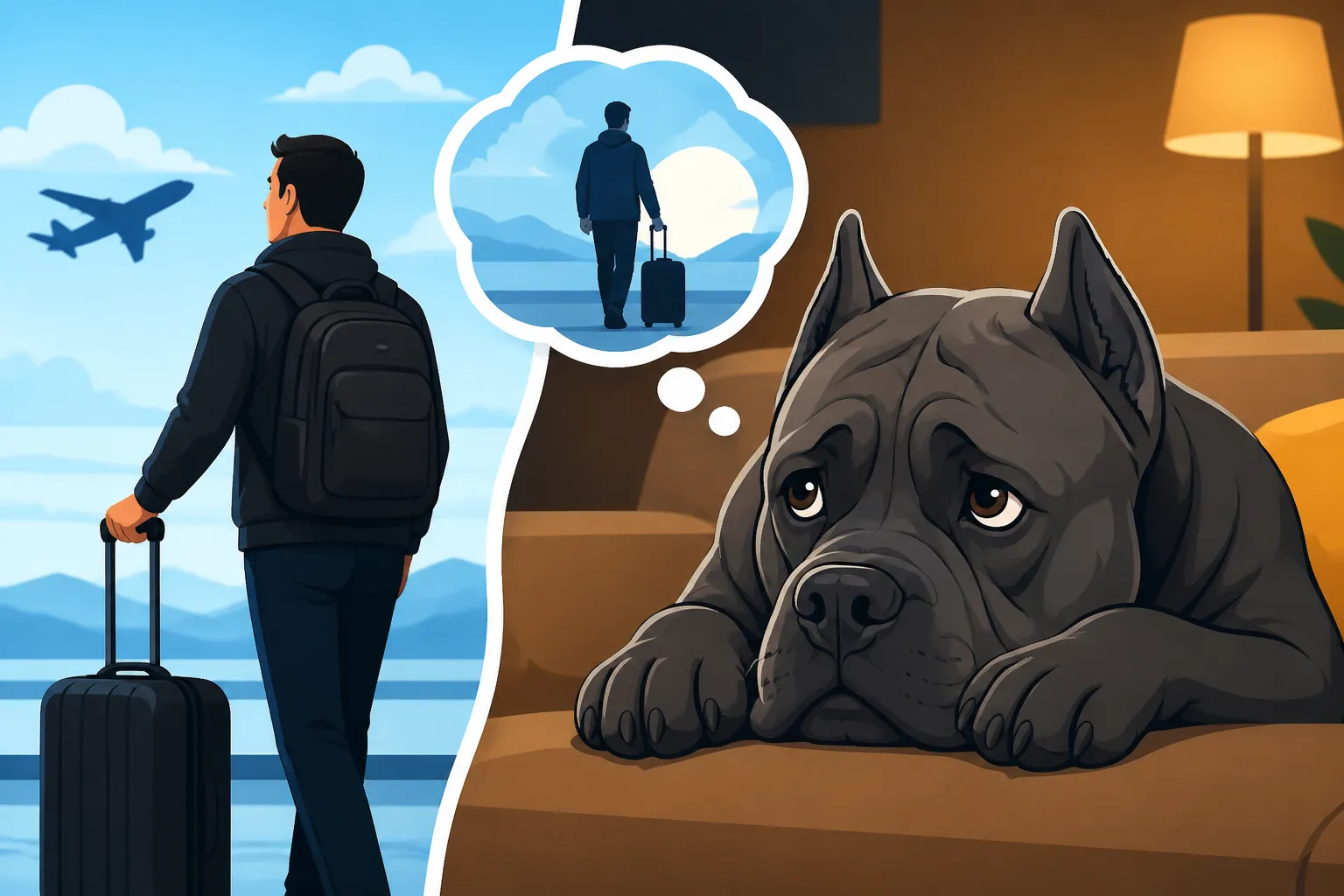
A frequent work trip or family emergency can turn a simple question into a stressful one: who can safely care for a powerful, people-oriented Cane Corso while you’re away? This guide explains how to choose between a sitter, trusted friend, or boarding facility, prepare your dog and home, and reduce the disruption of travel without assuming every Corso has the same needs.
Why frequent travel needs a real care plan
A Cane Corso is not a dog to leave on autopilot
Cane Corsos are large, strong dogs, and many are closely bonded to their households. That doesn’t mean every individual will struggle when left alone, but it does mean you should plan carefully instead of assuming a neighbor can pop in whenever convenient. The right arrangement depends on your dog’s temperament, health, training, daily routine, and comfort with unfamiliar people.
Think about an ordinary travel day from your dog’s point of view. A person they barely know enters the home, handles the leash, prepares meals, and perhaps tries to move them away from a window or door. A Corso who is relaxed with visitors may take that in stride. One who is wary, territorial, or uncomfortable with handling may need a slower introduction and a caregiver with relevant experience.
It also helps to separate “can stay home alone for a while” from “can be left for an entire trip.” Even a dog that settles calmly during a workday still needs care, exercise, bathroom breaks, company, and someone who can respond if something goes wrong. For a closer look at the day-to-day question, see Whether a Cane Corso Can Be Left During a Work Day and How Many Hours a Cane Corso Can Be Left Alone.
Repeated absences can expose gaps in the routine
Travel itself is not automatically harmful. The problem is unpredictability: a different caregiver every time, irregular meal and walk times, long stretches without interaction, or rushed introductions on the day you leave. Some dogs adjust well to consistent care; others become unsettled when their routine and familiar people disappear.
Watch for changes when you prepare to go or return. Pacing, persistent barking, destructive chewing, house-soiling, refusal to eat, or frantic greetings can have several causes, and they don’t prove a dog has separation anxiety. Still, patterns that happen repeatedly around departures are worth discussing with your veterinarian or a qualified behavior professional. The article Separation Anxiety in a Cane Corso Left in a Crate can help you think through one common concern, but a crate is not a cure-all and should not be used to confine a distressed dog for an extended absence.
If your schedule has become travel-heavy, be honest about the routine you can maintain between trips. A well-managed care plan should work on an ordinary Tuesday, not just during a carefully arranged holiday. The Structure a Cane Corso Needs Every Single Day is useful for mapping the consistency your dog may rely on.
Choose a care arrangement that fits your dog
Compare a home sitter, familiar person, and boarding facility
There is no single best option for every Cane Corso. A sitter who stays in your home may preserve familiar surroundings, while boarding can offer staff and a more structured setting. A trusted friend or relative may already have a relationship with your dog, but familiarity alone does not guarantee they are comfortable managing a strong dog on leash or responding to an emergency.
| Care option | May suit a dog who | Questions to ask before booking |
|---|---|---|
| In-home sitter | Settles best in familiar surroundings and is comfortable with a new caregiver | Can the sitter stay for the agreed hours, follow handling instructions, and manage your dog safely? |
| Trusted friend or relative | Already knows the person and has practiced the routine with them | Are they genuinely willing and physically prepared to provide every walk, meal, and check-in? |
| Boarding facility | Has been introduced gradually and can cope with a staffed, unfamiliar environment | How are dogs supervised, separated, exercised, and handled if they become stressed or unwell? |
| Combination of care | Benefits from familiar visits plus a backup or overnight arrangement | Who is responsible for each time block, and who takes over if the first caregiver cancels? |
An in-home sitter can be a good fit when your dog is more comfortable at home, but “in-home” can mean very different things. Confirm whether the person will sleep there, how long the dog will be alone, and whether they are responsible for other animals or jobs during the visit. If the plan is a few short drop-ins, make sure the gaps between visits are reasonable for your particular dog.
Boarding may be practical for dogs who have already had positive experiences away from home. Arrange a tour, ask about the facility’s handling policies, and give your dog a short trial stay before relying on it for a longer trip. A kennel’s willingness to accept a large guardian breed is only the starting point; you also need to know whether its setup suits your dog’s temperament and needs. For help identifying a suitable caregiver, see Finding a Pet Sitter Who Will Handle a Cane Corso.
Choose experience and communication over a reassuring first impression
A caregiver should be able to follow your instructions without turning the job into a test of strength. Ask how they would handle a dog that hesitates at a doorway, reacts to a passing dog, refuses to get into a car, or is uncomfortable with a visitor. Their answers should be calm, practical, and consistent with the training approach you use—not based on forcing the dog through a stressful situation.
Introduce the caregiver to your Corso while you are present, then practice a short handoff. For example, have the sitter join you on a quiet walk, give a familiar meal, or stay with the dog while you step out briefly. Add time gradually if your dog remains comfortable. Don’t wait until the ride to the airport to discover that your dog won’t accept a leash from the new person.
Share clear, written instructions and ask the caregiver to send routine updates. Agree on how often they will check in, how they will contact you in an emergency, and who can make decisions if you are unreachable. If your dog has guarding, reactivity, or handling concerns, a trainer can help you build a safer handoff plan. What to Look For in a Cane Corso Trainer offers a starting point for assessing professional help.
Prepare your dog, caregiver, and home before departure
Make a written care sheet that someone can use under pressure
A useful care sheet is specific enough to prevent guesswork. List your dog’s usual meal routine, measured portions, medication instructions if applicable, bathroom habits, walk preferences, known triggers, and the cues your household uses. Include what your dog finds reassuring and what tends to make a situation worse. “Give space when he is unsure” is more useful than “he can be protective.”
Also include practical details that are easy to forget: your veterinarian’s contact information, the nearest emergency clinic, your preferred way to be reached, a backup contact, and where the leash, carrier, cleaning supplies, and food are stored. Tell the caregiver which doors and gates must stay closed. For a large dog, a slipped collar or an open front door can become a serious problem quickly, so agree on leash and entry procedures in advance.
Set out the supplies in one predictable place. Keep food in its original packaging or label the storage container, and provide enough of the food your dog already eats. A last-minute diet change can upset some dogs’ stomachs, adding an avoidable problem while you’re away. If you use Chewy to order your dog’s usual food or recurring supplies, check the shipment before departure and make sure the caregiver knows where everything is stored. Don’t leave the caregiver to guess about portions or substitute a new food without your approval.
Keep departures and daily care as ordinary as possible
Try not to make travel day the first time your dog sees the caregiver handling the routine. A few practice visits let you observe how the person and dog interact, and they give your dog a chance to learn that the sitter’s arrival is not a surprise. If the dog is uneasy, slow down and get professional guidance rather than relying on repeated forced exposure.
Keep the normal meal and walk schedule as close as practical. Ask the caregiver not to add unfamiliar treats, intense exercise, or busy outings simply to “tire the dog out.” A calm sniff walk and familiar enrichment may be a better fit than a crowded public place, particularly if your dog is sensitive around unfamiliar dogs or people. You can leave approved toys or food puzzles, but avoid anything your dog might break, swallow, or guard when unsupervised.
Use familiar bedding and everyday items if they help your dog settle, but don’t assume a worn shirt will solve distress. In a household with a dog who is uncomfortable around strangers, the caregiver’s behavior and the gradual introduction matter more than a particular object. You can use Chewy or another pet-supply retailer to replace a familiar food puzzle or arrange a delivery of the same food, but keep the actual care plan focused on what your dog already knows and safely enjoys.
Plan for contingencies, not just the expected schedule
Travel plans change. Flights are delayed, roads close, and a sitter may become ill. Before leaving, identify a backup caregiver who has met your dog and understands the instructions. Make sure both people know who is responsible if the original plan falls through; vague assumptions can leave a dog without care during a long gap.
If your dog has a medical condition, mobility issue, medication schedule, or history of panic, share that information before confirming the arrangement. Ask the caregiver to tell you promptly about a missed meal, vomiting, unusual behavior, or a loose dog encounter rather than waiting to see if it passes. For emergencies, provide written permission or other information the veterinary practice may need, and agree in advance on how expenses and decisions will be handled.
Finally, think through how you will keep contact useful rather than stressful. A brief photo or update can be reassuring, but constant messages can distract a caregiver who is walking or supervising your dog. Set a reasonable check-in routine and make sure the sitter can reach you quickly if something important happens. For supplies such as familiar food, waste bags, or replacement enrichment items, a Chewy order may be convenient; confirm that deliveries arrive before you leave rather than relying on a package to show up during the trip.
Check the plan before every trip
Use a pre-travel checklist
A simple checklist reduces the last-minute scramble that often leads to missed details. Review it with the caregiver, not just on your own. If the person will be staying in your home, show them how to secure doors, gates, and any areas your dog should not enter.
- Confirm the caregiver and backup have both agreed to the dates and responsibilities.
- Arrange at least one introduction and a short practice visit before a longer absence.
- Write down meals, medication, walks, handling preferences, triggers, and emergency contacts.
- Set out the dog’s usual food, leash, collar or harness, waste bags, cleaning supplies, and approved enrichment.
- Confirm the caregiver understands how to enter and leave the home without allowing the dog to bolt.
- Share your veterinarian’s details and the process for contacting you or the backup person.
- Agree on check-in times and what situations require an immediate call.
- Leave enough time to adjust the plan if your dog appears frightened or the caregiver is uncomfortable.
The checklist should reflect your dog, not a generic ideal. One Corso may be content with a sitter who visits several times a day; another may need someone present for longer stretches or a facility where staff can supervise closely. If the arrangement only works when nothing unexpected happens, it needs a backup.
Reassess after you return
When you get home, give your dog a quiet chance to settle rather than assuming an exuberant greeting means everything went perfectly. Ask the caregiver how meals, bathroom breaks, sleep, and walks went, including small changes that might matter next time. If the dog ate less, had accidents, barked for long periods, or seemed unusually tense, note the details and adjust the plan.
A short debrief can make the next trip easier. Maybe the sitter needs another practice visit, the boarding trial should be shorter, or your dog does better with a familiar evening routine. If distress was significant or recurring, speak with your veterinarian and consider working with a qualified behavior professional before scheduling another long absence. The goal is not to find a one-size-fits-all arrangement, but to build reliable care that your dog can handle and the caregiver can deliver safely.
Disclaimer
This article is for general informational purposes only and does not constitute professional advice. Laws, prices and regulations vary by location and change over time. Consult a qualified professional for guidance on your specific situation.