The 1988 Litter That Started American Cane Corsos
For anyone fascinated by the majestic Cane Corso, it can feel like these incredible dogs have always been a part of the American dog scene. But the truth is, the journey of the Cane Corso to the United States was a carefully orchestrated effort by dedicated enthusiasts, and it really took off with a pivotal litter in 1988. This guide will walk you through the fascinating story of how these dogs, once nearly extinct in their homeland, found a new beginning and established their roots on American soil.
The Cane Corso's Journey to American Shores
Before the Cane Corso captured the hearts of American dog lovers, it was a breed deeply embedded in the rural landscape of Southern Italy, serving as a versatile farm dog and guardian. Its existence, however, was far from secure, making its eventual arrival in America a testament to the perseverance of a few devoted individuals.
Pre-1988: A Breed on the Brink
For centuries, the Cane Corso thrived in its native Italy, primarily in the Puglia region, working as a robust farm dog. These dogs were guardians, hunters, and cattle drivers, embodying the spirit of the ancient Roman Molossers from which they descended. You might recall stories of The Roman War Dog Behind the Cane Corso, powerful canines used in battle and protecting homesteads. However, the mid-20th century brought immense challenges. Post-World War II, Italy underwent significant economic and social changes. Mechanized farming replaced traditional methods, and the need for large, working dogs diminished dramatically. As a result, the Cane Corso population dwindled, pushing the breed to the very edge of extinction. It was a dire situation, truly a case of How the Cane Corso Nearly Disappeared After the War. For a while, it seemed only a handful of isolated dogs remained, clinging to existence in remote parts of the Italian countryside.
The Italian Revival and Early Enthusiasts
Thankfully, the story didn't end there. In the 1970s, a dedicated group of Italian enthusiasts, most notably Dr. Paolo Breber, began the painstaking work of identifying and gathering the surviving specimens. This revival movement gained momentum after Dr. Breber published an article in 1976 that brought attention to the breed, often referred to as The 1976 Article That Started the Cane Corso Revival. These passionate individuals traveled through the Italian countryside, searching for dogs that still embodied the historical type and working ability of the Cane Corso. Their efforts led to the founding of the Società Amatori Cane Corso (SAC) in 1983, a pivotal organization dedicated to standardizing and preserving the breed. The Founding of the Società Amatori Cane Corso in 1983 marked a crucial step in bringing the Cane Corso back from oblivion. They established a breed standard, initiated careful breeding programs, and eventually achieved formal recognition from the Italian Kennel Club (ENCI) in 1994, known as The 1994 ENCI Recognition of the Cane Corso. This Italian revival laid the essential groundwork for the breed's eventual introduction to other parts of the world, including the United States.
The Pivotal 1988 Litter: Genesis of the American Cane Corso
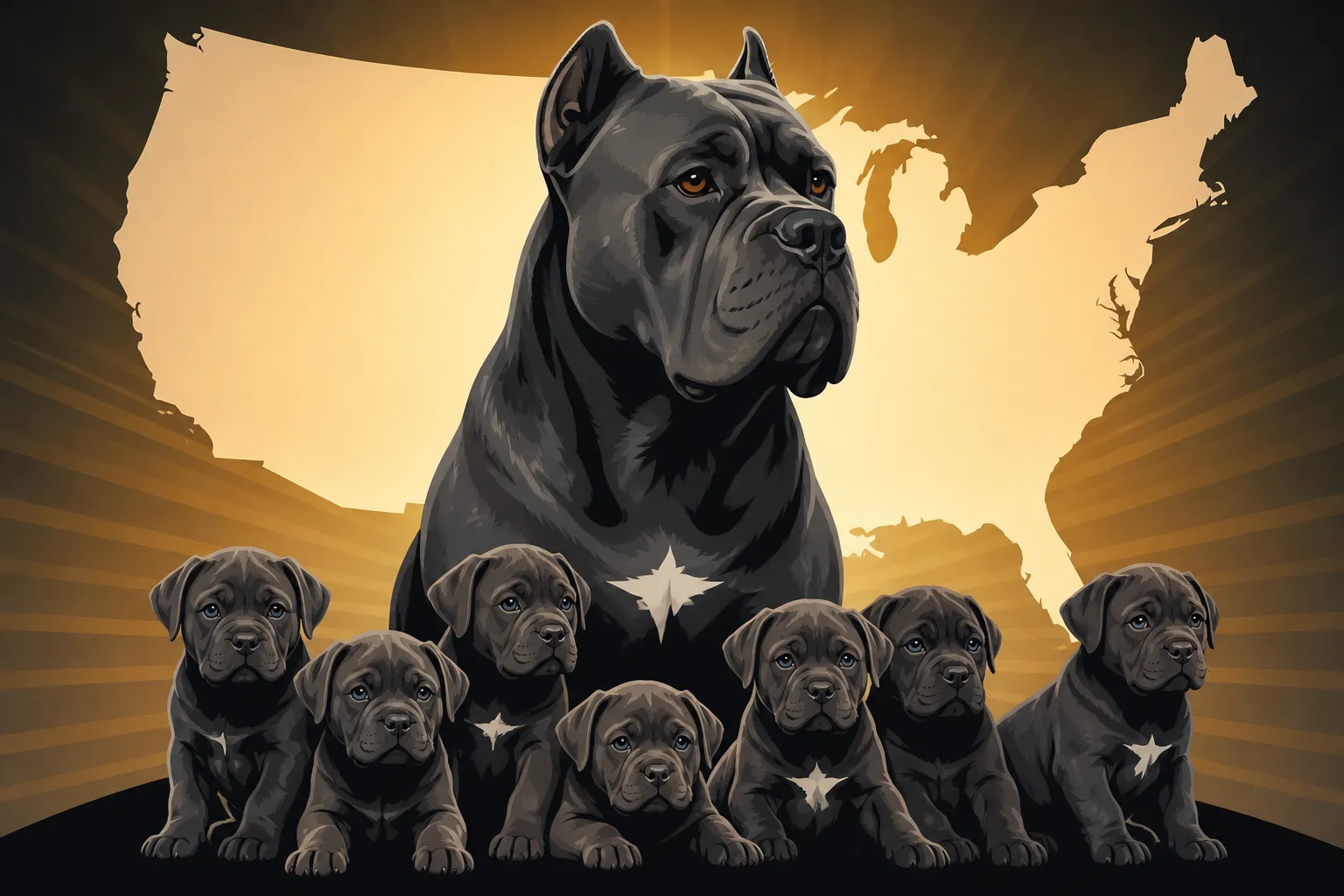
The efforts of the Italian enthusiasts were certainly admirable, but for the Cane Corso to truly flourish internationally, it needed dedicated proponents in other countries. The year 1988 stands out as a landmark year for the breed in America, thanks to a specific litter that became the cornerstone of its establishment.
The Key Individuals and Their Vision
The arrival of the Cane Corso in America wasn't a random event; it was the result of deliberate planning and passion. A crucial figure in this story was Michael Sottile, an American enthusiast who recognized the breed's immense potential and historical significance. He had been following the breed's revival in Italy, deeply impressed by its stoic demeanor, intelligence, and guardian instincts. Sottile, along with other early American fanciers, envisioned a future for the Cane Corso in the United States, not just as a pet, but as a recognized working breed, a true living testament to its ancient heritage. Their vision was clear: to introduce and establish the Cane Corso with careful attention to preserving its authentic traits, avoiding the pitfalls of rapid, uncontrolled expansion that can sometimes dilute a breed's integrity. It was a commitment to quality over quantity, a goal that required significant investment in time, research, and travel.
The Dogs Themselves: Foundation Stock
The particular 1988 litter that marked the true beginning of American Cane Corsos was born from imported Italian stock. While specific names from that exact litter might not be widely publicized as "the first," what's critical is that the parents of these early American-born pups were direct imports from the thriving, re-established Italian lines. These were dogs carefully selected for their adherence to the breed standard, their sound temperament, and their robust health.
Imagine the excitement surrounding the arrival of these dogs! They were often described as possessing the classic characteristics of the breed: a powerful build, an expressive head, and that unmistakable confident, watchful gaze. These foundation dogs carried the genetic legacy of the surviving Italian Corsos, ensuring that the American breeding program started with strong, authentic representatives. They weren't just "dogs"; they were ambassadors of a nearly lost heritage, carrying the responsibility of an entire breed's future on their sturdy shoulders. Early breeders poured over photographs and pedigrees, making sure they were acquiring dogs that aligned with What the Standard Says a Cane Corso Should Look Like in Italy.
Here’s a look at some key characteristics desired in these early foundation dogs that influenced the American lines:
| Characteristic | Description | Importance for Foundation Stock |
|---|---|---|
| Temperament | Confident, assertive, protective, but stable and discerning. | Essential for preserving the breed's guardian role without aggression. |
| Physical Build | Robust, muscular, athletic, but not overly bulky. | Necessary for maintaining working ability and longevity. |
| Head Type | Distinctive, powerful head with a broad muzzle and strong jaws. | A hallmark of the breed, critical for identification and function. |
| Health | Free from obvious genetic defects; good hip/elbow conformation. | Crucial for establishing a healthy genetic pool in a new country. |
| Proportionality | Well-balanced, longer than tall, indicative of Molosser type. | Ensures correct movement and adherence to historical type. |
Establishing the Breed in America: Early Challenges and Triumphs
Bringing a nascent breed to a new country is never a straightforward task. The early American Cane Corso enthusiasts faced a unique set of hurdles, from gaining official recognition to educating the public about this powerful and intelligent guardian.
Registering and Promoting the Cane Corso
One of the immediate challenges was establishing a formal registry and promoting the breed. Initially, groups like the International Cane Corso Federation (ICCF) served as the primary registry for Cane Corsos in the United States. Which American Registry Held Cane Corsos Before the AKC is an important piece of this puzzle, as these organizations worked tirelessly to track pedigrees and ensure the integrity of the growing American population. It wasn't just about paperwork; it was about publicizing a breed that was virtually unknown to most Americans. Enthusiasts participated in rare breed shows, wrote articles, and dedicated countless hours to simply getting the word out. They had to explain what a Cane Corso was, where it came from, and why it was a unique and valuable addition to the canine world. This often involved dispelling myths and correcting misconceptions, as people naturally compared them to other, more familiar large breeds.
The Importance of Selective Breeding
The early American breeders understood that the future of the Cane Corso in the U.S. depended entirely on responsible, selective breeding. They prioritized health, temperament, and adherence to the Italian breed standard. This meant conducting health screenings, even before many were formally required. They were concerned with the overall well-being of the breed, understanding that a strong foundation now would prevent widespread health issues later. The careful selection of breeding pairs was paramount, aiming to produce offspring that not only looked the part, adhering to The Height a Cane Corso Should Measure and other physical characteristics, but also possessed the stable and discerning temperament that defines a true Cane Corso. Breeders carefully studied pedigrees and shared information, creating a collaborative environment focused on the breed's betterment. This focus on ethical breeding, from the very start, helped to shape the genetic health and behavioral soundness of American Cane Corsos for generations.
Navigating the New World
Beyond breeding, these pioneers faced the task of navigating a new cultural landscape. Unlike Italy, where the Cane Corso had a specific historical role, in America, it was an exotic import. They had to educate potential owners about the commitment required for such a powerful and intelligent dog. This included emphasizing the need for extensive socialization, consistent training, and understanding The Character a Cane Corso Judge Expects in the Ring – a character that demanded a confident, experienced handler.
They also had to contend with the challenges of finding appropriate supplies for such a large breed. Imagine trying to find a crate big enough or a collar strong enough before online retailers like Chewy made everything so accessible. Early owners might have had to custom-order items or travel extensively to find what they needed, a stark contrast to the convenience we have today. Furthermore, they had to address concerns about breed reputation, which sometimes arose due to the breed's imposing appearance. It was a constant effort of advocacy and education to ensure the Cane Corso was understood and appreciated for its true nature, rather than being unfairly judged.
Impact and Legacy of the Foundation Litter
The direct descendants of that 1988 litter, and the subsequent early imports, became the bedrock upon which the American Cane Corso population was built. Their influence cannot be overstated, defining many aspects of the breed we see today.
Shaping the American Cane Corso Type
The physical and temperamental traits of those initial foundation dogs played a critical role in shaping what is now recognized as the "American Cane Corso type." While always aiming for fidelity to the Italian standard, any breed introduced to a new gene pool will naturally develop some subtle distinctions over time. The careful selection by early American breeders focused on preserving the robust, athletic build and the noble, watchful expression that defines the breed. They worked to maintain the correct proportions and powerful musculature, ensuring these dogs could perform the functions they were historically bred for. This focus created a consistent look and temperament among the early American lines, a template that subsequent generations would follow. It ensured that the dogs were not only impressive in appearance but also possessed the keen intelligence and protective instincts characteristic of The Roman Molossers the Cane Corso Descends From.
Progeny and Continued Development
The offspring of the 1988 litter and other early imports quickly spread across the country, forming the basis for numerous breeding programs. These first generations were crucial, as they carried the limited genetic diversity available at the time. Breeders carefully tracked lineages, shared stud services, and collaborated to expand the gene pool while minimizing inbreeding. This was a complex dance, balancing the need for genetic variety with the imperative to maintain breed type and health. Over the years, the progeny of these foundation dogs continued to gain recognition. They competed in various events, from conformation shows to working trials, showcasing their versatility and intelligence. This continuous development, building upon the initial genetic blueprint, allowed the American Cane Corso to mature as a distinct and thriving population, consistently reflecting the strong qualities inherited from its ancestral stock. Many modern pedigrees can still be traced back to these early lines.
Modern Day Echoes
Even today, decades later, the genetic influence of that 1988 litter and the other early imports is evident in many Cane Corsos across America. Responsible breeders still meticulously research pedigrees, often looking for dogs that trace back to these healthy and typey foundation animals. The efforts of those early pioneers in health screening and temperament selection continue to impact the breed. For example, the emphasis on hip and elbow health in the early days contributed to the breed's overall soundness, and these remain critical clearances today, often reflected in certifications like What a Cane Corso CHIC Number Actually Certifies. When you look at a well-bred American Cane Corso, you are, in many ways, seeing the living legacy of those individuals who brought the first dogs over and nurtured them. Even finding specialized food for a large breed on Chewy today is a testament to how far the breed has come from those initial, challenging days. The dedication to the breed's health, temperament, and adherence to standard remains a guiding principle, a direct inheritance from the vision of those who started it all.
Comparing Early American & Italian Lines
While the American Cane Corso owes its existence to its Italian roots, the process of establishing the breed in a new country naturally led to some interesting developments. Understanding these nuances helps us appreciate both the continuity and the subtle divergences in the breed's history.
Subtle Differences in Type
It's a common phenomenon for a breed, once established in a new region or country, to develop minor stylistic differences from its country of origin, even while adhering to the same breed standard. The American Cane Corso, though fiercely loyal to its Italian blueprint, has seen some subtle shifts over the decades. Sometimes, American breeders might lean towards a slightly heavier build or a particular head type that becomes popular within their lines, compared to their Italian counterparts. These differences are often a matter of interpretation within the permissible range of the breed standard, rather than a deviation from it. Early breeders in America were working with a relatively small gene pool initially, and the dogs they chose as foundation stock naturally emphasized certain traits. Over time, these emphasized traits, through selective breeding, could become more prevalent in the American population. While both Italian and American lines produce magnificent examples of the breed, a very keen eye might spot these minor variations in presence or conformation, much like comparing two dialects of the same beautiful language.
Preservation of Core Traits
Despite any minor stylistic divergences, one thing that early American breeders were absolutely unwavering about was the preservation of the Cane Corso's core traits. The very essence of the breed – its formidable guardian instinct, its unwavering loyalty, and its impressive working ability – was paramount. They understood that these were not just physical attributes but intrinsic behavioral characteristics that made the Cane Corso unique. Whether you were looking at an early Italian import or a descendant born in America from that pivotal 1988 litter, the expectation was a dog that possessed a calm, confident demeanor, a discerning protective instinct, and the intelligence to be a true partner. This meant careful selection for stable temperaments, ensuring that while the dogs were capable guardians, they were also reliable family members. Breeders actively worked with their dogs, often engaging them in protection sports, obedience, or other activities that highlighted their innate abilities. This dedication ensured that the fundamental character of the Cane Corso remained intact, providing owners with a dog that was not just physically imposing but also mentally sound and true to its historical purpose. The modern Cane Corso, whether you source its food from a place like Chewy or a specialty store, still carries this inherent guardian spirit.
Disclaimer
This article is for general informational purposes only and does not constitute professional advice. Laws, prices and regulations vary by location and change over time. Consult a qualified professional for guidance on your specific situation.