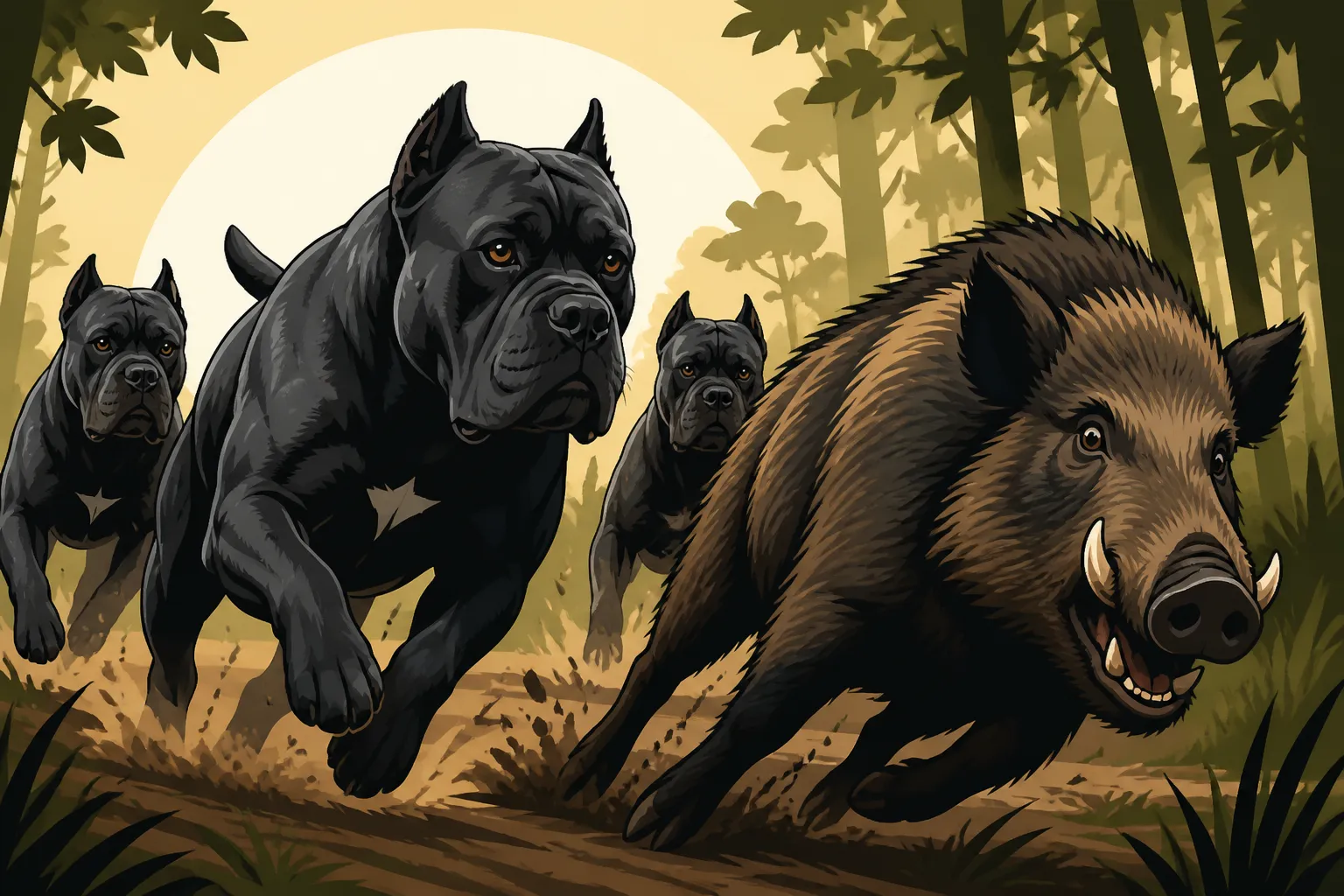
Hunting Wild Boar With Cane Corsos
When we look at our majestic Cane Corsos today, lounging on the couch or guarding the family with a watchful eye, it’s easy to forget the rugged, intense history that shaped them. Many people mistakenly think of them solely as guardians, but their roots run much deeper, forged in the demanding landscapes of ancient Italy. They weren't just protectors of property; they were active participants in the survival of their human families, a role vividly illustrated by their historical involvement in hunting wild boar. This guide will take you back in time, unraveling the story of the Cane Corso as a formidable boar hunter, and showing how this ancient job continues to influence the breed we love and live with today.
The Ancient Purpose: Why Wild Boar Hunting Was Essential
Before refrigerators and grocery stores, survival in rural Italy was a daily grind. Every resource counted, and securing food for the family and protecting livestock was paramount. Wild boar, while a valuable food source, also presented a significant threat to agricultural lands and smaller domestic animals. Hunting them wasn't a sport in the way we often think of it today; it was a matter of necessity and community survival.
Survival and Sustenance in Rural Italy
Imagine life centuries ago in the vast, untamed forests and rocky hillsides of regions like Puglia and Basilicata. Wild boar were abundant, but they weren't simply animals to be hunted; they were a dynamic force in the ecosystem that directly impacted human livelihoods. A single boar could decimate a farmer's crop overnight, destroying the very sustenance meant for his family and his livestock. Beyond that, they posed a physical danger to children, smaller domestic animals, and even adults traversing the wilderness. For the subsistence farmers and villagers, hunting these powerful creatures was a vital act of both protection and provision, offering a much-needed source of protein for their tables.
The meat, while tough, was highly prized and could sustain families through lean times. Every part of the animal was used, from the hide to the fat, embodying a practical, no-waste approach to living off the land. This wasn't about thrill-seeking; it was about ensuring the continuity of the family and community. The dogs who aided in this hunt were not mere pets; they were indispensable working partners, their abilities directly contributing to the survival of their human counterparts.
The Historical Landscape and Its Dangers
The terrain itself presented its own challenges. Dense underbrush, steep inclines, and hidden ravines made tracking and cornering a wild boar a dangerous endeavor. Boar are incredibly powerful, agile, and equipped with razor-sharp tusks that can inflict horrific wounds on both dogs and humans. These animals are known for their ferocity when cornered, often charging with surprising speed and force. Without specialized dogs, successfully tackling a mature boar would have been nearly impossible for human hunters armed with spears or rudimentary knives.
The landscape also meant that any dog participating in the hunt needed to be incredibly robust, able to navigate difficult terrain for extended periods, and possess the physical fortitude to withstand potential injuries. This harsh environment naturally selected for dogs with immense strength, stamina, and a certain level of imperviousness to pain – qualities that are still evident in the Cane Corso's formidable physique and resilient nature today. The challenges of the hunt were not just about finding the animal but about surviving the encounter, making the Cane Corso's role incredibly high stakes.
The Cane Corso's Specialized Role as a Catch Dog
The Cane Corso wasn't just another dog in the hunting party; they performed a highly specialized and dangerous job. Known as "catch dogs," their role was critical in securing the boar once it had been located and cornered. This wasn't about making the kill, but about safely holding the animal for the hunters.
More Than Just a Hunter: The Art of the Catch
Unlike "bay dogs" who would track and harass the boar, keeping it at bay until hunters arrived, the Cane Corso’s primary function was to physically engage and hold the boar. This required a unique blend of strength, courage, and precise bite work. A Cane Corso had to be able to latch onto the boar's head or ear, pinning it down without inflicting fatal wounds prematurely, allowing the hunters to approach safely to dispatch the animal. This was a brutal dance between predator and prey, demanding immense physical power and unwavering determination from the dog. How Many Cane Corsos It Took to Hold a Boar can give you a deeper appreciation for the sheer scale of the task.
The dogs were taught to grab and hold, not to tear or kill. This distinction is crucial because it speaks to the intelligent control and focus required. A dog that simply attacked wildly would be quickly injured or killed. Instead, the Cane Corso needed to apply pressure strategically, using its powerful jaws and body weight to immobilize a thrashing, potentially lethal animal. This control, combined with raw power, is a hallmark of the breed and something you can still see in their intensity and focus today.
The Synergy of Human and Canine in the Field
The success of a boar hunt was never solely dependent on the dogs or the hunters alone; it was a testament to the symbiotic relationship between them. Hunters relied on the Cane Corso's keen senses to locate the boar, their powerful physique to engage it, and their unwavering grip to hold it steady. In turn, the dogs relied on their human handlers for direction, protection from a charging boar, and eventually, the kill that would end the dangerous encounter. This partnership was built on trust, clear communication, and a deep understanding of each other's roles.
Working in unison, a pack of Cane Corsos, often guided by experienced handlers, would drive the boar towards a pre-determined area or corner it against natural barriers. Once engaged, the dogs would work together, with some holding the boar while others, if present, might circle or distract. The handler's timing was everything – knowing when to step in, when to command a release, and when to protect a dog from injury. This profound working relationship cultivated a highly biddable, intelligent, and deeply loyal companion in the Cane Corso, even under the most extreme pressure.
Unyielding Traits: What Made the Cane Corso Perfect for the Task
The qualities that made the Cane Corso an unparalleled boar hunter are the very same characteristics that define the breed today: incredible physical prowess combined with unwavering mental fortitude. These dogs weren't just big; they were purpose-built for a specific, demanding job.
Physical Prowess: Power, Agility, and Resilience
Imagine a dog built like a tank but moving with surprising grace. That's the Cane Corso needed for boar hunting. They possess [Unmatched Strength and Stamina], evident in their muscular build, deep chest, and powerful hindquarters. This physical strength allowed them to withstand the brutal impacts of a thrashing boar, hold it firmly, and endure the long chases through challenging terrain. Their bone structure is robust, designed to absorb and distribute force, minimizing injury from a charging animal.
But strength alone wasn't enough; agility was equally vital. Wild boar are remarkably fast and can turn on a dime, making a slow, lumbering dog an easy target. The Cane Corso, despite its size, possesses an athleticism that allows it to maneuver quickly, dodging tusks and maintaining its grip. Furthermore, their skin is thick and surprisingly loose, especially around the neck and shoulders, providing a natural defense against bites and scrapes during an altercation. This resilience, both in body and spirit, was paramount to surviving a hunt where injury was a constant threat. Even today, responsible owners look to brands like Chewy for high-quality diets that support this powerful musculature and active lifestyle.
Mental Fortitude: Courage, Intelligence, and Tenacity
Beyond their physical attributes, the Cane Corso's mental makeup was equally critical. Boar hunting is not for the faint of heart, demanding extraordinary courage. These dogs had to face down an animal that could easily kill them, without hesitation or fear. This innate bravery, coupled with a calm temperament under pressure, allowed them to perform their duty with a clear head, rather than succumbing to panic. The Prey Drive Behind a Cane Corso's Boar Hunting Past is a deep dive into this aspect of their character.
Intelligence played a significant role too. A Cane Corso needed to understand its job, respond to its handler's commands amidst chaos, and make split-second decisions in a dangerous situation. They had to learn how to approach, where to bite, and how to hold without causing undue harm before the hunter arrived. This wasn't mindless aggression; it was controlled application of force. Finally, tenacity—the sheer refusal to let go, to give up, or to back down—was perhaps the most crucial mental trait. Once a Cane Corso had locked onto a boar, it would hold on with unyielding determination, often until the bitter end, ensuring the safety of the hunting party. This persistent nature is a trait many modern owners recognize as both a blessing and a challenge in their own Corsos.
The Realities and Risks of the Boar Hunt
While the image of a powerful Cane Corso bravely facing down a wild boar might seem heroic, the reality of these hunts was often grim. It was a dangerous endeavor, fraught with peril for both canine and human, leading to significant changes in how such activities are viewed and conducted today.
The Perils Faced by Dog and Hunter
The primary danger came from the wild boar itself. A mature boar, especially a sow protecting piglets, is a formidable adversary. Their tusks, capable of goring flesh and breaking bones, could inflict fatal wounds in an instant. Dogs often sustained severe lacerations, puncture wounds, and even broken limbs. It wasn't uncommon for a valuable hunting dog to be crippled or killed during a hunt. The very act of catching and holding such a powerful, aggressive animal meant dogs were always in harm's way. This explains why Cane Corsos developed such thick skin and a high pain tolerance – adaptations for survival in a brutal environment.
Hunters, too, faced significant risks. Approaching a large, furious boar held by dogs was incredibly dangerous. A misstep, a fumbled weapon, or a dog losing its grip could result in a charge that left a human severely injured or worse. Even after the boar was subdued, the remote locations meant that immediate medical attention for injuries to dogs or humans was often impossible, leading to further complications or death. The sheer physicality and danger of this task underscore the profound bond and reliance between these dogs and their human companions.
Ethical Considerations and Modern Practices
Today, the ethics surrounding hunting, especially with dogs, have evolved significantly. While wild boar populations still pose challenges in some regions, and hunting continues in various forms, the traditional "catch dog" method with its high risk of injury is often replaced or highly regulated. Many modern hunters prioritize quick, humane kills using firearms, and if dogs are involved, they are more typically used for tracking and baying, keeping a safe distance rather than direct physical engagement.
The shift reflects a greater emphasis on animal welfare, both for the hunted animal and the hunting dogs. Veterinary care is more accessible, leading to a stronger desire to prevent injuries rather than simply treating them. This evolution highlights a fundamental change in our relationship with working animals and the natural world. While the historical context is crucial for understanding the Cane Corso's heritage, modern practices aim for a more responsible and less inherently dangerous approach. Even so, the historical fact that the Cane Corso was bred for such a demanding and dangerous task is part of their inherent nature and something every owner should understand.
The Enduring Legacy: How Hunting Shaped Today's Cane Corso
Even though most modern Cane Corsos will never see a wild boar, the instincts and physical traits honed by centuries of hunting remain deeply ingrained. Understanding this legacy is crucial for any Cane Corso owner, helping to explain their behavior and needs.
Deep-Seated Instincts in a Modern Home
The same traits that made the Cane Corso a formidable boar hunter – their immense strength, unwavering courage, strong prey drive, and innate protective instincts – are still very much alive in the breed today. When you see your Cane Corso intensely focused on a squirrel in the yard, it's a echo of their ancestors tracking game. Their powerful bite and tendency to hold objects firmly, or even their desire to "catch" and retrieve toys with precision, harken back to their role as catch dogs. This isn't just a quirk; it's a hard-wired instinct.
This means that while your Cane Corso is a beloved family member, they come with a heritage that requires responsible management. Their protective nature, once directed at livestock and hunters in the field, now focuses on their human family and territory. This can manifest as an intense loyalty, but also as wariness towards strangers or perceived threats. Why a Cane Corso Is Not a First Dog is often stated because these strong instincts require an experienced, consistent handler who can channel them appropriately through training and socialization.
Understanding the Cane Corso's Drive and Focus
For a breed like the Cane Corso, understanding their historical drive is key to meeting their modern needs. Their need for physical activity isn't just about burning off energy; it's about engaging their powerful bodies and minds, preventing boredom and potential behavioral issues. Activities that tap into their natural tendencies, such as scent work, obedience, or protection sports, can be incredibly fulfilling for them. Ninety Minutes a Day and a Cane Corso's Mind is a good guideline for the kind of engagement they thrive on.
Their focus and determination, once used to hold a boar, can now be channeled into mastering complex commands or performing tasks around the home. They are dogs that crave purpose and structure. Providing them with opportunities to "work," even if it's just practicing advanced obedience or carrying a backpack on a hike, will make for a happier, more balanced Cane Corso. Investing in durable toys and enrichment items from places like Chewy that can stand up to their powerful jaws is also crucial to redirecting that innate drive for engagement.
Traits Developed for the Hunt and Their Modern Expression
Let's look at some key traits that were essential for boar hunting and how they show up in a modern Cane Corso:
| Trait | Essential for Boar Hunting | Modern Expression in a Companion Cane Corso |
|---|---|---|
| Physical Strength | Overpowering and holding a large, thrashing wild boar | Impressive power in play, potential to pull on leash, strong body for sports |
| Courage/Tenacity | Facing down a dangerous animal without hesitation, not letting go | Unwavering loyalty, protective instincts, determined in tasks, can be stubborn |
| Agility/Stamina | Maneuvering quickly in rough terrain, sustained chase | Athleticism, enjoys vigorous exercise, can be destructive if under-exercised |
| Prey Drive | Tracking, chasing, and engaging game animals | Intense focus on small animals (squirrels, cats), strong interest in moving objects |
| Protective Instinct | Guarding hunters and livestock from threats, including boar | Territorial behavior, guarding family, suspicious of strangers |
| Bite Control/Hold | Catching and holding without prematurely killing | Strong chewing, careful play with known objects, can be mouthy without training |
Understanding this table helps us see that the magnificent dog curled up on your rug is a direct descendant of a formidable hunter. It's a testament to their history, and a reminder of the responsibility we have to nurture these powerful traits into well-adjusted, loyal companions. The Roman War Dog Behind the Cane Corso further explores their ancient lineage. The modern Cane Corso may no longer be hunting boar, but their ancestral purpose continues to shape who they are.
Disclaimer
This article is for general informational purposes only and does not constitute professional advice. Laws, prices and regulations vary by location and change over time. Consult a qualified professional for guidance on your specific situation.