The Farm Job the Cane Corso Was Kept For
The majestic Cane Corso often strikes people as a formidable guardian, a powerful protector poised to defend its home and family. While this image is certainly accurate and speaks to a core aspect of their temperament, it only tells part of the story. The truth is, these incredible dogs weren't always solely focused on personal or property protection in the way we might think today. For centuries, across the rugged farmlands of Southern Italy, the Cane Corso was an indispensable worker, performing a diverse array of demanding "farm jobs" that were crucial for the survival of entire households. This comprehensive guide will peel back the layers of time, revealing the versatile, gritty, and utterly essential roles these dogs played in agrarian life, far beyond merely standing guard.
More Than Just a Guard Dog: The Cane Corso's Versatile Farm Role
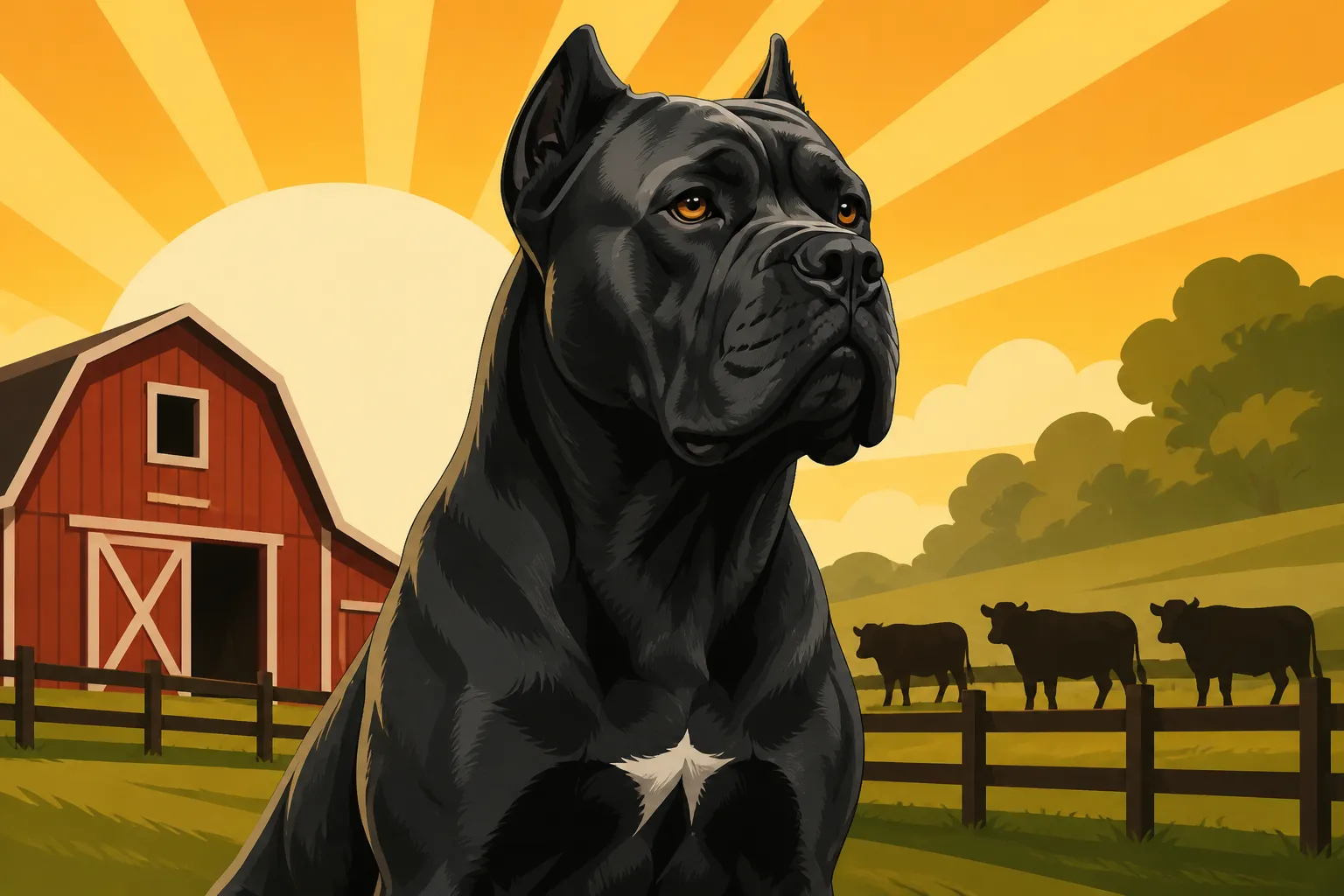
When we think of a "guard dog," we often envision a static presence, a watchful eye. But the Cane Corso's historical role on the Italian farm, particularly in the masseria (a fortified farm estate common in regions like Puglia and Basilicata), was far more dynamic and integrated into daily operations. They weren't just protecting a fence line; they were actively involved in the ebb and flow of farm life.
Protecting the Masseria and Its Inhabitants
The masseria was more than just a farm; it was a self-sufficient community, often isolated and vulnerable. The Cane Corso's protection duties extended to every facet of this complex environment. This wasn't just about deterring a casual trespasser; it was about safeguarding precious resources – livestock, crops, tools, and most importantly, the human family – from a variety of very real threats. Think about what a farmer had to contend with: rustlers eyeing their herds, wild predators like wolves and bears looking for an easy meal, and even rival factions or brigands in times of unrest. The Corso was the first, and often only, line of defense.
Their protection was proactive and intelligent. They had to be able to discern legitimate visitors from threats, a skill honed by generations of living in close proximity to their families and observing the rhythms of farm life. A familiar neighbor delivering goods might be greeted with a deep rumble, a warning not to get too close unescorted, but not with aggression. An unknown figure creeping around at night, however, would trigger a full-throttle, determined response. This required immense discernment, an innate understanding of their territory, and a deep bond with their human masters, allowing them to interpret subtle cues and act decisively.
Furthermore, the Cane Corso's protective instincts extended beyond just the adults of the family. They were often entrusted with the well-being of children, becoming steadfast, gentle giants with the youngest members of the household. Imagine a child playing in the yard, a massive Corso calmly observing from a nearby vantage point. This dog understood its sacred duty to keep the vulnerable safe, a trait that makes them such loyal family companions even today. They were guardians in the truest sense, encompassing a wide spectrum of duties that went far beyond what most modern "guard dogs" are expected to do. Guarding the Masseria in Southern Italy provides more insight into this protective heritage.
A Livestock Guardian of Old
While many breeds specialize in passive livestock guarding, like the Great Pyrenees or Anatolian Shepherd, the Cane Corso's approach was often more direct and, when necessary, confrontational. Their role wasn't just to coexist with the flock; it was to actively defend it, sometimes engaging directly with predators that threatened the sheep, goats, or even cattle. This distinction is crucial because it highlights the Cane Corso's strength, bravery, and willingness to put itself in harm's way.
In the mountains and forests surrounding many Italian farms, predators were a constant menace. Wolves, bears, and even large feral dogs posed a significant threat to a farmer's livelihood. A Cane Corso's job was not only to patrol the periphery but to embed itself within the herd, becoming a living shield. Their imposing presence alone was often enough to deter smaller predators. However, if a wolf pack dared to approach, the Cane Corso would not hesitate to intercept, often working in concert with other Corsos or human farmers.
This direct engagement with large, dangerous predators required incredible physical prowess, fearlessness, and a powerful bite. They were bred to be able to hold their own, to stand their ground, and to protect their charges with their lives if necessary. Unlike some herding breeds that might gather and drive animals, the Cane Corso was there to prevent harm, often by force. This combination of vigilance and courage made them invaluable assets to farmers whose entire year's income could be wiped out by a single successful predator attack.
The Cane Corso as a Driving and Herding Aid
When we think of "herding," images of agile Border Collies nipping at heels might come to mind. The Cane Corso's interaction with livestock, however, was a very different kind of "herding" or, more accurately, "driving." It was about power, intimidation, and control, especially with large, stubborn animals.
Moving Livestock on the Farm
The Cane Corso was essential for moving large animals like cattle from one pasture to another, or from the fields to the village market. This wasn't a gentle nudge; it was a forceful, determined direction. Imagine trying to move a herd of strong, potentially obstinate cattle without the aid of modern equipment. The Cane Corso, with its immense presence and powerful bite, could get the job done. They would work at the flanks or rear of the animals, using their body and assertive demeanor to keep the cattle moving in the desired direction.
This type of work demanded not only strength but also incredible control and judgment. A dog that simply bit haphazardly would injure the livestock, reducing its value. The Cane Corso had to know when to apply pressure, when to bark, and when to use its physical presence to guide rather than harm. This fine balance speaks volumes about the breed's intelligence and the intense training and bonding required between dog and farmer. They were truly partners in these endeavors, with the dog understanding and executing complex tasks that directly impacted the farm's productivity.
The ability to control large livestock was not just a convenience; it was a necessity for survival in a pre-industrial farming era. Without strong, capable dogs, moving herds could be a days-long, dangerous, and even impossible task. The Cane Corso simplified this, making it more efficient and safer for the farmers. Driving Cattle With a Cane Corso delves deeper into these specific tasks.
Assisting with Butchering and Management
Perhaps one of the most unique and historically significant, yet dangerous, jobs of the Cane Corso was assisting with the handling and butchering of large livestock. In a time before modern veterinary chutes or restraining equipment, how did a farmer manage to hold a full-grown bull or hog still for tasks like castration, branding, or even the final act of butchering? This is where the Cane Corso truly shone, or rather, held tight.
The dogs were trained to grip specific, less sensitive areas of the animal, such as an ear or a dewlap, and hold it firmly. This wasn't about inflicting pain, but about providing an unyielding anchor, using their powerful jaws and immense body weight to immobilize a struggling animal. The trust between the farmer and his dog during these procedures must have been absolute. A misplaced bite, a moment of hesitation, or a loss of grip could result in severe injury to both animal and human.
This grisly but essential task highlights the Cane Corso's immense physical strength, its powerful bite, and its unwavering resolve. It also underscores their intelligence and trainability, as they had to learn precisely where to bite, how to hold, and when to release. They weren't just brute force; they were precision instruments in the hands of a skilled farmer. This demanding role further solidifies their image as truly multi-purpose working dogs, integral to every aspect of the farm's operation, from birth to harvest.
The Hunter: Cane Corso's Role in Wild Boar Hunts
Beyond the immediate confines of the farm, the Cane Corso's skills were leveraged in the pursuit of wild game, particularly the formidable wild boar. This wasn't just sport; it was often a critical aspect of resource management and protection.
Tracking and Cornering Game
Wild boar were (and still are) a serious threat to crops, capable of decimating a season's harvest in a single night. Hunting them was necessary for pest control, but also provided a vital source of meat for the farming families. The Cane Corso's keen senses and relentless drive made them excellent trackers. They possessed a powerful nose, capable of following complex scent trails through dense undergrowth and over varied terrain.
Once a boar's trail was picked up, the Corsos would work in a coordinated pack, sometimes with other hunting dogs, to flush out the animal. Their job wasn't to silently stalk; it was to drive the boar, barking and pushing it until it was cornered or brought to bay. This required speed, endurance, and an unyielding will to push forward, even when faced with the formidable defenses of an angry boar.
Their ability to corner such a dangerous animal was paramount. A cornered boar is an extremely aggressive and powerful adversary, capable of inflicting severe damage with its tusks. The dogs had to be able to contain it, holding it in place until the hunters could arrive to make the kill. This cooperative effort between dogs and humans showcased the Cane Corso's intelligence and their understanding of a complex, multi-stage hunting process. Hunting Wild Boar With Cane Corsos provides more context on this historical practice.
Engaging and Holding the Boar
The ultimate test of a Cane Corso's bravery and physical capability in the hunt came when it had to engage and hold a wild boar. These were not small, easily subdued animals; a mature wild boar can weigh hundreds of pounds and move with surprising speed and ferocity. This was an incredibly dangerous task, and the dogs needed to be utterly fearless and supremely powerful.
Typically, several Cane Corsos would work together. Their strategy involved engaging the boar from multiple angles, distracting it, and then using their powerful jaws to grip the animal, often on an ear or flank, effectively immobilizing it. The goal was to hold the boar long enough for the hunter to approach safely and deliver the final blow. This required an iron grip, immense physical strength to withstand the boar's struggles, and an unwavering commitment to the task.
The risks were immense. Many working Cane Corsos carried scars from encounters with boar tusks. It was a brutal, demanding job that only the strongest, bravest, and most determined dogs could perform. This aspect of their history speaks volumes about the raw power and tenacity that are still evident in the breed today. It's a reminder that their ancestors were not just pets, but vital, tough, and often sacrificial working partners on the Italian landscape. You can appreciate why their drive needs an outlet, even if it's just finding treats hidden in a puzzle toy from Chewy.
Adapting to the Landscape: The Cane Corso in Southern Italy
The Cane Corso's remarkable versatility and resilience were not just random traits; they were finely tuned adaptations to the challenging environment of Southern Italy, where resources were often scarce and life was hard.
Surviving the Rugged Terrain
The regions where the Cane Corso flourished, like Puglia, Basilicata, and Calabria, are characterized by diverse and often unforgiving landscapes. From the rugged Apennine mountains to dense forests, arid plains, and rocky coastal areas, these dogs had to be able to navigate and thrive in all conditions. Their physical build — muscular, agile, with a dense, short coat — was perfectly suited for this. They weren't cumbersome giants but powerful athletes capable of covering ground quickly and efficiently.
Their stamina was legendary. Whether patrolling vast stretches of farmland, driving livestock for miles, or tracking a boar through thorny undergrowth, the Cane Corso needed incredible endurance. This was not a dog that lounged around; it was a dog constantly in motion, performing its duties in all weather, from scorching Mediterranean summers to surprisingly cold, damp winters. Their ability to adapt to varying temperatures and sparse vegetation further solidified their place as indispensable working animals.
Beyond physical traits, their mental toughness was also a key to survival. In these isolated regions, a dog had to be self-reliant, intelligent, and capable of making decisions in the absence of human direction. This independence, combined with a deep loyalty to their family, allowed them to function effectively in dynamic and unpredictable rural settings.
Integral to the Local Economy and Lifestyle
In the subsistence farming communities of Southern Italy, every resource was precious, and every member of the household, human or animal, had to contribute to survival. The Cane Corso was not a luxury; it was a fundamental part of the economic and social fabric of these farms. They contributed directly to the farm's output through their roles in livestock management, protection, and hunting, thereby putting food on the table and safeguarding wealth.
Their presence brought security, allowing farmers to focus on their arduous tasks with less worry about predators or thieves. They were living, breathing alarm systems and deterrents, critical in areas where law enforcement was sparse or distant. The dogs were deeply integrated into daily routines, working alongside their human companions from dawn till dusk. They earned their keep, and then some.
This deep integration meant that the Cane Corso was viewed as a respected working partner, not merely a pet. The bond was one of mutual reliance and survival. The dog's life was intertwined with the family's fortunes, making them deeply valued and protected members of the community. Understanding this deep-rooted utility helps us appreciate the breed's inherent desire for purpose and companionship even in modern homes.
The Decline of the Traditional Farm Role and Modern Relevance
The world changes, and even the most enduring traditions eventually yield to progress. The mid-20th century brought significant shifts to Italy, marking a sharp decline in the traditional farm jobs that had defined the Cane Corso for centuries.
Impact of Mechanization and Changing Agriculture
The period following World War II brought sweeping changes to Italy's agricultural landscape. Mechanization rapidly replaced manual labor and animal power. Tractors, modern fencing, and improved transportation made the Cane Corso's traditional roles in driving livestock and holding animals for butchering largely obsolete. With less reliance on vast, open pastures and more controlled farming practices, the need for dogs to herd or actively defend against predators diminished.
Furthermore, economic development and urbanization drew many people away from rural life, leading to a decline in subsistence farming. Fewer masseria operated in the traditional, self-sufficient manner. The rise of centralized markets and food distribution networks meant farmers no longer needed to hunt wild boar for survival or move entire herds to distant towns. The dogs' jobs simply disappeared, leaving a void that many other breeds also faced as the world industrialized.
This rapid transformation led to a drastic reduction in the Cane Corso population. With their essential work gone, many families could no longer justify keeping such large, demanding dogs. The breed faced near extinction, with only scattered examples remaining in remote areas, kept primarily for property guarding or simply as family companions, their once-diverse skill set largely forgotten. It wasn't until dedicated enthusiasts rediscovered these remaining dogs that the breed was brought back from the brink, as explored in The 1976 Article That Started the Cane Corso Revival.
Echoes of the Past in Today's Cane Corso
Even though most modern Cane Corsos will never herd cattle or track wild boar, the traits developed over centuries of farm work are still deeply embedded in their DNA. Understanding these historical roles is key to appreciating and managing the modern Cane Corso. Their intense guardian instinct, for example, isn't just a random trait; it's a direct lineage from those dogs protecting the masseria from all threats.
Their intelligence, problem-solving ability, and desire for a "job" are also remnants of their past. A Cane Corso that is bored and under-stimulated is often a destructive and unhappy dog, simply because its innate drives for purpose and activity are not being met. This is why consistent training and engagement are so critical for the breed today. Activities like obedience, scent work, or even protection sports can tap into these inherent abilities, providing a constructive outlet for their powerful minds and bodies.
When you see your Cane Corso intensely watching the yard, or meticulously "helping" you carry in groceries from the car, you're witnessing echoes of those ancient farm jobs. Their formidable presence, coupled with surprising agility, still makes them impressive companions. Whether it's a new training collar or a durable chew toy from Chewy, providing outlets for their intelligent minds and powerful jaws is vital. What a Cane Corso's Guardian Instinct Actually Is provides deeper insights into these traits.
Comparing the Cane Corso's Historic Roles to Other Breeds
To truly appreciate the unique blend of attributes that made the Cane Corso so valuable on the farm, it's helpful to compare their historical roles with those of other working breeds.
Distinguishing from Shepherd Dogs
While both Cane Corsos and traditional shepherd dogs like German Shepherds or even more ancient herding breeds worked with livestock, their methods and primary functions were distinct. Shepherd dogs are primarily gatherers and movers, using their speed, agility, and often a "herding eye" to manipulate the flock, guiding them gently or firmly as needed. They prevent animals from straying and direct them with precision.
The Cane Corso, on the other hand, was less about gentle guidance and more about driving, holding, and protecting. When moving cattle, their approach was one of physical presence and assertive control, rather than the subtle maneuvering of a Border Collie. Crucially, in a confrontation with a predator, a shepherd dog might bark to alert the farmer or try to drive the predator away, but it's less likely to engage in a direct, sustained physical confrontation in the way a Cane Corso was bred to do. The Cane Corso was the heavy-duty enforcer, built to stand its ground against a wolf or bear.
This distinction highlights the Cane Corso's unique position as a heavy utility dog, combining protection with brute force working abilities, rather than the agile, precise management of a herding breed. Their power was channeled into tasks that required more confrontational engagement and less delicate manipulation.
Contrasting with Other Mastiff Types
When comparing the Cane Corso to other Mastiff-type breeds, particularly their Italian cousin, the Neapolitan Mastiff, or even more sedentary guardians like the English Mastiff, the differences in their historical farm roles become even clearer. Many mastiffs were bred as estate guardians, valued for their intimidating size and formidable presence. They were often more static protectors, guarding a defined area with their mere existence, often engaging only when a threat was well within their territory.
The Cane Corso, while sharing the "guardian" label, was a far more active and versatile working dog. They were expected to move with the livestock, patrolling expansive areas of the masseria, and actively participate in hunts or handling procedures. They were agile enough to track boar through difficult terrain and powerful enough to hold a struggling bull. This level of sustained physical activity and diverse task execution set them apart from many of the larger, slower mastiffs who were primarily valued for their imposing, often stationary, presence. The Cane Corso was a working athlete, while some other mastiffs were more akin to living fortresses. For example, The Cane Corso Against the Neapolitan Mastiff elaborates on these breed distinctions.
Here's a quick comparison of their typical historical roles:
| Characteristic | Cane Corso | Shepherd Dog | Large, Stationary Mastiff |
|---|---|---|---|
| Primary Livestock Role | Driving, holding, direct protection | Gathering, guiding, managing flock movement | Deterrent presence (less direct animal handling) |
| Predator Defense | Active confrontation, direct engagement | Alerting, deterring, may chase off | Passive deterrence, may engage if cornered |
| Hunting Role | Tracking, cornering, holding large game (boar) | Less common for large game, may flush small game | Minimal, primarily guardian |
| Activity Level | High, active over large areas | High, agile, focused on precise movements | Lower, static presence, patrols smaller area |
| Physical Demands | Strength, power, endurance, powerful bite | Agility, speed, stamina, quick reflexes | Imposing size, intimidating presence |
What a Cane Corso Owner Can Learn from Its Farm History
Understanding the Cane Corso's rich working history isn't just an academic exercise; it's absolutely crucial for anyone living with or considering bringing one of these magnificent dogs into their home today. Their past illuminates their present.
Understanding Their Innate Drives
The strong guarding instinct we see in Cane Corsos today isn't a behavior problem; it's a genetic echo of their centuries-long role as protectors of the masseria. They were bred to be vigilant, discerning, and decisive in defense of their family and property. This means that a modern Cane Corso needs appropriate outlets for these drives and clear guidance from its human family. Without proper socialization and training, this powerful instinct can become misdirected or overwhelming for an owner. They need to know what to guard, who to guard it from, and when it's appropriate to activate their protective mode.
Similarly, their inherent intelligence, problem-solving capabilities, and physical prowess are direct results of the complex and demanding farm jobs they performed. A Cane Corso isn't content to just be a couch potato. They thrive when given a purpose, a "job" to do, even if that job is as simple as managing a structured routine, performing obedience tasks, or engaging in mentally stimulating games. A bored Cane Corso, with all that innate drive and power, is a recipe for destructive behavior and frustration for both dog and owner. Recognizing and channeling these drives into positive activities is paramount for a happy, well-adjusted Cane Corso. Ninety Minutes a Day and a Cane Corso's Mind highlights the importance of mental and physical stimulation.
Importance of Training and Structure
The historical Cane Corso worked in close partnership with its human farmer, often performing dangerous and complex tasks that required precise obedience and unwavering trust. This means that today's Cane Corso still craves and needs a highly structured environment with consistent training. They are intelligent dogs capable of learning a great deal, but they also possess a strong will, a necessity for facing down a wild boar or holding a bull. This combination demands a leader who is calm, consistent, and confident.
Training for a Cane Corso isn't just about teaching basic commands; it's about building a reliable working relationship, much like the farmers of old had with their dogs. They need to understand their place in the household, what is expected of them, and that their human handler is the ultimate decision-maker. This structure provides security for the dog and ensures that its powerful instincts are channeled appropriately. Whether you're working on basic manners or exploring more advanced sports, the principle remains: a Cane Corso benefits immensely from consistent, positive training that respects its intelligence and working heritage.
Remember that providing the right tools can make all the difference. High-quality, durable training equipment, from sturdy leashes and collars to engaging puzzle toys, can be found readily on sites like Chewy. These resources help modern owners meet the historical needs of their Cane Corso, allowing them to thrive as respected members of the family, even if their "farm job" is now guarding the living room from rogue dust bunnies. Ultimately, understanding their past provides the blueprint for a successful and fulfilling life with a Cane Corso in the modern world.
Disclaimer
This article is for general informational purposes only and does not constitute professional advice. Laws, prices and regulations vary by location and change over time. Consult a qualified professional for guidance on your specific situation.