Whether a Second Cane Corso Works in the Same Home
Adding a second Cane Corso requires evaluating monthly costs, space, and your current dog’s behavior around other animals.
Work with the temperament you have.
House-training and crate work, recall, leash manners, separation anxiety, and the behaviors this breed is wired for.

Adding a second Cane Corso requires evaluating monthly costs, space, and your current dog’s behavior around other animals.

Cane Corso introductions to resident dogs require assessing social dynamics and individual personalities to ensure safe interactions.

Cane Corso rough play risks and natural instincts explained, covering accidental injury, human fragility, and guardian behavior triggers.

Cane Corso preparation steps before a new baby arrives include sound desensitization, routine boundaries, and clothing scent introduction.

Cane Corso food stealing from toddlers, resource guarding risks, and practical safety strategies to prevent dangerous food incidents.
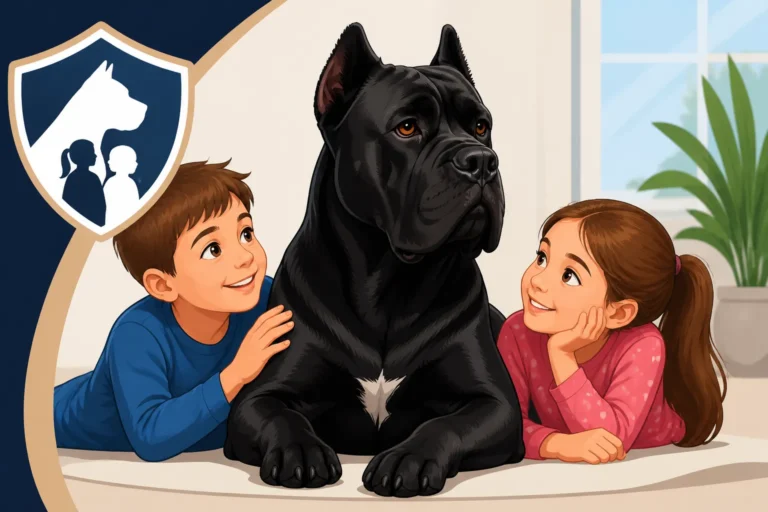
Cane Corso interactions with visiting children require preparation, management, and supervision to ensure safety and peace.

Child handlers walking a Cane Corso face extreme physical risks because a 110 pound mastiff easily outweighs a ten year old.

Cane Corso guardian instincts require careful management around children to prevent dangerous resource guarding and reactivity.
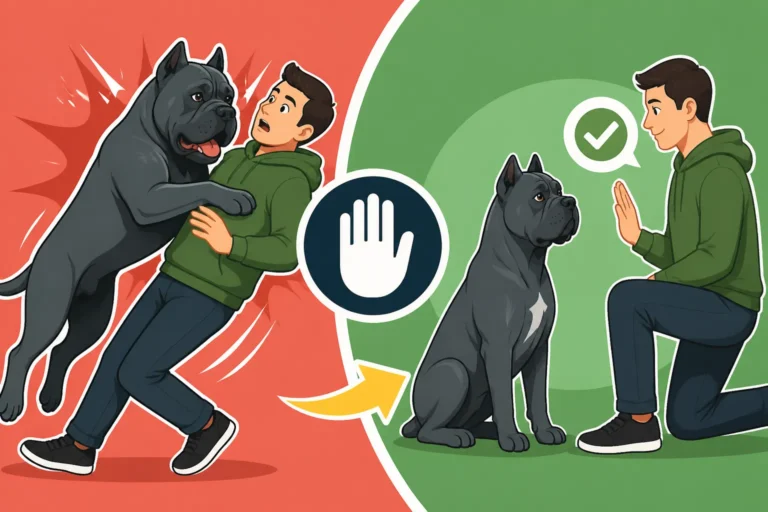
Cane Corso body slamming stems from excitement, lack of body awareness, attention-seeking, or guardian instincts, requiring specific training steps.

Cane Corso size and playful energy can cause accidental toddler collisions, requiring training strategies to prevent injuries.